Federal prosecutors have charged former FBI Director James Comey for a third time, in a case that turns on a single date. The charges, unsealed on October 26 in Washington, concern events of October 5, 2016. Prosecutors filed them on October 5, 2026, exactly 10 years later. Comey's lawyers say that was too late.
What the charges say
The government filed a criminal information, a charge brought by prosecutors without a grand jury vote, in federal court in the District of Columbia. U.S. District Judge Trevor McFadden's order unsealing the case describes two counts. The first alleges that Comey transmitted national defense information to a person not entitled to receive it, under 18 U.S.C. § 793(d). The second alleges a conspiracy with "others known and unknown" to do the same.
The charges stem from an October 5, 2016, New York Times article about Yahoo and email surveillance, NBC News reported. A prosecutor's filing says Comey "directed staff to speak to" the reporter about accuracy concerns with a Reuters story published the day before, "and thereby illegally transferred classified information."
The case had been sealed since October 5 at the government's request. McFadden unsealed it after Comey asked and the government did not object. He found that criminal charges against a former FBI director over conduct in office "are of significant public interest." The judge said he would address the rest of the dismissal motion "in due course."
The time limit dispute
The ordinary federal deadline for most felony charges is five years, which for this conduct ran out in 2021, according to the motion. Espionage Act offenses such as § 793 have a 10-year limit. Comey's motion to dismiss, filed October 16, argues that the 10-year statute applies only if "the indictment is found" within that period. The motion says an information is not an indictment. That is because prosecutors issue it on their own, without a grand jury finding of probable cause.
The government disagrees. A Justice Department spokesperson told NBC News that "filing a criminal information to toll the statute of limitations is a widely recognized practice in federal court and has been approved by multiple Circuit Courts of Appeals." To "toll" a deadline is to pause it. NBC reported that Comey cannot be tried on an information unless he waives indictment.
What each side argues
Comey and his lawyers. In a video on Substack, Comey called the case "an appalling abuse of the Department of Justice" and said, "I'm still innocent." His lawyer, Patrick Fitzgerald, has argued that two earlier teams of prosecutors looked at the same matter and declined to bring charges. In a statement, Fitzgerald said the first case against Comey, which a judge dismissed, was brought by "a person who was not actually a United States Attorney." Former federal prosecutor Greg Rosen told NBC News the filing was "vindictive."
The Justice Department and the president. The department's position is that filing the information paused the deadline, so the charges are timely. Its spokesperson called the matter "an ongoing criminal investigation" and declined further comment. A prosecutor's filing says the investigation found Comey "sought to correct misinformation" that had appeared in a Reuters story. Trump fired Comey in 2017 and has repeatedly called for him to be prosecuted, according to NBC.
Weighing the claims
The central question is legal and narrow: does a criminal information satisfy a statute that refers to an "indictment"? Both sides cite case law, and the court has not ruled. The department's statement that circuit courts have approved the practice is a claim about precedent that 567politics has not independently checked. The defense's reading rests on the statute's text, which is quoted in its motion.
Each side also makes claims about motive that go beyond the legal record. Rosen's charge of vindictiveness, and Comey's description of an "abuse," are arguments about intent that a court has not found. Trump's past attacks on Comey, which NBC reports include calling him a "dirty cop," are personal attacks that do not address the evidence in this case. The department has not publicly explained why it waited until the last day of the 10-year period, beyond its tolling statement.
Comey also faces an April 2026 indictment in North Carolina over a social media image of seashells reading "8647," NBC reported. Comey has maintained his innocence. For how 567politics handles legal reporting, see our methodology.
This AI-assisted report was prepared on October 28, 2026, from the court filings and reporting linked above.
Photo and reporting note
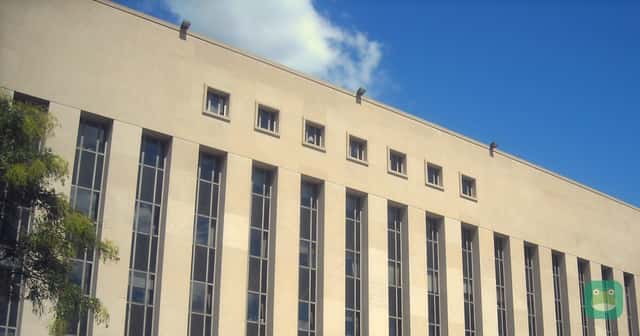
File image for context, not a photograph of the events reported here. It shows the E. Barrett Prettyman U.S. Courthouse in Washington. Photo: AgnosticPreachersKid, original file, released into the public domain by its author. Cropped for publication.
