Chicago makes Smart Streets permanent as the camera program prepares to expand
A broad council vote authorizes phased expansion. Safety outcomes, fair review and street design will matter as much as ticket totals.
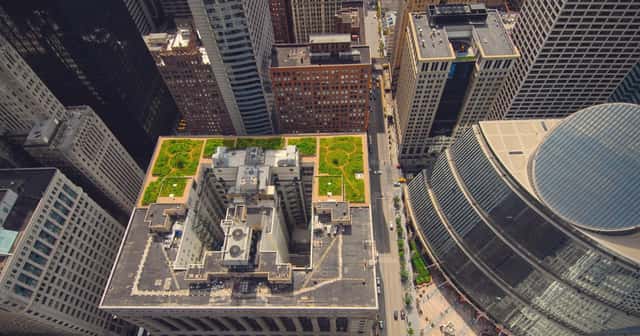
Chicago is preparing to take automated enforcement of blocked bus and bicycle lanes beyond its pilot boundaries, following the City Council’s October 14 approval of a permanent Smart Streets program. The next test is whether a broader camera network produces clearer lanes and more reliable travel, rather than simply a larger ticket total.
The legislative record for SO2026-0028833 shows 49 votes in favor, with one member not voting. The vote changes the program’s authority; it does not mean every neighborhood already has the same coverage. Officials describe a phased expansion, with full citywide coverage planned for 2028.
The mayor’s October 30 announcement presents the program as a way to protect streets and improve transit. That claim is important to evaluate separately from the administration’s revenue forecast. A fine can be collected without proving that a trip became faster, and a warning can change behavior without producing revenue at all.
The problem the cameras are meant to address
A bus lane only works when it is available to buses. A vehicle stopped in it can force a bus into general traffic. A blocked bus stop can make boarding harder, especially for a rider who needs a ramp or a clear connection to the curb. A bicycle lane blocked by a vehicle can push a rider into a different traffic space.
These are the operational problems identified in CTA’s March 2025 Smart Streets briefing. The briefing describes camera capture, review of evidence and the city’s role in issuing a mailed ticket. It is a document about the earlier pilot, useful for understanding the process rather than a final specification for every part of the expansion.
The enforcement argument is that existing rules need consistent consequences. If a delivery operator or driver expects a violation to be rarely detected, the convenience of stopping in a restricted lane may outweigh the perceived risk of a ticket. Cameras can increase the likelihood that a violation is documented without requiring an officer to be present at that exact moment.
That mechanism is plausible, but it does not measure the result on its own. Evaluation needs to distinguish how often a camera passes a location, how many vehicles violate a rule and how travel conditions change. A corridor with many tickets might have more problems, more enforcement or both.
What has been approved and what remains to come
The ordinance makes a temporary approach permanent and changes the area where it can operate. The mayor’s announcement describes the expansion in stages during 2027 and 2028. Residents should therefore check the applicable boundaries and notice requirements rather than assume that all city streets are already being enforced identically.
WTTW’s October 9 committee report documents the earlier debate over expansion. It distinguishes tickets assessed from revenue actually collected, a difference that remains important when the program appears in a budget. A bill issued to a vehicle owner and cash received by the city are not interchangeable figures.
The council’s broad support also matters for how the dispute is described. The record does not show a divided final vote between a pro-camera bloc and an anti-camera bloc. There are still substantive questions about design, implementation and measurement. Reporting those questions does not require inventing an organized opposition that the evidence does not establish.
Residents can follow the municipal rollout through the Chicago local desk. National arguments about traffic enforcement may raise relevant principles, but Chicago’s ordinance, locations and review process determine what this program actually does.
Safety and revenue are different measures
A safety program should have measures tied to the problem it is meant to solve. For a blocked bus lane, those might include obstruction frequency, delay and reliability. For a bicycle lane, the questions include whether riders encounter fewer blockages and whether dangerous movements are reduced. A ticket count is an administrative output, not a complete safety outcome.
Revenue has a separate budget role. If warnings and citations successfully reduce violations, collections could eventually decline even while the street functions better. Conversely, a revenue increase could reflect wider coverage rather than more dangerous behavior. Officials need to avoid treating whichever number rises as automatic proof of success.
The mayor’s statement includes several claims about warnings and behavior. They are attributed here to the administration. A public evaluation should make the underlying periods, denominators and data definitions available so residents can distinguish people who were observed again from people whose later behavior is simply unknown.
567politics’ methodology treats an official claim as a claim until the supporting evidence has been examined. That standard is relevant to both supporters’ safety assertions and critics’ warnings about the program. Neither a press release nor an isolated complaint is sufficient to estimate the full effect.
Enforcement cannot fix every design problem
An independent analysis by Michael McLean, using a Department of Finance records extract, argues that clusters of recurring violations can reveal locations where street design needs to change. Its emphasis is on treating enforcement data as a diagnostic tool, rather than assuming that more tickets solve a badly arranged curb.
That is a different emphasis from the administration’s case for wider enforcement, but the two are not inherently incompatible. A camera may help enforce a rule while a loading-zone redesign reduces the incentive to violate it. A protected bicycle lane may prevent a vehicle from entering the space that an unenforced painted lane leaves exposed.
The practical question is what happens after a hotspot is identified. A city can keep issuing citations indefinitely or examine whether deliveries, passenger pickup and transit boarding are competing for the same short stretch of curb. A workable design needs legal space for necessary activity without allowing that activity to block a protected route.
The independent analysis has limits too. Its published extract ends in September and does not by itself establish a causal effect on crashes or travel times. A map of citations should not be read as a map of all violations, all injuries or all enforcement needs. It shows the records the analysis contains.
The fairness test concerns process as well as location
Automated enforcement can reduce some discretionary encounters, but that does not remove the need for a fair review process. The evidence needs to show the relevant vehicle, place, time and conduct. People should be able to understand why a citation was issued and how to challenge an error.
The mayor’s announcement says potential violations receive review and owners retain the ability to contest tickets. That is a commitment that can be checked in implementation. An accessible process requires more than a nominal right to appeal: notices must be understandable, evidence usable and deadlines clear.
The distribution of fines also deserves attention. The same amount can impose a different burden on households with different incomes. At the same time, a blocked stop or lane can impose a daily cost on riders who have no practical driving alternative. Fairness analysis should include both the people receiving tickets and the people affected by the underlying conduct.
It would be premature to assign a measured neighborhood impact without the relevant data. A credible report would distinguish enforcement exposure, violation rates, warning rates, contested tickets and outcomes. Those categories answer different questions. Combining them into one large total can conceal the pattern residents need to understand.
What a useful public dashboard would show
A clear dashboard could separate warnings, assessed fines, collections and successful appeals. It could provide location and time information at a level that supports evaluation without unnecessarily disclosing personal information. Changes in coverage should be marked so that a bigger enforcement footprint is not mistaken for a sudden behavioral change.
Transit performance measures would add another layer. Officials could compare similar periods and corridors while accounting for service levels, construction and other changes. An observed improvement is worth examining, but attributing all of it to cameras requires more than a before-and-after headline.
The United States policy guide places transportation and public spending in a broader policy context. Here, the municipal question is specific: whether Chicago can enforce protected street space and improve its design while giving the public reliable information about costs and results.
The approach also intersects with the mayor’s broader budget. Brandon Johnson’s profile provides background on his priorities, but the success of Smart Streets should be assessed through the program’s own outcomes. Political support for an administration is neither evidence for nor evidence against a transportation intervention.
What residents should watch next
The next developments are the actual rollout, the boundaries in effect, the review process and the public evidence on outcomes. A permanent authorization creates continuity; it does not eliminate the need for continuing oversight. The city can revise implementation if data or lived experience reveals a problem.
There is no representative opinion poll in this report. The council vote is a legislative decision, the administration’s announcement states its case and the independent analysis offers another way to evaluate design. None should be turned into an unsupported claim that every driver, rider or cyclist holds the same view.
The clearest test is a street that works better: buses able to reach stops, bicycle lanes available to riders and a curb managed for legitimate uses. More cameras may be one part of that result. The ordinance’s implementation will show whether Chicago pairs enforcement with the measurement, design and accountability needed to make the result visible.
Differing perspectives
What should guide Chicago’s expansion of automated bus and bicycle lane enforcement?
Each position is summarized as its supporters make it, with equal weight and in alphabetical order. A summary is not an endorsement; the evidence for each is weighed in the story above.
Expand enforcement to keep protected lanes clear
Who holds it: Mayor Brandon Johnson, CDOT and CTA leadership
City officials argue that blocked bus stops and lanes delay riders and place vulnerable street users at risk. They see wider camera enforcement as a way to make existing rules effective, improve transit reliability and encourage drivers to change behavior, with review and appeal procedures supporting the expansion.
In their words: Office of Mayor Brandon Johnson, October 30 release carried by Forth ↗
Use violation patterns to redesign recurring problem locations
Who holds it: Michael McLean, independent Smart Streets data analyst
McLean argues that enforcement should be a backstop rather than the whole response to recurring curb conflicts. His analysis treats clusters of warnings and tickets as signals for protected lanes, boarding areas and loading changes that make illegal stopping less useful or harder to carry out in the first place.
In their words: Michael McLean, Chicago Smart Streets Pilot Analysis ↗
READ BEYOND 567POLITICS
Alternate sources & perspectives
Independent coverage and primary evidence to help you compare arguments. A link is not an endorsement; perspective labels describe the linked material.
- primary evidence
Smart Streets expansion ordinance ↗
Councilmatic / Chicago City Clerk records
Passage date and recorded49yes/1notvoting tally.
- primary evidence
Smart Streets pilot briefing, March2025 ↗
Chicago Transit Authority
Original account of the pilot’s enforcement process, clearly identified as historical pilot documentation.
- primary evidence
Mayor announces Smart Streets expansion ↗
Office of Mayor Brandon Johnson / Forth
Full original October30 release; performance assertions remain attributed.
- independent analysis
Chicago Smart Streets Pilot Analysis ↗
Michael McLean
Independent FOIA-based analysis emphasizing street design and the limits of citation data.
- independent analysis
Committee advances camera expansion ↗
WTTW News
Original committee reporting separating fines assessed from actual receipts.
Reviewed 2026-11-04. Original sources and substantive viewpoints reviewed November4. No representative opinion poll is supplied. Official proposals are distinguished from enacted measures; source-access limits are disclosed in individual notes. Fiscal and causal assertions are not independently audited forecasts.