Arcom refers Zemmour remarks to prosecutors as France debates a "great replacement" speech bill
The regulator's chief said it acts on specific remarks, not a media climate. The father of the man killed in Trappes says the government has not contacted him.
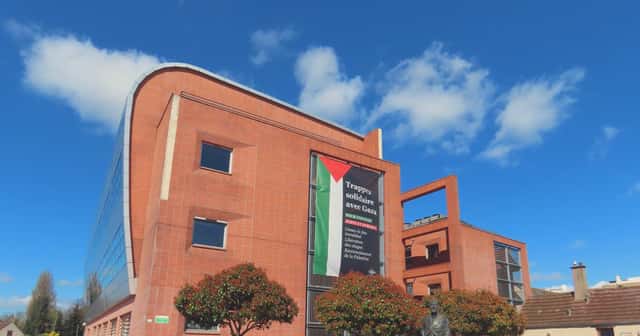
France's broadcasting regulator has asked prosecutors to examine televised remarks by far-right presidential candidate Éric Zemmour. Arcom president Martin Ajdari disclosed the referral on France Inter on Tuesday, November 3. It comes as a debate grows over how far the law should go against "great replacement" and "remigration" rhetoric after the racist attack in Trappes and La Verrière on October 23.
The same day, the lawyer for the father of the man killed in the attack said her client still had not been contacted by President Emmanuel Macron or the government. Green lawmakers have filed bills in both houses of Parliament to make clear that invoking the "replacement" of one population by another can count as incitement to hatred. Legal scholars disagree on whether the bills would change anything, and the minister in charge of fighting discrimination has argued for debate rather than a ban.
Quotations from French-language sources in this article are 567politics translations.
The Arcom referral
"As a public authority, we may be led to report remarks to public prosecutors when they seem to us to violate, for example, the laws on incitement to discrimination," Ajdari said on France Inter, according to franceinfo. "That was done by Arcom's services last week regarding remarks made on different channels" by Zemmour.
Franceinfo reported that on October 18, the day after the events of October 17, Zemmour spoke on LCI of "hordes of North African and African barbarians coming into the cities." On BFMTV he spoke of "Arab-Muslim scum." On CNEWS he called for the "remigration" of looters, meaning the expulsion of foreigners.
Ajdari did not quote those passages. He said their "repetition" and their "proximity on different channels" had "justified" a referral. Such a step "is not a first, but it is relatively rare," he said. Zemmour leads the Reconquête party. Any decision to open a case now rests with prosecutors.
What Arcom says about media responsibility
Trappes Mayor Ali Rabeh has accused some media outlets, including CNews, of sharing responsibility for the attack by giving too much airtime to speech that stigmatizes people of immigrant origin, franceinfo reported. 567politics covered that dispute and a petition about CNews in an earlier story.
Ajdari said the regulator would not take a position on that question. "As an audiovisual regulator, we do not have to rule on it," he said. That question belongs to "the political debate," he said.
"What we rule on is whether the programs broadcast by television and radio channels comply with their legal and contractual obligations," Ajdari said. He said "words have a psychological, social, collective, democratic importance." But "from the point of view of audiovisual law, words must simply respect a legal framework." He added: "When this framework is exceeded, we sanction. We do it regularly and we will do it again."
He said Arcom decides "case by case on precise remarks that were made." It does not act "on the denunciation of an atmosphere, of a mood that is encouraged or of a psychological conditioning, which does not fall at all within the field of audiovisual regulation."
The attack and the investigation
On Friday, October 23, at about 10:30 a.m., a man opened fire in Trappes and La Verrière, two towns in the Yvelines department west of Paris. One person was killed and seven were injured. Macron called the "racist terrorist attack" a "turning point in the life of our Republic and our nation," franceinfo reported.
The man killed was Pengo Bossio Wangi, a 26-year-old Black Frenchman. Several of the injured are of African or North African origin, franceinfo reported. A 12-year-old girl was seriously injured in La Verrière; franceinfo said her life is no longer in danger.
The main suspect, Kevin Tessier, 39, was charged and placed in pre-trial detention last Thursday. The investigation covers "murder" and "attempted murders" "in relation with a terrorist enterprise," with the aggravating circumstance that the acts were committed because of the victims' real or supposed race, ethnicity, nation or religion. According to the prosecution, the suspect admitted targeting people he saw as Muslim, African or North African, France 3 reported. Rabeh has said the suspect had expressed ideas close to the "great replacement" theory.
Late on Tuesday, franceinfo reported, citing sources close to the case and confirming a BFMTV report, that Tessier had tried to take his own life in detention on Sunday. He returned to prison a few hours after receiving medical care.
The victim's family and the government
Zineb Alami, the lawyer for Bolema Bossio Wangi, the father of the man killed, said on BFMTV on Monday that he "waited for there to be a call" from the government "so that condolences could be offered to him." "That has not been done," she said. Contacted by franceinfo on Tuesday, she said her client "has had no contact" with a member of the government since his son's death.
Macron's entourage told franceinfo that "the President of the Republic takes care of the families of victims in this kind of case." It did not say whether he had tried to reach the family or planned to. It said it "never communicates" on such matters. Franceinfo noted that the Élysée has made such contacts public in other cases in recent years. They include the family of teacher Samuel Paty in 2020 and the parents of the girl Lola in 2022.
Yassine Bouzrou, a lawyer for other members of the family, did not say whether his clients had been contacted. The offices of the interior, justice and anti-discrimination ministers and the government spokeswoman did not respond to franceinfo or referred questions to the office of Prime Minister Sébastien Lecornu. Lecornu's team had not responded either.
According to franceinfo, the Élysée has not contacted the father and did not wish to comment on any exchanges with other family members. A national tribute to all the victims of the Trappes and La Verrière attacks was announced after a Council of Ministers meeting. Its date has not been set.
The bills on "great replacement" speech
Green lawmakers from the Paris region filed bills last week in both houses. In the National Assembly, the text is carried by Sabrina Sebaihi, deputy for Hauts-de-Seine, and Steevy Gustave, deputy for Essonne. In the Senate, Akli Mellouli, senator for Val-de-Marne, filed a similar text. The Senate lists it as a bill "aimed at strengthening the fight against speech inciting hatred and racist and xenophobic acts," filed on October 29.
France 3 described the "great replacement" as a far-right conspiracy theory popularized by the writer Renaud Camus in the early 2010s. It claims that French and European populations are being replaced by immigrants, mainly from Africa. France 3 said the idea has been taken up by figures including Zemmour, Jordan Bardella of the National Rally and Valérie Pécresse of Les Républicains.
The bills would write into law that "provocation to discrimination, hatred or violence" can result from remarks invoking "the replacement of one population by another or the need for a remigration." They would also cover remarks that "designate a group of people as a threat because of their origin" or their real or supposed membership of an ethnic group or nation, France 3 and TF1info reported.
The texts would also:
- Raise penalties when such remarks are made by an elected official or a candidate for election.
- Strengthen sanctions on media in case of "repetition" of remarks inciting hatred or violence on their channels.
Under the press law of July 29, 1881, provocation to discrimination, hatred or violence is punishable by one year in prison and a €45,000 fine, France 3 reported.
In their statement of reasons, the authors say it is necessary to "redefine the balance between freedom of expression and the protection of people against racist, xenophobic and discriminatory speech." They write that "it is not a question of depriving citizens of their freedom of opinion by creating a crime of opinion." They argue that "racism is built first of all by words, representations and their repetition in public space."
"It is not a point of view, it is a racist theory," Sebaihi said on franceinfo. "We must put an end to these theories that can lead to attacks like the one in Trappes."
Last week, prefects also banned an identitarian conference on "remigration" planned in Le Plessis-Robinson and a demonstration in Paris, France 3 reported. Despite the bans, a meeting of the group "Objectif Remigration" took place in a Paris bistro on Sunday, according to Libération.
Legal experts disagree
Constitutional law scholar Benjamin Morel told France 3 that "the Constitutional Council will not be able to let this pass." He said the text would be "either redundant" with existing law "or would risk being a disproportionate infringement of freedom of expression." He said he understood "the political and symbolic gesture."
Thomas Hochmann, a public law professor at Paris Nanterre University, said the bill "has some interest." In theory, he said, the "great replacement" theory is already a form of provocation to hatred that "should already be convicted on the basis of existing law." But in practice, he said, courts refuse to convict such remarks because they find the provocation not explicit enough. He cited a 2017 Court of Cassation ruling on a Valeurs actuelles cover. "Hence the interest of adding a clarification to the law," he said.
Christophe Bigot, a press law lawyer, told Public Sénat the text was "redundant" with existing law. "Pedagogy is not the role of the law," he said.
Dominique Sopo, president of SOS Racisme, said he is "not hostile" to the bill. But he warned that "the risk is chasing after the new expressions used by this or that racist demagogue." Asked about constitutional limits, Rabeh said changing the Constitution if needed would be "desirable."
Bergé: debate, not a ban
Aurore Bergé, the minister for the fight against discrimination, has argued that the theory should be fought in debate. "Does stating this theory bring you under the law? The answer is no," she said in September, according to LCP. She said the theory had "racist undertones" and was "false, lying and dangerous." "To fight them, you have to accept to debate," she said. "I do not refuse the debate, I do not refuse the fight."
On CNews in September, Bergé had answered no when asked whether the theory was racist, LCP reported. Her remarks drew criticism within her own camp, including from Renaissance deputy Prisca Thévenot.
What comes next
Prosecutors will decide whether to act on the Arcom referral. The Green bills have been filed but not scheduled for debate. The date of the national tribute to the victims has not been announced.
Differing perspectives
Should French law explicitly treat "great replacement" and "remigration" speech as incitement to hatred?
Each position is summarized as its supporters make it, with equal weight and in alphabetical order. A summary is not an endorsement; the evidence for each is weighed in the story above.
A clarification is needed because courts won't convict
Who holds it: Thomas Hochmann, public law professor, Paris Nanterre University
Law professor Thomas Hochmann argues the great replacement theory is already a form of provocation to hatred that existing law should punish, but courts refuse to convict because they find the provocation not explicit enough. He calls a 2017 Court of Cassation ruling erroneous and says a clarification in the law would be useful, since racist speech justifies limits on expression.
In their words: France 3 Paris Île-de-France ↗
Fight it through debate
Who holds it: Aurore Bergé, minister for the fight against discrimination
Minister Aurore Bergé argues that stating the great replacement theory does not, by itself, break the law, though she rejects the theory and says it has racist undertones. She says the way to counter such ideas is to accept debating them openly, and that she refuses neither the debate nor the fight against them.
In their words: LCP ↗
Redundant, and wider would be unconstitutional
Who holds it: Christophe Bigot, press law lawyer
Press lawyer Christophe Bigot argues the bill would change little in court because it duplicates existing provisions that already punish incitement to discrimination. He says pedagogy is not the role of the law, and that truly widening the offense to cover merely stirring rejection of a group would probably be unconstitutional and create a gray zone for free expression.
In their words: Public Sénat ↗
Yes, write it into the law
Who holds it: Green lawmakers Sabrina Sebaihi, Steevy Gustave and Akli Mellouli
The Green lawmakers argue that racism is built first through words and their repetition in public space, and that theories of a population being replaced can lead to attacks like Trappes. Their bills would state that invoking replacement or remigration can amount to provocation to hatred, with heavier penalties for elected officials, candidates and repeat broadcasters, without creating a crime of opinion.
In their words: TF1info / AFP ↗
READ BEYOND 567POLITICS
Alternate sources & perspectives
Independent coverage and primary evidence to help you compare arguments. A link is not an endorsement; perspective labels describe the linked material.
- independent analysis
L'Arcom saisit la justice après des propos d'Éric Zemmour au lendemain de la journée du 17 octobre ↗
franceinfo
Arcom president Martin Ajdari on the referral and on media responsibility, Nov 3.
- independent analysis
Le père de Pengo Bossio Wangi n'a pas été contacté par Emmanuel Macron ou le gouvernement, affirme son avocate ↗
franceinfo
Family lawyer's account and the Élysée's response.
- independent analysis
Attentat raciste dans les Yvelines : point sur l'enquête et le suspect ↗
franceinfo
Charges, victims and the suspect's status in detention.
- primary evidence
Proposition de loi visant à renforcer la lutte contre les discours incitant à la haine et aux actes racistes et xénophobes ↗
Sénat
Senate legislative file for Akli Mellouli's bill, filed Oct 29, 2026.
- left argument
Attentat raciste de Trappes : une proposition de loi déposée pour sanctionner la théorie du "grand remplacement" ↗
TF1info / AFP
The Green lawmakers' case for the bill, quoting its statement of reasons.
- independent analysis
La proposition de loi contre la théorie du "grand remplacement" est-elle utile ? ↗
France 3 Paris Île-de-France
Legal views from Benjamin Morel, Thomas Hochmann and SOS Racisme.
- independent analysis
"Le racisme ne naît pas de nulle part" : les écologistes ont déposé une proposition de loi ↗
Public Sénat
Senator Mellouli's arguments and press lawyer Christophe Bigot's critique.
- other perspective
Grand remplacement : Aurore Bergé précise ses propos sur une théorie aux relents racistes ↗
LCP
The anti-discrimination minister's case for debating rather than banning the theory.
Reviewed 2026-11-03. Automated discovery returned only dictionary pages for the word 'great', so sources were chosen by reading original reporting and primary documents directly. No written statement from Reconquête or the National Rally responding to the Arcom referral or the Green bills could be found in readable form (an RN reaction was available only as video without a transcript), so no right-wing argument is listed. Aurore Bergé's position is listed as an other perspective because it comes from a centrist government minister.