LA parks measure tests a funding guarantee against budget flexibility
PRK would phase in a larger guaranteed parks allocation without creating a new tax. Its service goals and effects on other spending need separate scrutiny.
Los Angeles voters were asked on November 3 to make parks a larger protected claim on the city budget. Charter Amendment PRK would increase the minimum allocation for Recreation and Parks over ten years. The central dispute is not whether residents should have usable parks. It is whether a long-term funding floor is the right way to secure them when the same pool of money also supports other services.
The official measure sets out a phased increase in the property-value-based allocation. It does not create a new tax. That makes PRK different from a proposal asking voters to buy more services with an additional revenue stream. It asks the city to give parks a larger guaranteed position within an existing budget. This report analyzes that policy and makes no call on the final election result.
Readers can follow the Los Angeles politics desk for city decisions and the county election office for official counting information. A measure can lead in partial returns without yet being a certified amendment. That distinction also matters for any claim about when new budget obligations begin.
A floor is different from a complete budget
PRK's guarantee would rise from an amount linked to 0.0325 percent of assessed property value to 0.065 percent, with the change spread across a decade. Under the city file, the Council could reduce the increased allocation during a declared fiscal emergency, within defined limits. The funding rule is a minimum, not a detailed list of projects or a promise that every facility receives an equal increase.
The practical question is what happens above that floor. Elected officials would still make choices about staffing, maintenance, recreation programs and capital needs. A guaranteed amount can stabilize planning without deciding which neighborhood pool gets repaired first. Conversely, a budget above the floor is not automatically evidence that the guarantee is unnecessary. It may reflect a choice to meet needs the minimum never attempted to cover.
Assessed value is also not the same as the market price a resident sees in a property listing. The formula links the funding rule to a defined tax base. It should not be described as a direct percentage of every household's current housing wealth. Residents comparing estimates over time need to know both the rate and the base to which it applies.
Why supporters want the protection
Supporters argue that parks have needs that are easy to postpone in annual budget negotiations. A damaged restroom, a closed pool or reduced program hours can persist without producing one large, decisive moment at City Hall. A stable funding commitment is meant to counter that tendency by placing a minimum investment beyond ordinary bargaining.
LAist's reporting describes the measure as an effort to give the department predictable resources for maintenance, staffing and programs. The Los Angeles Area Chamber's Jobs PAC guide also supports PRK, a reminder that views on local spending do not always follow a simple labor-versus-business divide.
Predictability can have value even before a larger budget arrives. A department deciding whether to recruit staff or plan a multiyear repair needs some confidence that a program will not disappear at the next budget negotiation. However, confidence about funding is not the same as a guarantee that hiring or construction proceeds on time. Procurement, training, design and operating decisions remain necessary.
The equity argument is similarly more specific than a claim that all parks should look identical. Different neighborhoods can have different amounts of space, different facility conditions and different access to private recreation. A public department may need to direct resources unevenly to improve access fairly. A larger total makes that choice possible; it does not supply the criteria by which the choice should be made.
Why critics worry about budget mandates
The competing concern is that every protected spending floor reduces room to respond elsewhere. NBC Los Angeles' explanation of PRK notes that no opposing argument appeared in the official voter pamphlet. The Los Angeles Times reported opposition from the police union and concerns about budget flexibility.
A June15 City Administrative Officer report, addressing an earlier funding design, recommended the annual budget process instead of increasing a charter mandate. Its general flexibility argument is relevant, but its earlier phase-in estimates should not be substituted for the final ten-year measure. That distinction lets readers evaluate a documented fiscal objection without mixing different versions of the proposal.
The critique is strongest when it recognizes parks as a real service rather than an optional amenity. Opponents can accept the need for maintenance while arguing that elected officials should balance it against emergency response, public works or homelessness services through the regular budget. Their objection concerns the allocation rule, not necessarily the value of the program receiving protection.
A formula also creates a political asymmetry. The protected program can point to its legal minimum, while services without a comparable guarantee must compete for what remains. That does not establish that the resulting distribution is wrong. It means voters should understand that the decision changes bargaining power as well as dollars.
The same scrutiny belongs on a claim that ordinary budget discretion will solve the problem. If a department has struggled to obtain sustained investment, asking residents to rely on future annual decisions requires a credible explanation of what would change. Simply preserving flexibility does not demonstrate that officials will use it effectively. The dispute is between two ways of securing a public service, each with risks that need to be made visible.
The emergency clause is a safeguard, not an answer to every concern
PRK's fiscal-emergency provision acknowledges that a guarantee may meet circumstances in which the city cannot fund all of its obligations as planned. That is relevant to the flexibility argument. It would be misleading to describe the proposal as an absolute lockbox that cannot respond to a crisis.
But an emergency exception is not the same as ordinary discretion. It raises questions about the standard for declaring an emergency, the duration of the reduction and the record used to justify it. The public should be able to trace why the exception is used and when the normal rule resumes. Otherwise, a safeguard can become either politically unusable or a routine way around the commitment.
These are questions for implementation, not evidence that officials will misuse the clause. Our methodology separates a risk identified in a policy's design from a claim that misconduct has occurred. A debate becomes less useful when every safeguard is treated as proof of good administration or every discretionary provision is treated as proof of bad faith.
The test is services residents can use
If PRK becomes law, the public should be able to connect added resources with service changes. Useful measures could include whether facilities reopen, repairs are completed, programs operate at accessible hours and maintenance improves. Those are suggested tests in this analysis. This report does not claim the city has adopted a complete performance framework for the amendment.
An expenditure total alone would be inadequate. More spending can be required simply to maintain the same service when costs rise. Equally, a department should not be judged only by whether its total budget increases, with no attention to what residents receive. The relevant record needs both inputs and outcomes.
Neighborhood distribution matters too. A citywide improvement can conceal areas where conditions do not change. A public report should make it possible to examine which facilities receive work and why. That need not mean a promise to divide money equally among all districts. It means explaining the basis for choices and allowing residents to compare the stated priorities with actual delivery.
A long phase-in makes those checks more important, not less. Officials who administer later budgets may differ from those who endorsed the measure. A clear baseline, transparent milestones and consistent records can preserve accountability across that turnover. Without them, each budget season may restart the argument about what earlier commitments were meant to accomplish.
One further distinction will matter when residents read the first budget after the election: an increase phased over ten years is not an immediate doubling of service. A smaller initial step could be consistent with the rule, while a claim that the entire long-term allocation has already arrived would not be. The city should present current-year obligations separately from the final target. That would help residents distinguish an implementation delay from a timetable that was part of the proposal all along.
What the vote can and cannot settle
A vote on PRK can decide whether Los Angeles adopts the submitted funding rule. It cannot decide the condition of every park or resolve every future budget conflict. Nor can a final tally by itself establish why residents voted as they did. This report cites no representative survey of the motives behind the PRK vote.
Our local politics section examines similar questions about how cities turn public priorities into durable commitments. The comparison is useful when it focuses on incentives and accountability. It becomes misleading if one city's formula is treated as an automatic solution for another city with a different budget and set of responsibilities.
Under our editorial standards, support for a service should not be confused with support for any particular funding mechanism. PRK presents a real choice between a stronger floor for parks and a stronger claim for annual budget discretion. The evidence after the ballot will be whether the rule produces more reliable access to recreation while making its tradeoffs clear. Both the benefit and the cost deserve to remain visible.
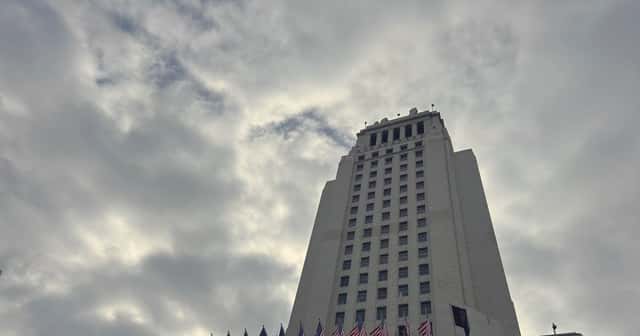
Photo: Los Angeles City Hall, April 2025, by Busition / Wikimedia Commons, CC BY 4.0. Representative civic image; cropped for display.
Differing perspectives
Should Los Angeles protect more parks funding through its charter?
Each position is summarized as its supporters make it, with equal weight and in alphabetical order. A summary is not an endorsement; the evidence for each is weighed in the story above.
Guarantee long-term parks investment
Who holds it: PRK supporting ballot-argument signers, including Monica Rodriguez and Kenneth Mejia
A stronger minimum can give parks the stable resources needed for maintenance, accessible programs and reliable staffing. Supporters argue that repeated annual negotiations have not protected those needs adequately. A phased guarantee would let the department plan while giving the city time to adjust, with a fiscal-emergency provision addressing extraordinary pressure.
In their words: Los Angeles City Clerk, PRK supporting argument ↗
Keep funding choices in annual budgets
Who holds it: City Administrative Officer Matthew Szabo, in his June15 analysis of an earlier proposal
The city can provide more parks funding through its ordinary budget without restricting a larger share of general revenue in the charter. The City Administrative Officer argued that a stronger mandate reduces flexibility when other service needs arise. This is a general budget-design objection; the earlier report examined a different phase-in than the final ballot measure.
In their words: City Administrative Officer, June15 report ↗
READ BEYOND 567POLITICS
Alternate sources & perspectives
Independent coverage and primary evidence to help you compare arguments. A link is not an endorsement; perspective labels describe the linked material.
- primary evidence
PRK official legal text and ballot argument ↗
Los Angeles City Clerk
Defines final funding formula and emergency provisions.
- other perspective
Parks funding and fiscal flexibility report, June15 ↗
City Administrative Officer
Earlier proposal; only general annual-budget objection used, not obsolete cost projections.
- independent analysis
Parks budget measure guide ↗
LAist
Service and implementation context.
- independent analysis
PRK recreation and parks budget explanation ↗
NBC Los Angeles
No formal opposition filed; broader fiscal tradeoffs.
- other perspective
Jobs PAC voter guide ↗
Los Angeles Area Chamber of Commerce
PRK support verified; do not infer views of every business.
Reviewed 2026-11-04. Reviewed November 4, 2026. The analysis uses official ballot materials and the documented positions listed below. The standalone measure files retain proof markings and were cross-checked against the final voter pamphlet. No certified outcome, voter motive or representative polling result is claimed. Forecast effects are distinguished from measured outcomes. The licensed City Hall photograph is an archive illustration, not an image of the election.