More than 58 million voted early in the midterms: final counts, poll closing times and mail-ballot deadlines
Final early-vote data equal 53% of the 2022 vote. When polls close in each state, and which states count mail ballots arriving after Election Day.
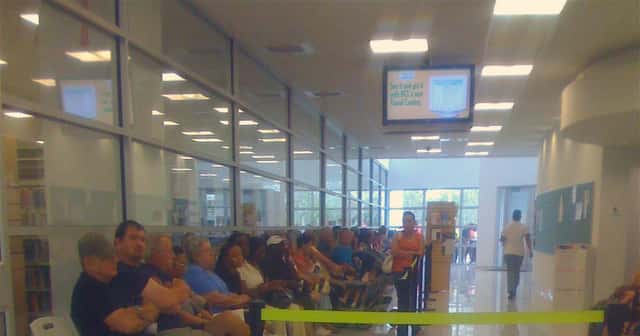
More than 58 million Americans voted before Election Day in the 2026 midterms, according to the final pre-election count from the University of Florida Election Lab. The lab's state-by-state file, last updated late Monday night, records 58,677,062 ballots cast early in person or returned by mail in 48 states and the District of Columbia. That figure is the equivalent of 53.4% of all the ballots those same states counted in the 2022 midterm general election.
The remaining voters cast ballots today. This story sets out what the final early-vote data show and what they do not. It also lists when polls close in each state, how long mail ballots can still arrive and be counted, and why some results will take days. It covers voting logistics only. It does not report or project results; 567 Politics will report outcomes once they are official or called by major news organizations.
The final early-vote count
The Election Lab, run by University of Florida political scientist Michael McDonald, compiles early-vote figures from state and county election offices and, in a few states, from other data providers. The lab's national data file shows the following totals as of its last pre-Election Day update:
- Total early ballots: 58,677,062
- Cast in person before Election Day: 31,897,521
- Returned by mail: 26,779,541
- Ballots cast in 2022 in the same 48 states and D.C.: 109,979,856, as recorded in the lab's file
Alabama and New Hampshire are not included in the file. CBS News reports that 47 states and D.C. offer early voting options, the exceptions being Alabama, Mississippi and New Hampshire. Mississippi appears in the lab's file with mail ballots only.
Most states in the file were updated on Monday, November 2. Three were not: Missouri and West Virginia were last updated October 29 and Tennessee on October 30, so their final totals will be somewhat higher than shown. For Tennessee, the lab notes that the state reports only in-person early votes, with no mail-ballot figures.
The Washington Sun reported that more than 57 million Americans had voted before Election Day, a midterm record. It said early turnout had passed both 2022 and 2018 even after adjusting for population growth. Earlier in the period, 567 Politics reported that the count was running nearly 10 million ahead of the same point in 2022 according to an Associated Press analysis.
A record early vote does not mean a record turnout. Some voters who used to vote on Election Day now vote earlier, so the early total can rise without the overall total rising. McDonald told the Washington Sun that registered Democrats and unaffiliated voters had cast ballots faster than four years ago, while Republican voters lagged their 2022 pace in some states. "If we don't see Republicans get engaged at the same level as the other groups," he said, "then we may fall short of that 2018 election." The 2018 midterm had the highest turnout of any midterm in a century, the paper noted.
Where early ballots have already approached the 2022 total
Comparing each state's early vote with its total 2022 vote shows how much of a typical midterm electorate has already voted. The comparison has limits. It does not account for population growth or for changes in voting rules, and 2026 turnout could end up higher or lower than 2022.
Texas stands out. The state recorded 7,736,594 early ballots, equal to 94.9% of the 8,151,590 ballots cast there in 2022. The Election Lab data show 96.5% of the Texas early vote was cast in person. The Washington Sun attributed this largely to the state's requirement that voters give a reason to vote by mail. Texas has a closely watched Senate race on the ballot.
Several states with long early-voting periods or all-mail elections are above 70%: North Carolina (74.4%), Oregon (74.2%), Nevada (73.6%), Colorado (73.2%), Tennessee (72.9%), Georgia (71.3%) and Florida (70.1%).
States at the low end tend to have restricted or no early in-person voting. Pennsylvania, where the Election Lab records all ballots cast before Election Day as mail ballots, recorded 1,062,313 mail ballots, the equivalent of 19.6% of its 2022 vote. Missouri's figure of 11.3% reflects both its limited early-voting period and the fact that its data had not been updated since October 29.
Source: UF Election Lab, 2026 early-vote data file, last updated Nov. 2, 2026
Show the numbers
| State | Share of 2022 total vote |
|---|---|
| Texas | 94.9% |
| North Carolina | 74.4% |
| Oregon | 74.2% |
| Nevada | 73.6% |
| Colorado | 73.2% |
| Tennessee | 72.9% |
| Georgia | 71.3% |
| Florida | 70.1% |
| Washington | 65% |
| Arizona | 63.6% |
| California | 59.8% |
| Michigan | 51.4% |
| Pennsylvania | 19.6% |
The largest early-vote totals by state were:
| State | Early ballots | 2022 total vote | Share |
|---|---|---|---|
| Texas | 7,736,594 | 8,151,590 | 94.9% |
| California | 6,662,914 | 11,146,610 | 59.8% |
| Florida | 5,464,802 | 7,796,916 | 70.1% |
| Georgia | 2,826,388 | 3,964,926 | 71.3% |
| North Carolina | 2,819,922 | 3,790,202 | 74.4% |
| Michigan | 2,313,206 | 4,500,400 | 51.4% |
| New York | 2,110,908 | 5,962,278 | 35.4% |
| Washington | 1,992,533 | 3,067,686 | 65.0% |
California's figure is likely to grow substantially. The Election Lab file shows the state had sent out 23,451,219 mail ballots, of which 6,364,403 had been returned. Ballots mailed by Election Day count if they arrive within the state's deadline, described below.
In person or by mail
Nationally, 54% of early ballots were cast in person and 46% by mail, according to the Election Lab totals. The balance varies widely by state.
In Georgia, 95.7% of early ballots were cast in person, and in North Carolina 96.7%, even though both states allow any voter to request an absentee ballot. John Fortier of the American Enterprise Institute described this to the Washington Sun as a regional preference, "a tradition of voting early in person," rather than a partisan one.
Mail voting in North Carolina fell sharply. The Washington Sun reported about 94,000 mail ballots returned, down 40% from 2022; the Election Lab file shows 93,597. Michael Bitzer of Catawba College told the paper that a new requirement for voters to seal an inner envelope before sealing the outer one created "additional hurdles." Across the 27 states and D.C. that reported both voting methods in each of the last two midterms, mail voting fell 13% while in-person early voting rose 46%, the paper reported.
Michigan is holding its first midterm with statewide early in-person voting. The state recorded 2,313,206 early ballots, 51.4% of its 2022 total vote. The Election Lab notes that Michigan does not identify how each voter cast a ballot, so its in-person figure of 684,492 is estimated from mail-ballot application data. The state's open Senate seat is among the contests on the ballot.
What party registration data can and cannot show
Twenty-seven of the states in the Election Lab file report early voters' party registration. In those states, the file records 12,512,103 early voters registered as Democrats (42.6%), 9,116,463 registered as Republicans (31.0%) and 7,421,749 registered with neither major party (25.3%).
These are registrations, not votes. The Election Lab's own page states that its party registration statistics "are not actual votes." Registered Democrats can vote for Republicans and the reverse, and voters registered with neither party can vote either way. The 27 states account for about half of all early ballots, and some of the largest early-vote states, including Texas, Georgia, Michigan, New York and Ohio, do not record party registration at all.
The Washington Sun reported that about 90% of the Democratic registration margin came from five states (California, Maryland, Pennsylvania, New Jersey and North Carolina) and nearly 40% from California alone. Because supporters of different parties can differ in when they choose to vote, a registration lead among early voters can shrink or grow once Election Day ballots are counted.
Kansas moved the other way in the final days, according to the Washington Sun. Democrats led the state's early vote by about 9,400 ballots on October 28; by Monday, Republicans led by about 11,500. The Election Lab file shows 203,502 registered Republicans and 192,007 registered Democrats among early voters in Kansas. The state's Senate race is on the ballot.
Christopher Cooper, a political scientist at Western Carolina University, told the paper that early returns are not a reliable guide to outcomes. "It's not the case that you can just copy and paste these results into what you're going to see in the end," he said.
When polls open and close
Polling hours are set by each state, and some states span two time zones. The times below are the latest closing time in each state, in Eastern Time, as listed by CBS News. Polls in parts of several states close earlier.
| Latest closing (ET) | States |
|---|---|
| 7 p.m. | Georgia, Indiana, Kentucky, South Carolina, Vermont, Virginia |
| 7:30 p.m. | North Carolina, Ohio, West Virginia |
| 8 p.m. | Alabama, Connecticut, Delaware, D.C., Florida, Illinois, Maine, Maryland, Massachusetts, Mississippi, Missouri, New Hampshire, New Jersey, Oklahoma, Pennsylvania, Rhode Island |
| 8:30 p.m. | Arkansas |
| 9 p.m. | Arizona, Colorado, Kansas, Louisiana, Michigan, Minnesota, New Mexico, New York, South Dakota, Tennessee, Texas, Wisconsin, Wyoming |
| 10 p.m. | Iowa, Montana, Nebraska, Nevada, North Dakota, Utah |
| 11 p.m. | California, Idaho, Oregon, Washington |
| 12 a.m. | Hawaii |
| 1 a.m. | Alaska |
The first polls close at 6 p.m. ET in the eastern parts of Indiana and Kentucky. Most of Texas closes at 8 p.m. ET and most of Alaska at midnight ET, an hour before the last polling places in each state.
Polls opened as early as 5 a.m. ET in Vermont. The last states to open are Alaska and Washington, at 11 a.m. ET, and Hawaii, at noon ET. CBS notes that voters who are in line when a polling place closes have the right to remain in line and vote.
How long mail ballots can still arrive
States set their own deadlines for receiving mail ballots. On June 29, the Supreme Court ruled 5-4 in Watson v. Republican National Committee that federal law does not require ballots to be received by Election Day. The case concerned a Mississippi law that counts ballots postmarked by Election Day and received within five business days. SCOTUSblog's account of the ruling notes that Justice Amy Coney Barrett wrote for the majority, joined by Chief Justice John Roberts and Justices Sonia Sotomayor, Elena Kagan and Ketanji Brown Jackson. Justice Samuel Alito wrote the dissent, joined by Justices Clarence Thomas and Neil Gorsuch, with Justice Brett Kavanaugh joining most of it.
According to the National Conference of State Legislatures, the ruling means existing state laws on receipt deadlines remain in place. Thirty-five states require mailed ballots to arrive by Election Day. Fifteen states and D.C. will count a ballot that arrives later if it is postmarked on or before Election Day, within a set window. Under NCSL's summary of state law, those windows include:
| State | Postmarked ballots counted if received |
|---|---|
| Texas | By 5 p.m. the day after the election |
| Kansas | Within three days (under a court injunction) |
| Massachusetts | By 5 p.m. on the third day after |
| Virginia | Before noon on the third day after |
| Nevada | By 5 p.m. on the fourth day after |
| Mississippi | Within five business days |
| New Jersey | Within 144 hours (six days) of polls closing |
| California, New York, Oregon | Within seven days |
| Alaska, D.C. | Within 10 days |
| Maryland | By 10 a.m. on the second Friday after |
| Illinois | Within 14 days |
| Washington | By the day before certification, 21 days after a general election |
West Virginia counts postmarked ballots received before its canvass, which begins on the fifth day after the election, NCSL reports.
Kansas changed its law in 2025 to require mailed ballots to arrive by 7 p.m. on Election Day. NCSL reports that a district court judge blocked that law in July 2026, and that the secretary of state's appeal was blocked by the Kansas Supreme Court. Under the injunction, postmarked ballots that arrive within three days will be counted this year. Ohio, North Dakota and Utah moved the other way in 2025, ending or narrowing their post-Election Day windows, according to NCSL.
Military and overseas voters often have longer deadlines. NCSL counts 30 states and D.C. that accept at least some military and overseas ballots received after Election Day.
California's mail ballots were also the subject of a Justice Department emergency request that the Supreme Court denied; see our report on the Supreme Court's decision and a related federal court order.
Why some counts will take days
In states with post-Election Day receipt windows, ballots will keep arriving after polls close, and election officials cannot finish counting until the window ends. States also differ in when officials may begin processing mail ballots before Election Day, and in how voters can fix, or "cure," problems such as a missing signature. The Election Lab's page notes that, by federal law, officials do not begin counting ballots until Election Day, although they may prepare them in advance. Close races in states that process large numbers of mail ballots can take longer to count.
Election Day may also bring disputes over who may be present at polling places and counting centers. The Justice Department has said it is sending about 1,000 monitors; for the rules states have set on how close federal monitors can get, see our report on Justice Department election monitors.
The early-vote figures in this story come from the Election Lab's running count, which is not an official total. Official turnout will come from state canvasses, which take place in the days and weeks after the election.
Sources and method
The early-vote figures are taken from the UF Election Lab's 2026 national data file as downloaded on the morning of November 3. Shares of the 2022 vote were calculated by 567 Politics by dividing each state's early-vote total by the 2022 total vote recorded in the same file. National in-person, mail and party-registration totals are sums of the state figures in the file. Poll times are from CBS News; mail-ballot deadlines are from NCSL's table of state laws; the Supreme Court's reasoning is from the opinion itself. For how we handle data and sources, see our methodology.
Differing perspectives
Should mail ballots postmarked by Election Day but received afterward be counted in federal elections?
Each position is summarized as its supporters make it, with equal weight and in alphabetical order. A summary is not an endorsement; the evidence for each is weighed in the story above.
No: all ballots should be collected by Election Day
Who holds it: Dissent in Watson v. RNC (Alito, Thomas, Gorsuch; Kavanaugh in part); Republican National Committee and Mississippi Republican Party
The dissent argued that the electorate's collective choice must be authoritatively expressed on Election Day, which requires that collection of ballots be completed that day, as it was when all voting was in person. It warned that letting absentee ballots arrive after preliminary returns are public creates greater opportunity for fraud and risks further undermining public confidence in election integrity.
In their words: Supreme Court of the United States, Watson v. RNC, Alito dissent ↗
Yes: federal law sets the voting deadline, not the receipt date
Who holds it: Supreme Court majority in Watson v. RNC (Barrett, Roberts, Sotomayor, Kagan, Jackson); Mississippi
The majority held that the federal election-day statutes require the electorate's choice to be made on Election Day, and that this happens when voting is complete, not when ballots arrive. Because those statutes set no receipt deadline, states may count ballots postmarked by Election Day and received later. Arguments that Election Day receipt protects integrity and confidence are policy arguments for legislatures: the question was whether that idea is in the U.S. Code.
In their words: Supreme Court of the United States, Watson v. RNC opinion of the Court ↗
Yes: grace periods should stay in place to avoid late changes
Who holds it: Voting Rights Lab
Voting Rights Lab, a nonpartisan election policy organization, said the ruling lets existing grace-period laws for ballots postmarked by Election Day, and for military and overseas ballots, stay in effect unless state legislatures change them. It argued that leaving these laws intact prevents late changes to election administration that could cause confusion for voters and election administrators before the midterms.
In their words: Voting Rights Lab ↗
READ BEYOND 567POLITICS
Alternate sources & perspectives
Independent coverage and primary evidence to help you compare arguments. A link is not an endorsement; perspective labels describe the linked material.
- independent analysis
2026 Early Voting ↗
University of Florida Election Lab
Running national and state early-vote tracker compiled by Michael McDonald; notes that party registration statistics are not votes.
- primary evidence
2026 early-vote national data file (CSV) ↗
University of Florida Election Lab
State-by-state early ballots, in-person and mail splits, party registration and 2022 total vote used for every figure and chart in the story.
- independent analysis
Early Voting Sets a Midterm Record, But Analysts Caution That May Not Translate to Record Turnout ↗
The Washington Sun
Reports more than 57 million early votes and interviews McDonald, AEI's John Fortier, Catawba College's Michael Bitzer and others on what the numbers mean.
- primary evidence
Here's when polls open and close for 2026 midterm elections today ↗
CBS News
State-by-state poll opening and latest closing times in Eastern Time.
- primary evidence
Table 11: Receipt and Postmark Deadlines for Absentee/Mail Ballots ↗
National Conference of State Legislatures
State-by-state statutory receipt deadlines, recent law changes and the Kansas injunction.
- primary evidence
Watson v. Republican National Committee (opinion) ↗
Supreme Court of the United States
June 29, 2026, 5-4 ruling that federal election-day statutes do not bar counting ballots postmarked by Election Day and received later; includes Justice Alito's dissent.
- independent analysis
Justices uphold state law allowing for late-arriving mail-in ballots ↗
SCOTUSblog
Amy Howe's account of the Watson ruling, its lineup and the case history.
- other perspective
Supreme Court Upholds Ballot Postmark Grace Period Laws ↗
Voting Rights Lab
Nonpartisan election policy group's analysis arguing the ruling keeps grace-period laws in place and avoids late rule changes.
Reviewed 2026-11-03. Sources picked by hand; discover_politics_sources was skipped because it has returned unrelated pages throughout this batch. Every listed page was opened before publication. Early-vote figures and 2022 comparison totals come from the UF Election Lab national CSV downloaded Nov. 3 (file last modified 11:30 p.m. ET Nov. 2); Missouri and West Virginia data were last updated Oct. 29 and Tennessee Oct. 30. Shares of the 2022 vote are 567 Politics calculations from that file. No official national early-vote total exists. AP coverage could not be opened.