New York housing purchase bill puts nonprofit capacity and costs in focus
COPA would give qualified buyers an early chance at some buildings. Its promise depends on financing, repairs and accountable ownership after a sale.
New York City's Council-approved Community Opportunity to Purchase Act would give certified nonprofit buyers an early chance to acquire certain residential buildings when owners choose to sell. The next test is whether a purchase right can become a workable path to repairs and lasting affordability, rather than a new set of notices without the money to close a deal.
The Council approved the bill on October 22. The official Introduction 905-A record reviewed for this report lists the mayor's desk for signature and shows no enactment date or law number. This article describes the approved bill's terms without claiming a signature that the reviewed record does not establish.
For the New York politics desk, the central distinction is between an opportunity to buy a building and the ability to operate it well. A nonprofit owner still needs financing, maintenance capacity and an accountable relationship with the tenants who already live there.
The proposal targets certain properties, not every home sale
The bill covers a defined set of multifamily properties linked to physical distress or specified affordability restrictions. It includes exclusions and an opportunity for an owner to contest whether a property belongs within its scope. Readers should not treat it as a purchase rule for every house or every apartment building in the city.
The Council's October 22 summary describes a notification process, a period to express interest and a later opportunity to submit an offer. It also describes a right of first refusal when an owner receives an offer from another buyer, along with an undue-financial-hardship exemption.
Those are distinct stages. Expressing interest is not a completed purchase. A first opportunity to offer does not mean an owner must accept any price a nonprofit proposes. A right to match an outside offer also has terms that matter to both the owner and the prospective buyer.
A usable public guide would explain those stages in order. Owners need to know when a notice is required and when a period ends. Qualified buyers need to know what information they can obtain and when they must respond. Tenants need to understand what, if anything, changes while those steps take place.
Supporters want a route to community ownership
The New Economy Project's October 22 statement welcomes passage as a tool for stabilizing housing and preserving long-term affordability. Its case is that community land trusts and other qualified buyers need a real opening in the sales process to compete for properties at risk.
The argument is about more than the label nonprofit. Supporters want ownership arrangements that protect residents from displacement and preserve affordability over time. That goal requires rules and resources after acquisition as well as an opportunity before a sale.
A first chance can matter when a buyer needs time to examine a building and assemble financing. But the chance only becomes useful if a qualified organization can assess the asset, make a credible offer and meet the terms of a purchase. The bill cannot by itself supply every part of that capacity.
An evaluation should therefore count more than notices received. It should show how often qualified buyers expressed interest, made offers, obtained contracts and completed purchases. Those stages reveal where a process works and where a project stops.
It should also explain why deals fail. A seller may reject an offer, financing may not materialize or a building may need more work than a buyer can fund. Those are different problems and could call for different responses. A single failure total would conceal that distinction.
Owners' representatives say financial pressures remain
In an interview reported by Commercial Observer on October 23, New York Apartment Association CEO Kenny Burgos argues that changing ownership does not resolve the operating pressures facing housing providers. He points to financial strain among nonprofit as well as private operators.
That is a different claim from saying all nonprofit ownership must fail. It asks whether the proposed route addresses the gap between a building's income and the cost of keeping it in good condition. A favorable acquisition price does not necessarily pay for the repairs or future expenses that follow.
The concern can be tested through a building's financing and operating plan. A credible buyer should identify expected revenue, repair needs, debt costs, reserves and the sources of any subsidy. A plan that omits a major expense may look affordable while shifting a problem into the future.
Supporters and critics can agree that tenants need safe homes while disagreeing about whether a purchase preference is the right tool. Reporting should examine that disagreement without assuming that a buyer's legal form guarantees good management or that every existing owner's account of costs is complete.
Bisnow's October 22 reporting describes the narrowed bill and continued objections from owners' representatives. Estimates of how many buildings would be affected differ across public accounts, so this report does not adopt an unverified citywide count as a settled fact.
Certification needs to mean practical capacity
The bill assigns the Department of Housing Preservation and Development a role in certifying qualified entities. That creates an important gate: the organizations receiving the purchase opportunity should be able to carry out the work that the policy expects of them.
Certification should not be confused with a guarantee that every future deal is sound. An organization may have experience but still face a project beyond its current resources. Each purchase needs its own assessment of the building, the financing and the work required.
A public list of qualified entities can help owners and tenants identify legitimate participants. Clear contact information and a process for updating that list would reduce confusion. It should be easy to distinguish a certified organization from a group simply claiming an interest in a property.
The city also needs a way to respond when an organization no longer meets the rules. That process should be fair, documented and timely. Leaving a struggling provider on a list without review would weaken the promise that certification stands for a real level of capacity.
Tenants' experience should be part of the assessment. A provider's ability to acquire buildings is not the same as its ability to respond to a repair request or manage a difficult project. The public interest extends beyond the date a deed changes hands.
Affordability and repairs must be planned together
An acquisition can preserve a home only if the building remains livable. A financing plan should account for immediate hazards, deeper repairs and routine upkeep. Treating all of those needs as one broad rehabilitation number can make it hard to see which work is urgent.
A useful project plan would identify the work, the estimated cost, the order of completion and the effect on residents. It should explain whether tenants can remain in place and what protections apply if temporary relocation is needed. This report does not assume that any particular property will require such a move.
Long-term affordability also needs a clear definition. The public should know who can qualify for a home, how rents are set and how long restrictions last. A general promise of community control does not answer each of those questions.
The arrangement should also identify who makes decisions when resources are tight. Tenants need a way to raise concerns, obtain information and challenge a failure to meet commitments. Participation in a purchase campaign is not a substitute for a durable process after the campaign ends.
A reserve for future work can help avoid a new cycle of deferred maintenance. Whether a given project has an adequate reserve depends on its conditions and costs. The point is to make that question visible before a financial problem becomes an emergency.
A fair sales process needs clear deadlines
A sale can involve financing dates, inspections and other commitments. Adding a purchase opportunity requires a process that participants can follow with confidence. Confusion about when a clock starts or what counts as a complete notice can create disputes without advancing housing preservation.
The city should publish plain instructions and explain how errors are corrected. It should also state the evidence needed for a hardship request and how an applicant can learn the result. A transparent process protects both the policy's purpose and owners' ability to understand their obligations.
A periodic report should distinguish time required by the law from delays caused by missing information, financing or other parties. Without that distinction, supporters may understate the burden of a process and critics may attribute every slow sale to the bill.
The same care applies to enforcement. A penalty allegation is not a final finding. Reporting should identify the conduct alleged, the response and the result, rather than treating a dispute as proof that either a seller or a qualified buyer acted in bad faith.
The test comes after the vote
The immediate milestones are the bill's final legal status and the rules and resources needed to put it into practice. Later evidence should connect completed purchases to affordability, repairs and tenant experience. Passage alone cannot establish those outcomes.
Our local politics section follows that chain from authority to delivery. No representative poll of owners or tenants was reviewed for this article. The positions here are those of identified organizations and speakers, rather than a claim about what all New Yorkers believe.
Our methodology separates a policy argument from an observed result, and our editorial standards require the same scrutiny of every owner type. COPA's promise depends on what happens after an opportunity is offered: a sound purchase, a workable budget and a home that remains safe and affordable.
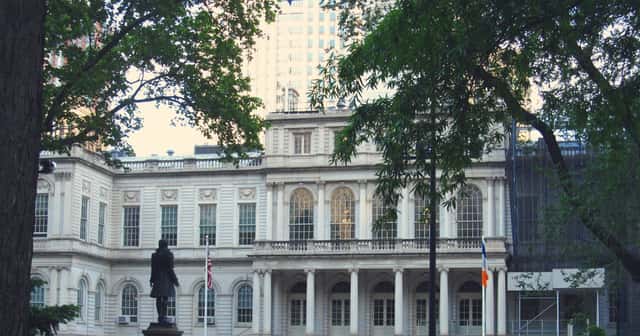
Photo: New York City Hall, May 2012, by Ken Lund, CC BY-SA 2.0, via Wikimedia Commons. Cropped; archival civic image.

Differing perspectives
Can an early nonprofit purchase opportunity strengthen housing preservation?
Each position is summarized as its supporters make it, with equal weight and in alphabetical order. A summary is not an endorsement; the evidence for each is weighed in the story above.
Address operating costs as well as ownership
Who holds it: New York Apartment Association CEO Kenny Burgos
In an October 23 interview, Burgos argues that changing a building’s owner does not resolve high operating costs and weak finances. He points to strain among nonprofit providers as well as private owners, questioning whether a purchase preference addresses the underlying resources needed to maintain housing.
In their words: Commercial Observer interview with Kenny Burgos, October 23 ↗
Create a route to lasting community ownership
Who holds it: New Economy Project and community housing advocates
New Economy Project supports COPA as a way to give community land trusts and other qualified buyers a real chance to acquire at-risk buildings. It links that opportunity to long-term affordability and housing stability, rather than leaving community buyers outside a fast-moving sales process.
In their words: New Economy Project October 22 statement ↗
READ BEYOND 567POLITICS
Alternate sources & perspectives
Independent coverage and primary evidence to help you compare arguments. A link is not an endorsement; perspective labels describe the linked material.
- primary evidence
official Introduction 905-A record ↗
New York City Council legislative record
Official record reviewed; distinguish a proposal, passage and implementation.
- primary evidence
Council's October 22 summary ↗
New York City Council
Official record reviewed; distinguish a proposal, passage and implementation.
- other perspective
New Economy Project's October 22 statement ↗
New Economy Project
Source reviewed for attributed position and relevant evidence; not a representative opinion survey.
- other perspective
interview reported by Commercial Observer on October 23 ↗
commercialobserver.com
Source reviewed for attributed position and relevant evidence; not a representative opinion survey.
- other perspective
Bisnow's October 22 reporting ↗
bisnow.com
Source reviewed for attributed position and relevant evidence; not a representative opinion survey.
Reviewed 2026-11-04. Sources reviewed November 4, 2026. No interviews, representative opinion poll, independent election call or government-data API pull is claimed. Legislative status and source-specific limitations are stated in body. The City Hall photograph is an archival civic image, with creator, license and crop credit supplied.