New York rent freeze puts tenant relief, building costs and process in focus
Order 58 applies a zero guideline to qualifying leases. Tenant advocates defend the evidence while small owners warn about rising operating costs.
New York City's rent freeze has reached the period when it affects qualifying leases, while the policy remains the subject of a court fight and a dispute over housing costs. The key distinction for readers is between the rule now published by the Rent Guidelines Board and the arguments made about whether that rule should stand.
Apartment and Loft Order 58 sets a zero-percent guideline adjustment for one-year and two-year apartment leases commencing from October 1, 2026, through September 30, 2027. It applies within the order's rent-stabilization framework; it is not a citywide freeze covering every apartment or every charge.
For our New York politics coverage, the policy poses two linked questions. How much relief does a zero adjustment provide to covered households? And how should the city judge claims that holding revenue steady will make it harder to maintain parts of the housing stock?
A zero guideline has a defined scope
The lease commencement window is central to the order. A reader should not assume that a guideline for leases beginning in that period automatically rewrites every lease already in effect. Nor does a two-year lease option mean the board has announced the rules for every lease beginning two years later.
The order also states that further adjustments may be authorized by law. That is a reason to avoid describing the policy as a universal ban on every possible rent change. A particular apartment's lawful rent can depend on facts and rules beyond the headline guideline.
This article explains the policy debate, rather than determining the lawful rent for an individual tenant. The official order is the starting point for the guideline, and apartment-specific disputes require the relevant lease, regulatory history and applicable state rules. A broad campaign slogan cannot replace those records.
The phrase rent freeze is also used for other programs. Assistance for qualifying seniors and people with disabilities follows a separate set of eligibility and benefit rules. It should not be confused with the board's annual guideline order simply because both are described with the same phrase.
Those distinctions have practical importance. A person who hears that all rents are frozen may expect relief outside the order's scope. A person who hears that a lawsuit exists may incorrectly assume the published rule has already been erased. Accurate reporting needs to avoid both shortcuts.
Tenant advocates defend relief and the board's evidence
In an August 14 statement, Legal Services NYC and The Legal Aid Society defend the freeze and seek dismissal of the landlords' challenge. They argue that the board had a substantial record of tenant hardship and housing finances to support its decision.
Their case is that a zero adjustment can provide meaningful relief to households struggling with rent burdens, and that the board acted within its discretion after a public process. Those are the advocates' positions in the dispute, rather than a judicial finding adopted by this article.
Relief should be described with a clear comparison. A freeze avoids a guideline increase that might otherwise have been allowed; it does not lower the existing rent by the amount a tenant already owes. A household may still face pressure from food, energy or other expenses even when its rent does not rise under this order.
An assessment of the policy should therefore examine both housing payments and the broader household budget. It should not treat a zero guideline as proof that every covered family is financially secure. The value of avoiding another increase can be real without resolving every source of hardship.
The effect can also differ across households. A fixed rent bill may represent very different shares of income for two tenants. That is a reason to examine the distribution of relief, not simply the number of apartments under an order.
Small owners argue that costs cannot be held still
Small Property Owners of New York's 2026 testimony urges the board to approve adjustments that reflect operating costs. In the underlying June 16 statement, board president Ann Korchak argues that older buildings cannot be maintained when expenses repeatedly rise faster than income.
That is a claim about the resources needed to preserve housing, not a calculation of the condition of every building. The testimony presents owners' argument for higher revenue. It does not, on its own, establish the finances of an individual property or prove that a particular repair cannot be made.
The useful response is to examine evidence at the right level. A citywide average may describe a broad trend while concealing buildings with unusually high costs or low income. An individual troubled building may show a serious problem without representing every owner.
Debt costs also need to be distinguished from operating expenses. A purchase price and financing structure can affect an owner's cash position, while routine expenses concern the work of running the property. Combining all costs into one number can make it harder to see what changed and why.
A sound debate should identify which costs are measured, the period covered and the properties included. It should explain whether a reported change reflects prices, a different mix of buildings or a change in accounting. Those details matter more than a claim that one headline percentage settles the issue.
The legal dispute concerns process as well as policy
The Fordham Housing Court Decisions Project's record of the September 16 order describes a challenge by Kenilworth Holdings and other landlords. It says the court allowed limited expedited discovery concerning communications between City Hall and the board, while reserving the merits of the challenge and the board's dismissal request.
That is a dated procedural account, not a final ruling on the rent freeze. The downloadable opinion was not accessible through the reviewed archive link, so this article does not quote the underlying decision or claim to have independently reviewed the full court file.
Commercial Observer's October 27 report describes the continuing court battle after the order began applying to qualifying leases. The report discusses disputes over communications and the board's independence. This article does not independently establish that no later filing or order exists.
The legal distinction matters. A court can allow evidence gathering without deciding that the disputed conduct occurred. A party can allege an improper process without having proved it. A motion or a discovery order should not be presented as a final decision invalidating the policy.
The board's members being appointed by the mayor also does not by itself decide the claim. The question in a process challenge is what the applicable law requires and what the evidence shows about the decision made. Political support for an outcome and an unlawful process are not interchangeable descriptions.
The evidence needs dates and limits
The board's explanatory statement sets out the context for the annual order and the material considered. Such records give readers a way to examine the board's reasoning rather than relying solely on statements from advocates on either side.
Housing finance data often describe an earlier period. A report published this year may rely on income and expense information collected before the latest change in costs. That does not make the report worthless, but it limits claims about conditions at the moment of publication.
Forecasts raise another issue. An estimate of future costs can help a board make a decision before every bill arrives. It is still a forecast. Later data should be used to assess its accuracy, while recognizing that an error in one projection does not automatically resolve every question about the final guideline.
The same standard applies to tenants' circumstances. Household hardship needs evidence about income, rent burdens and other costs. A story about one household can explain a problem in human terms, but it should not be treated as a representative measure of the entire regulated market.
Public debate becomes clearer when the parties identify their strongest evidence and its limits. That approach allows readers to see where the disagreement is factual, where it concerns a legal standard and where it reflects a choice about how to balance competing needs.
Maintenance remains a test after the vote
A policy intended to keep housing affordable should also be assessed alongside building conditions. A tenant does not benefit from a stable rent in a home with unresolved hazards. A claim that a freeze causes disrepair, however, needs evidence beyond the existence of a repair problem.
A review could follow violations, repair completion and building finances over time. It would need to account for problems that began before the order, changes in enforcement and other factors affecting costs. A simple before-and-after comparison may not isolate the guideline's effect.
Likewise, a favorable citywide trend should not erase serious failures in particular buildings. Residents need a way to raise those failures and obtain action under the rules that apply. The annual guideline debate does not replace the work of enforcing housing standards.
The local politics section follows those implementation questions as well as the court record. Our methodology separates a forecast, an attributed argument and an observed outcome. Our editorial standards also require procedural rulings and final judgments to remain distinct.
The published order supports a narrow, concrete account of the guideline. The broader verdict on relief, maintenance and legal process requires more records. Keeping those questions separate is the best way to make a heated housing debate useful to the people whose homes and buildings are at stake.
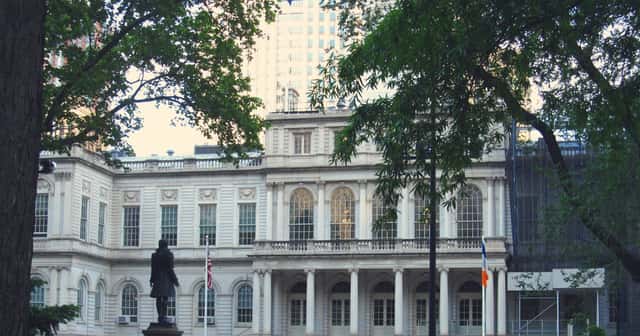
Photo: New York City Hall, May 2012, by Ken Lund, CC BY-SA 2.0, via Wikimedia Commons. Cropped; archival civic image.

Differing perspectives
How should New York weigh rent relief against the costs of maintaining housing?
Each position is summarized as its supporters make it, with equal weight and in alphabetical order. A summary is not an endorsement; the evidence for each is weighed in the story above.
Defend relief supported by the public record
Who holds it: Legal Services NYC and The Legal Aid Society
The tenant advocates defend the zero guideline as lawful relief supported by the board’s record of hardship and housing finances. They argue that the board considered evidence and testimony within its discretion, and seek dismissal of the landlords’ challenge to the order.
In their words: Legal Services NYC August 14 statement ↗
Let revenue reflect building operating costs
Who holds it: Small Property Owners of New York
SPONY’s June 16 testimony asks for rent adjustments that reflect rising costs. It argues that older buildings cannot be maintained, repaired and operated when expenses keep outpacing income, placing the long-term preservation of housing at the center of its case against holding revenue still.
In their words: SPONY 2026 Rent Guidelines Board testimony ↗
READ BEYOND 567POLITICS
Alternate sources & perspectives
Independent coverage and primary evidence to help you compare arguments. A link is not an endorsement; perspective labels describe the linked material.
- primary evidence
Apartment and Loft Order 58 ↗
rentguidelinesboard.cityofnewyork.us
Official record reviewed; distinguish a proposal, passage and implementation.
- other perspective
August 14 statement ↗
legalservicesnyc.org
Source reviewed for attributed position and relevant evidence; not a representative opinion survey.
- other perspective
Small Property Owners of New York's 2026 testimony ↗
spony.org
Source reviewed for attributed position and relevant evidence; not a representative opinion survey.
- primary evidence
Fordham Housing Court Decisions Project's record of the September 16 order ↗
ir.lawnet.fordham.edu
Official record reviewed; distinguish a proposal, passage and implementation.
- other perspective
Commercial Observer's October 27 report ↗
commercialobserver.com
Source reviewed for attributed position and relevant evidence; not a representative opinion survey.
- primary evidence
board's explanatory statement ↗
rentguidelinesboard.cityofnewyork.us
Official record reviewed; distinguish a proposal, passage and implementation.
Reviewed 2026-11-04. Reviewed November 4, 2026. Order 58 is the primary source for the published guideline. SPONY’s June testimony was retrieved from its original DOCX and text was extracted. The Fordham archive supplies a dated procedural summary; the underlying downloadable opinion was inaccessible. October 27 reporting was reviewed for later context, but the full current court docket was not independently reviewed. Allegations and procedural orders are not final merits findings. No representative survey or original interviews are claimed.