Great Highway debate leaves access, traffic and coastal costs to be tested
Proposition G proposed weekday vehicle access and weekend restrictions. The dispute turns on travel needs, park use, permits and the cost of changing the space.
San Francisco's Great Highway dispute reached the ballot again on November 3, but the policy questions reach beyond whether a road is open or closed. Proposition G would restore weekday private-vehicle access to the Upper Great Highway while keeping a weekend and holiday restriction. The choice also involves coastal permits, traffic safety, park access and the cost of changing the space again.
The official title and summary identifies the relevant stretch as Lincoln Way to Sloat Boulevard. That boundary matters. A claim about another section of the coast should not be treated as evidence about every part of the roadway covered by this measure.
This article explains what the measure proposes and what would have to be measured after the election; it does not independently certify or call the result. Our San Francisco politics desk is examining the competing needs of people who travel through the west side and people who use the space as a park.
The schedule is a substantive part of the proposal
Proposition G would allow private vehicles during the week, with the roadway restricted from Friday at 6 p.m. until Monday at 4 a.m. and on holidays. Authorized vehicles, including emergency and certain government vehicles, are treated differently from ordinary private cars. Those details appear in the official summary and legal text.
A weekday-weekend arrangement is not the same policy as either permanent private-vehicle access or a permanent car-free park. It gives different uses priority at different times. That can be described as a compromise, but the word alone does not show whether the schedule meets the needs of affected residents.
Someone who can visit a park only on a weekday may experience the change differently from a weekend visitor. A person making a daily cross-town trip may value a weekday road more than occasional recreation on the same pavement. The policy has to account for those different schedules rather than treat all users as interchangeable.
The physical design also matters. Features suited to an open recreation space may conflict with regular vehicle travel. A schedule printed in law does not by itself identify which installations stay, which move or how safely the transition occurs. Those are implementation decisions with costs and consequences of their own.
Supporters argue for a weekday transportation route
The Great Highway for Everyone campaign supports Proposition G as a way to move weekday traffic off neighborhood streets while retaining car-free recreation on weekends and holidays. Its case emphasizes the daily travel needs of west-side residents.
That is a policy argument worth evaluating independently of campaign labels. A roadway can serve people making essential trips, not only discretionary travel. Travel to work, school, care and appointments can involve constraints that a simple suggestion to drive less does not resolve for every household.
The relevant question is whether the proposed access actually improves those trips and what it does to other routes. Reopening one corridor may change traffic patterns elsewhere. The proper comparison would examine travel times, vehicle volumes, collisions and transit performance across a defined network, not just a single intersection selected because it supports a preferred conclusion.
Campaign claims about injury changes also require careful denominators. A rise in reported crashes may reflect changes in traffic volume, the period examined or other street alterations. A before-and-after comparison can identify a question to investigate without proving that one closure caused every subsequent change. This article does not adopt a campaign's causal percentage as an independent finding.
Opponents argue that the weekday park has value
The Save Sunset Dunes campaign opposes Proposition G, arguing that weekday vehicle access would remove important park uses and require costly physical changes. It views the existing space as a public amenity rather than simply an unused road.
That position also needs precise measures. A park can create value through exercise, social contact, access to open space and nearby business activity. Those benefits are not captured by a vehicle travel-time calculation. At the same time, an attendance count should distinguish repeat visits from unique visitors, and a business owner's experience should not automatically become a citywide estimate.
A resident who uses a nearby park several times a week is not less real because a counter records them repeatedly. But the repeated count cannot be described as the same number of different people. Sound reporting can recognize the importance of frequent use while stating what the measurement actually represents.
The San Francisco Public Press account documents how proponents and opponents frame the conflict differently. Its reporting helps identify the competing uses. It does not eliminate the need to check the underlying traffic, access and cost records when evaluating a numerical claim.
The business question also needs a defined comparison. A shop near the park may gain customers who arrive for recreation, while another business may depend on customers who find driving access easier. An interview can describe either experience but cannot establish the net change across the neighborhood. A stronger assessment would compare similar periods, identify how sales were measured and disclose whether the sample includes businesses that closed or declined to respond. That approach would not settle every value judgment about public space, but it would prevent a selected example from carrying more weight than its evidence allows.
Reopening would require more than a ballot result
The city would need a coastal development permit and might need other approvals to reopen the roadway to private vehicles. The official summary makes clear that changing the legal direction at the ballot is not the same as immediately satisfying those permit requirements.
This distinction matters for public expectations. A voter can support a proposal without controlling the timetable of a separate regulatory process. Officials should identify the approvals required, the agency responsible for each and the status of the application. A delay caused by a missing permit is different from a delay caused by a city budget decision.
Permit review can also produce conditions or a need for further study. Those conditions may affect cost and design. Describing a single early estimate as the final price can therefore mislead. The public should be able to see how the estimate changes and which new assumptions explain the difference.
The coast is also a place where agencies have overlapping responsibilities. A park, a road and a coastal resource can occupy the same area. The existence of more than one approval process is not proof of obstruction, but it does make clear explanations of authority especially important.
The cost estimate has separate capital and annual parts
The controller's fiscal analysis estimates about $9.8 million in one-time capital costs if the road opens to private vehicles, plus annual cost increases of roughly $500,000 to $1.9 million. The statement ties the range to operational choices and future funding decisions.
The distinction between a one-time expense and an annual expense is essential. Adding several years of operations to capital costs can be a useful comparison, but the period and assumptions must be stated. A five-year total is not an annual bill. A lower yearly maintenance figure does not include every cost of changing the site.
Sand removal and dune work contribute to the uncertainty. Weather, the desired level of road access and the money appropriated can change the actual expense. A road kept open to vehicles may require a different maintenance standard from a recreation space that can tolerate different conditions.
The analysis also identifies traffic signals and other changes as capital needs. Residents should be able to distinguish equipment that serves the proposed roadway from changes that would occur under another plan anyway. Counting the same improvement fully against two alternatives would distort the comparison; excluding a required improvement would do so in the opposite direction.
Access is more than choosing between cars and pedestrians
People with disabilities, older residents and families with young children may have varied needs in the same place. Some may depend on a vehicle to reach the coast. Others may benefit from a space without private traffic. Neither group can be represented accurately by assuming that one travel mode defines everyone with the same age or disability.
The useful public record would identify accessible routes, crossings, seating, transit connections and any shuttle service. It would explain the difference between getting to the area and moving within it. An accessible destination can still be hard to reach, and a convenient road can still create a difficult crossing.
Those details are part of the wider local politics section, where municipal choices often distribute benefits by time, place and mobility. A citywide vote settles the legal question placed before voters. It does not remove the need to address people whose daily needs remain unmet under the chosen arrangement.
No representative survey of residents' reasons for their votes was reviewed for this article. The competing views described here are documented campaign positions. Our editorial standards separate those sources from claims about the opinion of all San Franciscans.
The record to watch next is concrete: the official election determination, any permit activity, the adopted budget and consistent measurements of travel and park use. The 567politics methodology explains why those observations must remain separate from a forecast. The Great Highway debate will be better informed when each side's claimed benefit is tested against the same defined period and the same public evidence.
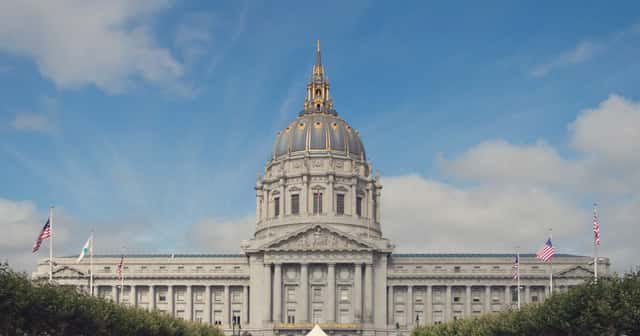
Photo: San Francisco City Hall, July 2015, by Supercarwaar, CC BY-SA 4.0, via Wikimedia Commons. Displayed with a crop; archival image.

Differing perspectives
Should the Upper Great Highway return to private-vehicle use on weekdays?
Each position is summarized as its supporters make it, with equal weight and in alphabetical order. A summary is not an endorsement; the evidence for each is weighed in the story above.
Keep the full-time park
Who holds it: Save Sunset Dunes campaign, sponsored by Friends of Sunset Dunes
A full-time car-free park provides recreation and open space during weekdays as well as weekends. Opponents argue that reopening the roadway would remove park features and create substantial costs, while the claimed transportation benefits require scrutiny against the available evidence.
In their words: Save Sunset Dunes Park ↗
Restore the weekday route
Who holds it: Great Highway for Everyone campaign
Weekday vehicle access would give west-side residents a more direct travel route and could shift traffic away from neighborhood streets. Supporters favor retaining car-free weekends and holidays while preserving the surrounding coastal amenities and recreational paths throughout the week.
In their words: Great Highway for Everyone ↗
READ BEYOND 567POLITICS
Alternate sources & perspectives
Independent coverage and primary evidence to help you compare arguments. A link is not an endorsement; perspective labels describe the linked material.
- primary evidence
Official title and summary ↗
City and County of San Francisco
Official legal or fiscal document reviewed; forecasts are not observed outcomes.
- primary evidence
Legal text ↗
City and County of San Francisco
Official legal or fiscal document reviewed; forecasts are not observed outcomes.
- other perspective
Great Highway for Everyone campaign ↗
Great Highway for Everyone
Organization’s own policy argument; does not represent a survey of residents.
- other perspective
Save Sunset Dunes campaign ↗
Save Sunset Dunes Park
Organization’s own policy argument; does not represent a survey of residents.
- independent analysis
San Francisco Public Press account ↗
San Francisco Public Press
Independent local reporting; preliminary results must not be treated as certified.
- primary evidence
Controller's fiscal analysis ↗
City and County of San Francisco
Official legal or fiscal document reviewed; forecasts are not observed outcomes.
Reviewed 2026-11-04. Reviewed November 4, 2026. Official legal/fiscal PDFs were retrieved from media.api.sf.gov, with source text archived alongside the draft. SF.gov HTML was bot-gated. No independent election call, voter-opinion survey, interviews or government-data API pull is claimed. Attributed campaign arguments are not facts about all residents. Public record and source-specific limitations appear in the body.