U.S. will drop South Africa and Rwanda from AGOA trade preferences on Jan. 1
Washington cites trade barriers, corruption and security. Pretoria says AGOA now carries a tenth of its U.S. exports; citrus growers warn of job losses.
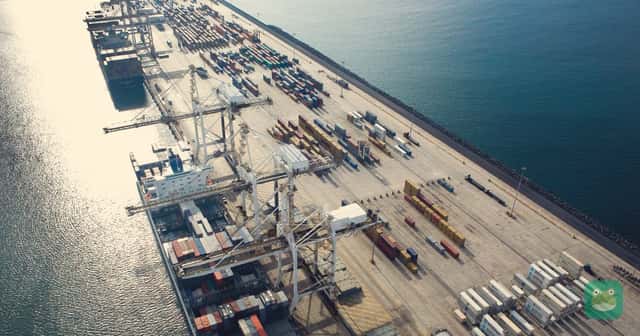
The United States will remove South Africa and Rwanda from the African Growth and Opportunity Act (AGOA) on January 1, 2027, ending their duty-free access to the U.S. market for products covered by the trade preference program. U.S. Trade Representative Jamieson Greer announced the decision on Monday, November 2, after President Donald Trump notified Congress and both governments of his intent to terminate their eligibility, according to a USTR statement.
South Africa has been the program's largest beneficiary. Its government says the direct trade hit is smaller than it once was, because AGOA's share of its exports to the United States has fallen sharply in the past year. Growers, unions and analysts say exporters of citrus, sorbets and macadamia nuts will still feel the loss. In Rwanda, the move adds to U.S. sanctions announced last week over its alleged support for the M23 rebel group in eastern Democratic Republic of Congo, which Kigali denies.
This article sets out what the United States decided and why, what is at stake in trade terms, how each side has responded, and what happens before the termination takes effect.
What Washington announced
AGOA, first passed in 2000, lets eligible sub-Saharan African countries ship more than 1,800 products to the United States without tariffs. That is on top of about 5,000 products under the separate Generalized System of Preferences, according to the South African government news agency. The law requires the president to review each country's eligibility every year.
Greer said the annual interagency review, led by his office, found that "the governments of Rwanda and South Africa are engaging in practices that are inconsistent with AGOA's eligibility criteria." He said those practices "include, but are not limited to, barriers that undermine American trade and investment and practices that pose a threat to U.S. national security and foreign policy interests in the region." He added: "The Trump Administration is working to ensure our African partners take the necessary steps to meet the eligibility criteria."
The statement's background section gave separate lists for each country. For South Africa, the administration said it was "deeply concerned by barriers to U.S. trade and investment, corruption, and threats to U.S. national security and foreign policy interests." For Rwanda, the list was longer: "trade and investment barriers, rule of law, political pluralism, internationally recognized worker rights, human rights, and threats to U.S. national security and foreign policy interests."
The statement did not give specific examples of the trade barriers or security concerns, DW noted. The dispute between the two governments predates this review. Reuters reported that the administration has also objected to South Africa's foreign policy, in particular its genocide case against Israel at the International Court of Justice. Israel denies the genocide allegation. Trump has also said that white South Africans face persecution; South Africa's government rejects that claim as false, Reuters and AFP reported.
Why the date is January 1
The timing follows the statute. The AGOA section of U.S. trade law covers a country that "is not making continual progress" on the program's requirements. In that case the president "shall terminate the designation," the law as compiled on GovInfo says. The cutoff is "effective on January 1 of the year following the year in which such determination is made." The requirements include a market economy, the rule of law and political pluralism. They also include "the elimination of barriers to United States trade and investment."
AFP reported that any removal requires 60 days' notice to Congress and to the country concerned. South Africa's trade minister, Parks Tau, said last week that if his country were removed it would have 60 days to address U.S. concerns "before any suspension, full or partial, could take effect," the government news agency reported. Monday's notice came about 60 days before January 1.
The program itself has been through two extensions this year. A law signed on February 3 extended AGOA "through December 31, 2026," USTR said in February. AFP reported on Monday that the program has since been renewed until the end of 2028, though it is still reviewed every year.
How much trade is at stake for South Africa
South Africa's government argues that the direct exposure is now limited. Tau said AGOA exports were worth about $1.7 billion in 2025, down from $4 billion in 2024. That is about 1 percent of South Africa's total exports, Daily Maverick reported. He said only 10 percent of South African exports to the United States entered under AGOA in 2025, down from 28 percent in 2024.
Source: Trade Minister Parks Tau, quoted by Daily Maverick
Show the numbers
| Year | Exports under AGOA |
|---|---|
| 2024 | $4bn |
| 2025 | $1.7bn |
Tau did not explain the drop in the statements we reviewed. He said the greater pressure on exporters comes from other U.S. tariffs: the Section 232 duties of 25 percent on autos and 50 percent on steel and aluminum, according to The National. "Those apply to every US trading partner, not to South Africa alone," he said. Eckart Naumann, an independent economist with the Trade Law Centre, told Daily Maverick that cars, steel and aluminum would not be affected by the AGOA decision. He said the special tariffs of 25 to 50 percent they already face far outweigh the margin AGOA provides.
A Reuters fact box said South Africa exported more under AGOA than any other country. It said the United States is South Africa's second-largest export market after China. Bilateral trade with the United States was about $29 billion in 2025, compared with about $36 billion with China.
The South African government also points to the wider relationship. Tau said more than 600 American companies operate in South Africa, supporting about 134,600 jobs, and that South Africa supplies 12 of the 50 minerals the United States regards as critical. Those figures come from the government and have not been independently audited for this article.
Which industries say they will be hurt
The sectors that rely most on the preference are agricultural. The Citrus Growers' Association of Southern Africa called the decision a serious blow. "A citrus grower cannot simply divert his crop to another market – markets have different phytosanitary requirements and consumer tastes. Entire orchards have been planted specifically for the US market," said its chairman, Gerrit van der Merwe, according to The National. He said it was "too early to say how many" jobs would go in the Western and Northern Cape, but that "some people will unfortunately lose their jobs." The association's chief executive, Boitshoko Ntshabele, said U.S. importers and distributors would also lose: "That entire value chain, on both sides of the Atlantic, is now under threat."
According to van der Merwe, citrus would now face the ordinary U.S. duty, generally 1.5 to 2.5 U.S. cents per kilogram, on top of an additional 12.5 percent tariff that applies to all citrus except oranges. Naumann said the impact would be sharper for sorbets, which he called "one of South Africa's success stories" with more than $33 million in U.S. sales in 2025. He said a 17 percent standard tariff waived under AGOA would be added on top of the 12.5 percent tariff, "effectively a 30% tariff disadvantage."
Matthew Parks, a spokesperson for the Congress of South African Trade Unions (Cosatu), said the federation was deeply concerned about agricultural and manufacturing jobs. He said many jobs had already been lost at factories and companies in Cape Town, Atlantis, Malmesbury and Tulbagh, among other places, according to Daily Maverick.
Not every analyst sees the change as severe. Wandile Sihlobo, President Cyril Ramaphosa's envoy on agriculture and land, said the decision was not a complete ban from the U.S. market, Daily Maverick reported. He estimated that some products now entering at 12.5 percent would face about 15.9 percent once AGOA lapses. "In 2025, the South African farming sector faced tariffs of around 30%. Still, agricultural exports to the US were strong," he said. Sihlobo works for the South African government, so his assessment is not independent of it.
What each side argues
The U.S. administration
The administration's case rests on the eligibility criteria themselves. In Greer's account, AGOA is conditional, and the review found "concerning and pervasive practices" in both countries. U.S. Ambassador Brent Bozell wrote on X that "it is regrettable that South African policies led to the termination of AGOA for South Africa," according to Daily Maverick. He called it "a predictable and preventable outcome resulting from the rejection by South Africa's government of real concerns raised by the U.S. Government." He added that he remained "hopeful that we can find a path forward." We were not able to locate and verify the original post's permalink, so it is quoted here from Daily Maverick rather than embedded.
South African publication The National listed a range of U.S. grievances: land expropriation legislation, equity rules for investors, the government's response to "Kill the Boer" rhetoric and farm safety, and Washington's wish for a more non-aligned foreign policy. Earlier U.S. steps have included halting aid, a refugee program for Afrikaners and the exclusion of South Africa from the U.S.-hosted G20 summit in December, The National reported. Daily Maverick read Tau's pledge to uphold South Africa's "transformation objectives" as a reference to U.S. demands that South Africa drop Black Economic Empowerment ownership rules for American investors.
The South African government
Pretoria says it negotiated in good faith and was given new demands late in the process. Tau said the government had "constructively responded" to U.S. concerns and made additional trade concessions, and that it was "unfortunate" Washington was raising issues that had not featured in earlier talks, according to AFP and Daily Maverick. Before the decision, he said South Africa had tabled proposals that preserve "our constitutional values and imperatives." He said they comply with World Trade Organization rules. But "it would not be appropriate to set out their detail in public," he said.
On Monday the trade ministry said AGOA "remains important to South Africa, but it does not constitute the totality of the economic relationship," and that it would support affected sectors. Last week Tau listed the markets the government is courting instead. They include the African Continental Free Trade Area, India, the European Union, the United Kingdom, Southeast Asia, Mercosur and China.
South Africa's opposition and business
Criticism inside South Africa is directed at both governments. The Democratic Alliance (DA), a partner in South Africa's coalition government, blamed the African National Congress (ANC) minister who runs foreign policy. Ryan Smith, the DA's international relations spokesperson, called the decision "a devastating blow" to agriculture, auto manufacturing and mining. He said it was "avoidable and completely unnecessary" and blamed International Relations Minister Ronald Lamola's "ideological obstinacy," Daily Maverick reported. That is a political charge; Lamola's office had not responded to it in the coverage we reviewed.
Anthony Carroll, a non-resident fellow at the Carnegie Endowment for International Peace and a member of a USTR advisory committee on Africa, said the decision penalized the wrong people. He told Daily Maverick that it is wrong to penalize businesses and workers who have no role in government policy. He said he had made that case to Congress. He warned the move could harm cooperation "in other areas such as critical minerals."
The removal also lands during South Africa's local election campaign, which 567 Politics covered as voting began.
Rwanda's case
Rwanda's exposure is much smaller. U.S. imports from Rwanda totaled $43.3 million in 2025, mostly coffee and tea, according to the Reuters fact box, which said official data does not show how much of that entered under AGOA. Trump suspended Rwanda's right to export clothing duty-free in 2018, during his first term, after Kigali raised tariffs on imported second-hand clothing.
The new decision follows sanctions announced on October 28. The Treasury Department sanctioned Rwanda's Ministry of Defence and the Zigama Credit and Savings Society for supporting M23. Treasury said the group "has illegally seized territory in eastern Democratic Republic of the Congo." Treasury Secretary Scott Bessent said Rwanda "must halt its support for M23 and withdraw its troops from eastern DRC." Treasury accused the Rwanda Defence Force of deploying "thousands of troops" in North and South Kivu.
Rwanda denies supporting M23. Before the sanctions, Foreign Minister Olivier Nduhungirehe told AFP that the situation in Congo "is mainly a Congolese issue." He added that "Rwanda must not be held as a scapegoat for what is happening in Congo forever." As of Monday evening Eastern time, we had not found a Rwandan government statement on the AGOA decision. Reuters reported that neither government had responded immediately; South Africa's response came later in the day.
The open questions before January 1
Three issues will decide how much the termination matters.
Whether talks change the outcome. The administration frames the decision as reversible if countries "take the necessary steps." South Africa says it remains open to talks. Neither side has said what specific concessions would be enough, and the 60-day window is short for a trade agreement.
How much trade actually moves. The government's figure that only 10 percent of exports to the United States used AGOA in 2025 suggests a limited aggregate effect. Citrus, sorbets and nuts face larger tariff changes, and growers say they cannot quickly redirect fruit grown for American buyers. Job loss estimates have not been published; the citrus association said it was too early to give one.
Whether Congress weighs in. AGOA was renewed with support from both parties, but the statute leaves eligibility decisions to the president. We found no statement from congressional trade committee leaders on Monday's decision before publication.
The decision is part of a wider pattern of trade pressure by the Trump administration, which 567 Politics tracks on the U.S. issues watchlist. Earlier today we also reported on Uganda's troop withdrawal from Somalia, another shift in the security and economic ties between African governments and their outside partners.
About this article
This article is based on the USTR statement, U.S. statute text, Treasury's sanctions release, South African government statements and reporting by Reuters, AFP, DW, Daily Maverick and The National. Trade figures are government figures and are attributed. The AP story on the decision could not be loaded. Our campaign-finance check for Donald Trump returned no verified snapshot; his funding does not bear directly on this trade decision. The U.S. government datasets in our research index, such as Treasury and labor statistics, do not include AGOA trade figures, so we relied on the official sources linked above. Read how we handle sources and contested claims in our editorial standards and methodology.
Differing perspectives
Should the United States remove South Africa and Rwanda from the AGOA trade preference program?
Each position is summarized as its supporters make it, with equal weight and in alphabetical order. A summary is not an endorsement; the evidence for each is weighed in the story above.
Blame Pretoria's diplomacy for an avoidable loss
Who holds it: South Africa's Democratic Alliance, through international relations spokesperson Ryan Smith
The DA argues that losing AGOA is a heavy blow to farming, agro-processing, car manufacturing and mining, and that it could have been avoided with sound economic diplomacy. It says International Relations Minister Ronald Lamola refused to make concessions and took a deliberately antagonistic public approach to Washington, so workers in AGOA-linked industries will pay for the governing party's foreign policy priorities.
In their words: Daily Maverick ↗
Keep South Africa in and settle disputes through talks
Who holds it: South Africa's government, including Trade, Industry and Competition Minister Parks Tau
Pretoria argues that it engaged constructively on every U.S. concern, tabled concessions through proper channels and met U.S. officials repeatedly, so new demands should be resolved by negotiation. It says trade is mutually beneficial: more than 600 U.S. companies operate in South Africa and it supplies 12 of the 50 minerals Washington deems critical. It says its proposals must respect its constitution, WTO rules and its own producers.
In their words: SAnews, South African Government News Agency ↗
Remove both countries from AGOA
Who holds it: President Donald Trump, U.S. Trade Representative Jamieson Greer and U.S. Ambassador to South Africa Brent Bozell
The administration argues that AGOA is a conditional benefit, not an entitlement, and that the law requires countries to remove barriers to U.S. trade and investment and avoid undermining U.S. security and foreign policy. It says its annual review found pervasive practices in both countries that fail those tests, including corruption and trade barriers in South Africa and rule-of-law and human rights concerns in Rwanda, and that the countries can regain access by meeting the criteria.
In their words: Office of the U.S. Trade Representative ↗
Spare exporters and workers from political disputes
Who holds it: The Citrus Growers' Association of Southern Africa and other South African exporters
Growers argue that trade penalties fall on farmers, farm workers and U.S. importers who have no say over government policy. They say orchards were planted for American buyers and cannot easily switch markets because of differing plant-health rules, and that towns such as Citrusdal depend on the U.S. trade. They want disputes between governments kept separate from the trade preferences that sustain these jobs.
In their words: The National (South Africa) ↗
READ BEYOND 567POLITICS
Alternate sources & perspectives
Independent coverage and primary evidence to help you compare arguments. A link is not an endorsement; perspective labels describe the linked material.
- primary evidence
Ambassador Greer issues statement on President Trump's intent to terminate Rwanda and South Africa from AGOA ↗
Office of the U.S. Trade Representative
The decision and the stated reasons for each country.
- primary evidence
African Growth and Opportunity Act (compilation as amended) ↗
U.S. Government Publishing Office
Statutory eligibility criteria and the January 1 termination rule.
- primary evidence
Statement on the reauthorization of the African Growth and Opportunity Act ↗
Office of the U.S. Trade Representative
February 2026 extension of AGOA.
- primary evidence
Treasury sanctions Rwanda's Ministry of Defence over M23 support ↗
U.S. Department of the Treasury
October 28 sanctions that preceded the AGOA decision.
- other perspective
SA ready for AGOA eligibility decision ↗
SAnews (South African Government News Agency)
South African government's position and trade figures before the decision.
- independent analysis
What now? Experts weigh in after Trump boots SA from AGOA ↗
Daily Maverick
Reactions from Tau, the DA, Cosatu, citrus growers and trade economists.
- other perspective
US moves to remove South Africa from AGOA from January 2027 ↗
The National (South Africa)
Citrus industry reaction and a list of U.S. grievances.
- independent analysis
US to suspend South Africa and Rwanda from duty-free trade access ↗
Reuters via CNBC Africa
Wire report on the decision and diplomatic context.
- independent analysis
What does the loss of US trade benefits mean for South Africa and Rwanda? ↗
Reuters via CNBC Africa
Trade data for both countries.
- independent analysis
US to exclude South Africa, Rwanda from Africa duty-free trade deal ↗
AFP
Notice rules, program extension to 2028 and Rwanda's earlier comments.
- independent analysis
US to drop South Africa, Rwanda from duty-free trade initiative ↗
DW
Background on AGOA and South Africa's response.
Reviewed 2026-11-02. Sources chosen by hand after opening each page. The AP report could not be loaded. No primary statement from the Democratic Alliance or the Citrus Growers' Association was found on their own sites; their words are quoted via South African outlets.