Authors and Alabama readers sue state library board over rule on transgender content in youth sections
The suit names board chair John Wahl, the GOP nominee for lieutenant governor on Tuesday's ballot. He says the rule moves books, not bans them.
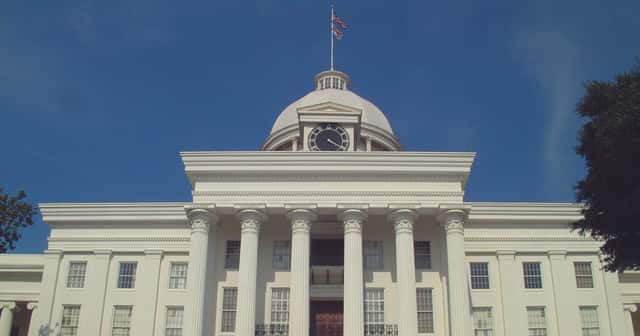
Three authors of young-adult novels, three Alabama library patrons and a statewide reading group have sued the board that hands out state money to Alabama's public libraries. They say its newest rule punishes libraries that put books about transgender people in children's and teen sections. The suit names board chair John Wahl, who is on Tuesday's ballot as the Republican nominee for lieutenant governor.
The complaint, Rosewater v. Executive Board of the Alabama Public Library Service, was filed Oct. 30 in federal court in Montgomery. It asks a judge to block the rule. The plaintiffs argue that it discriminates by content, sweeps in far too much and is too vague to follow, in violation of the First and Fourteenth Amendments.
Wahl and the board majority have defended the policy as a way to give parents more say over what children read. They say it moves books rather than removing them. The suit lands on Election Day, as Alabama voters pick a governor and lieutenant governor who will help shape the board's future.
What the rule says
The Alabama Public Library Service, known as APLS, is a state agency. Its board sets the rules a local library must follow to receive state aid. The money is split among libraries by population.
On Nov. 20, 2025, a board majority voted to change one of those rules. The new text says, "Under this rule, any materials regarding transgender procedures, gender ideology, or the concept of more than two biological genders shall be considered inappropriate for children and youth." Under other parts of the same rule, a library must have written policies that keep material "deemed inappropriate for children [and] youth" out of children's and young-adult collections. A library that does not comply loses its eligibility for state aid.
The rule does not define "gender ideology" or "transgender procedures." That gap is at the center of the vagueness claim. The complaint says many well-known books could be swept in. It cites Louisa May Alcott's Little Women, in which Jo laments "not being a boy." It cites Shakespeare's Twelfth Night, where Viola disguises herself as a young man. And it cites Every Day, a 2012 young-adult novel about a spirit that wakes up each day in a different person's body, male or female.
Who is suing
The three authors live outside Alabama. Kit Rosewater, of New Mexico, wrote Buried Feelings. Page Powars, of New York, wrote But I Hate Him. Phoenix McDonald, of Oregon, wrote The Hidden Continent. Each book is marketed to readers under 18 and includes a transgender character, according to the complaint.
The suit says the Gadsden Public Library declined in 2026 to buy all three books because their content fell under the rule. Three members of Read Freely Alabama, Amber Geislinger, Karen McCord and Jenny Quattlebaum, had asked the library to buy them. The complaint says each was told the books could not be acquired because of the rule.
Read Freely Alabama says it has more than 3,300 members. It describes itself as a volunteer group that opposes censorship in Alabama libraries. The plaintiffs are represented by the Birmingham firm Wiggins Childs and by Democracy Forward, a Washington-based legal group.
Gadsden's library director, Craig Scott, told AL.com, "We've been barred from ordering books that our patrons have requested." AL.com reported that it sought comment from APLS, Wahl and board member Amy Minton.
How the board got here
The complaint traces the policy back nearly three years. In January 2024, Attorney General Steve Marshall issued an opinion at APLS's request. According to the complaint, he concluded that the agency could not directly control which books libraries label age-inappropriate. But it could attach conditions to state money. The opinion added that "[s]uch regulations must not induce libraries to violate the First Amendment."
AL.com has reported that a 2024 letter from Gov. Kay Ivey set off the board's changes. In July 2024, the board amended its funding rule to require written selection policies. In late 2025, it proposed the language now in dispute. The complaint says comments ran through Oct. 14, 2025, a public hearing was held Oct. 21, and more than 6,100 comments favoring the change arrived by the last day. It also says the Alabama Republican Party sent letters urging supporters to back the rule.
1819 News reported after the vote that board members Ronald Snider and Angelia Stokes cast the only no votes. It also reported that no one spoke in favor of the rule at the hearing.
- Jan. 30, 2024Attorney general's opinion says APLS may set funding conditions that do not violate the First Amendment
- July 2024Board amends funding rule to require written selection policies
- Oct. 21, 2025Public hearing on the transgender-content definition
- Nov. 20, 2025Board majority adopts the definition
- Jan. 15, 2026Board strips state funding from the Fairhope Public Library
- June 18, 2026APLS tells libraries to submit policies before the fiscal year
- Oct. 1, 2026Fiscal year 2027 begins and the rule takes effect
- Oct. 30, 2026Authors, patrons and Read Freely Alabama sue
Source: Rosewater v. APLS complaint, Alabama Political Reporter
The board has already enforced its rules. On Jan. 15, 2026, it voted to strip state funding from the Fairhope Public Library. The complaint says Fairhope had refused to move books about consent and child trafficking out of its teen section. On June 18, APLS emailed libraries telling them to submit their collection policies for review. To stay eligible for fiscal 2027 money, the complaint says, libraries had to do so before Oct. 1.
The Alabama Political Reporter reported that the rule took effect Oct. 1 and that libraries can keep full funding if they comply by June 2027.
What is at stake for libraries
The complaint says Alabama has more than 220 public libraries and many depend heavily on state aid. It says Jefferson County's public libraries drew nearly a quarter of their revenue from state funding in fiscal 2024. Libraries use the money for programs, books, supplies and staff pay, the suit says.
Local library boards have traditionally chosen their own books under state law, the complaint says. The plaintiffs argue the state is using its purse to override those choices based on viewpoint. The attorney general's 2024 opinion, by contrast, said the agency may attach conditions to state aid. And Wahl has said the rule leaves the books in the library, only on different shelves.
What the board's chair has said
Wahl spoke to 1819 News after the November 2025 vote. "We don't want to ban a book," he said. "We're not taking books out of the library. We're saying, 'Let's move the content out of youth sections, move it to the adult section where parents can make the decision.'" He also said that "sexuality is a deeply personal subject" and that "the goal of the APLS board is to put parents back in the driver's seat." The outlet also reported that tiered library cards came up as part of the board's discussion of parental control.
Snider, one of the two no votes, offered a different view to AL.com. He said he has been "in opposition on many of the actions taken by the board restricting access," and called it "micro-managing on decisions that should be made by local libraries."
What the plaintiffs say
The plaintiffs laid out their case in a Democracy Forward release. The release describes the rule in practice. Libraries cannot acquire new material marketed to readers under 18 if it matches the definition, it says. Matching books already on the shelves must move to the adult section.
"The APLS Board's own subjective judgments about what is appropriate should not determine what materials all Alabamians can access," said Angie Hayden, a co-founder of Read Freely Alabama. "That is not protecting children or parental rights. It is imposing government decisions on private family matters."
Rosewater said Buried Feelings was named a Junior Library Guild Gold Standard Selection. "But because the book features a transgender love interest, APLS has censured the title and prevented it from being in circulation," she said. "Families in Alabama deserve to decide what books their own children have access to."
Powars said But I Hate Him "is not a book about being transgender." She described it as "a sweet romance that happens to feature a transgender character." McDonald said The Hidden Continent is the third book in a trilogy that includes characters with disabilities, of different races and with LGBTQ identities. Excluding it, McDonald said, "affects the readership for the entire trilogy."
Skye Perryman, Democracy Forward's president, said APLS "has begun compelling libraries to remove and exclude books from their shelves." Both sides, then, frame their case around parents' rights. The board says parents should decide what children see in youth sections. The plaintiffs say families, not a state board, should decide what their children read.
The suit asks for a declaration that the rule is unconstitutional, preliminary and permanent injunctions, and legal fees.
The election angle
Wahl's role makes the case part of Tuesday's vote. He leads the board as its chair while running for lieutenant governor, the state's second-highest office. Ivey, whose 2024 letter AL.com says started the board's changes, is term-limited and leaves office in January.
The case also joins a national debate over transgender issues in schools and public institutions. Voters in several states are deciding ballot measures on transgender students in school sports today. Federal agencies have moved on related policy, including a recent HHS rule on gender dysphoria under Section 504. In Kansas, a new law on transgender residents' driver's licenses has raised voter ID questions this fall.
The plaintiffs here focus on the state funding condition and the rule's undefined terms, not on any single book's removal. They have asked for a preliminary injunction, which would block the rule while the case goes on. Libraries that want to keep full state aid face the June 2027 compliance date reported by the Alabama Political Reporter.
Funding disclosure
This story discusses Ivey and Marshall in a policy context. Neither 567 Politics profile has a verified campaign-finance snapshot, and both raise money for state office under Alabama law rather than through the Federal Election Commission. We have not reviewed their state filings, or Wahl's, for this story. See our methodology for how we handle funding data.
Differing perspectives
Should Alabama condition state library aid on keeping material about gender identity out of children's and teen sections?
Each position is summarized as its supporters make it, with equal weight and in alphabetical order. A summary is not an endorsement; the evidence for each is weighed in the story above.
Block the rule in court
Who holds it: Authors Kit Rosewater, Page Powars and Phoenix McDonald; Read Freely Alabama; Democracy Forward
Opponents say the rule singles out books with transgender characters, uses undefined terms librarians cannot apply, and keeps popular, award-winning titles away from young readers who request them. They say it costs authors sales, overrides family choices with a state board's judgment and violates the First and Fourteenth Amendments, so a federal court should block it.
In their words: Democracy Forward ↗
Keep the rule
Who holds it: APLS board chair John Wahl and the board majority
Supporters say parents, not library staff, should decide when children encounter material on gender and sexuality, which they call a deeply personal subject. They say the rule does not ban or remove any book. It moves such material from youth sections to adult sections, where parents can choose it, and attaches conditions to state money as the attorney general said the agency may do.
In their words: 1819 News ↗
Leave shelving to local libraries
Who holds it: APLS board member Ronald Snider; Gadsden Public Library director Craig Scott
This view holds that local library boards and staff, who know their own communities, should decide how to shelve and buy books. It says the state board has been micro-managing decisions that belong to local libraries and restricting access through a series of actions, and that funding rules should support local libraries rather than direct their collections.
In their words: AL.com ↗
READ BEYOND 567POLITICS
Alternate sources & perspectives
Independent coverage and primary evidence to help you compare arguments. A link is not an endorsement; perspective labels describe the linked material.
- primary evidence
Complaint, Rosewater et al. v. Executive Board of the Alabama Public Library Service, No. 2:26-cv-00916 (M.D. Ala. Oct. 30, 2026) ↗
U.S. District Court for the Middle District of Alabama (via Democracy Forward)
The 19-page complaint with the rule text, the plaintiffs, the rulemaking history and the relief sought.
- right argument
'Parents back in the driver's seat': APLS chairman Wahl applauds rule change on gender ideology in children, teen library collections ↗
1819 News (Erica Thomas)
Board chair John Wahl's case for the rule after the Nov. 20, 2025 vote, and the vote count.
- left argument
Authors and Parents Unite to Oppose Alabama Library Censorship ↗
Democracy Forward
Statements from the three authors, Read Freely Alabama and Democracy Forward explaining their challenge.
- independent analysis
John Wahl, Alabama library board sued over transgender book restrictions ↗
AL.com (Williesha Morris)
Report on the filing with comments from board member Ronald Snider and Gadsden library director Craig Scott.
- independent analysis
Read Freely, authors sue APLS over rule barring transgender content in youth sections ↗
Alabama Political Reporter (Jacob Holmes)
Report on the suit with the rule's Oct. 1 effective date and the June 2027 compliance window.
Reviewed 2026-11-03. discover_politics_sources returned only general Alabama pages, so sources were selected by hand and opened on Nov. 3, 2026. No statement from APLS, Wahl or the state in response to the lawsuit was found by deadline; the board's position is represented by Wahl's November 2025 interview. The Alabama Reflector and AP reports could not be opened. Attorney General opinion 2024-016 was read only as quoted in the complaint. No representative poll of Alabamians on this rule was found.