Kansas votes under a law that invalidated transgender residents' driver's licenses
SB 244 defines sex and gender as sex at birth. State officials say mismatched IDs cannot be used to deny a vote, while researchers and voters warn of problems at the polls. A court ruling is pending.
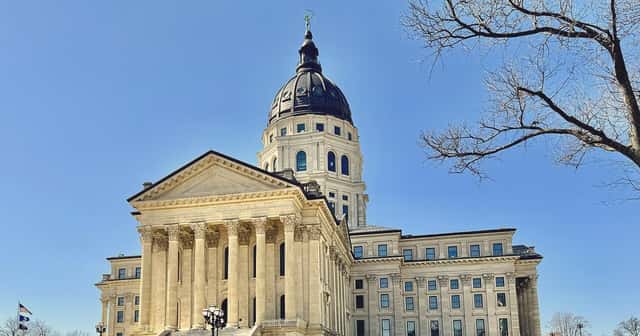
Kansas voters go to the polls on Tuesday under a new state law that changed what a driver's license can say about gender. Senate Bill 244 defines "sex" and "gender" in state law as a person's biological sex at birth. It invalidates Kansas driver's licenses and birth certificates that list a different one. It also limits which restrooms people may use in government buildings. State officials say a mismatch between a voter's ID and sex at birth cannot be used to deny a vote. Transgender voters, lawyers and a research institute at UCLA say the law could still cause problems at the polls.
This story sets out what the law does, how many people it affects by one academic estimate, what state officials have said about voting, and where the court fight stands. It covers a policy dispute with two clear sides, and it also covers a factual question that has no answer yet: whether any voter will be turned away.
What SB 244 does
Kansas lawmakers passed the bill early in 2026. Gov. Laura Kelly, a Democrat, vetoed it on Feb. 13. The Republican-led legislature overrode her veto on Feb. 18, and the text was published in the Kansas Register on Feb. 26. The law has several parts.
- Definitions. In state law, a person's "sex" or "gender" means "biological sex, either male or female, at birth." The bill defines a female as a person whose reproductive system is developed to produce eggs, and a male as one developed to fertilize them.
- Driver's licenses. Any license issued before July 1, 2026, that lists a gender "contrary to" that definition is invalid. The state sends written notice. The holder must surrender it and get a new one with the sex listed at birth.
- Birth certificates. Certificates issued before July 1, 2026, that conflict with the definition are also invalid.
- Future changes. The law bars changing the marker on a license or birth certificate to match gender identity.
- Restrooms and similar spaces. Multiple-occupancy private spaces in government buildings, such as restrooms and locker rooms, must be designated for one sex. A government entity that breaks the rule faces civil penalties of $25,000 for a first violation and $125,000 for each later one. A person who breaks it gets a warning first. A second violation brings a $1,000 civil penalty, and a third is a class B misdemeanor. The law also lets a person who says they were harmed by a violation sue, and the person can seek either actual damages or $1,000 in set damages.
- Sex-based laws. A clause says laws that distinguish between the sexes face "intermediate" constitutional scrutiny, a lower bar than the strict test used for race.
The law grew out of an earlier fight. In 2023, Kansas passed Senate Bill 180, known as the Women's Bill of Rights. It said "sex" in state law means biological sex at birth. Attorney General Kris Kobach, a Republican, sued the state's revenue department for letting transgender people change the marker on their licenses. A district court agreed with him. The Kansas Court of Appeals reversed that ruling on June 13, 2025, and the Kansas Supreme Court declined to hear the case on Sept. 29, 2025. That is the history Kobach cited when he asked the legislature for a stricter law, and SB 244 followed.
How many people are affected
The Williams Institute at UCLA School of Law published an analysis of SB 244 in October. It is an estimate, not a count. The researchers, Elana Redfield and Jody Herman, used the 2022 U.S. Transgender Survey and national population estimates.
They estimate that 22,400 adults and 7,300 youths aged 13 to 17 in Kansas identify as transgender. About 71 percent of the adults reported holding a driver's license, which works out to about 15,900 people. Of license holders, 21 percent had changed the gender marker. That gives about 3,300 adults whose licenses the law likely affects. A separate estimate puts about 3,100 transgender adults born in Kansas as holders of amended birth certificates.
Source: Williams Institute, Impact of SB 244 (October 2026)
Show the numbers
| Group | People |
|---|---|
| Transgender adults in Kansas | 22,400 |
| Adults with a Kansas driver's license | 15,900 |
| Estimated eligible to vote in Nov. 2026 | 14,300 |
| Licenses likely invalidated | 3,300 |
| Amended birth certificates likely invalidated | 3,100 |
The Institute says these numbers are probably low. The license estimate leaves out people under 18. The institute also warns that its survey data were collected before the law took effect.
How many people have actually received notices is less clear. The Kansas Reflector, a nonprofit newsroom, reported in June that the Kansas Department of Revenue sent about 300 letters in a first wave in February and that more were coming. The Reflector found that some transgender residents' licenses had been invalidated and others had not. The 19th, another nonprofit newsroom, wrote in October that "thousands" of people received letters. The two reports differ, and the department has not published a total. The department's general counsel declined to comment to the Reflector, citing the lawsuits.
The case for the law
Supporters have made their argument mostly in legislative testimony. On Jan. 13, 2026, Kobach testified for House Bill 2426, a companion bill that took the same approach. SB 244 itself came later, so his words are about the policy and not about SB 244's final text. He said the bill's "purpose is very simple—to correct an error committed by the Kansas Court of Appeals, and to restore the Legislature's intent." He argued that the court had "twisted" the 2023 law.
Kobach gave two practical reasons. First, "law enforcement relies on accurate identification documents for public safety," and "inconsistent gender markers on driver's licenses can complicate interactions during traffic stops, in the execution of arrest warrants, and in correctional facilities." Second, vital statistics used for public health "must be grounded in objective biology and history to maintain reliability." He also said the bill would "end litigation that would otherwise continue for several more years." His full statement is on the Kansas Legislature's site.
Republican Sen. Roger Marshall, who is on the ballot Tuesday, has pressed the same theme in his campaign. MS NOW reported that in a recent debate he said Democrats under Sen. Chuck Schumer "are pushing this transgender ideology" on Kansans. Marshall's remark was about national Democrats, not SB 244 by name.$
The case against the law
The American Civil Liberties Union filed Doe v. State of Kansas in Douglas County District Court on behalf of two transgender men. It argues SB 244 violates the Kansas Constitution's protections for personal autonomy, privacy, equality, due process and free speech. Harper Seldin, a senior staff attorney at the ACLU, said invalidated IDs "threatens to out transgender people against their will every time they apply for a job, rent an apartment, or interact with police." He called the law "a transparent attempt to deny transgender people autonomy over their own identities and push them out of public life altogether."
A second suit came from Jamie Miller of Lawrence, a transgender woman who received a letter in April. She argues that invalidating her license violates her rights to privacy and due process, and that changing her license to "male" would be fraud. Her lawyer, David Brown, told the Reflector that the loss of a valid license limits her ability to take her disabled daughter to medical visits. State Rep. Abi Boatman, a Wichita Democrat, told the Reflector that she sees "a disconnect between the law that was passed and the way it's being enforced."
The ACLU's case page lists a preliminary injunction hearing that began Sept. 29 and proposed findings filed Oct. 21. This article found no ruling in the sources it reviewed. A judge could still rule after the election.
What officials say about voting
Kansas requires voters to show photo ID when voting in person. The Secretary of State's photo ID page lists acceptable documents. They include a Kansas or out-of-state driver's license or ID card, a U.S. passport, a military ID, a tribal ID and a student ID from a Kansas college. A voter without a valid ID can cast a provisional ballot and show ID before the county canvass. The page does not say whether an invalidated license still counts, and this article found no written guidance on that question.
The state's position comes from records obtained by the group American Oversight and reported by the Kansas Reflector on Sept. 16. In July, Roger Lomshek, treasurer of the Kansas Republican Party, called the Secretary of State's office. He asked why SB 244 was not being applied to the voter registration of Avery Rowland, a transgender Democrat running for the Kansas House. The state elections director, Bryan Caskey, wrote that he did not agree with Lomshek's reading. The office's general counsel, Clay Barker, wrote in an email that the law "mandates the use of biological sex at birth anywhere" the word gender appears, including voter forms. He added that "the statute does not place a duty on the county election officer to verify" such information. The duty falls on the voter, he wrote.
Whitney Tempel, a spokeswoman for the Secretary of State, told the Reflector that "gender discrepancies can never be a basis for denying anyone the right to vote." Danedri Herbert, a spokeswoman for Kobach's office, said "an individual's sex is entirely irrelevant to being able to vote or to file to run for the Legislature." Lomshek did not respond to the Reflector's requests for comment. Rowland told the Reflector that she follows the law as written and that her own voter file lists "male."
American Oversight's director, Chioma Chukwu, said the records show the Secretary of State's office "privately analyzed how this law's requirements could impact voters, while publicly maintaining that the law had nothing to do with the office's responsibilities." She said Kansans "should not have to rely on informal assurances."
What voters say, and what researchers warn
The Williams Institute estimates that about 14,300 transgender Kansans can vote in November. It calculates that about 59 percent of them, or 8,400 people, lacked a government photo ID with their correct name and gender even before SB 244. It says the law is "likely to exacerbate barriers to voting." It points to other research linking ID-change limits and strict voter ID laws with more problems for transgender voters. These are model-based estimates. They show how many people could face a mismatch, not how many will.
Voters interviewed this fall described a mixed picture. The 19th spoke with four transgender women. All voted in the August primary without trouble and planned to vote again. Jessie Lawson of Wichita told the outlet she reluctantly changed her license because she did not want anything to stop her from voting. Hazel Krebs of Westwood never received a letter and still carries a license marked "F."
MS NOW followed two voters in Lawrence on early-voting day. Both cast ballots without harassment. One had changed his marker back after getting a letter. The other never received a letter and still has "male" on his ID. One of them, Kellogg, said he worried that if a poll worker scrutinized an ID marked female, he would not know what recourse he had. Mark Johnson, a University of Kansas law professor, told MS NOW that well-meaning poll workers might see a mismatch and stop a voter. He said he expects some people not to vote as a result. Douglas County Clerk Jamie Shew told MS NOW that rumors and misinformation about Election Day have been spreading more than ever this year.
These accounts are anecdotes from a handful of voters. They show the concerns people hold and the experiences some have had. They do not show how many voters will face trouble Tuesday. The 19th also noted that so far, mismatched IDs "don't seem to be a problem" at the ballot box, calling it "a rare good sign." Both the worry and the early reassurance can be true at once, because the first general election under the law is the first real test.
The election context
The law has become part of the campaign. Democrat Adam Hamilton, a pastor, is challenging Marshall in the U.S. Senate race. Our report on the final Kansas polls found Hamilton ahead by 1 to 5 points across surveys, and the coverage of the Trump rallies in Iowa and Kansas reports on Trump's final-weekend rallies in both states. Hamilton told MS NOW that "I love trans people" and that opponents have "taken a small group of people, turned them into a campaign issue."
Nationally, polls show Democrats ahead on the congressional ballot, according to our review of the final national polls. Kansas is one of many states where officials and courts are managing Election Day rules. Our report on the Justice Department's election monitors describes limits states have set, and the final-week voting overview covers deadlines. In Virginia, voters will decide on a gender-related amendment of a different kind, as our explainer on Questions 1 and 2 shows.
What is still unknown
- Whether a judge will block any part of SB 244, and when. The injunction hearing is over, and no ruling was found.
- How many licenses have actually been invalidated. Reports range from hundreds to thousands, and the state has not published a figure.
- Whether any voter will be challenged or turned away over a mismatched ID. State officials say gender cannot be a basis for denying a vote. Written guidance on invalidated licenses was not found.
- How the Williams Institute's survey-based estimates compare with the real counts. They rest on 2022 survey data from before the law.
- How the law will affect the Senate race, if at all. No poll reviewed for this article asked about SB 244.
The two sides see different problems. Supporters see a clean, uniform rule that matches documents to biology and ends a long legal fight. Opponents see a rule that removes valid documents from people who relied on the state's earlier policy. Courts will decide the legal question. Election officials and voters will decide the practical one on Tuesday.
Differing perspectives
How should Kansas apply SB 244's sex-at-birth rules for IDs, and do they affect voting?
Each position is summarized as its supporters make it, with equal weight and in alphabetical order. A summary is not an endorsement; the evidence for each is weighed in the story above.
Block or overturn SB 244
Who holds it: ACLU, ACLU of Kansas and transgender Kansans who sued
The ACLU argues that SB 244 violates the Kansas Constitution's protections for personal autonomy, privacy, equality, due process and free speech. Attorney Harper Seldin said the invalidation of state-issued IDs "threatens to out transgender people against their will every time they apply for a job, rent an apartment, or interact with police," and called the law "a transparent attempt to deny transgender people autonomy over their own identities." The suit asks a court to block enforcement.
In their words: ACLU, Doe v. State of Kansas case page ↗
Keep and enforce SB 244
Who holds it: Attorney General Kris Kobach and the Republican legislative majority
In testimony on a companion bill, Kobach said the purpose was "to correct an error committed by the Kansas Court of Appeals, and to restore the Legislature's intent." He argued that law enforcement relies on accurate identification, since inconsistent gender markers "can complicate interactions during traffic stops," and that vital statistics "must be grounded in objective biology and history to maintain reliability." He said the approach would restore uniformity to state documents.
In their words: Kansas Legislature, House Judiciary Committee testimony of Attorney General Kris Kobach, Jan. 13, 2026 ↗
Voting is not affected by the ID rules
Who holds it: Kansas Secretary of State's office and Attorney General's office
State officials say SB 244 does not give election officers a role in policing gender on voter files. A Secretary of State spokeswoman said "gender discrepancies can never be a basis for denying anyone the right to vote." An Attorney General spokeswoman said "an individual's sex is entirely irrelevant to being able to vote or to file to run for the Legislature." The office's counsel wrote that the statute places no duty on county officers to verify registration entries.
In their words: Kansas Reflector, Sept. 16, 2026 (quoting state officials and agency records) ↗
READ BEYOND 567POLITICS
Alternate sources & perspectives
Independent coverage and primary evidence to help you compare arguments. A link is not an endorsement; perspective labels describe the linked material.
- primary evidence
SB 244 as published in the Kansas Register (veto, override and text) ↗
Kansas Secretary of State
Full enacted text, including definitions, ID invalidation and penalties.
- independent analysis
Impact of SB 244 on transgender Kansans ↗
Williams Institute, UCLA School of Law
Population estimates for licenses, birth certificates and voting; method uses 2022 survey data.
- right argument
Testimony of Attorney General Kris Kobach on HB 2426 ↗
Kansas Legislature
The state's case for matching documents to sex at birth, in the proponent's own words.
- left argument
Doe v. State of Kansas ↗
ACLU
The challengers' legal claims and court filings, including hearing transcripts.
- independent analysis
Records show Kansas election officials refused call to police gender markers on voter files ↗
Kansas Reflector
Agency records and statements on whether SB 244 applies to voter registration.
- independent analysis
Kansas has invalidated some transgender residents' licenses, but not all ↗
KCUR / Kansas Reflector
Implementation by the Department of Revenue and the Miller lawsuit.
- other perspective
Mismatched IDs aren't stopping trans Kansans from voting ↗
The 19th
Accounts from four transgender women on voting under the law.
- other perspective
Some trans voters won't have valid IDs on Election Day as GOP upends gender marker rules ↗
MS NOW
Voter accounts, Sen. Hamilton and Sen. Marshall remarks, and a law professor on poll workers.
- primary evidence
Kansas photo ID requirements for voting ↗
Kansas Secretary of State
List of acceptable photo IDs and provisional-ballot rules.
Reviewed 2026-11-02. Every source below was opened and read on Nov. 2, 2026. The discovery tool returned broad search pages that were not used. Gaps: Kobach's testimony concerns House Bill 2426, a companion bill, not SB 244 itself, and no statement from the bill's legislative sponsors was located. No ruling from the Douglas County court was found as of Nov. 2. Reports differ on how many licenses were invalidated (the Reflector said about 300 letters in a first wave; The 19th said thousands) and the Department of Revenue has not published a total. The Williams Institute figures are survey-based estimates. The Secretary of State's photo ID page does not say whether an invalidated license counts as valid ID, and no written guidance on that was found.