Parscale’s firm reports $40.5 million for Israel’s U.S. media campaign
Justice Department filings trace payments to Trump’s former campaign manager’s firm. FEC records show a separate gift from a subcontractor.
Clock Tower X, the firm registered by former Trump campaign manager Brad Parscale, reported receiving $40.5 million from Havas Media Germany over two reporting periods for work on behalf of Israel. The October 30 disclosure lists $25.5 million in service payments for the six months through September. Filings in early November show that the firm was still distributing material after the U.S. midterms. The money paid for a communications effort directed at Americans, including content on U.S. defense cooperation with Israel. March-period statement, item 14(a) · September-period statement, item 14(a) · November 7 materials
The October report also records a $5,000 contribution by a Clock Tower subcontractor to the campaign of Florida Republican Rep. Jimmy Patronis$. The firm disclosed it in the section for contributions made with the donor’s own money. The campaign’s Federal Election Commission filing shows two memo entries totaling the same amount, transferred through a joint fundraising committee. Patronis had already voted for a defense bill containing a provision that U.S. pro-Israel advocates and a site in Clock Tower’s network supported. The records show a contractor relationship, separate campaign receipts and an effort to influence debate. They leave the effect on the vote unresolved. Clock Tower’s political contribution disclosure · Patronis campaign report, page 1329 · House roll call
What the firm reported receiving and spending#
Clock Tower registered under the Foreign Agents Registration Act in September 2025. Its registration identifies Bradley Parscale as its owner. The original exhibit describes a nationwide U.S. effort to combat antisemitism through strategic communications and media services for Havas’s Israeli government client. Havas Media Germany is the company listed as the payer in the receipts appendices. The November filings identify the State of Israel as the sponsor through Havas. That chain distinguishes the foreign government commissioning the work from the agency handling the contract and the U.S. firm receiving the payments. Registration statement · Initial exhibit · DOJ documents retrieved November 10, 2026
| Six months ended | Report filed | Service payments received | Reported disbursements |
|---|---|---|---|
| March 31, 2026 | May 18, 2026 | $15,000,000.00 | $13,061,802.50 |
| September 30, 2026 | October 30, 2026 | $25,500,000.00 | $18,388,988.90 |
| Combined | Two statements | $40,500,000.00 | $31,450,791.40 |
The figures are nominal U.S. dollars. They come from items 14(a) and 15(a) of the two supplemental statements, with the combined totals calculated by addition. Receipts rose 70% between the two equal reporting periods. The March-period appendix lists six payments between October 24, 2025, and March 3, 2026. The September-period appendix lists $3 million received April 9 and five $4.5 million payments from May through September. The totals are the firm’s own disclosures. The gap between reported receipts and disbursements cannot be used to calculate profit because the reports do not reconcile timing, outstanding obligations or the full economics of the work. May filing, pages 42–45 · October filing, pages 105–107
Source: May supplemental statement, October supplemental statement
Show the numbers
| Six months ended | Receipts | Disbursements |
|---|---|---|
| March 31, 2026 | $15,000,000 | $13,061,802.5 |
| September 30, 2026 | $25,500,000 | $18,388,988.9 |
A contract schedule describes planned work in a different way. The initial exhibit outlined a $6 million budget pool and a December amendment raised it to $9 million. A later Havas schedule filed October 5 listed $4.5 million in digital advertising for each of November and December. Those are scheduled amounts for particular months. The October 30 supplemental report covers receipts only through September, so the later schedule cannot verify payment for either month. Havas’s October schedule describes the agency as a booking agent and says it does not take responsibility for campaign content. December amendment · October work order, page 6
A Trump fundraising vendor appears in the spending appendix#
Parscale ran the digital operation for Donald Trump’s 2016 campaign and managed his 2020 campaign for part of the election cycle. The link to Trump’s political operation also appears in two sets of vendor records. Trump 47 Committee reported paying Campaign Nucleus LLC $15,000 for fundraising software on July 22, 2025. Clock Tower’s April–September 2026 appendix lists six software payments to the same named company totaling $120,002.70. The Associated Press identifies Campaign Nucleus as a business Parscale built. The records put a common vendor on both sides of the comparison, while the money flows in each record are distinct. Associated Press on Parscale and Campaign Nucleus · Trump 47 Committee’s year-end report · Clock Tower disbursements, pages 106–107
The six entries are a slice of the foreign contract’s spending. The same appendix lists media placement, direct engagement, web work and sentiment analysis. It also lists $907,687.03 paid to Cavalier Communications on September 25 with the description “Iowa Mailers.” The entry records a payment and purpose as reported by Clock Tower. It does not identify who received the mailers, what the pieces said or whether they sought support for a candidate. In the software records, the shared vendor’s name provides a lead about where to look for contracts and controls. It supplies no evidence that the foreign campaign used Trump committee data or that the Trump committee received any of Havas’s payments. October supplemental statement, item 15(a)
Recent filings show what audiences were offered#
The initial work plan called for material tailored to Gen Z across social platforms and for websites intended to shape how generative AI systems frame topics. The November reports show activity on the first part of that plan. A report submitted November 4 lists 19 posts for the 24 hours starting at 9 a.m. Eastern on November 2. Its first entry identifies a Culturavia TikTok about Tel Dan. A report filed November 7 lists 21 posts in the 24 hours starting at 9 a.m. Eastern on November 4, beginning with a Culturavia post about flowers. The reports identify Israel as the sponsor. These two selected windows measure the firm’s reported output. They give no count of distinct viewers or people persuaded. Initial work plan, page 23 · November 4 report · November 7 report
The firm’s output also included material tied to policy. Drop Site News identified favorable coverage of closer U.S.-Israel defense ties on Allyvia as Congress debated the fiscal 2027 defense authorization bill. Clock Tower lists Allyvia among the channels it used. The House bill’s Section 219 directs the defense secretary to name an official to coordinate research and industrial cooperation with Israel. It calls for work on subjects including counter-drone systems and cyber defense. The text provides for joint training and information sharing in support of the technology work. Its executive agent would coordinate cooperation from within the Pentagon. October statement, item 18 · Drop Site’s review of the sites · House-passed bill, Section 219
AIPAC made a separate public case for the provision, arguing that it would coordinate existing research and improve congressional oversight. A New Policy, an advocacy group that opposes the measure, argues that integrating technology supply chains could make cooperation harder to revisit through the ordinary aid process. On November 9, Rep. Ro Khanna$ renewed his call to remove the provision in the post-election session, Anadolu reported. The filings and published material show advocacy around an identifiable proposal. Determining whether it changed a legislator’s position would require evidence about the legislator’s exposure to that advocacy and reasons for the vote. AIPAC’s memo · A New Policy’s analysis · Anadolu on Khanna’s statement
The AI evidence is narrower. Parscale’s team told Axios that it saw its material appear in AI answers and declined to release supporting data. Drop Site showed examples in which chatbots cited sites from the network. Those examples document instances of citation under the tested prompts. Establishing a durable change to a model would require evidence about what the system retrieved or trained on, along with comparisons across prompts and versions. The Justice Department disclosure shows intent and a record of publication. It cannot establish that a platform was paid or that answers changed across all users. Axios on the team’s response · Drop Site’s query examples
Patronis’s vote came before the subcontractor’s gift#
The October disclosure names Michael Shields as the donor on July 29. Shields had registered as a U.S. citizen and Clock Tower subcontractor in October 2025. Patronis’s principal campaign committee reported a $3,500 memo entry and a $1,500 memo entry attributed to Shields, both dated August 4, 2026. Each identifies the Great Gulf of America Fund as the source of the transfer. The dates describe different entries in different records. The memo lines describe the underlying donor and should not be added again as new receipts. The matched amounts support the link between the foreign-agent disclosure and the campaign record. They do not establish foreign reimbursement or a request for action. Shields’s short form · DOJ statement, page 7 · Campaign report, pages 1329 and 1334
Jimmy Patronis supported the full defense bill on July 22, seven days before the FARA-listed gift. The next day he voted against a resolution directing Trump to remove U.S. forces from hostilities with Iran. He voted with most Republicans on both measures. Patronis’s official biography describes his earlier support for Israeli businesses and investment in Israel Bonds while Florida’s chief financial officer. That record offers an explanation for his position that predates the donation. The vote on the defense bill covered the entire package, so it cannot isolate his view of Section 219. July 22 roll call · July 23 roll call · Resolution text and action · Patronis’s official biography
The campaign separately reported four $5,000 direct receipts from AIPAC PAC. The two 2025 receipts were dated January 13 and March 18. The 2026 receipts were dated February 12 and September 30. The FEC filing index identifies the two amended 2025 reports and the two 2026 reports as the current versions for those periods. Three preceded the vote. The fourth followed it. The $20,000 was about 0.45% of the committee’s $4.47 million in receipts reported through October 14 and about 3% of its other committee contributions. AIPAC describes itself as a U.S. organization advocating a stronger alliance and says the Israeli government neither directs nor funds it. Its policy memo and its PAC’s contributions establish parallel support for the alliance. No reviewed document ties the gifts to a demand for Patronis’s vote. FEC candidate summary · January 2025 receipt · March 2025 receipt · February 2026 receipt · September receipt, report page 1311 · AIPAC’s description
| Member | 2026 cycle direct receipts reviewed | July defense bill |
|---|---|---|
| Jimmy Patronis, Republican of Florida | $20,000 from AIPAC PAC | Voted yes on the full bill |
| Ro Khanna, Democrat of California | No match in the partial topic registry | Voted no and sought to strip the provision |
The review used Patronis’s November 10 and Khanna’s November 8 funding snapshots for the 2026 reporting cycle. The FEC identifies their principal committees as C00893594 and C00503185. The comparison covers direct committee receipts on Schedule A line 11C. Individual and conduit gifts fall outside that subtotal, and it does not deduct refunds. Outside spending supporting or opposing a candidate is checked separately. Neither snapshot identified a match in the limited topic registry for that spending, which does not establish a comprehensive total. Patronis FEC profile · Khanna FEC profile · House vote · Khanna’s amendment in the committee record
Ro Khanna tried to remove the provision at committee markup, when it carried a different section number. His opposition and Patronis’s support fit broader differences over the bill and the relationship. The comparison can establish those differences and the sequence of documented payments. It cannot isolate the effect of donations from party alignment, earlier policy views or the rest of the authorization bill. Our coverage of AIPAC-aligned outside spending against Thomas Massie$ shows how a super PAC can spend on a race without transferring money to a candidate’s campaign.
- Khanna moves to remove the defense cooperation provision at markup
- The House passes the full defense bill with Section 219 intact
- Clock Tower reports this as the date of Shields’s contribution
- Patronis’s campaign dates the transfer memo entries to this day
- The campaign reports another direct $5,000 AIPAC PAC receipt
- Clock Tower files its six-month financial disclosure
Source: Committee markup, House roll call, Patronis campaign report, October FARA statement
Trump’s aid announcement and the defense bill#
Donald Trump used a November 3 interview to say he planned to end annual military aid to Israel by year’s end while leaving room for cooperation. Israel’s Defense Ministry has described separate talks aimed at shifting toward joint research, development and production. An interview statement, a pending defense bill and a government advertising contract are distinct records. None supplies a documented chain showing that Parscale’s campaign shaped Trump’s announcement or a decision on aid. Trump’s interview transcript excerpt · Israel Defense Ministry statement
The FARA reports show the foreign client, intermediary, payments and examples of material. The FEC records show money reported by political committees, including the gift that the firm disclosed separately. The Justice Department’s FARA guidance describes disclosure obligations for foreign representation, while the FEC’s rules on foreign nationals address election contributions and spending. Our guide to reading U.S.–Israel influence records explains where those records intersect. The public record reviewed November 10 shows an effort to reach U.S. audiences and build support for policy positions. Evidence of an official decision changed by that effort would require a further record of contacts, requests or decision-making.
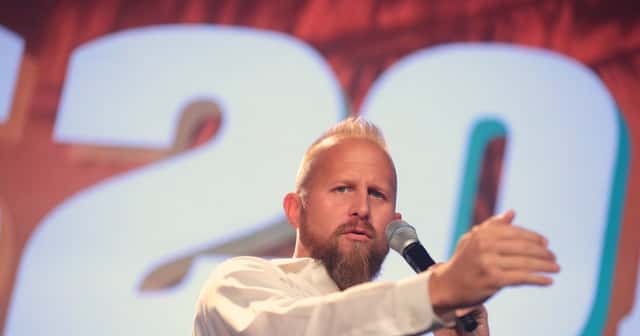
Lead photo by Gage Skidmore. Brad Parscale speaks in West Palm Beach, Florida, on December 20, 2018. Cropped for publication and shared under the same license. Original photograph · CC BY-SA 3.0 Unported.

Differing perspectives
Should Congress keep the provision expanding U.S.–Israel defense technology cooperation?
Each position is summarized as its supporters make it, with equal weight and in alphabetical order. A summary is not an endorsement; the evidence for each is weighed in the story above.
Keep the defense technology provision
Who holds it: AIPAC
AIPAC argues that the United States and Israel face shared threats, including drones and cyberattacks, and that closer coordination would help their defense researchers respond faster. It says a Pentagon official could reduce duplication across existing programs, help move jointly developed technology into use and provide Congress with clearer reporting on the work.
In their words: AIPAC ↗
Remove the defense technology provision
Who holds it: A New Policy, an advocacy organization
A New Policy argues that integrating military technologies and supply chains would deepen reliance on Israeli systems and make cooperation harder for Congress to reconsider through annual aid decisions. It says the broader scope creates risks involving sensitive technology and accountability. It wants lawmakers to weigh those risks before extending the relationship through the defense authorization bill.
In their words: A New Policy ↗
Cite this article
567politics AI-assisted reporting. “Parscale’s firm reports $40.5 million for Israel’s U.S. media campaign.” 567politics. Published 2026-11-10. https://567politics.com/news/brad-parscale-clock-tower-israel-40-million-fara-patronis
Wikipedia citation
{{cite news |title=Parscale’s firm reports $40.5 million for Israel’s U.S. media campaign |url=https://567politics.com/news/brad-parscale-clock-tower-israel-40-million-fara-patronis |work=567politics |author=567politics AI-assisted reporting |date=2026-11-10 |language=en}}CSL-JSON for reference managers
{
  "id": "https://567politics.com/news/brad-parscale-clock-tower-israel-40-million-fara-patronis",
  "type": "article-newspaper",
  "title": "Parscale’s firm reports $40.5 million for Israel’s U.S. media campaign",
  "URL": "https://567politics.com/news/brad-parscale-clock-tower-israel-40-million-fara-patronis",
  "container-title": "567politics",
  "language": "en",
  "author": [
    {
      "literal": "567politics AI-assisted reporting"
    }
  ],
  "issued": {
    "date-parts": [
      [
        2026,
        11,
        10
      ]
    ]
  }
}Citations identify this article and its publication date. Assess the reporting and its linked sources before using it as evidence.
Read this article as Markdown or JSON. Cite the original page and retain its sources, dates and qualifications.
Embed this article summary
Paste this HTML into your page. The summary stays linked to the full story and updates with it. No account required.
<iframe src="https://567politics.com/embed/news/brad-parscale-clock-tower-israel-40-million-fara-patronis?theme=auto" title="Parscale’s firm reports $40.5 million for Israel’s U.S. media campaign by 567politics" width="100%" height="440" style="border:0;max-width:100%" loading="lazy"></iframe>
<p style="font-size:14px">Parscale’s firm reports $40.5 million for Israel’s U.S. media campaign by <a href="https://567politics.com/news/brad-parscale-clock-tower-israel-40-million-fara-patronis" rel="nofollow">567politics</a></p>
<script async src="https://567politics.com/embed.js"></script>
READ BEYOND 567POLITICS
Alternate sources & perspectives
Independent coverage and primary evidence to help you compare arguments. A link is not an endorsement; perspective labels describe the linked material.
- primary evidence
Clock Tower X’s first supplemental statement ↗
Clock Tower X LLC via the Justice Department
First reporting period. The receipts appendix names Havas Media Germany as the payer and lists six service payments through March.
- primary evidence
Clock Tower X’s October supplemental statement ↗
Clock Tower X LLC via the Justice Department
Later service payments and a separately reported political contribution. The filing also provides the spending appendix used for the Campaign Nucleus calculation.
- primary evidence
Patronis’s October quarterly report ↗
Friends of Jimmy Patronis via the FEC
Campaign reporting. Pages 1329 and 1334 identify two transfer memo entries for Michael Shields. Page 1311 shows the September AIPAC PAC receipt.
- independent analysis
Axios examines the effort to reach AI answers ↗
Axios
Claimed AI reach and limits. The story reports the team’s own account of results and the absence of public supporting data.
- independent analysis
Drop Site tests citations to Clock Tower-linked sites ↗
Drop Site News
Examples of policy messaging and chatbot citations. The tests illustrate what can appear under selected prompts without measuring effects across all users.
- other perspective
AIPAC makes the case for the cooperation provision ↗
AIPAC
Keep Section 219. AIPAC argues that better coordination can strengthen defense technology and congressional oversight.
- other perspective
A New Policy analyzes the risks of deeper military technology ties ↗
A New Policy
Remove Section 219. The group raises concerns about sensitive technology, supply chain reliance and the scope of congressional review.
- independent analysis
Khanna calls to strip Section 219 in the post-election session ↗
Anadolu
Current legislative context. The November 10 report quotes Khanna’s renewed objections and summarizes the July House action.
Reviewed 2026-11-10. The general discovery tool returned unrelated results. Targeted searches identified the DOJ filings, independent reporting and proponents’ policy statements. Large and scanned DOJ PDFs were retrieved from the original URLs and checked against rendered pages. The analysis uses filings stamped by November 10. The original Allyvia pages could not be opened, so descriptions of their coverage are attributed to Drop Site. The FEC campaign report corroborates the two memo entries, while the separate joint committee name search did not return a matching itemized donor entry. The reports do not establish a policy bargain, the impact of the messages, or comprehensive lifetime funding.