Brazil amends its Constitution to end the six-day work week; the fight shifts to cost
Amendment 141, enacted Oct. 16, cuts the legal week from 44 to 40 hours in two steps. Government researchers and business groups disagree sharply on the cost.
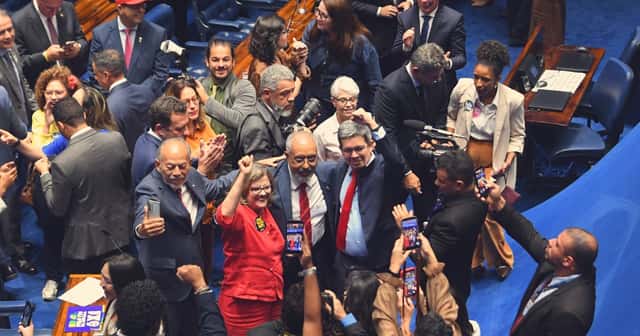
Brazil's Congress has written a shorter work week into the Constitution. On October 16, 2026, lawmakers enacted Constitutional Amendment 141 at a joint session in Brasília. It ends the "6x1" schedule, six days of work followed by one day off, which is common in shops, restaurants, warehouses and security firms. The legal maximum falls from 44 to 40 hours a week, with two paid rest days and no cut in pay, according to the Senate's news agency.
The change comes in two steps. Sixty days after publication, the weekly cap drops to 42 hours and the second rest day applies. One year after that, the cap drops to 40 hours. Agência Brasil, the public news agency, reported that the first step takes effect in mid-December.
The amendment passed in the middle of a presidential runoff, and its timing still shapes the argument over it. President Luiz Inácio Lula da Silva made it a campaign theme. His opponent, Senator Flávio Bolsonaro, opposed it for months and then voted for it 12 days before the October 25 runoff. Business groups say it will raise prices and slow formal hiring. A government research institute says the direct cost for most large sectors is small. Both sides are working from projections, not observed results.
What the amendment changes
| Step | When | Weekly limit |
|---|---|---|
| Before the change | Until mid-December 2026 | 44 hours, one rest day |
| First step | 60 days after publication | 42 hours, two rest days |
| Second step | One year after the first step | 40 hours, two rest days |
Source: Agência Senado and Agência Brasil, October 16, 2026.
One of the two rest days should fall on a Sunday when possible. During the transition, employers can spread the 42 hours over five days. Agência Brasil calculated that an even split works out to about 8 hours and 24 minutes a day. After the transition, the limits are 8 hours a day and 40 hours a week. Work beyond that is overtime.
The text leaves room for flexibility. Sectors with special schedules can offset weekend work, as long as workers average two rest days a week over a calendar month and get at least one day off in every seven. A collective agreement with a union can set a different arrangement on those terms. Agência Brasil noted that this means a six-day pattern can survive in some workplaces under such a deal. Contract clauses that conflict with the new rules lose force after 60 days.
There are also exceptions. Public servants at every level of government keep their current hours. University graduates who earn at least 2.5 times the ceiling of the general social security system, or R$21,188.87 a month, can negotiate their hours directly with employers, as long as the five-day pattern holds. Firms that supply outsourced workers to government agencies get 12 months instead of 60 days. Schedules already at 40 hours or less do not shrink further. A future law may set adjustment measures for micro and small businesses, on condition that they keep jobs.
How it passed
- Chamber of Deputies approves it in two rounds, 472-22 and 461-19
- Senate Constitution and Justice Committee approves the text
- Flávio Bolsonaro says he will vote yes
- Senate approves it 75-1 in both rounds
- Congress enacts Amendment 141
- First step to a 42-hour week
Source: Agência Senado
The proposal began as PEC 221/2019, first signed by Deputy Reginaldo Lopes of the Workers' Party (PT). It was joined with a 2025 proposal by Deputy Erika Hilton of the left-wing PSOL. The Chamber of Deputies passed it on May 27 with well over the 308 votes a constitutional amendment needs, the Chamber's news agency reported. In the Senate, rapporteur Omar Aziz (PSD) kept the Chamber's text unchanged. That spared it a return trip to the Chamber.
The Senate voted on October 14. The tally was 75 to 1 in each of the two rounds, the Senate agency reported. The only no vote came from Senator Hamilton Mourão of Republicanos, who served as Jair Bolsonaro's vice president. Senate President Davi Alcolumbre presided and did not vote. Senator Oriovisto Guimarães (PSDB) withdrew an amendment, signed by 27 other senators, that would have spelled out how the rules treat schedules already under 40 hours. The rapporteur had said it changed the substance of the text.
Several opposition senators voted yes while asking for later changes. Senator Marcos Pontes of Bolsonaro's Liberal Party (PL) said "a person has to work as much as they think they have to work." His party colleague Carlos Portinho said that for these rights to count, "there has to be a job." Senator Vanderlan Cardoso (PSD) backed a flexible schedule with hourly pay chosen by the worker in writing. All three quotations are 567politics translations of remarks reported by the Senate agency.
At the October 16 ceremony, Alcolumbre said Congress was turning "two historic struggles into rights." The second amendment enacted that day gives special retirement terms to community health agents. Lula said the Constitution had become "more of a citizens' Constitution." He added, "nobody wants a company to go bankrupt, but nobody wants a worker to die from lack of rest either." Opposition leaders did not attend, Agência Brasil reported.
Who is affected
The Senate agency cited Ministry of Labor data on formal employment. Of 44.7 million workers whose schedules were identified, about 14.9 million, or one in three, worked a 6x1 schedule. Some 38.6 million worked more than 40 hours a week, including 37.2 million at exactly 44 hours. Commerce, services, industry and logistics have the most workers on these schedules.
A February 2026 technical note from Ipea, the federal economic research institute, used a different source with a similar result. In the 2023 RAIS employer registry, about 31.8 million of roughly 44 million formal private-sector workers, or 74%, had 44-hour contracts, Poder360 reported.
| Group | Workers | Source |
|---|---|---|
| 6x1 schedule | 14.9 million | Ministry of Labor |
| Over 40 hours a week | 38.6 million | Ministry of Labor |
| At 44 hours a week | 37.2 million | Ministry of Labor |
| 44-hour contracts, 2023 | 31.8 million | Ipea, RAIS 2023 |
These figures come from formal employment records. They do not count informal workers, whose hours do not appear in these registries. The two sources also use different years and definitions, so their totals should not be added or subtracted.
The cost dispute
The sharpest disagreement is over cost. Estimates differ by an order of magnitude, mostly because they measure different things.
The Ipea estimate. Ipea found that a 40-hour week would raise the average hourly cost of formal labor by 7.84%, holding monthly pay fixed. Labor is a modest share of total costs in industry and retail. So the institute put the direct effect on those sectors' operating costs at around 1%. Labor-heavy services face more. For security and surveillance firms, Ipea estimated 6.6% of operating costs. Ipea researcher Felipe Pateo told Poder360 that the study did not model how firms respond. They could cut output, raise productivity or hire more workers.
The business estimate. On October 7, six business confederations issued a joint note against a vote before the runoff. The signers were the national confederations of industry (CNI), transport (CNT), commerce (CNC), agriculture (CNA), insurers (CNseg) and cooperatives (OCB), the trade outlet Mercado&Consumo reported. Citing CNI estimates, the note said production costs could rise by up to R$267.2 billion and GDP could fall by 0.7%. It also said consumer prices could rise 6.2% on average. The confederations said a measure of this size should not be voted without taking account of its effect on investment and formal jobs. CNI president Ricardo Alban has argued that Brazil should tackle its weak productivity first. CNI figures put productivity growth per worker at about 0.2% a year from 1988 to 2024, according to the confederation.
Why the numbers differ. Ipea's 7.84% is a rise in the cost of an hour of labor. Its 1% figure is that increase weighed against all of a sector's costs. The CNI's R$267.2 billion is an annual sum for the whole economy, not a percentage, and its price and GDP figures are separate projections. The published summaries reviewed for this article do not explain the CNI method in detail. None of these figures is a measured result. Each rests on assumptions about whether firms absorb the cost, raise prices, cut staff or get more done per hour.
Weighing the arguments. At the ceremony, Lula recalled that business leaders in the early 1960s warned that the "13th salary," a mandatory year-end bonus, would ruin companies. "It did not break the companies," he said, as quoted by Agência Brasil. That is a fair answer to any claim that ruin is certain. As proof that this change will be harmless, though, it is a weak analogy. The bonus, the sectors and the economy of the 1960s differ from today's. The business projections carry a matching limit. A price rise of 6.2% assumes firms pass most of the cost on to customers. Ipea's study did not test that assumption, and neither side has published data showing how firms will actually respond.
The politics of the vote
The vote landed between the two rounds of the presidential election. Flávio Bolsonaro's position moved over the year, as O Povo documented. In May he called the debate "inopportune and electoral." In August he said workers should be free to choose their own schedules. On October 7 he said Lula "is thinking about power, not about the worker." On October 13, after visiting his father, he said he would vote yes. "I am traveling around Brazil, and most Brazilian workers want the end of 6x1," he said. He added that "we defend something even better" and that "whoever pays this bill will have to be the government." These quotations are 567politics translations.
On October 15, the Broadcast news service of Grupo Estado reported that campaign allies had told business leaders that he would support a revision if elected, as republished by Diário do Grande ABC. One business representative quoted in the report said the campaign "guaranteed they will review everything on the 6x1." Bolsonaro himself had not publicly mentioned a revision, the report said. One option under discussion was PEC 12/2026 by Senator Rogério Marinho (PL), the Senate opposition leader and Bolsonaro's campaign coordinator. It would create a flexible regime with pay by the hour. Government leader Randolfe Rodrigues called it "the opposite of ending the 6x1."
Mourão set out his own objection in June. He said the vote should wait until after the election, "without the pressure that is occurring," CNN Brasil reported. He called freedom of contract "fundamental" and said the amendment would make the bond between employer and employee rigid. He co-signed the opposition's alternative based on hourly pay.
Each camp has pointed to the other's electoral motives. On October 13, Lula said the PL had decided to back the measure because of "pressure from society," Times Brasil reported. The business confederations called a vote before the runoff inopportune, and Mourão spoke of electoral pressure on lawmakers. Neither charge settles whether the policy is sound. A popular or well-timed measure can still be good or bad on its merits. The timing complaint does carry one concrete point. The Senate passed the text without changing a word, which left questions such as small-business rules for later laws. On the other side of the ledger, the Chamber voted in May and the Senate committee received the text in August, so the measure was not rushed through in a single week.
What voters said in polls
Polls before the vote found majority support, with conditions. A Genial/Quaest survey of 2,005 voters, published May 18, found 68% in favor of ending the 6x1 schedule and 22% against, with a margin of error of 2 points, Poder360 reported. When the same survey asked about an end to the schedule that came with a pay cut, 56% were against and 39% in favor.
A Quaest poll of 2,154 people aged 16 and older, taken October 10 to 13, measured the question differently. Among respondents who had heard of the measure, 61% approved and 20% disapproved, O Liberal reported from Estadão Conteúdo. Because the October figure covers only those aware of the measure, it cannot be compared directly with May's figure for all voters. The amendment as enacted bars pay cuts.
What comes next
The first step, to 42 hours, arrives in mid-December. Congress still has to write rules for sectors with special schedules and a possible law for small businesses. Business groups say they want the amendment reviewed.
Lula won the October 25 runoff, so a quick reversal led by the president is off the table. Reporting on the aftermath is in our story on Flávio Bolsonaro after the runoff. Any change to the amendment would itself need a constitutional amendment, with 308 of 513 deputies and 49 of 81 senators in two rounds in each house. A new Congress takes office in February 2027, and our report on the Chamber's electoral reform push covers how its party balance is shaping the next fights. Background on the country's main policy debates is on our Brazil issues page.
Campaign finance note: Brazilian candidates file campaign accounts with the Superior Electoral Court. This article did not review those filings for the people named.
Photo and reporting note
Photo: Senators celebrate the Senate's approval of the amendment on October 14, 2026, including Teresa Leitão, Paulo Paim and Randolfe Rodrigues of the PT. Jonas Pereira/Agência Senado, original file, free to reuse with credit to Agência Senado. Cropped for publication. This AI-assisted report was prepared on November 2, 2026, from the sources linked above. Quotations from Portuguese are 567politics translations unless marked otherwise.

Differing perspectives
Was Brazil right to cut the legal work week to 40 hours with two rest days, on the timetable Congress set?
Each position is summarized as its supporters make it, with equal weight and in alphabetical order. A summary is not an endorsement; the evidence for each is weighed in the story above.
Add a flexible regime with pay by the hour
Who holds it: Opposition senators including Rogério Marinho, Vanderlan Cardoso and Marcos Pontes, many of whom voted yes
These senators voted for the amendment or accept its goal but argue that a single national rule is too rigid. They back a flexible regime in which workers choose their hours and are paid by the hour, with written consent, as in Senator Marinho's PEC 12/2026. Senator Pontes said a person should work as much as they think they should. Others asked for a responsible transition and federal help for employers and towns facing higher costs.
In their words: Agência Senado, Oct. 14, 2026 ↗
End the 6x1 schedule now, without pay cuts
Who holds it: President Lula, the Workers' Party and allied parties, Senate and Chamber leaders, and labor unions
Supporters argue that millions of workers on six-day schedules lack time to rest, care for family or study, and that a two-day weekend is a basic right. At the October 16 ceremony Lula said nobody wants a company to go bankrupt, but nobody wants a worker to die from lack of rest either. He pointed to the 13th salary, which business groups also said would ruin companies in the 1960s, and said it did not. They add that the change is phased in over about 14 months.
In their words: Agência Brasil, Oct. 16, 2026 ↗
Fix productivity first and debate costs away from elections
Who holds it: The national confederations of industry (CNI), commerce, transport, agriculture, insurers and cooperatives
Business groups argue that Brazil's productivity has barely grown for decades and that the country should remove structural bottlenecks before adding labor costs. CNI president Ricardo Alban said decisions that raise costs without broad debate can harm industry, especially small and medium firms. The confederations cite CNI estimates of up to R$267.2 billion a year in added costs, higher prices and a GDP loss of 0.7%, and called a vote before the runoff inopportune.
In their words: Confederação Nacional da Indústria (CNI) ↗
Keep freedom of contract and decide after the election
Who holds it: Senator Hamilton Mourão, the only senator to vote no
Mourão argues that freedom of contract between employer and employee is fundamental and that writing hours into the Constitution makes that relationship rigid. He said the issue was poorly placed in an election year and that lawmakers were under electoral pressure, so the vote should have waited until after October, when a better solution might emerge. He backed the opposition's alternative of a regime based on pay per hour worked.
In their words: CNN Brasil, June 11, 2026 ↗
READ BEYOND 567POLITICS
Alternate sources & perspectives
Independent coverage and primary evidence to help you compare arguments. A link is not an endorsement; perspective labels describe the linked material.
- primary evidence
Congresso promulga o fim da escala 6x1 e aposentadoria de agentes de saúde ↗
Agência Senado
The Senate's account of the Oct. 16 enactment: amendment number, transition rules, exceptions and Ministry of Labor counts of affected workers.
- primary evidence
Senado aprova fim da escala 6x1 ↗
Agência Senado
The Oct. 14 floor vote, 75-1 in both rounds, with remarks from government and opposition senators and the withdrawn Oriovisto amendment.
- primary evidence
Câmara aprova em dois turnos fim da escala 6x1 com jornada máxima de 40 horas semanais ↗
Agência Câmara
The Chamber's May 27 votes of 472-22 and 461-19 that sent the proposal to the Senate.
- independent analysis
Congresso promulga emenda do fim da 6x1; escala 5x2 começa em 60 dias ↗
Agência Brasil
Public news agency's explainer on the transition, collective-agreement exceptions and Lula's remarks at the ceremony.
- independent analysis
Fim da escala 6 X 1 elevaria custo do trabalho em 7,84%, diz Ipea ↗
Poder360
Reports the federal research institute Ipea's estimate of a 7.84% rise in hourly labor cost and about 1% of operating cost for industry and retail.
- left argument
Vitória do povo brasileiro: aprovado o fim da escala 6x1! ↗
Central Única dos Trabalhadores (CUT)
Brazil's largest union federation argues that fewer hours without pay cuts improve workers' health and family life, and says it will monitor implementation.
- right argument
Produtividade e escala 6x1: presidente da CNI fala à CNN Brasil e BandNews ↗
Confederação Nacional da Indústria (CNI)
The industry confederation argues Brazil should fix low productivity before adding labor costs, warning of harm to small and medium firms.
- other perspective
Haverá aumento de inflação e desemprego com fim da 6x1, dizem confederações empresariais ↗
Mercado&Consumo
Trade outlet's report on the Oct. 7 joint note by six business confederations citing CNI cost, price and GDP estimates and opposing a vote before the runoff.
- right argument
Mourão vê pressão eleitoral e defende debater fim da 6x1 depois de outubro ↗
CNN Brasil
The only senator to vote no explains his objection: freedom of contract, electoral pressure and support for an hourly-pay alternative.
- independent analysis
Fim da escala 6x1: contra ou a favor? Veja o que Flávio Bolsonaro já disse sobre o tema ↗
O Povo
Dated timeline of Flávio Bolsonaro's statements on the measure before his Oct. 13 decision to vote yes.
- independent analysis
A empresários, Flávio Bolsonaro sinaliza revisão da PEC do fim da 6x1 se eleito ↗
Diário do Grande ABC (Broadcast/Agência Estado)
Grupo Estado's Broadcast reporting that campaign allies told business leaders a revision would follow a Bolsonaro win.
- primary evidence
68% são a favor do fim da escala 6 X 1, diz pesquisa Quaest ↗
Poder360
Genial/Quaest poll results, including the drop in support when a pay cut is mentioned, with sample size and margin of error.
Reviewed 2026-11-02. Reviewed November 2, 2026. Primary evidence comes from the Senate and Chamber news agencies; the published text of Amendment 141 in the Diário Oficial was not opened directly, so transition dates follow the agencies' summaries (they differ by one day on the first step, Dec. 15 or 16). The CNI's full method for its R$267.2 billion estimate was not available in the pages reviewed; the six confederations' Oct. 7 note was read through a trade outlet's report. A Workers' Party statement page returned an error and is not listed. The site's automated source discovery returned no relevant results, so these sources were found by manual search and opened individually.