These Democrats took the most AIPAC PAC money. Bell and Moskowitz lead.
OpenFEC Schedule B rankings for Democratic House and Senate committees in the 2024 and 2026 cycles, beside Iran war-powers votes and the party’s split over refusing the money.
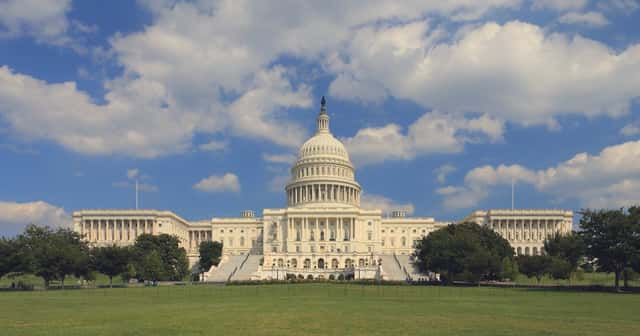
Among Democrats, Wesley Bell$, George Latimer$ and Jared Moskowitz lead AIPAC PAC Schedule B totals. The same caucus is splitting over whether that money should be refused.
Federal Election Commission Schedule B aggregates for the American Israel Public Affairs Committee Political Action Committee (committee ID C00797670), retrieved November 9, 2026, show that Democratic candidate committees—not Republican ones—occupy several of the largest recipient slots in both the 2023–24 and 2025–26 cycles. This story ranks only Democrats. It is a companion to 567politics' cross-party AIPAC PAC recipients and Iran war-powers comparison and to the Ted Cruz pro-Israel PAC money inventory$. It does not repeat those articles' Republican case studies.
The ranking uses OpenFEC's schedule_b/by_recipient totals for AIPAC PAC. Those totals include earmarked conduit gifts that AIPAC PAC solicits from individual Americans and transmits to campaigns, plus the PAC's own limited contributions. They are not Israeli government money. U.S. law bars foreign governments, including Israel, from contributing to federal candidates. AIPAC's AIPAC Money page states that its donors are Americans and that the organization is neither directed nor funded by the Israeli government. No FEC Schedule B line reviewed for this story identified the State of Israel as a contributor. Influence claims that collapse AIPAC PAC receipts into "Israel money" are reported here as critics' arguments, not as findings.
How this Democratic ranking was built#
OpenFEC returned 738 recipient rows for the 2024 cycle and 734 for the 2026 cycle. Democracy Engine and similar payment processors were excluded because they are conduits, not candidate committees. Each remaining high-dollar recipient name was matched to an OpenFEC committee record and kept only when the committee's party field was DEM or DFL. Menendez for Senate ($1,081,980.51 in the 2024 aggregate) was excluded because OpenFEC lists that Senate committee as IND (Independent) for the period reviewed. An individual name string, "SCHLEIFER, HARRIET" ($550,500 in 2024), was excluded as not a Democratic candidate committee. For Wesley Bell in 2024, OpenFEC lists both "BELLFORMISSOURI" ($3,003,080.03) and "BELL FOR MISSOURI" ($167,773.00); Schedule B lines for both carry recipient committee ID C00842336, so this story combines them.
The totals are larger than the PAC-only contribution lines that appear on many candidates' Form 3 Schedule A summaries. For example, Cory Booker's 2026 F3-11C snapshot retrieved for this story shows a $5,000 AIPAC PAC contribution, while the Schedule B by_recipient aggregate to Cory Booker for Senate is $702,091.21. The difference is mostly earmarked individual gifts transmitted through the PAC. Readers comparing "AIPAC PAC contribution" headlines should check whether the source counted only the PAC's own gifts or the full Schedule B transmission total used here.$
United Democracy Project (UDP, C00799031) independent expenditures are separate and are not added into these ranking totals. OpenSecrets' broader "Pro-Israel" industry code (Q05) was not used for the ranked figures in this story.
2025–26 cycle: Democratic AIPAC PAC recipients#
In the 2026-cycle OpenFEC aggregate opened November 9, 2026, the largest Democratic candidate-committee recipients were:
Source: OpenFEC AIPAC PAC by recipient, 2026, FEC AIPAC PAC committee
Show the numbers
| Democrat | AIPAC PAC total |
|---|---|
| Wesley Bell | $2,301,963 |
| Jared Moskowitz | $1,263,273 |
| Debbie Wasserman Schultz | $875,809 |
| Ritchie Torres | $855,743 |
| Greg Landsman | $782,036 |
| Cory Booker | $702,091 |
| Brad Sherman | $672,131 |
| Mark Warner | $671,736 |
| Pete Aguilar | $605,986 |
| Don Davis | $597,814 |
| Shri Thanedar | $513,578 |
| Chris Coons | $498,099 |
| Susie Lee | $475,635 |
| Laura Gillen | $449,471 |
| Ted Lieu | $448,110 |
Wesley Bell (MO) leads Democrats at about $2.30 million. Jared Moskowitz (FL) is second at about $1.26 million. Debbie Wasserman Schultz (FL), Ritchie Torres$ (NY) and Greg Landsman$ (OH) follow. Senate Democrats in the top 15 include Booker ($702,091), Mark Warner$ ($671,736) and Chris Coons$ ($498,099).
| Rank | Democrat | AIPAC PAC total | War-powers vote |
|---|---|---|---|
| 1 | Wesley Bell (MO-House) | $2,301,963 | House 199 Yea |
| 2 | Jared Moskowitz (FL-House) | $1,263,273 | House 199 Yea |
| 3 | Debbie Wasserman Schultz (FL) | $875,809 | House 199 Yea |
| 4 | Ritchie Torres (NY-House) | $855,743 | House 199 Yea |
| 5 | Greg Landsman (OH-House) | $782,036 | House 199 Yea |
| 6 | Cory Booker (NJ-Senate) | $702,091 | Senate 58 Yea |
| 7 | Brad Sherman$ (CA-House) | $672,131 | House 199 Yea |
| 8 | Mark Warner (VA-Senate) | $671,736 | Senate 58 Yea |
| 9 | Pete Aguilar$ (CA-House) | $605,986 | House 199 Yea |
| 10 | Don Davis$ (NC-House) | $597,814 | House 199 Yea |
| 11 | Shri Thanedar$ (MI-House) | $513,578 | House 199 Yea |
| 12 | Chris Coons (DE-Senate) | $498,099 | Senate 58 Yea |
| 13 | Susie Lee$ (NV-House) | $475,635 | House 199 Yea |
| 14 | Laura Gillen$ (NY-House) | $449,471 | House 199 Yea |
| 15 | Ted Lieu$ (CA-House) | $448,110 | House 199 Yea |
Amounts are OpenFEC Schedule B by_recipient aggregates for C00797670, cycle 2026, retrieved November 9, 2026. House votes are Roll Call 199 on H. Con. Res. 86 (June 3, 2026). Senate votes are vote 58 (March 18, 2026). Every Democrat in this top-15 sample who appears on those roll calls voted Yea to advance or pass war-powers limits—the same direction as most of their caucus, and the opposite of most Republicans documented in the recipients comparison.
2023–24 cycle: Democratic AIPAC PAC recipients#
The 2024-cycle Democratic ranking is dominated by contested primaries and battleground races:
Source: OpenFEC AIPAC PAC by recipient, 2024, FEC AIPAC PAC committee
Show the numbers
| Democrat | AIPAC PAC total |
|---|---|
| Wesley Bell | $3,170,853 |
| George Latimer | $2,818,639 |
| Jacky Rosen | $1,822,565 |
| Hakeem Jeffries | $939,360 |
| Josh Gottheimer | $860,537 |
| Don Davis | $843,475 |
| Pete Aguilar | $621,674 |
| Ritchie Torres | $602,618 |
| Jon Tester | $595,991 |
| Jared Golden | $595,492 |
| Bob Casey | $575,899 |
| Grace Meng | $554,633 |
| Kirsten Gillibrand | $479,847 |
| Gregory Meeks | $461,707 |
| Jake Auchincloss | $446,359 |
Bell's combined 2024 total is about $3.17 million, ahead of George Latimer (NY) at about $2.82 million and Sen. Jacky Rosen$ (NV) at about $1.82 million. House Minority Leader Hakeem Jeffries$ appears fourth among Democrats at about $939,360. Josh Gottheimer$, Don Davis, Pete Aguilar and Torres also clear $600,000. Senate Democrats Rosen, Jon Tester, Bob Casey and Kirsten Gillibrand$ are in the top 15. Joanna Weiss, a California House candidate rather than a sitting member, received about $394,849 in the broader Democratic list and illustrates that the PAC's Schedule B book includes challengers, not only incumbents.
Votes and stated reasons#
The money ranking and the war-powers roll calls do not move in lockstep with critics' simplest story—that AIPAC PAC dollars buy automatic support for Middle East wars. In this Democratic top-15 sample for 2026, the House members voted Yea on Roll Call 199, which directed the president to remove U.S. forces from hostilities with Iran unless Congress authorized them. Booker, Warner and Coons voted Yea on Senate vote 58. That pattern matches most Democrats and contrasts with Republican AIPAC PAC recipients such as Cruz, who voted Nay on vote 58, as documented in the Cruz money inventory.
Lawmakers' own statements emphasize constitutional process and U.S. security, not donor instructions. Moskowitz, the second-largest Democratic AIPAC PAC recipient in the 2026 aggregate, said on March 5, 2026, that he would vote for the Massie-Khanna war-powers resolution after initially signaling a no. "The military operations carried out this weekend were not limited strikes. The President of the United States has said it's a war," he wrote in a House statement. "Regardless of how one feels about this war, or this President, Congress's constitutional role in any declaration of war is a completely separate issue." He also said Iran "should never have a nuclear weapon" and that the resolution would not block defensive operations or intelligence sharing with allies, including Israel.
Booker, sixth among Democrats in the 2026 AIPAC PAC ranking, condemned Iran as "one of the most dangerous, destabilizing forces in the Middle East" with "American blood on its hands," while arguing that those facts do not "suspend our Constitution." In a February 28, 2026 Senate statement, he said Trump launched "massive and ongoing" strikes "without Congressional authorization" and without "a credible legal justification or coherent strategy." He later backed Senate war-powers efforts and voted Yea on vote 58. The FEC conduit total and the constitutional critique sit in the same public record; the filings do not show which caused the other.
Critics on the progressive left still argue that AIPAC PAC and UDP spending shape who reaches Congress in the first place—especially in Democratic primaries—even when general-election war-powers votes later break along party lines. That primary-spending argument is separate from the Schedule B recipient ranking and is the focus of reporting on UDP and Massie elsewhere on 567politics. This Democrats-only story keeps the two claims distinct.
The Democratic split over AIPAC#
Inside the Democratic Party, AIPAC PAC support has become a factional marker. Progressive challengers and some incumbents treat refusal as a purity test. Centrist and pro-Israel Democrats treat acceptance as ordinary issue advocacy. The party's internal range is visible on the United States political spectrum chart (dated editorial estimates, not measured scores):
Representative polling shows the party's voters moving faster than many of its pro-Israel officeholders. Gallup's 2026 World Affairs reading found 65% of Democrats saying their sympathies lie more with the Palestinians and 17% more with the Israelis—continuing a flip that Gallup first recorded as a clear Democratic majority for Palestinians in 2025 (Gallup, "Israelis No Longer Ahead in Americans' Middle East Sympathies"). Pew Research Center's October 2025 survey found 77% of Democrats and Democratic leaners with an unfavorable view of the Israeli government (Pew). Those figures describe party identifiers in national surveys. They are not a census of AIPAC PAC donors, and they do not prove that any single Schedule B total bought a vote.
Incumbents and candidates have begun to refuse or return AIPAC-linked money. Rep. Seth Moulton said in October 2025 that he was returning AIPAC donations and would not accept further support. "In recent years, AIPAC has aligned itself too closely with Prime Minister Netanyahu's government," he said, according to contemporaneous reporting of his announcement (Boston.com). "I'm a friend of Israel, but not of its current government, and AIPAC's mission today is to back that government." Progressive primary challengers, including candidates backed by Justice Democrats, have made "not taking a dime from AIPAC" a campaign line, as summarized in 2025–26 primary reporting. Washington Examiner and Semafor coverage in the same period documented additional House Democrats who accepted AIPAC-linked support in prior cycles and later pledged to reject it for 2026. This story does not invent a complete refusal list; where a lawmaker's FEC returns are not opened here, the refusal is attributed to their public statement or to named reporting.$
AIPAC and its defenders answer that refusing the money singles out one American constituency. In a February 25, 2026 Times of Israel essay republished on AIPAC's site, Rabbi Stuart Weinblatt wrote that candidates who reject AIPAC-affiliated support are "infringing on the fundamental right of a group of citizens to participate in the American political process" and "giving credence to dangerous antisemitic tropes" (AIPAC editorial). AIPAC's money FAQ repeats that donors are Americans of both parties and that foreign-government funding is a "mischaracterization." Critics reply that the objection is to a lobby's policy agenda and primary-spending strategy, not to Jewish political participation as such. The article frames that dispute without endorsing either side's motive theories.
What the Democratic totals do and do not show#
Three limits matter.
First, Schedule B by_recipient for AIPAC PAC is not a career total, not an OpenSecrets industry total, and not UDP independent spending. Bell's $2.30 million in the 2026 cycle and $3.17 million in the 2024 cycle are cycle-specific transmission aggregates. Adding them without care would double-count overlapping reporting or invent a "career AIPAC" figure this export does not support.
Second, party-line war-powers votes among top Democratic recipients undercut any automatic claim that the largest Schedule B totals predict Nay votes on Iran limits. The same Democrats who cleared hundreds of thousands of dollars in AIPAC PAC transmissions still voted with their caucus on Roll Call 199 and Senate vote 58. Critics can still argue that the PAC's primary spending selects the caucus in advance. That is a different empirical claim and needs primary and IE evidence, not only these recipient rankings.
Third, foreign-government money is a legal category of its own. Nothing in the OpenFEC exports opened for this story shows Israeli government contributions to these Democratic committees. Treating AIPAC PAC earmarks from U.S. donors as "money from Israel" collapses a legal distinction that both FEC disclosure rules and AIPAC's own public materials insist on. Critics who want a wider network analysis can use OpenSecrets industry codes or UDP Schedule E; they should label those sources accurately.
Bell, Latimer and the primary money lane#
Bell's place atop both cycle lists reflects contested Democratic primaries as much as general-election fundraising. In 2024 he defeated then-Rep. Cori Bush in Missouri's 1st District with heavy outside support from pro-Israel groups; Semafor and other outlets later described AIPAC-linked spending as politically risky for him with progressive primary voters as he faced town-hall protests. The Schedule B figures in this story are campaign receipts transmitted by AIPAC PAC, not UDP independent expenditures. Readers should not add UDP ads into Bell's $2.30 million or $3.17 million totals. The point of separating the vehicles is to keep the ranking auditable against a single FEC export.
Latimer's $2.82 million 2024 total likewise tracks a high-cost New York House race in which AIPAC PAC and allied groups backed a Democrat against a progressive incumbent. Jeffries' $939,360 in the same cycle shows that leadership offices, not only contested challengers, appear in the Democratic recipient file. Gottheimer's $860,537 places a New Jersey Democrat who has publicly opposed some Iran war-powers proposals earlier in 2026—before later voting Yea on House Roll Call 199—high on the 2024 list. Sequence again matters: public statements and roll calls change; the cycle aggregate is a sum of dated transmissions, not a single check that purchased a single vote.
Rosen's $1.82 million 2024 Senate total and Tester's and Casey's mid-tier totals show that Senate Democrats running in competitive states also cleared large AIPAC PAC transmission books. Tester and Casey were not members of the Senate that cast vote 58 in March 2026 after their 2024 defeats; their 2024 Schedule B totals remain part of the cycle ranking even though they have no 2026 war-powers cell in the table above.
What Democratic leaders and caucus factions say#
Jeffries and other institutional Democrats have described AIPAC's brand as increasingly difficult inside the party even while many caucus members continue to accept transmitted support. New York Times reporting in 2026 quoted people around House leadership calling AIPAC an "increasingly toxic brand" among Democratic primary voters—an attributed political assessment, not a FEC finding. Progressive organizers treat that toxicity as earned. Pro-Israel Democratic groups treat it as the product of online pressure and primary incentives that punish alliance politics.
The Congressional Progressive Caucus, New Democrat Coalition and Blue Dog Coalition embody different incentives on foreign policy and donor networks. Progressives are more likely to publicize AIPAC refusals. New Democrats and Blue Dogs are more likely to defend alliance commitments and treat pro-Israel PACs like other issue PACs. None of those caucus labels appears on an FEC Schedule B line. They are useful for locating the dispute on the U.S. party spectrum, not for rewriting the money table.
Booker's dual posture—harsh on the Iranian regime, insistent on congressional war powers—illustrates why a money-only story misreads Democratic foreign policy. His February 28 statement called a nuclear-armed Iran "an intolerable threat" and said Trump had put "our troops, our diplomats, and our regional partners at grave risk" without a plan for collapse, nuclear material or humanitarian fallout. That is not the language of a lawmaker denying Iran's danger. It is the language of a senator who still voted to force a congressional role. Moskowitz's March 5 statement makes a similar move: celebrate pressure on the Iranian regime, then insist Article I still applies. Critics who say AIPAC PAC money buys "wars on Israel's behalf" must still explain why these high recipients voted for war-powers limits when many Republican recipients did not.
Critics' influence argument, stated carefully#
Progressive critics argue three linked claims. First, that AIPAC PAC and UDP spending decide Democratic primaries against critics of Israeli government policy. Second, that the resulting caucus is more pro-Israel than Democratic voters, as Gallup and Pew numbers suggest. Third, that Schedule B transmission totals are a receipt for that selection mechanism even when later floor votes follow party lines. Each claim needs its own evidence. Primary IE totals belong in UDP Schedule E stories. Voter-opinion gaps belong in polling stories with full question wording. Recipient rankings, the subject of this article, show who received the transmitted money.
AIPAC's reply, in its own words, is that the first claim demonizes American donors; that Democratic voters' sympathy numbers do not erase American Jews' or pro-Israel Democrats' right to organize; and that labeling the money "foreign" is false. The Weinblatt essay goes further, saying refusal campaigns feed "stereotypes about Jewish money and political influence." Fair reporting requires printing that defense next to the critics' case. It does not require accepting either side's account of the other's motives.
Foreign nationals and foreign governments remain barred from federal candidate contributions under 52 U.S.C. § 30121. That statute is why this story repeats, with every large Democratic total, that the OpenFEC lines reviewed are U.S. donor transmissions and PAC activity—not Israeli treasury funds. If a verified filing later shows otherwise for a named committee, that filing should be cited and this article updated. None was found in the exports opened November 9, 2026.
Reading the two cycles together#
Comparing 2024 and 2026 Democratic lists shows continuity and churn. Bell, Torres, Aguilar and Davis appear near the top in both cycles. Moskowitz, Wasserman Schultz, Landsman, Sherman, Thanedar, Gillen and Lieu are more prominent in the 2026 Democratic top 15 than in the 2024 extract used here. Rosen, Jeffries, Gottheimer, Latimer, Tester, Casey, Meng, Gillibrand, Meeks and Auchincloss loom larger in 2024. Election calendars explain much of that churn: senators and House members raise differently when they are on the ballot. Treating a single cycle as a permanent "AIPAC Democrats" roster would misstate the FEC book.
Notable Democratic candidates appear when the data supports it. Weiss's 2024 total shows a non-incumbent Democrat in the PAC's Schedule B file. Bell's early House and later Senate-related activity under the same committee ID shows why candidate IDs H4MO01134 and S4MO00250 both attach to C00842336 in OpenFEC. This story labels him as a House Democrat for the war-powers vote he cast and notes the dual candidate IDs in the methods file.
For readers who want the Republican and mixed-party context, the top recipients and war-powers story remains the place to compare Collins, Cotton, Cornyn, Cruz and Fitzpatrick. For a single-senator deep dive on Republican pro-Israel PAC receipts, use the Cruz article. This Democrats-only ranking exists so the party's internal money pattern is not buried inside a bipartisan list.
Methods note#
Data: OpenFEC /v1/schedules/schedule_b/by_recipient/ for committee C00797670, cycles 2024 and 2026, retrieved November 9, 2026 (America/New_York). Party filters used OpenFEC committee party fields. Bell 2024 combined two recipient_name spellings after Schedule B confirmed shared committee ID C00842336. Votes: House clerk Roll Call 199 XML and Senate LIS vote 58 XML opened for this reporting package. Funding snapshots for Booker (cycle 2026, fetched November 9, 2026) illustrate that Form 3 PAC lines can be far smaller than Schedule B conduit totals; Moskowitz had no published 567politics FEC snapshot at research time, so his ranking rests on the OpenFEC Schedule B aggregate alone. Gallup and Pew figures are national survey estimates with their published field periods and margins; they are cited for Democratic identifiers' attitudes, not as proof of causation.
Byline: 567 Politics staff.
Differing perspectives
Should Democrats keep accepting AIPAC PAC campaign support?
Each position is summarized as its supporters make it, with equal weight and in alphabetical order. A summary is not an endorsement; the evidence for each is weighed in the story above.
Accept the money and still enforce war powers
Who holds it: Democrats such as Jared Moskowitz and Cory Booker who appear high on AIPAC PAC Schedule B lists and voted for Iran war-powers limits
A third group treats the PAC transmissions as compatible with tough Iran rhetoric and with votes that reclaim Congress’s Article I war role. Moskowitz said Iran should never have a nuclear weapon and that he would still vote for a war-powers resolution once operations became a war. Booker called the Iranian regime dangerous and said none of those facts suspend the Constitution. In their framing, donor totals do not dictate floor votes, and constitutional process is separate from alliance policy.
In their words: Office of Rep. Jared Moskowitz ↗
Keep accepting American pro-Israel PAC support
Who holds it: AIPAC, DMFI allies, and Democrats who treat alliance PACs as ordinary issue giving
Supporters say AIPAC PAC money comes from American citizens of both parties who favor a strong U.S.–Israel relationship, not from the Israeli government. They argue that refusing only this constituency singles out Jewish and pro-Israel Americans while labor, environmental and business PACs face no comparable purity test. In their view, candidates who reject the support feed dual-loyalty tropes and abandon a democratic ally that shares intelligence and security interests with the United States.
In their words: AIPAC / Rabbi Stuart Weinblatt in The Times of Israel ↗
Refuse or return AIPAC-linked money
Who holds it: Progressive primary challengers, Justice Democrats-aligned candidates, and some incumbents such as Seth Moulton
Opponents say AIPAC PAC and affiliated spending punish Democrats who criticize Israeli government policy, especially in primaries, and that the brand is now toxic with much of the Democratic base. They point to Gallup and Pew findings that Democratic voters’ sympathies have shifted toward Palestinians and argue candidates should not take money from a lobby they see as too close to Benjamin Netanyahu’s government. Returning or refusing the money, they say, restores credibility with primary voters without denying Israel’s right to exist.
In their words: Boston.com reporting of Rep. Seth Moulton’s announcement ↗
Cite this article
567 Politics staff. “These Democrats took the most AIPAC PAC money. Bell and Moskowitz lead..” 567politics. Published 2026-11-09. https://567politics.com/news/democrats-aipac-pac-top-recipients-2024-2026-fec-november-2026
Wikipedia citation
{{cite news |title=These Democrats took the most AIPAC PAC money. Bell and Moskowitz lead. |url=https://567politics.com/news/democrats-aipac-pac-top-recipients-2024-2026-fec-november-2026 |work=567politics |author=567 Politics staff |date=2026-11-09 |language=en}}CSL-JSON for reference managers
{
  "id": "https://567politics.com/news/democrats-aipac-pac-top-recipients-2024-2026-fec-november-2026",
  "type": "article-newspaper",
  "title": "These Democrats took the most AIPAC PAC money. Bell and Moskowitz lead.",
  "URL": "https://567politics.com/news/democrats-aipac-pac-top-recipients-2024-2026-fec-november-2026",
  "container-title": "567politics",
  "language": "en",
  "author": [
    {
      "literal": "567 Politics staff"
    }
  ],
  "issued": {
    "date-parts": [
      [
        2026,
        11,
        9
      ]
    ]
  }
}Citations identify this article and its publication date. Assess the reporting and its linked sources before using it as evidence.
Read this article as Markdown or JSON. Cite the original page and retain its sources, dates and qualifications.
Embed this article summary
Paste this HTML into your page. The summary stays linked to the full story and updates with it. No account required.
<iframe src="https://567politics.com/embed/news/democrats-aipac-pac-top-recipients-2024-2026-fec-november-2026?theme=auto" title="These Democrats took the most AIPAC PAC money. Bell and Moskowitz lead. by 567politics" width="100%" height="440" style="border:0;max-width:100%" loading="lazy"></iframe>
<p style="font-size:14px">These Democrats took the most AIPAC PAC money. Bell and Moskowitz lead. by <a href="https://567politics.com/news/democrats-aipac-pac-top-recipients-2024-2026-fec-november-2026" rel="nofollow">567politics</a></p>
<script async src="https://567politics.com/embed.js"></script>
READ BEYOND 567POLITICS
Alternate sources & perspectives
Independent coverage and primary evidence to help you compare arguments. A link is not an endorsement; perspective labels describe the linked material.
- primary evidence
AIPAC PAC committee page ↗
Federal Election Commission
Source committee for Schedule B by_recipient rankings of Democratic candidates.
- primary evidence
OpenFEC Schedule B by recipient API ↗
Federal Election Commission / OpenFEC
Machine-readable totals used for the 2026 Democratic ranking (retrieved Nov. 9, 2026).
- primary evidence
House Roll Call 199, H. Con. Res. 86 ↗
U.S. House Clerk
Official House war-powers vote used beside Democratic recipient totals.
- primary evidence
Senate roll call vote 58, March 18, 2026 ↗
U.S. Senate
Official Senate war-powers discharge vote for Booker, Warner, Coons and peers.
- independent analysis
Moskowitz statement on Massie-Khanna war powers resolution ↗
Office of Rep. Jared Moskowitz
Moskowitz's own Article I rationale while ranking second among 2026 Democratic AIPAC PAC recipients.
- left argument
Booker statement on Trump's military strikes on Iran ↗
Office of Sen. Cory Booker
Booker's condemnation of Iran paired with insistence on congressional war authorization.
- right argument
What is AIPAC Money? ↗
AIPAC
AIPAC's denial of foreign-government funding and defense of American issue giving.
- right argument
The Danger Of Candidates Rejecting AIPAC Funds ↗
AIPAC / Times of Israel essay
Pro-Israel reply to Democrats who refuse AIPAC-linked support.
- left argument
Moulton returns AIPAC donations over support for Netanyahu ↗
Boston.com
Documents Moulton's own words returning AIPAC donations.
- independent analysis
Israelis No Longer Ahead in Americans' Middle East Sympathies ↗
Gallup
2026 Gallup World Affairs reading with Democrats at 65% Palestinian / 17% Israeli sympathy.
Reviewed 2026-11-09. Hand-picked from OpenFEC Schedule B by_recipient for AIPAC PAC C00797670 (2024 and 2026), House Roll Call 199 and Senate vote 58, Moskowitz and Booker statements, AIPAC money and refusal editorials, Gallup/Pew Democratic opinion pages, and Boston.com on Moulton. OpenSecrets Pro-Israel industry pages were not used for ranked figures. discover_politics_sources returned mostly generic party pages and was supplemented with verified primary and argument sources opened for this story.