Why some Democrats are souring on Jeffries and Schumer—and where AIPAC fits
Funding ties, Israel policy and frustration over confronting Trump fuel criticism. Polls and the leaders’ responses show why the backlash needs a closer look.
Democrats can celebrate winning elections while remaining unhappy with the people who lead their party. The criticism of Hakeem Jeffries$ and Chuck Schumer$ reflects that tension: activists want a harder break with established habits, including ties to AIPAC, while congressional leaders argue that building majorities and governing require a broader coalition.
The backlash is real, but it is not identical for the two men. Schumer has faced explicit demands to surrender his leadership post. Jeffries has faced anger over Israel policy and his private meeting with Jared Kushner. Polls also show that frustration with party leadership does not translate into equal levels of personal rejection.
This is an examination of disputes that developed during 2025 and 2026, not a claim that every embedded post was written after this week's election. The dates matter: some of the sharpest public criticism predates the Democratic victory by months.
AIPAC funding is part of the argument
For critics of Jeffries, the American Israel Public Affairs Committee has become a symbol of the distance between Democratic leaders and voters demanding a different policy toward Israel. The criticism combines a financial question—who helps fund campaigns—with a policy question about military assistance.
A concrete example emerged in July. Sludge reported that AIPAC PAC transmitted two earmarked payments totaling $149,300 on May 20 to the Jeffries Battleground Protection Fund. The report identified the underlying donor as investor Daniel Och. That recipient is a joint fundraising committee benefiting Jeffries' campaign, the Democratic Congressional Campaign Committee and frontline House Democrats. It is not accurate to describe the entire sum as money placed in Jeffries' personal campaign account. Sludge's report.
The timing drew attention because Jeffries opposed a subsequent amendment that would block funding for Israel in a State Department spending bill. The documented financial relationship is relevant to scrutiny. It does not, by itself, establish that a donation caused his position or that anyone purchased a vote.
On July 14, Justice Democrats spokesperson Usamah Andrabi (@usamahandrabi) criticized Jeffries for missing an opportunity to respond to the party's base and challenge AIPAC's influence.
His argument was about representation: would leadership follow voters seeking change, or preserve relationships with a powerful political organization? The post records that criticism. It does not measure how many Democrats agree with it.
There is an important distinction among a PAC's own contributions, donations from individuals routed through a PAC, and outside spending supporting or opposing candidates. Broad online totals can combine those categories or include other organizations. This article does not present an unverified combined number as a direct AIPAC payment to either leader.
Jeffries offered a policy defense
Jeffries said the July amendment was too broad and could affect humanitarian assistance, refugee resettlement, peace-building and embassy operations. He also signaled that U.S. policy needed to change. Those arguments deserve examination alongside the fundraising record, rather than being replaced by an assumption about his motives. Axios's account of his letter.
The disagreement was not simply between people who support Israel and people who do not. J Street also opposed the amendment's drafting while acknowledging why Democrats might use the vote to protest Israeli government policy. That leaves room for disagreement over the instrument even among lawmakers who want conditions or changes. AP's account of the vote.
For readers assessing the funding criticism, the useful questions are specific. What did the proposal actually prohibit? What alternative did a lawmaker support? Who received the contribution, and over what period? Answers to those questions make accountability stronger than a graphic that combines unlike financial categories.
Our review of changing American attitudes toward Israel explains the wider political setting. Public dissatisfaction creates pressure on leaders, but a national poll cannot establish the motive behind an individual vote.
AIPAC has changed its approach
The story also requires an update. In October, AIPAC announced changes to its political operation. An October 21 commentary published on its own website described the end of PAC endorsements, direct candidate contributions and public earmarking through that PAC, while emphasizing continued organizing and individual giving.
The organization presented the changes as a way to strengthen its mission, not abandon electoral activity. Its supporters' stated case is that Americans should organize financially and politically to sustain the U.S.-Israel relationship. The explanation published by AIPAC.
That change does not erase earlier donations or resolve the critics' concern about influence. It does mean future reporting must follow the actual channels through which money moves. Saying that AIPAC is simply leaving politics would misrepresent the approach described on its website.
The records reviewed here document a particular Jeffries fundraising transaction. They do not establish a comparable current-cycle total for Schumer. The article therefore does not attach the Jeffries figure to both leaders.
Schumer's accountability fight began before this election
The clearest demand for Schumer's removal came during the November 2025 shutdown dispute. On November 10, Rep. Ro Khanna$ (@RoKhanna) said Schumer should be replaced because he had failed to lead an effective fight against rising health insurance premiums.
That was a demand to change Senate Democratic leadership, not a demand that Schumer immediately leave the Senate. It also concerned a different controversy from Jeffries' Israel-aid vote.
The key factual qualification is that Schumer opposed the agreement that prompted this round of anger. Eight members of the Democratic caucus joined Republicans to advance it. Critics were judging his ability to hold the caucus together, not accusing him accurately of casting a yes vote on that particular measure. Contemporary reporting.
Ron Filipkowski (@RonFilipkowski) made the leadership argument explicit: a leader remained responsible for the outcome even if his own vote opposed it.
The competing view is that responsibility has limits. A caucus leader can negotiate, persuade and set strategy, but fellow senators still cast their own votes. An argument for replacing him must explain what a successor could plausibly do differently.
Schumer's own position belongs in the record
Video shared by Fox News on November 10, 2025, captured Schumer saying he could not support the continuing resolution because the health care problem was too serious.
Including that statement changes the shape of the dispute. It was not simply a disagreement over whether health care mattered. It was a dispute over whether Schumer's strategy could deliver the outcome his party wanted.
A leader's opposition can be sincere and still be ineffective. Conversely, a failed negotiation does not automatically prove that a different leader could have won. The public argument is strongest when it addresses available options, vote counts and consequences rather than treating frustration as a complete explanation.
The Kushner meeting intensified distrust of Jeffries
In August 2026, reports that Jeffries had met privately with Jared Kushner prompted a different kind of backlash. Critics questioned why a prospective Democratic speaker would cultivate a relationship with Trump's son-in-law while promising oversight of the administration.
Tommy Vietor (@TVietor08) argued that Jeffries should approach Kushner through demands for records and testimony. His post also contained accusations about Kushner's business activity; those are Vietor's claims, not findings established by this article.
Dean Obeidallah (@DeanObeidallah) framed the meeting as a source of division at a time when Democrats needed to unite for the election.
Those posts express dissatisfaction with strategy. They do not prove that the meeting involved a secret agreement or a promise to limit investigations.
Jeffries said Kushner requested the discussion and that affordability was its focus. Semafor reported mixed reactions among Democratic aides: some saw a practical channel for governing, while others thought the meeting was politically damaging. Semafor's reporting.
Jeffries (@RepJeffries) also posted a public assurance that Trump's circle would receive no exemption from scrutiny.
Polls show frustration, with important differences
Pew's September 2025 survey found that 59% of Democrats and Democratic-leaning independents disapproved of their congressional leaders' job performance, while 40% approved. In 2023, the figures had been 37% and 61%, respectively.
The individual ratings were less uniform. Jeffries was viewed favorably by 41% of Democrats and leaners and unfavorably by 20%. Schumer's ratings were 35% favorable and 39% unfavorable. These are historical findings, not a fresh post-election poll. Pew's analysis.
Marquette's May 20–26, 2026, survey also found a gap between the two men among Democrats:
| Leader | Favorable | Unfavorable | Hadn't heard enough |
|---|---|---|---|
| Hakeem Jeffries | 42% | 18% | 40% |
| Chuck Schumer | 35% | 32% | 32% |
The Democratic subgroup contained 435 respondents, with a reported margin of error of plus or minus 5.2 percentage points. Rounding can prevent totals from reaching 100%. These data do not support saying most Democrats personally disliked Jeffries. They show considerable unfamiliarity alongside criticism. Marquette's results and methodology.
Winning does not settle the leadership argument
Jeffries launched his bid for speaker after the Democratic victory, and Axios reported that he was widely expected to secure the position. Online criticism and congressional support can coexist. Axios's November 4 report.
For critics, the next test is whether greater power produces a different approach to oversight, health care and Israel. For the leaders, it is whether they can translate a broad electoral coalition into results without losing its members.
The same distinction runs through our coverage of Republican arguments over the Iran war: winning or losing an election does not establish every explanation offered afterward. Our guide to foreign-war polling likewise separates policy preferences from claims about electoral causes.
AIPAC funding belongs in this debate because critics explicitly connect donor influence with policy choices. So do the shutdown dispute and the Kushner meeting. Together they reveal a demand for leaders who can explain whom they represent, how they use power and what their compromises achieve.
Reporting note: The seven embedded posts were checked against X's public embed records. They span November 2025 through August 2026. This article follows our editorial standards by distinguishing documented events, attributed accusations and analysis.
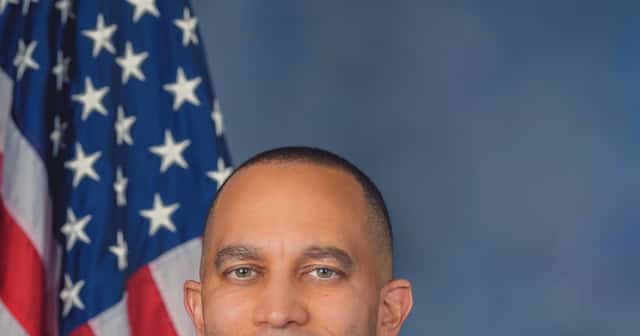
Photo: Hakeem Jeffries' official 2021 portrait, Franmarie Metzler / Office of Representative Hakeem Jeffries; public domain. Source and provenance. Archival photograph; cropped for display.

Differing perspectives
What is driving the criticism of Democratic leadership?
Each position is summarized as its supporters make it, with equal weight and in alphabetical order. A summary is not an endorsement; the evidence for each is weighed in the story above.
Follow the base on Israel policy
Who holds it: Progressive critics including Usamah Andrabi
Critics argue that leadership should respond to voters demanding changes in Israel policy and demonstrate independence from AIPAC. They see the July aid debate as a missed opportunity for Jeffries to show that donor relationships will not set the party's direction.
In their words: Andrabi’s July 14 post ↗
Judge leaders by results
Who holds it: Ro Khanna and other critics of Schumer
Khanna argues that a leader who cannot deliver an effective fight on health care should be replaced. This criticism focuses on caucus strategy and outcomes, even when Schumer personally votes against an agreement that other Democratic senators support.
In their words: Khanna’s November 2025 post ↗
Keep governing channels without abandoning oversight
Who holds it: Jeffries and defenders of the Kushner meeting
Jeffries says the meeting concerned affordability and did not exempt anyone from accountability. Supporters of maintaining such channels see negotiation and oversight as compatible responsibilities, while critics question the political cost and demand evidence that cooperation produces public benefits.
In their words: Semafor’s reporting ↗