Justice Department sends about 1,000 Election Day monitors as states set how close they can get
Colorado, Indiana, Kentucky and Wyoming keep monitors outside polling places; Pennsylvania lets them in with limits; an NAACP records suit continues.
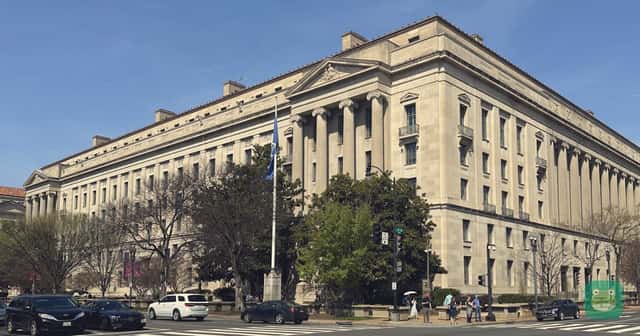
The Justice Department plans to send about 1,000 election monitors to polling places across the country on Tuesday, Nov. 3, the largest monitoring effort the department has attempted, according to Votebeat. On the eve of the midterms, the practical rules for those monitors are being set state by state. Several states and counties have told the department that its staff must stay outside polling places, and Pennsylvania has said they may come inside only under limits.
The department says the monitors will do what federal observers have done for decades: watch for compliance with federal voting laws and report what they see. Critics, including the NAACP and some state officials, say the scale of the effort and the people taking part could intimidate voters. Some Republican officials have welcomed the monitors, while others have questioned their conduct or their value.
This story explains what is known about the deployment, where state officials have drawn lines, what the department has told a federal court, and how each side describes the stakes. For wider coverage of Tuesday's elections, see the 567 Politics United States elections guide.
The size of the effort
The plan dates to August. On Aug. 18, the Washington Examiner reported that the administration intended to deploy around 1,000 monitors nationwide. The Examiner reported that, according to the department, the monitors' role is to observe rather than intervene. It added that Assistant Attorney General Harmeet Dhillon, who leads the Civil Rights Division, said the monitors would watch for issues such as barriers for voters with disabilities and suspected fraud.
Earlier counts differ by source. A department official told PBS News that the department sent 388 people to polling places during the 2022 midterms. The Indiana Capital Chronicle, citing CBS News, put the figures at 289 monitors in 2022 and 714 in the 2024 presidential election. Under either count, this year's plan is larger than in recent cycles.
The department has not published a full list of monitored places. A department spokesperson told Votebeat that the full list would be released on Election Day. Local officials have confirmed notices in many jurisdictions. Democracy Docket compiled news reports from 21 states naming places that have been notified. Its list includes four Pennsylvania counties, among them Philadelphia and Allegheny. It also includes Detroit and six other Michigan cities, four metro Atlanta counties, and King County, Washington. Democracy Docket wrote that the locations are "almost all Democratic strongholds." The department told PBS News that it is focusing on "high-population areas because that's where the most voters are." It added that it also considers past problems with language access and disability access, and races where voter intimidation could be a risk.
Who the monitors are
Department monitors have traditionally been civil rights attorneys. This year the pool is wider.
In a sworn declaration filed Oct. 28 in a records lawsuit brought by the NAACP, the department said no FBI or Immigration and Customs Enforcement employees would serve as monitors, MS NOW reported. "There will be no Federal Bureau of Investigation or U.S. Immigration and Customs Enforcement employees, much less agents, serving as monitors," the declaration said, according to MS NOW. The filing said employees of the Bureau of Alcohol, Tobacco, Firearms and Explosives, the Drug Enforcement Administration and the Bureau of Prisons will serve. It said one Customs and Border Protection employee will serve on a detail to the Civil Rights Division.
The NAACP said the declaration states that those personnel will not be armed and will not be authorized to make arrests or act as law enforcement. A senior department official told PBS News that prosecutors will also serve as monitors, though they would not personally prosecute any case arising from what they saw.
In letters to election officials, the department has described the role narrowly. "Our monitors only observe and take notes. They do not intrude or interfere in any way in the voting process," department trial attorney James T. Catania wrote to Pennsylvania, according to The Philadelphia Inquirer. The letter said monitors will introduce themselves to poll managers, dress in business casual clothing without department insignia, and not carry firearms. It said that if monitors see an issue, a team lead may contact the local election office.
Where states have drawn lines
Federal monitors generally have no greater right to enter a polling place than any member of the public unless a court order or agreement says otherwise. Department spokesperson Kiersten Pels told Votebeat that "DOJ monitors are subject to state and local laws and rules pertaining to polling locations." She said the department trains monitors on the rules in each assigned jurisdiction.
Colorado. Secretary of State Jena Griswold, a Democrat, offered to let monitors into Adams County voter centers if they were escorted by state observers and followed set restrictions. The department declined. Its reply, quoted in full in a secretary of state news release, said: "While we appreciate your efforts to accommodate us, we will have to decline your offer. Our monitors will remain outside of polling places and not come within 100 feet of the building in accordance with Colorado state law." Griswold said her office "provided reasonable restrictions on DOJ monitors, which they refused to accept."
Indiana. The department plans to send up to 12 monitors to Marion County and about a dozen to Lake County, the Indiana Capital Chronicle reported. An Indiana Election Division official told the paper that "our state law does not give federal monitors access to enter any voting location." Marion County Clerk Kate Sweeney Bell said monitors would stay at least 50 feet from entrances, the same limit that applies to campaign workers. She said they would work in pairs at six or seven of the county's 182 vote centers and conduct voluntary exit interviews. Department staff said their questions would focus on disability access, provisional ballots and language assistance, she said. Neither county is covered by the Voting Rights Act's language-assistance requirement.
Kentucky. Election officials in Jefferson and Fayette counties, home to Louisville and Lexington, said monitors would not be allowed inside polling places, Louisville Public Media reported. Jefferson County Clerk David Yates said his office could call police if monitors crossed the 100-foot boundary and kept trying to enter. The Kentucky State Board of Elections said monitors, like anyone else not voting, must stay at least 100 feet from polling-place entrances.
Wyoming. Attorney General Keith Kautz issued an opinion that state law does not let department monitors into controlled areas of polling places without a court order, settlement or consent decree, Cowboy State Daily reported. Laramie County Clerk Debra Lee said the department agreed to keep its monitors 100 yards from polling places and to interview only voters who agree to talk.
Pennsylvania. The state is taking a middle path. A Department of State spokesperson told the Inquirer that monitors may enter polling places but must stay at least 10 feet from the area where voting machines are located. Deputy Secretary Jonathan Marks told county officials that monitors "may not enter restricted areas, inspect voting equipment, or demand access to any records." Secretary of the Commonwealth Al Schmidt said the monitors "are not legally entitled to any greater access to polling places than any member of the public," according to Votebeat.
The Inquirer also cited a Newsweek report that one Arkansas county has told the department its monitors must remain outside polling locations.
The Wyoming primary dispute
Much of the debate traces to Wyoming's Aug. 18 primary. Two Civil Rights Division attorneys arrived in Laramie County. A local official said they asked about poll worker training and new equipment and sought to look at tabulators, according to PBS News, which cited WyoFile.
Gov. Mark Gordon, a Republican, criticized the visit. "It was aggressive, unexpected, disruptive – certainly didn't seem to show respect for the state," he told The New York Times, as quoted by The Guardian. A department spokesperson told The Guardian that the department disagreed "with the public framing that the two monitors we sent were 'aggressive' or did anything improper." The senior official who spoke to PBS News acknowledged that the department had not notified the local clerk in advance. Wyoming Secretary of State Chuck Gray, also a Republican, defended the August visit and said election observation is allowed, according to Cowboy State Daily.
The court fight over records
The NAACP filed a Freedom of Information Act request on Sept. 1 and sued Dhillon in October, saying the department had not turned over records about the deployment, The Guardian reported. Kristen Clarke, the NAACP's general counsel, held Dhillon's job under President Joe Biden. "There is no federal statute that gives the US Department of Justice [DoJ] the right to send their so-called 'election monitors' to polling sites across the country," she said.
According to the NAACP, a federal judge ordered the department on Oct. 29 to use reasonable efforts to produce records on a rolling basis before Election Day. The NAACP called the Oct. 28 declaration the department's initial response. "We remain determined to pull back the veil on the DOJ's plans to deploy monitors," Clarke said in an NAACP statement. The NAACP has told voters they are under no obligation to speak with monitors.
The case for the monitors
Supporters say the program continues long-standing practice and serves voter confidence. Attorney General Todd Blanche told Fox News that "every single election's been monitored" since the 1960s. "This administration, President Trump, is doing the same thing that every single administration has done in our generation, multiple generations," he said, as quoted by The Guardian.
Dhillon has framed the effort around trust in results. She spoke on a Bloomberg podcast in August, as transcribed by the Connecticut Centinal. "The goal is not so much going after one voter here or there; it is increasing all American citizens' confidence in our elections, and that requires us to enforce our laws," she said. She described distrust of election results as "a bipartisan problem."
Indiana Attorney General Todd Rokita, a Republican, welcomed the monitors in a statement quoted by the Indiana Capital Chronicle. "Federal monitors who observe and report simply add another layer of accountability to the work our great state already does to protect the integrity of every legal vote," he said. The senior department official told PBS News that groups "saber-rattling and fearmongering about prosecutors being monitors" were doing more to deter voters than the monitors themselves.
The case against
Opponents argue that the context matters as much as the numbers. Griswold told PBS News she does not believe there is a "reasonable basis" for the monitors. She said the department was trying to "lay the groundwork for MAGA and Trump to reject the results if they don't go their way." That is her claim, and the department has not adopted that framing.
The Campaign Legal Center has warned that attorneys from outside the Civil Rights Division "may lack knowledge of federal civil rights laws and training on how to engage in election monitoring," Votebeat reported. The center also pointed to monitors in Arizona and Minnesota whose past conduct it criticized, according to the Inquirer. Democrats in Congress are sending their own observers. Votebeat reported that Senate Democrats are sending more than 100 staffers to monitor elections in nine states. "Election interference is unconstitutional and illegal and Congress will be watching," Sen. Alex Padilla of California said in a statement quoted by Votebeat.$
The monitors arrive amid other federal actions on elections this fall. The department has sued over certification of the Alaska Senate race. Federal prosecutors have opened an Arizona probe of voter registration groups, and a judge has barred the department and Homeland Security from threatening election workers over flagged ballots.
Views from former officials and election administrators
Several people who have worked in or alongside the program describe it as more routine than either side suggests. Stacey Young, who served as a monitor three times as a department civil litigator, told PBS News the job has historically been "pretty passive." She said prosecutors "can be viewed as a more intimidating presence" than civil attorneys.
David Becker, a former Voting Section attorney, told PBS News the scale is "not normal, but I'm not particularly concerned." He noted that monitors must follow state and local rules about entering polling places. Justin Levitt, who helped oversee the program in the Obama administration, told MS NOW it is "not normal" for ATF and DEA staff to serve. He added that they are "still just there only to observe, and can (and will) still be tossed out of the polls if they disrupt or disturb or intimidate."
Kansas Secretary of State Scott Schwab, a Republican, told PBS News that monitors in his state cannot go past the voter ID checkpoint. He questioned the use of resources. "When you look at the number of polling places across the country, I'm not sure it's the best use of resources," he said. In Pennsylvania, Vic Walczak, legal director of the ACLU of Pennsylvania, told the Inquirer the monitors are not a cause for alarm.
What voters can expect on Tuesday
For most voters, the practical effect will be small. Monitors are expected in a limited number of polling places. In several states they will stand outside the zones where campaigning is banned. Interviews are voluntary. "A voter doesn't have to answer a question if they don't want to," Sweeney Bell told the Indiana Capital Chronicle. The department official who briefed PBS News said monitors are there to "observe and report." Any enforcement action would come after the election, the official said.
In Wyoming, the Laramie County clerk said her office is briefing poll workers and meeting with the sheriff's office. State and federal laws bar monitors from intimidating voters, Votebeat noted. Pennsylvania's Department of State said police must stay 100 feet from polling places unless they are voting, serving a warrant or preventing a disturbance.
The department has said it will release its full list of monitored jurisdictions on Election Day. The NAACP's records case has a joint status report due on Nov. 12, according to SignalData's review of the docket. Reports of how monitors behaved, and whether any disputes arose, are likely to come in the days after the vote. President Donald Trump continues to falsely claim that the 2020 election was rigged, PBS News noted. Supporters and critics of the monitors alike have tied their arguments to how the 2026 results will be received.
This article was produced with AI assistance and reviewed against 567 Politics editorial standards. Campaign finance data is not included because this story concerns federal agency conduct, not a candidate's policy positions or finances.
Differing perspectives
Do the Justice Department's Election Day monitors pose a risk to voters?
Each position is summarized as its supporters make it, with equal weight and in alphabetical order. A summary is not an endorsement; the evidence for each is weighed in the story above.
Monitors only observe
Who holds it: U.S. Department of Justice
In a letter to Pennsylvania, department attorney James Catania wrote, "Our monitors only observe and take notes. They do not intrude or interfere in any way in the voting process." Spokesperson Kiersten Pels said, "DOJ monitors are subject to state and local laws and rules pertaining to polling locations," and that the department trains monitors on those rules.
In their words: Votebeat, Oct. 31, 2026 ↗
Scale and staffing raise concerns
Who holds it: NAACP and its General Counsel Kristen Clarke
The NAACP says the department's court declaration confirms that, unlike in previous elections, law enforcement agency personnel will take part as monitors, though unarmed and without arrest power. Clarke said the group will "ensure that all voters can cast ballots free from intimidation and harassment." The NAACP says voters need not talk to monitors.
In their words: NAACP, Oct. 29, 2026 ↗
READ BEYOND 567POLITICS
Alternate sources & perspectives
Independent coverage and primary evidence to help you compare arguments. A link is not an endorsement; perspective labels describe the linked material.
- primary evidence
Department of Justice Declines Secretary of State Parameters, Affirms They Will Not Enter Voter Centers ↗
Colorado Secretary of State
Oct. 29 release quoting the Justice Department's full reply declining Colorado's conditions and agreeing to stay 100 feet from Adams County voter centers.
- right argument
AAG Harmeet Dhillon: DOJ To Send 1,000 Election Monitors To Polls For Midterms ↗
Connecticut Centinal
Transcribes Dhillon's Bloomberg podcast remarks defending the monitors as a way to build voter confidence and enforce federal law, plus the department's primary-season figures.
- right argument
DOJ plans to send 1,000 poll monitors to watch midterm elections ↗
Washington Examiner
Aug. 18 report on the announcement that presents the department's case that monitors observe rather than intervene and look at disability access and suspected fraud.
- left argument
Amidst Ongoing Litigation, NAACP Responds to the Department of Justice's Admission of Election Monitor Specifics ↗
NAACP
Plaintiff's statement on the Oct. 28 declaration in NAACP v. Dhillon and the court's order for rolling record production before Election Day.
- left argument
Here's where the DOJ will deploy election monitors during the midterms ↗
Democracy Docket
Compiles notified jurisdictions in 21 states from news reports and argues the targets are mostly Democratic strongholds.
- independent analysis
Trump administration sending election monitors to observe the 2026 election in all 50 states ↗
Votebeat
Explainer on what monitors may and may not do, state access limits, the department's spokesperson statement and congressional observers.
- independent analysis
How some states are responding to DOJ's plan to send 1,000 monitors on Election Day ↗
PBS News
Senior department official's briefing, 2022 comparison figure, and views from Kansas and Colorado secretaries of state and former department lawyers.
- independent analysis
DOJ says FBI and ICE agents will not serve as poll monitors ↗
MS NOW
Reports the Oct. 28 sworn declaration naming ATF, DEA and Bureau of Prisons staff as monitors and excluding FBI and ICE.
- independent analysis
Federal election monitors won't enter Indiana polling sites, officials say ↗
Indiana Capital Chronicle
Marion and Lake county plans, the 50-foot limit, focus of voter interviews, and Attorney General Todd Rokita's support.
- independent analysis
Federal monitors barred from entering Kentucky polling sites, election officials say ↗
Louisville Public Media / Kentucky Public Radio
Jefferson and Fayette county officials and the State Board of Elections on the 100-foot rule.
- independent analysis
Wyoming AG: State Law Bars DOJ Election Monitors From Polling Places ↗
Cowboy State Daily
Summarizes Attorney General Keith Kautz's opinion and Laramie County's 100-yard arrangement; notes Secretary of State Chuck Gray's defense of the August visit.
- independent analysis
The DOJ plans to send poll monitors to Philly on Election Day. Here's what we know ↗
The Philadelphia Inquirer
Nov. 2 report quoting the department's letter to Pennsylvania and the state's 10-foot rule for monitors inside polling places.
Reviewed 2026-11-02. discover_politics_sources returned only unrelated dictionary and Ohio agency pages, so sources were selected by hand and each page was opened on Nov. 2, 2026. The Oct. 28 Neff declaration in NAACP v. Dhillon (D.D.C. No. 1:26-cv-03461) was not opened directly; its contents are attributed to MS NOW and the NAACP. Newsweek and IndyStar were paywalled, and an AP explainer timed out. The department has not published a list of monitored jurisdictions; it says the list will be released on Election Day. The Guardian (Oct. 7) was also used in the article but is omitted here because of the 12-source cap.