Epstein Survivors Could Get a New Weapon Against DOJ—and State Prosecutors Could Too
The proposed bill would let survivors and state prosecutors sue over withheld Epstein records, with different access rights and privacy safeguards.
Survivors and state prosecutors would gain distinct rights to obtain Epstein-related records under the enforcement proposal that moved closer to House consideration on November 11. The bill gives people outside DOJ new routes to court. They could challenge withheld material and seek orders to obtain the records they need. It would not simply make every unredacted file public. Read the proposed House bill.
The timing matters because the House clerk now records 218 signatures on the discharge petition associated with the proposal. That is a procedural milestone, not enactment. Until legislation becomes law, the proposed rights and deadlines described here must be treated as proposals. The petition targets a resolution that would insert the enforcement text into H.R. 185. The standalone House bill is H.R. 9694.
The distinction between public release and controlled access runs through the text. A survivor's request concerns that survivor's records. A state prosecutor's request concerns an investigation or proceeding. Public access is a separate issue. Disclosure rules and privacy protections would still apply. Confusing these audiences can make a protection for survivors look like a promise to publish their private information.
Survivors would gain access to their own records#
A victim could ask the attorney general for records without redactions. The records must relate to that person, specified family members or the harm suffered. The bill expressly includes FBI FD-302 files. The right covers records that identify, describe, quote or otherwise relate to the requester. It is not limited to records the person already knows exist. Section 2 of H.R. 9694 supplies those terms.
The accompanying limit is equally important. A request by one survivor would not entitle that person to another survivor's unrelated records. DOJ could still redact some parts. These include another victim's identity or private medical and similar files. Access to one's own account and protection of someone else's privacy are designed to operate together.
That structure addresses a problem public document releases cannot necessarily solve. A person may need the complete account held about them without wanting that account searchable by everyone. Putting a redacted file online may serve one purpose. But the person it describes may still be unable to learn what investigators recorded. These are different access questions, which the proposal treats separately.
Victims could also sue the attorney general. Grounds include unlawful withholding, redaction, delay or concealment. A failure to respond or justify a decision could also be challenged. They could sue in federal court in Washington. They could also sue in a federal district court in their home state. The proposed remedies include court declarations, injunctions, monetary relief, costs and reasonable attorney's fees.
Those remedies are available forms of relief under the text, not guaranteed payments or automatic victories. A court would still have to decide the claim and appropriate remedy. Courts would be told to speed up these cases as far as they can. The bill does not promise that every case would end on a fixed date.
The definition of victim also matters. It includes people directly harmed by the specified abuse or related crimes. Several routes could support a claim. These include recognition by federal authorities or a court, an investigative record, or a sworn statement alleging harm. It excludes some claims arising from a person's own role in the crimes. But it preserves an exception where that role began through the person's own trafficking or abuse. These details appear in the bill's definitions; they should not be reduced to a requirement that every survivor already possess a criminal judgment.
This access question is separate from the public naming issues examined in our report on what the Section 3 roster does and does not establish. A name appearing in a record does not, by itself, identify a perpetrator, establish a charge or resolve the reliability of an allegation.
State investigators would get evidence they could use#
For state law enforcement, the proposal goes beyond inspecting pages inside a federal facility. State officers could obtain unredacted records for investigations and court proceedings. State attorneys general, district attorneys and other authorized officers could keep, copy and use the material. Courts could impose protections for victims' personal information. The state-access provisions describe both the entitlement and the safeguards.
The bill specifically says production should not be limited to in-camera review—a private examination rather than general public access. It also says a protective order should not prevent a requesting state officer from possessing or using the material as needed for an investigation or proceeding under the proposed rules.
That difference has practical significance. Seeing a document once is not necessarily equivalent to being able to compare it with other evidence, use it in an interview or submit it to a court. The proposal attempts to make federal records usable in state proceedings while retaining controls on public exposure. Access alone would not prove an offense or remove the need to establish jurisdiction and the elements of any case.
State attorneys general made that argument in an October 15 letter to congressional leaders. They said access to unredacted investigative material, including relevant FBI reports, was needed to pursue matters within their jurisdictions. They also argued that survivors should have control over records concerning their own experiences. The letter supports the bill; it is evidence of the coalition's position, rather than an independent audit of all withheld files.
The proposal would apply to investigations already pending at enactment, not just those opened afterward. It would also prevent specified Justice Department regulations governing production demands from being used to condition or block access under the act. State officers would keep other legal routes already available to them.
For court filings, records protected from public disclosure would generally need to be sealed or otherwise protected by an appropriate order. A court would have to approve public disclosure. It must be lawful and meet the text's victim-privacy conditions. A prosecutor's access right is therefore not the same thing as permission to publish a victim's identity.
| Recipient | Proposed access | Important protection or limit |
|---|---|---|
| Survivor | Records relating to that person | Other survivors' privacy remains protected |
| State investigator | Usable unredacted evidence | Court protections and filing safeguards |
| Member of Congress | Unredacted access on written request | Defined process for challenging noncompliance |
| General public | Statutorily releasable records | Public disclosure differs from controlled access |
The institutional stakes connect with our reporting on the 2007 non-prosecution agreement. The present proposal concerns access and enforcement; it does not itself decide whether any earlier charging decision was lawful or direct a particular prosecution.
Privilege, classification and penalties need careful reading#
The proposal would explicitly bar common-law privileges from being used to withhold covered material except as the disclosure statute permits. It names deliberative-process, attorney-client, attorney work-product and law-enforcement privileges. This would directly address one of the department's stated reasons for withholding material. The change targets specific legal claims. It goes beyond a call for more transparency. The proposed amendment supplies the language.
The Justice Department's January 30 announcement said that unproduced material included duplicates, privileged records, material protected under the act and unrelated material. It reported nearly 3.5 million pages released and described victim-protection review procedures. Each reason needs its own review. The size of the release does not prove full compliance. Neither does the size of the archive.
Classification presents an additional drafting issue. The introduced House text would remove the original law's expressly listed withholding category for properly classified material. Yet it also retains a separate framework for secure review of classified records by state officials and says that provision does not authorize public release outside the original law's declassification framework. Readers should not translate that combination into an unconditional promise to put all classified records online.
Secure access would take place in a facility under court-approved rules. Those rules would protect properly classified information. They would prevent classification alone from being used to refuse or delay the specified state access, while allowing requests for protective handling, storage and filing procedures. The relationship among these provisions deserves scrutiny as the text moves through Congress; this article describes the introduced language rather than predicting how a court would resolve every interaction.
The penalty language likewise requires care. It points to existing federal criminal statutes covering specified conduct, including false statements, obstruction and records misconduct, and expressly preserves their required mental-state elements. It does not declare an official guilty. A disputed redaction would not lead to automatic imprisonment. The bill's penalties section must be read with those limitations.
Our coverage of the dispute over DOJ redactions provides background to the privilege debate. Our reporting on the direction of the release process concerns responsibility for decisions. Who made a decision is one question. Whether it met a disclosure duty is another. Whether it was a crime is a third.
Enforcement and privacy are not mutually exclusive#
Supporters argue that rights need remedies. Without a path to court, a person depends on the agency whose decision they challenge. The department's stated emphasis on privacy addresses a different but legitimate requirement: releasing investigative material can expose victims and other protected information. Neither proposition determines whether a specific redaction is lawful.
The original statute already prohibited secrecy based on embarrassment, reputational harm or political sensitivity while allowing specified protections. The new proposal tries to change who can enforce those duties and what records particular requesters can obtain. Its survivor-specific and state-specific pathways are therefore central to assessing it, not minor exceptions to a promise of total public release.
The reviewed material did not include a detailed administration response to every clause. Nor did it include a representative survey of survivors' views on this exact text. The state officials' support cannot stand in for every survivor. Nor does this article independently establish the legality of each withheld page or identify previously unknown offenders.
ABC News and Roll Call independently reported the petition's November 11 milestone. Further House action, Senate agreement and enactment remain necessary before these proposed powers become law. The next substantive question is whether the text that advances preserves both usable access for legitimate requesters and enforceable protection of private victim information.
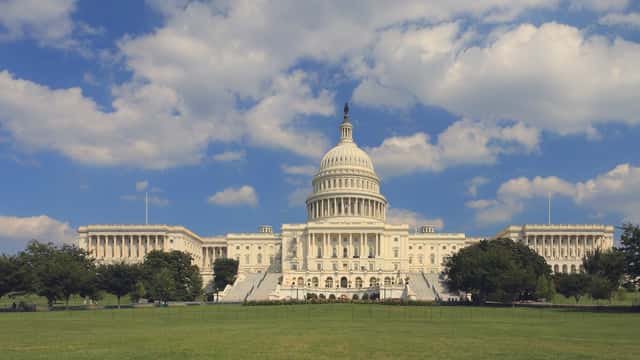
Checked November 12, 2026. AI-assisted document analysis; no interviews were conducted. This report examines proposed legislation, not individual legal advice. Lead image: the Capitol in 2013, by Martin Falbisoner, via Wikimedia Commons, cropped under CC BY-SA 3.0; the adapted photograph retains that license.

Differing perspectives
How should Congress address the dispute over compliance with the Epstein disclosure law?
Each position is summarized as its supporters make it, with equal weight and in alphabetical order. A summary is not an endorsement; the evidence for each is weighed in the story above.
Add enforceable access rights
Who holds it: Sponsors of the Epstein Files Transparency Act II
The sponsors argue that the original law has not secured the required disclosure and that additional legal remedies are necessary. They want survivors, state prosecutors and members of Congress to be able to challenge unlawful withholding directly, obtain records needed for accountability, and prevent privilege claims from defeating the disclosure duty.
In their words: Official introduction of the Epstein Files Transparency Act II, July 15, 2026 ↗
Assess disclosure alongside protected material
Who holds it: Department of Justice, in its explanation of the existing release
The department says its release fulfilled the act and that unproduced material falls into categories including duplicates, privileged records, statutory protections and unrelated material. It describes review procedures intended to protect victims. This is its defense of the existing production, rather than a detailed response to every provision of the proposed second act.
In their words: DOJ production announcement, January 30, 2026 ↗
Give state investigators usable evidence
Who holds it: State attorneys general signing the October 15 letter
The coalition argues that state investigations require unredacted federal evidence and that survivors need control over records concerning their own experiences. It supports explicit, expedited court remedies, access to relevant investigative reports and limits on privilege claims, presenting enforcement as a practical requirement for state accountability and survivor access.
In their words: State attorneys general letter to congressional leaders, October 15, 2026 ↗
Cite this article
567 Politics — AI-assisted reporting. “Epstein Survivors Could Get a New Weapon Against DOJ—and State Prosecutors Could Too.” 567politics. Published 2026-11-12. https://567politics.com/news/epstein-files-act-ii-survivor-state-prosecutor-access-explained-november-2026
Wikipedia citation
{{cite news |title=Epstein Survivors Could Get a New Weapon Against DOJ—and State Prosecutors Could Too |url=https://567politics.com/news/epstein-files-act-ii-survivor-state-prosecutor-access-explained-november-2026 |work=567politics |author=567 Politics — AI-assisted reporting |date=2026-11-12 |language=en}}CSL-JSON for reference managers
{
  "id": "https://567politics.com/news/epstein-files-act-ii-survivor-state-prosecutor-access-explained-november-2026",
  "type": "article-newspaper",
  "title": "Epstein Survivors Could Get a New Weapon Against DOJ—and State Prosecutors Could Too",
  "URL": "https://567politics.com/news/epstein-files-act-ii-survivor-state-prosecutor-access-explained-november-2026",
  "container-title": "567politics",
  "language": "en",
  "author": [
    {
      "literal": "567 Politics — AI-assisted reporting"
    }
  ],
  "issued": {
    "date-parts": [
      [
        2026,
        11,
        12
      ]
    ]
  }
}Citations identify this article and its publication date. Assess the reporting and its linked sources before using it as evidence.
Read this article as Markdown or JSON. Cite the original page and retain its sources, dates and qualifications.
Embed this article summary
Paste this HTML into your page. The summary stays linked to the full story and updates with it. No account required.
<iframe src="https://567politics.com/embed/news/epstein-files-act-ii-survivor-state-prosecutor-access-explained-november-2026?theme=auto" title="Epstein Survivors Could Get a New Weapon Against DOJ—and State Prosecutors Could Too by 567politics" width="100%" height="440" style="border:0;max-width:100%" loading="lazy"></iframe>
<p style="font-size:14px">Epstein Survivors Could Get a New Weapon Against DOJ—and State Prosecutors Could Too by <a href="https://567politics.com/news/epstein-files-act-ii-survivor-state-prosecutor-access-explained-november-2026" rel="nofollow">567politics</a></p>
<script async src="https://567politics.com/embed.js"></script>
READ BEYOND 567POLITICS
Alternate sources & perspectives
Independent coverage and primary evidence to help you compare arguments. A link is not an endorsement; perspective labels describe the linked material.
- primary evidence
House discharge petition 27: signatures ↗
Clerk of the U.S. House
Official record identifies the 218th signature on November 11 and the resolution targeted.
- primary evidence
H.Res. 1430 and its Epstein enforcement substitute ↗
U.S. Government Publishing Office
Explains why the discharge route refers to H.R. 185 and supplies the proposed substitute.
- primary evidence
H.R. 9694: introduced House text ↗
U.S. Government Publishing Office
Source for survivor access, state use, congressional requests, privilege restrictions and penalties.
- other perspective
DOJ explains its production and withheld categories ↗
U.S. Department of Justice
Department's January defense of its production and privacy procedures; not a clause-by-clause response to the new bill.
- other perspective
Sponsors explain their enforcement proposal ↗
Office of Rep. Thomas Massie
Bipartisan sponsors argue current disclosure is insufficient and new court remedies are needed.
- other perspective
State attorneys general support enforcement and survivor access ↗
State attorneys general; hosted by New York Attorney General
October 15 letter explains the investigative and survivor-access case for legislation.
- independent analysis
Discharge petition reaches 218 signatures ↗
ABC News
Independent reporting on the milestone and conditional post-Thanksgiving floor timing.
- independent analysis
Another Epstein files bill moves toward the House floor ↗
Roll Call
Separate reporting corroborates the signature threshold and explains the procedural step.
Reviewed 2026-11-12. Reviewed official bill and resolution text, original statute, House clerk signatures, DOJ's release explanation, sponsors' statement, state attorneys general letter, and independent ABC News and Roll Call reporting. Source discovery returned broad leads, supplemented by targeted searches. No detailed administration response to each clause or representative survey of survivors on this exact text was established. Legislative access is proposed, not enacted. No interviews were conducted.