Foreign lobbying, campaign money and policy: what a FARA filing can prove
A guide to separating representation agreements, reported payments, election spending and evidence of influence.
A foreign-lobbying filing can identify a client and an agreement. It can also show an effort to influence U.S. policy. It does not, by itself, establish that a campaign received foreign money or that an official exchanged a decision for payment. To follow an influence story, check four things separately: the contract, reported money, work performed and government response.
That distinction matters when assessing firms seeking access to the Trump administration. Our reporting on Kosovo’s Ballard Partners engagement and Taiwan’s Miller Strategies engagement examines disclosed representation. Those stories are starting points for scrutiny. A lobbyist’s political ties alone cannot establish what happened to policy.
The Foreign Agents Registration Act, or FARA, is a disclosure law. The Justice Department says its purpose is to help the government and public identify the sources behind certain efforts to influence American opinion, policy and law. Its own guidance also says accepting a filing does not endorse the truth or accuracy of its contents. A public document shows that someone made a disclosure. The account still needs checking. DOJ FARA guidance
Identify who represents whom before adding up money#
Start with the legal names and the relationship between them. A foreign principal under FARA can be a foreign government or political party. It can also be an overseas person or group. The relevant agency relationship and activities matter too. Neither someone’s ethnicity nor agreement with a foreign government establishes that relationship. 22 USC 611
Exhibit A identifies the foreign principal; Exhibit B describes the agreement. Other records identify who works on the account. They can also show changes to the arrangement. The Justice Department’s current forms page provides separate registration, amendment, supplemental and short-form templates. Read the attached documents rather than treating a search-result title as the entire record. DOJ forms and templates
| Record or transaction | What to examine | What it does not establish alone |
|---|---|---|
| Representation agreement | Parties, terms, dates | Fees actually paid |
| Reported receipt | Payer, amount, period | A campaign contribution |
| Disclosed contact | Recipient, subject, date | A policy commitment |
| Campaign transaction | Donor, committee, cycle | The cause of a policy decision |
- Identifymatch the registrant and foreign principal
- Readopen the agreement and its attached terms
- Updateexamine amendments and supplemental statements
- Compareseparate proposed terms from reported activity
Source: DOJ forms and templates
An intermediary makes this identity check especially important. A U.S. company can appear between a foreign government and the firm doing the work. Identify each documented link. Cite the filing or other evidence that establishes it. A domestic address does not settle where money came from. An overseas tie does not establish that a payment was unlawful.
For Israel-related reporting, keep the Israeli government, its contractors, U.S. advocacy organizations and individual U.S. donors distinct. A policy preference is not a money trail. Describe an organization’s documented role and the transaction actually recorded, without converting a political label into a statement about who supplied the funds.
A promised fee and a completed project are different evidence#
Read payment terms literally. A monthly retainer, maximum expense allowance and reported receipt measure different things. A contract can show what a client agreed to pay without showing that the full amount arrived. A report covering one period cannot automatically establish receipts in a later period.
The distinction is central to our Stark Aerospace contract review, which examines agreement terms alongside activity and payment reports. When following the documents yourself, write down which amount comes from which kind of record. Do not turn a possible expense reimbursement into a payment already received.
Section 612 requires disclosures covering the representation and subsequent reporting. The supplemental form asks about receipts, disbursements and activity during a defined reporting period. Its political-contribution question asks whose funds were used. It specifies gifts from the registrant’s or short-form registrant’s own funds, on their own behalf. That is a reason to inspect the field’s wording before attributing a contribution to a foreign client. 22 USC 612 · DOJ supplemental-statement template
Later amendments can materially change how an initial filing should be understood. Registration No. 7788 offers a concrete example. An October 28 filing identifies Olympic Media LLC, doing business as Starboard LLC, and LDRS Group LLC on behalf of the State of Israel. A November 12 amendment says the parties did not reach a final understanding on the scope and that no covered work was performed. That is the firm’s account. It is not an independent finding about every transaction. Original Exhibit A and B · Amendment
- DOJ received Starboard’s initial Exhibit A and B
- The firm reported no covered work and sought termination effective October 28
- This guide rechecked the document index and original records
Source: DOJ original filing, DOJ amendment
The DOJ document index retrieved November 20 returned five records for that registration in this review. That describes the retrieved document set, not a comprehensive audit of the firm or a finding about its present administrative status. Our earlier Starboard report explains the original disclosure and the later account together. Keeping both in view prevents a proposed engagement from being reported as completed work.
Campaign contributions need a separate trail#
Federal election law prohibits foreign nationals from directly or indirectly making election-related contributions and specified expenditures. The FEC also describes restrictions on foreign participation in decisions about election spending. Its guidance distinguishes foreign nationals from lawful permanent residents who qualify for the relevant exception. Citizenship and legal status must be established through evidence, rather than guessed from names. FEC foreign-national guidance
A payment for representation is not automatically a donation to a candidate. An independent expenditure is another category: the FEC defines it as spending on a communication expressly supporting or opposing a clearly identified candidate without the specified coordination with that candidate or party. The beneficiary of an advertisement does not thereby receive that advertising expenditure into a campaign account. FEC independent-expenditure guidance
Keep those categories separate when evaluating a claimed connection. A campaign receipt needs its donor, recipient committee, election cycle and filing. Outside spending needs the spender, supported or opposed candidate, dates and reporting scope. For a lobbying fee, identify the parties and check payment evidence. Adding all three into one “money received” total would hide who received it.
An amended report also needs attention. Compare the transaction identity and reporting period before adding an original and corrected entry. If the coverage excludes individual gifts, refunds or a category of committees, state that limit. A partial search is useful when labeled as partial. It cannot support a complete ranking of influence.
Policy effects require evidence beyond timing#
The next question is what the spending sought and what officials did. Build the chronology from actual communications, official meeting records, bill text, votes, executive decisions and public explanations. Compare the official’s position before the engagement with the action afterward. A longstanding policy position can explain alignment without establishing that a later payment changed it.
Distinguish access from results. A reported meeting can show an opportunity to make a case. A request for an arms decision can show an attempted influence effort. A subsequent decision can show the request and outcome aligned. Establishing a bargain needs more evidence linking the benefit and official action. Timing alone cannot supply the missing agreement.
- Identityverify the principal, representative and recipient
- Transactiondistinguish an agreement from reported money
- Activityidentify the request, communication or meeting
- Decisioncheck the official action and earlier position
- Assessmentstate what connects the records and what remains unknown
These are reporting tests, not a formula that mechanically decides legality. Investigators may possess evidence unavailable publicly, while a registrant’s account may be incomplete or disputed. Report an allegation, enforcement action and adjudicated finding as different stages. If the evidence establishes only a disclosed attempt to influence policy, say so plainly.
Transparency also has a civil-liberties dimension. In March 2025, the ACLU and Knight First Amendment Institute urged a narrow reading of FARA. They argued that a broad reading could chill journalism, research and nonprofit speech. They acknowledged a legitimate interest in exposing foreign influence while disputing how broadly the law should reach. This guide cites their stated argument, not a claim about the later outcome of the case discussed in that statement. ACLU and Knight Institute statement
ICNL’s March 2025 regulatory comments likewise called for targeted, proportionate rules and clearer boundaries. Separately, the statute contains exemptions whose application depends on the activity and relationship. A missing FARA registration does not prove concealment without further inquiry. An exemption claim also needs checking. ICNL comments · 22 USC 613
For a reader checking a new allegation, the practical next step is to find the document that would establish the specific missing link: a receipt for a payment claim, a contact record for an access claim, or a communication connecting an official act to a benefit. Name that gap instead of filling it with inference.
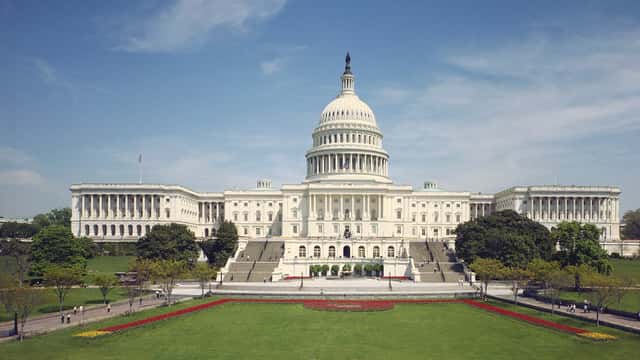
Photo credit: Architect of the Capitol / public domain, U.S. federal government work. Resized and cropped to 16:9.

References and reporting limits#
Reviewed November 20, 2026. This is an accountability explainer, not a new allegation or an exhaustive survey of foreign influence. The DOJ tool supplied the registration-specific index; original PDFs were checked separately, including visual review of the scanned November 12 amendment. No campaign-funding totals or causal policy findings are asserted. No interviews were conducted. The March 2025 advocacy statements are cited for their arguments, not as confirmation of current litigation outcomes or final regulatory changes.
- DOJ: FARA questions and answers
- DOJ: forms and templates
- DOJ: supplemental-statement template
- Statutory definitions, registration requirements and exemptions
- DOJ: registration 7788 document index
- Starboard: October 28 filing
- Starboard: November 12 amendment
- FEC: foreign nationals
- FEC: independent expenditures
- ACLU and Knight Institute: narrow-construction argument
- ICNL: regulatory comments
Differing perspectives
How should foreign-influence disclosure expose representation while protecting lawful speech?
Each position is summarized as its supporters make it, with equal weight and in alphabetical order. A summary is not an endorsement; the evidence for each is weighed in the story above.
Keep the law’s reach narrow and clear
Who holds it: American Civil Liberties Union and Knight First Amendment Institute
The organizations argue that exposing foreign influence is a legitimate interest but that broad readings can burden journalists, nonprofits and researchers with only limited foreign connections. They favor narrow interpretation so registration requirements and criminal sanctions do not chill protected speech or permit enforcement based on a speaker’s viewpoint.
In their words: ACLU and Knight Institute, March 5, 2025 statement ↗
Make foreign representation transparent
Who holds it: U.S. Department of Justice FARA Unit
The department argues that disclosure lets the public assess information intended to influence U.S. opinion, policy and laws with knowledge of the foreign interests behind it. Registration and public records identify specified representation and activities, helping people evaluate advocacy rather than having to guess its source.
In their words: U.S. Department of Justice, FARA guidance ↗
Cite this article
567politics AI Desk. “Foreign lobbying, campaign money and policy: what a FARA filing can prove.” 567politics. Published 2026-11-20. https://567politics.com/news/fara-filings-contracts-campaign-money-policy-evidence-guide
Wikipedia citation
{{cite news |title=Foreign lobbying, campaign money and policy: what a FARA filing can prove |url=https://567politics.com/news/fara-filings-contracts-campaign-money-policy-evidence-guide |work=567politics |author=567politics AI Desk |date=2026-11-20 |language=en}}CSL-JSON for reference managers
{
  "id": "https://567politics.com/news/fara-filings-contracts-campaign-money-policy-evidence-guide",
  "type": "article-newspaper",
  "title": "Foreign lobbying, campaign money and policy: what a FARA filing can prove",
  "URL": "https://567politics.com/news/fara-filings-contracts-campaign-money-policy-evidence-guide",
  "container-title": "567politics",
  "language": "en",
  "author": [
    {
      "literal": "567politics AI Desk"
    }
  ],
  "issued": {
    "date-parts": [
      [
        2026,
        11,
        20
      ]
    ]
  }
}Citations identify this article and its publication date. Assess the reporting and its linked sources before using it as evidence.
Read this article as Markdown or JSON. Cite the original page and retain its sources, dates and qualifications.
Embed this article summary
Paste this HTML into your page. The summary stays linked to the full story and updates with it. No account required.
<iframe src="https://567politics.com/embed/news/fara-filings-contracts-campaign-money-policy-evidence-guide?theme=auto" title="Foreign lobbying, campaign money and policy: what a FARA filing can prove by 567politics" width="100%" height="440" style="border:0;max-width:100%" loading="lazy"></iframe>
<p style="font-size:14px">Foreign lobbying, campaign money and policy: what a FARA filing can prove by <a href="https://567politics.com/news/fara-filings-contracts-campaign-money-policy-evidence-guide" rel="nofollow">567politics</a></p>
<script async src="https://567politics.com/embed.js"></script>
READ BEYOND 567POLITICS
Alternate sources & perspectives
Independent coverage and primary evidence to help you compare arguments. A link is not an endorsement; perspective labels describe the linked material.
- primary evidence
Disclosure argument: identify who stands behind foreign advocacy ↗
U.S. Department of Justice
Agency's explanation of disclosure purpose and warning that acceptance does not endorse a filing's truth.
- primary evidence
Document evidence: the original principal and proposed engagement ↗
DOJ FARA public records; submitted by Olympic Media LLC DBA Starboard LLC
October 28, 2026 Exhibit A and B identifies registrant 7788 and LDRS Group LLC on behalf of the State of Israel. Must be read with later amendment; not evidence alone of completed work.
- primary evidence
Registrant's response: no covered work was performed ↗
DOJ FARA public records; submitted by Olympic Media LLC DBA Starboard LLC
Three-page scanned November 12 amendment visually inspected; firm reports scope was not finally agreed and seeks termination effective October 28. Firm's account is distinguished from independently verified outcome.
- primary evidence
Election-law boundary: foreign-national restrictions ↗
Federal Election Commission
Explains election-money prohibitions, decision-making restrictions and permanent-resident distinction. No donation totals asserted.
- primary evidence
Money-type boundary: independent spending is separate from receipts ↗
Federal Election Commission
Definitions and reporting categories used to distinguish spending supporting candidates from money received by their campaigns.
- other perspective
Speech-protection argument: construe FARA narrowly ↗
American Civil Liberties Union and Knight First Amendment Institute
March 5, 2025 own-words advocacy statement supports narrow interpretation and identifies risks to journalists and nonprofits. Cited for the position, not as evidence of a current court outcome.
- other perspective
Civil-society argument: clear and proportionate registration rules ↗
International Center for Not-for-Profit Law
March 2025 original regulatory comments support targeted regulation with clearer exemption boundaries. An independent publisher from ACLU; related argument is not manufactured into an opposing camp.
Reviewed 2026-11-20. Original accountability explainer, not a new allegation. DOJ registration 7788 document index retrieved through get_government_dataset; October 28 original filing opened and November 12 scanned amendment downloaded from DOJ and visually reviewed in full. Related site articles read for contextual internal links. Discovery tool returned irrelevant reading-education candidates; excluded them and used direct manual searches of authoritative and advocacy sources. ACLU/Knight and ICNL are separate publishers offering related civil-liberties arguments; no artificial partisan symmetry is claimed. March 2025 statements establish proponents' arguments, not later litigation outcomes or final rule status. No campaign-funding totals, exhaustive lobbying inventory, new interviews, or causal policy findings. A credited, rights-verified 1600×900 lead photograph has been added. Patrick Karsh reviewed and approved this article and its photos for publication and partner distribution on November 20, 2026.