Russia bars two French deputies and two journalists in retaliation for the Fedorova expulsion
Moscow says Sacha Houlié, Arthur Delaporte, Ariane Chemin and Paul Gogo "harassed" the ex-RT France chief. Houlié calls it recognition of his work.
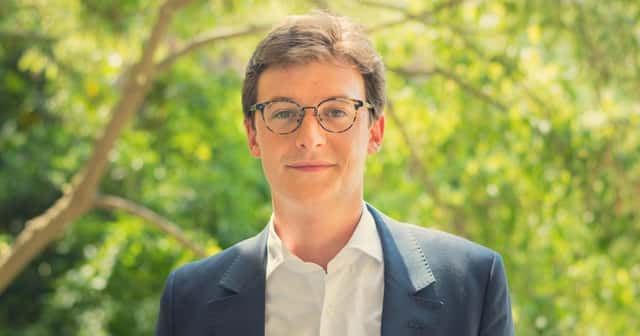
Russia has barred two French members of parliament and two French journalists from entering its territory, in retaliation for France's expulsion of the Russian commentator Xenia Fedorova. Maria Zakharova, the Russian foreign ministry's spokesperson, announced the measure at a briefing on Wednesday, November 11. It targets deputies Sacha Houlié of Place publique and Arthur Delaporte of the Socialist Party, Le Monde reporter Ariane Chemin, and freelance journalist Paul Gogo.
Zakharova said the four were banned "because of their participation in the harassment of Fedorova and their calls for her expulsion," according to AFP, as reported by franceinfo and Le Parisien. Fedorova, a former head of the Russian state channel RT in France, has been under a French expulsion order since late July. The European Union added her to a sanctions list in September.
The ban is the latest step in a five-month dispute over where commentary ends and foreign interference begins. French officials say Fedorova relayed Kremlin disinformation to destabilize France. She, her lawyer and her former employers say she is being punished for her opinions. Moscow calls the French measures political persecution. This report sets out what Russia announced, who the four are, how the Fedorova case reached this point, and what remains unresolved. Quotes from French- and Russian-language sources are 567politics translations.
What Moscow announced#
Zakharova named the four at her regular briefing in Moscow. In remarks carried by the Russian news agency Interfax and quoted by Vedomosti, she said the four "were the people who did not simply assist in this, but specifically did all of it." She said the decision was taken under Russia's federal law on the procedure for exit from and entry into the Russian Federation.
She framed the move as a matter of reciprocity. Russia intends to respond to hostile actions against the country and its citizens, Vedomosti reported. Lenta.ru, also citing Interfax, quoted her as saying that any hostile actions against Russia and its citizens "will not remain without an appropriate response."
The published accounts of the briefing do not list specific acts by each of the four, or say how long the ban lasts. Russian officials have used similar language before. When France issued the expulsion order in July, Russian diplomacy denounced "the political persecution of journalists on the basis of false accusations," Le Parisien recalled. In September, Kremlin spokesperson Dmitry Peskov called the EU sanctions against Fedorova illegal and described them as open pressure on the media, according to Vedomosti.
Who the four are, and what they said about Fedorova#
The four had each taken a public position on Fedorova in recent months. Their documented actions were a parliamentary question, public posts and interviews, and journalism. The expulsion itself was ordered by France's interior minister, not by any of them.
Sacha Houlié is a member of the National Assembly. He founded the Jeunes avec Macron youth movement and has since joined Place publique, the party of presidential candidate Raphaël Glucksmann. He chaired the National Assembly's law committee from 2022 to 2024 and sits on the parliamentary intelligence delegation, according to Euronews. He wrote a November 2023 report on France's vulnerability to foreign interference, which describes Moscow's methods over several pages. In early June, he called for Fedorova's residence permit to be withdrawn. "She is guilty of foreign interference in France and thus threatens the fundamental interests of the Nation," he wrote on X, Le Parisien reported.
Arthur Delaporte is a deputy from the Calvados for the Socialist Party. In June, during questions to the government, he challenged Interior Minister Laurent Nuñez over the 2024 renewal of Fedorova's ten-year residence permit, Euronews reported. He called the renewal an "undue and dysfunctional" decision by prefecture officials. He described Fedorova as a "Kremlin propagandist" and a "destabilizing agent in our country." "Will you withdraw her permit and start an expulsion procedure?" he asked. After the expulsion order, he told France Inter on July 30: "Finally, the government is taking measures."
Ariane Chemin is a senior reporter at Le Monde. She co-signed a portrait of Fedorova published in the paper in May, according to Le Parisien. In May she also published a book, "La guerre, ce sont les noms propres," a literary account of the consequences of Russia's invasion of Ukraine, Euronews reported.
Paul Gogo is a freelance journalist who works for several French outlets, including Ouest-France. He lived and worked in Russia for nine years, from 2017 until February 2026, after being based in Ukraine from 2014, according to Euronews. On France Culture, he had said Fedorova "relays Russian rhetoric point by point," Le Parisien reported.
Reactions so far#
Houlié was the first of the four to respond publicly, in a post on X reproduced by Ouest-France. He noted that he learned of the ban on November 11, "a day of remembrance of the price of our freedoms." He wrote that "what is meant as a sanction rings for me as recognition of my work against foreign interference in France." He listed that work: his report for the parliamentary intelligence delegation, the 2024 law to prevent interference that he steered through, and "obtaining the expulsion of the Russian agent Fedorova." He added: "Clearly, it invites me to continue this just commitment to the defense of the fundamental interests of France."
Ouest-France's management condemned the decision as harmful to press freedom and the freedom of information, the paper said.
As of Wednesday morning Eastern time, 567politics had found no public statement from Delaporte, Chemin, Gogo or Le Monde. Nor had it found a response from the French foreign ministry. This report will be updated if they comment.
How the Fedorova case reached this point#
The Russian ban responds to a chain of French and European decisions that began in the spring. Fedorova, born in Russia in December 1980, entered France in April 2017, according to a Paris administrative court ruling of August 3. She ran RT France, whose broadcasts the EU banned in March 2022 after Russia's full-scale invasion of Ukraine. From early 2025, she became a regular commentator on outlets owned by Vincent Bolloré's group, notably the news channel CNews, the radio station Europe 1 and the weekly JDNews.
- Fedorova enters France
- The EU bans RT's broadcasts after Russia invades Ukraine
- Renew group leader Valérie Hayer refers Fedorova's remarks to the media regulator Arcom
- Le Monde reports her residence permit was renewed in 2024; Houlié and Delaporte call for its withdrawal
- The interior minister signs an expulsion order, served on July 29
- Paris administrative court rejects her first emergency appeal
- The court rejects a second emergency appeal; the case on the merits stays open
- Nuñez warns the regulator that CNews could face prosecution if she returns on air
- The EU adds her to its sanctions list over Russian destabilization
- Russia bars Houlié, Delaporte, Chemin and Gogo
Source: Paris administrative court, franceinfo, Euronews
The spring campaign against her presence#
Pressure built in May and June. In mid-May, Valérie Hayer, who leads the Renew group in the European Parliament, asked Arcom to examine whether Fedorova's repeated remarks on CNews and Europe 1 met the legal duty of honesty, franceinfo reported. In late May, Foreign Minister Jean-Noël Barrot called her "a proven propagandist who serves as a relay for Kremlin disinformation" on France Inter. In early June, President Emmanuel Macron said she had already served Russian "state propaganda" in 2017 and that "things had not changed," franceinfo reported.
Not every official framed the question the same way. In June, Prime Minister Sébastien Lecornu said at a news conference on foreign interference in elections: "If we have to ban everyone who makes propaganda with ideas we disagree with, we are going to ban a lot of people." He set a "red line," franceinfo reported: her stay could not continue if she harmed "the fundamental interests of the Nation."
The expulsion order and the court challenge#
The interior minister signed the expulsion order on July 27, according to the August 3 court ruling. The order said her "conduct harms the fundamental interests of the State" and that her presence "constitutes, for this reason, a particularly serious and current threat to public order." It described her as "a relay for disinformation campaigns run by the Russian authorities" aimed at destabilizing public order, franceinfo reported. On July 28, the Paris police prefect placed her under a 45-day order to stay within Paris and report daily to a police station. On July 30, the interior and economy ministers froze her funds and economic resources for six months.
Fedorova was abroad when the measures were announced. Her lawyer, Emmanuel Piwnica, later said she had been in Rome and was then "outside the European Union" but "not in Russia," AFP reported via France 24. She had previously been banned from Germany, where she once lived.
She challenged the measures in court. On August 3, a Paris administrative judge rejected an emergency "référé-liberté" request, finding the required extreme urgency was not shown. The ruling did not decide whether the expulsion was lawful. On August 14, the court rejected a second emergency request, a "référé-suspension," again on urgency grounds and again without ruling on legality. The court said it remained seized of a challenge on the merits, to be judged later. Piwnica said his client would take the matter to the Conseil d'État, France's highest administrative court.
At the August hearing, Pascale Léglise, the interior ministry's director of public liberties, argued that Fedorova's remarks could amount to "manipulation of information" in a sensitive context. She cited recent Russian disinformation operations that targeted three presidential candidates: Gabriel Attal, Édouard Philippe and Raphaël Glucksmann, France 24 reported.
The fight over a return to CNews#
In early September, CNews announced that Fedorova would soon return to the air by video link. On September 10, Nuñez wrote to Arcom president Martin Ajdari. He warned that such a return would be a "circumvention" of the expulsion and asset freeze and could lead to "criminal prosecution," Euronews reported. Fedorova replied on X that the ministry had told the administrative court she could keep appearing in French media by video link. Her lawyer asked the minister to say which of the two positions was his.
The EU sanctions#
On September 24, the Council of the European Union added Fedorova to its list of people subject to restrictive measures over Russia's destabilizing activities. The listing freezes her assets across the EU, bars anyone from making funds available to her, and bans her from entering or transiting the 27 member states, Euronews reported. The French foreign ministry said France and Germany jointly proposed the listing.
The Council's stated grounds were quoted by Euronews. They say she "presented Western and European support for Ukraine as a factor prolonging the war" and "described Russia as a country seeking peace while portraying Europe as advocating confrontation." They also say she "called into question established facts relating to the illegal transfer and deportation of Ukrainian children." And they say she "spread narratives presenting European and NATO policies as threats to European security." Barrot welcomed the decision on X: "Those who think they can carry out hostile maneuvers against our democracy with impunity will suffer the consequences," franceinfo reported.
The core dispute: commentary or interference?#
The case turns on a question French law and politics have not fully settled. When does a foreign national's commentary become interference that justifies expulsion?
The French government's case is that Fedorova's role went beyond holding opinions. Officials say she systematically repeated Kremlin narratives about France's role in Ukraine and the reasons for Russia's invasion, as part of campaigns run by Russian authorities. Nuñez pointed to "numerous remarks" that "systematically take up Kremlin propaganda," France 24 reported. The EU Council reached a similar finding in its own listing. Deputies such as Houlié and Delaporte argue that a former head of a state channel banned in the EU should not keep a platform and residence in France.
Fedorova's case is that she is being punished for views. In a column in the JDD in August, she wrote that the French authorities' methods "may resemble an authoritarian logic," according to France 24. "My deep conviction is that to reach peace, all parties must be heard and single-minded thinking must be avoided," she wrote. Her lawyer called the accusations "an absolute fantasy." Canal+ and Lagardère, her former employers, called the expulsion "a particularly serious attack on freedom of expression and the pluralism of opinions." Her lawyer said she was later dismissed because she no longer had a residence permit.
Moscow's case is that France persecuted a journalist, and that those who pressed for it bear responsibility. Russia's ban targets that second claim.
The facts allow some separation between these claims. The French courts have so far ruled only on urgency, not on whether the expulsion was lawful, so there is no judicial finding yet on the merits. The EU listing is a decision by member governments, and listed people can challenge such decisions before the EU's General Court. On the Russian side, Moscow calls the four's conduct "harassment." The publicly documented acts of the four are a parliamentary question to a minister, posts on social media, a newspaper portrait and a radio interview. Houlié himself, however, says his work contributed to "obtaining" the expulsion. Whether that amounts to the kind of involvement Zakharova described is a matter of interpretation, not of record.
Why it matters for French politics#
The case sits inside a wider French debate about Russian influence in the 2027 presidential campaign. Glucksmann, whom Houlié supports, has said he has been the target of Russian online "destabilization" operations, Euronews reported. Ukraine policy has also become a campaign fault line, as our report on Jean-Luc Mélenchon's Donbass remarks and the replies from Kyiv and Barrot shows.
It also touches the fight over CNews, the channel on which Fedorova appeared most often. An Assembly committee recently shelved a petition with more than a million signatures to take the channel off the air, as covered in our report on the committee's 28-25 vote. And it follows France's decision this month to publicly attribute a cyberattack on supermarket refrigerators to Iran's Revolutionary Guards, set out in our report on that attribution. These cases show the range of tools the government now uses against what it calls foreign interference, from expulsions and asset freezes to public attribution and EU listings.
567politics found no statement from a party leader on Wednesday's Russian ban as of publication. The 2027 presidential election is set for April 18 and May 2.
The pending court case and possible French responses#
Several questions remain open.
The French court case. The Paris administrative court has yet to rule on the merits of Fedorova's challenge to the expulsion. Her lawyer has said he would take the emergency rulings to the Conseil d'État. 567politics has not found a ruling from that court.
The asset freeze. The national freeze ordered on July 30 runs for six months, which would take it to the end of January 2027 unless it is renewed. The EU freeze applies separately.
The practical effect of the ban. None of the four has said whether they planned to travel to Russia. Gogo, who left Russia in February after nine years there, is the one whose work is most tied to access to the country.
A French response. Paris had not answered publicly as of Wednesday morning Eastern time. Past French measures against Fedorova were announced by the interior and foreign ministries.
567politics will update this report with any reaction from the remaining three targets, Le Monde or the French government.
Differing perspectives
How should France's expulsion of Xenia Fedorova, and Russia's entry ban in response, be judged?
Each position is summarized as its supporters make it, with equal weight and in alphabetical order. A summary is not an endorsement; the evidence for each is weighed in the story above.
Bar those who campaigned for her expulsion
Who holds it: The Russian foreign ministry, through spokesperson Maria Zakharova, and the Kremlin
Moscow argues that France persecuted a Russian journalist and that the EU sanctions that followed are illegal pressure on the media. It says the two deputies and two journalists did not simply support her expulsion but actively worked for it, which it calls harassment. It has barred them under Russia's law on entry and exit, and says hostile actions against Russia or its citizens will not go without an appropriate response, applying the same reciprocity it says France and the EU invited.
In their words: Vedomosti, quoting Maria Zakharova via Interfax ↗
Expel her to counter Russian interference
Who holds it: The French government, including Interior Minister Laurent Nuñez and Foreign Minister Jean-Noël Barrot, and deputies such as Arthur Delaporte and Sacha Houlié
They argue that Fedorova, a former head of a Russian state channel banned in the EU, acted as a relay for campaigns run by the Russian authorities rather than as an ordinary commentator. In their view, a residence permit and a regular platform on French channels were incompatible with defending the country's interests. Delaporte says the expulsion order finally put words on a reality denounced for months or years, and that France cannot accept messaging from an outside power aimed at destabilizing it.
In their words: franceinfo / France Inter, interview with Arthur Delaporte ↗
Lift the measures and protect her speech
Who holds it: Xenia Fedorova, her lawyer Emmanuel Piwnica, and her former employers Canal+ and Lagardère
They argue the expulsion punishes opinions about the war in Ukraine rather than any proven act, and her lawyer calls the interference accusations a fantasy. Fedorova says that reaching peace requires hearing all parties and avoiding single-minded thinking, and that the authorities' methods may resemble an authoritarian logic. Her employers called the measures a particularly serious attack on freedom of expression and pluralism. Her lawyer adds that she lived in France for nearly ten years and supports a sister there.
In their words: France 24 (AFP) ↗
Cite this article
567 Politics staff. “Russia bars two French deputies and two journalists in retaliation for the Fedorova expulsion.” 567politics. Published 2026-11-11. https://567politics.com/news/france-russia-entry-ban-houlie-delaporte-chemin-gogo-fedorova-expulsion-november-2026
Wikipedia citation
{{cite news |title=Russia bars two French deputies and two journalists in retaliation for the Fedorova expulsion |url=https://567politics.com/news/france-russia-entry-ban-houlie-delaporte-chemin-gogo-fedorova-expulsion-november-2026 |work=567politics |author=567 Politics staff |date=2026-11-11 |language=en}}CSL-JSON for reference managers
{
  "id": "https://567politics.com/news/france-russia-entry-ban-houlie-delaporte-chemin-gogo-fedorova-expulsion-november-2026",
  "type": "article-newspaper",
  "title": "Russia bars two French deputies and two journalists in retaliation for the Fedorova expulsion",
  "URL": "https://567politics.com/news/france-russia-entry-ban-houlie-delaporte-chemin-gogo-fedorova-expulsion-november-2026",
  "container-title": "567politics",
  "language": "en",
  "author": [
    {
      "literal": "567 Politics staff"
    }
  ],
  "issued": {
    "date-parts": [
      [
        2026,
        11,
        11
      ]
    ]
  }
}Citations identify this article and its publication date. Assess the reporting and its linked sources before using it as evidence.
Read this article as Markdown or JSON. Cite the original page and retain its sources, dates and qualifications.
Embed this article summary
Paste this HTML into your page. The summary stays linked to the full story and updates with it. No account required.
<iframe src="https://567politics.com/embed/news/france-russia-entry-ban-houlie-delaporte-chemin-gogo-fedorova-expulsion-november-2026?theme=auto" title="Russia bars two French deputies and two journalists in retaliation for the Fedorova expulsion by 567politics" width="100%" height="440" style="border:0;max-width:100%" loading="lazy"></iframe>
<p style="font-size:14px">Russia bars two French deputies and two journalists in retaliation for the Fedorova expulsion by <a href="https://567politics.com/news/france-russia-entry-ban-houlie-delaporte-chemin-gogo-fedorova-expulsion-november-2026" rel="nofollow">567politics</a></p>
<script async src="https://567politics.com/embed.js"></script>
READ BEYOND 567POLITICS
Alternate sources & perspectives
Independent coverage and primary evidence to help you compare arguments. A link is not an endorsement; perspective labels describe the linked material.
- other perspective
Москва запретила въезд четырем гражданам Франции из-за дела Федоровой ↗
Vedomosti (Interfax)
Zakharova's stated grounds, the legal basis under Russia's law on exit and entry, and the reciprocity warning, in Russian.
- other perspective
Двум французским журналистам запретили въезд в Россию ↗
Lenta.ru
Russian-language account of the ban as presented by Moscow, focusing on the two journalists.
- independent analysis
La Russie interdit de territoire deux députés et deux journalistes français, en réponse à l'expulsion de Xenia Fedorova ↗
franceinfo
French public broadcaster's November 11 report of the ban with the Zakharova quote.
- independent analysis
Affaire Xenia Fedorova : deux députés et deux journalistes français interdits d'entrée en Russie ↗
Euronews
Background on each of the four, including Delaporte's June question to the interior minister.
- other perspective
Deux députés et deux journalistes français, dont un collaborateur de Ouest-France, interdits de territoire par la Russie ↗
Ouest-France
Houlié's full X post and Ouest-France management's statement that the ban harms press freedom.
- primary evidence
Ordonnance du juge des référés, Mme F., n° 2623788/9, 3 août 2026 ↗
Tribunal administratif de Paris
Court ruling rejecting Fedorova's first emergency appeal against the expulsion order, setting out the government's grounds and her arguments.
- left argument
Arrêté d'expulsion visant Xenia Fedorova : "Enfin, le gouvernement prend des mesures" contre la "propagande du Kremlin", juge le député PS Arthur Delaporte ↗
franceinfo / France Inter
Delaporte, one of the barred deputies, explains in his own words why he sought the expulsion.
- other perspective
La justice française rejette un deuxième recours contre l'expulsion de Xenia Fedorova ↗
France 24 (AFP)
Fedorova's and her employers' case against the expulsion as a restriction on free expression, alongside the August 14 ruling.
- independent analysis
L'Union européenne sanctionne la chroniqueuse russe Xenia Fedorova, accusée d'être la voix du Kremlin en France ↗
franceinfo
The September 24 EU sanctions listing and Foreign Minister Barrot's reaction.
Reviewed 2026-11-11. Reviewed November 11, 2026, about 10:30 a.m. Eastern. The connector's discover_politics_sources search returned only unrelated results, so every source below was found and opened by 567politics directly. The Russian foreign ministry's own transcript of Maria Zakharova's November 11 briefing was not located; her remarks are cited through Interfax as carried by Vedomosti and Lenta.ru. No public responses from Arthur Delaporte, Ariane Chemin, Le Monde or the French foreign ministry were found at the time of review. The EU Council's legal act listing Fedorova (EUR-Lex) could not be loaded, so the listing is cited through Euronews and franceinfo. France 24's site blocks some automated requests, so its link may need to be opened in a regular browser.