BSW leaders split over the AfD as Saxony-Anhalt's premier vote nears
Seven board members want the party to rule out tolerating an AfD government, while Wagenknecht's commission calls joint motions with the AfD a model.
Seven members of the national leadership of Germany's BSW want the party to rule out any arrangement that would keep an AfD government in power in Saxony-Anhalt. Their amendment, reported by the German Press Agency (dpa) on November 16, goes beyond the party's official line, which already rules out a coalition with the AfD. It sets them against a paper by the party's policy commission, chaired by founder Sahra Wagenknecht, which calls joint work with the AfD in the Magdeburg state parliament "a successful model."
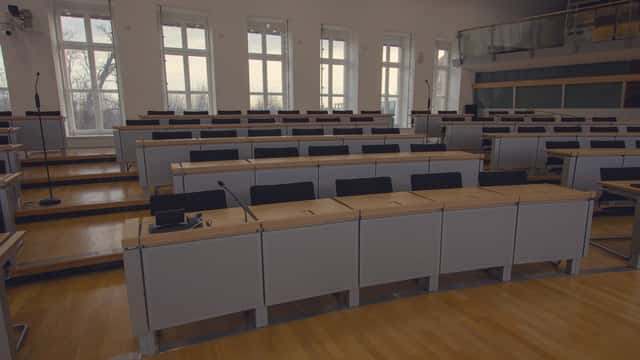
The dispute will be settled at the BSW's national congress in Dresden on November 27 and 28. It matters beyond one party. In Saxony-Anhalt, the BSW's five seats sit between an AfD group of 39 and the other parties' 39. The state parliament plans to elect a premier in mid-December, and the AfD's candidate, Ulrich Siegmund, needs at least three votes from outside his own group in the first two rounds.
Quotations from German-language sources in this article are 567politics translations.
What the amendment demands#
The amendment would add a clear line to the leadership's main motion for the congress. According to the dpa report, as carried by t-online, the BSW should rule out not only coalitions but also "a formal or de facto toleration, support for an AfD-led government and long-term arrangements for cooperation."
"The AfD is just as much the political opponent of the BSW as the governing parties of the 'center,'" the amendment says, according to dpa. It argues that both camps stand for rearmament, welfare cuts, "favoring the super-rich" and a shift to the right, and that "the AfD, which will reinforce this course, cannot be a partner for the BSW." It also says the AfD is not a party of peace, and recalls that Wagenknecht said in 2023 that the BSW would not make "common cause with the AfD."
The authors are four of the party's deputy chairs, Christian Leye, Amid Rabieh, Ralph Suikat and Jessica Tatti, and three other board members, Sevim Dağdelen, Klaus Ernst and Ralf Krämer. Dozens of supporters have signed it, dpa reported, including businessman Thomas Stanger, who has given the BSW donations in the millions several times. Most of the initiators used to belong to The Left, the party Wagenknecht left to found the BSW in early 2024. The Berliner Zeitung and Deutschlandfunk carried the same details. The amendment itself has not been published on the party's website.
Ernst set out the reasoning in a November 12 interview with der Freitag. He said the BSW should keep voting for AfD motions it agrees with, such as ending military aid to Ukraine or restarting the Nord Stream pipeline. "But beyond that there must be no cooperation or fraternization with this party," he said. "Already the election of the parliament's president was a mistake for me." He called the AfD right-wing extremist. A deal trading BSW votes for AfD projects, he said, would amount to a de facto toleration of an AfD government: "That is a red line we must not cross."
The arithmetic in Magdeburg#
The AfD won the September 6 state election with 43.8 percent of the party-list vote, according to the official final result. That gave it 39 of 83 seats, three short of the 42 needed for a majority. The BSW entered the state parliament for the first time with 5.3 percent.
Source: Die Bundeswahlleiterin (official final result)
Show the numbers
| Party | Seats |
|---|---|
| AfD | 39 |
| CDU | 15 |
| SPD | 8 |
| Greens | 8 |
| The Left | 8 |
| BSW | 5 |
The CDU, SPD, Greens and Left together also hold 39 seats. Neither bloc can reach 42 without the BSW, unless members break ranks. The state parliament confirmed that 42 votes form an absolute majority.
The premier vote is planned for mid-December, MDR reported. Siegmund told dpa in October he expected it on December 15. In the first two rounds a candidate needs 42 votes. If both fail, parliament votes on dissolving itself. If that motion also fails, a third round follows in which the most votes win and abstentions do not count. MDR reported that the CDU group plans to leave the chamber during the first round, and that Left group leader Eva von Angern intends to run as well. Caretaker premier Sven Schulze of the CDU has said his group will not vote for an AfD premier.
- Rounds 1 and 2a candidate needs 42 of 83 votes, by secret ballot
- Dissolution voteif both rounds fail, parliament votes on ending its term, which needs 42 votes
- Round 3if dissolution fails, the most votes win and abstentions do not count
Source: MDR
That third round is why abstention matters. Ernst told der Freitag that if the BSW can block an AfD premier by voting no, "we should do that." The party's co-chairs have committed it only to abstaining.
What Wagenknecht's commission argues#
The opposing case comes from the BSW's Grundwertekommission, an advisory panel of academics and public figures that Wagenknecht chairs. Its paper, "Politics on the issues instead of firewall polarization", is dated November 2026 and listed on the commission's page under November 11.
The paper backs what it calls the "Magdeburg way." The BSW, it says, should "consistently implement the line it promised before the election": vote for motions it considers sensible regardless of which party tables them, and use shared positions "also through joint motions." It calls the BSW's joint motion with the AfD on diplomacy in the Ukraine war and an end to energy sanctions "a successful model." It adds: "A selective agreement means neither a common political foundation nor a political rapprochement."
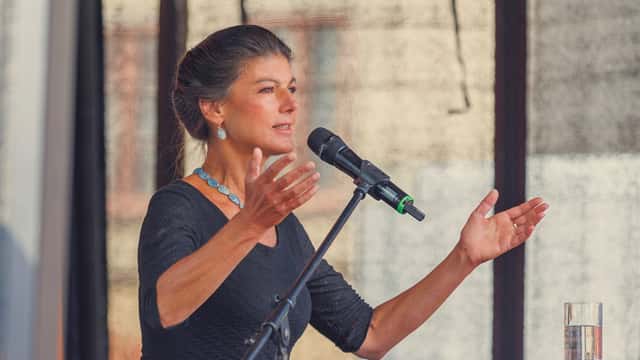
The commission also draws a line. "A coalition with the AfD or the toleration of an AfD (minority) government are therefore just as out of the question as joining a firewall coalition," it says. The German term "Brandmauer," or firewall, describes the other parties' refusal to cooperate with the AfD.
Its view of the AfD is where it differs most from the amendment's authors. The paper says the AfD should be treated "like any other political competitor." It says there are extremist positions in the AfD, and names an ethnic-nationalist wing that campaigns for "remigration" of millions. But it argues that some AfD members are closer to the BSW on peace policy than leading figures of any other party. It calls describing today's AfD as a "Nazi party" "completely detached from reality." It acknowledges a worry among members that cooperation could give extremist positions "power and influence," and says: "We do not close our eyes to this problem."
The commission argues that the long exclusion of the AfD helped radicalize and strengthen it, and that issue-by-issue cooperation could work against further radicalization. It also argues that refusing cooperation would cost the BSW voters: "Currently the AfD is often elected for similar reasons as the BSW."
The official line both sides cite#
The leadership's main motion for the Dresden congress, adopted in October, already contains much of the commission's language. "For us, the content decides and not the party membership card," it says. "If there is a majority for peace in Ukraine, the restart of Nord Stream or for free lunches in daycare centers and schools, we will push it through, regardless of who is part of this majority."
The same motion rules out a coalition, citing "fundamental differences" with the AfD on rearmament, economic and social policy and schools. It says the BSW will support neither a premier from the CDU nor Siegmund. It also rejects "völkisch" ideas and "remigration" of long-settled immigrants and German citizens. It defends the BSW's votes for the AfD's Tobias Rausch as parliament president, citing parliamentary custom, and says the party did not back the AfD's candidate for vice president, whom it called "an extremist."
- AfD wins 39 of 83 seats in Saxony-Anhalt; BSW enters with 5
- BSW leadership adopts main motion for the Dresden congress
- Wagenknecht's commission backs the "Magdeburg way"
- Seven board members' amendment against toleration reported
- Constitutional Court decision on BSW's federal election challenge due
- BSW congress opens in Dresden
- Premier vote expected, per AfD candidate Siegmund
The party's co-chairs, Fabio De Masi and Amira Mohamed Ali, make the same case in an essay in the party magazine Klare Linie. "Talking with all parties is part of democracy. But those who talk to each other do not have to govern together," they write. "There will be no coalition with the AfD with us." They say the BSW will abstain in the premier vote: "Should he get a majority, then with votes from the CDU or another party in the state parliament."
The amendment's backers want the congress to go a step further and write the ban on toleration and long-term deals into the motion itself. The commission's paper rules out toleration too, but supports joint motions with the AfD. The dispute is over where routine issue voting ends and support for a government begins.
Talks over a written deal#
The amendment's target is an arrangement that has been discussed openly in Magdeburg. AfD co-group leader Oliver Kirchner proposed in October that cooperation with the BSW be put in writing. "Everything that is fixed in writing is there," he said, according to MDR. dpa reported that talks are under way on policies an AfD-led minority government would have to carry out.
BSW state group leader Claudia Wittig told der Freitag in late October that written arrangements were not ruled out. "That the AfD wants a written agreement does not surprise me. That says nothing yet about the form of cooperation. For larger projects it will probably be necessary," she said. She said trades would be decided case by case. Wittig has said the BSW will not join a government or vote for Siegmund.
Besides the parliament president and the Ukraine motion, the BSW also voted with the AfD on a media policy measure, Deutschlandfunk reported. Wittig and other BSW members also attended a dinner hosted by the right-wing Compact magazine with AfD lawmakers, which she later called a mistake, the taz reported.
A party under pressure#
The fight comes at a hard moment for the BSW. The party renamed itself on October 1. The letters now stand for "Alliance for Social Justice and Economic Reason," and Wagenknecht no longer chairs it. It failed to enter parliament in Berlin and Mecklenburg-Vorpommern in September, with 4.8 and 4.7 percent of the party-list vote.
Source: Die Bundeswahlleiterin: Bundestag 2025, Saxony-Anhalt, Mecklenburg-Vorpommern, Berlin
Show the numbers
| Election | BSW share |
|---|---|
| Bundestag 2025 | 4.98% |
| Saxony-Anhalt 2026 | 5.3% |
| Mecklenburg-Vorpommern 2026 | 4.8% |
| Berlin 2026 | 4.7% |
In Thuringia, ten of its state lawmakers around Katja Wolf left the BSW group and formed their own, according to wahlrecht.de.
The taz reported that half of one district association in North Rhine-Westphalia quit after a cooperation offer to the AfD, and that 21 members in Saxony-Anhalt left before the state election. The party told the taz it had grown by "several hundred members" since the start of the year, and gave no figures for departures. Ernst told der Freitag that many who oppose closer ties have left, and that many newer members are open to them.
On Wednesday, November 18, the Federal Constitutional Court is due to publish its decision on the BSW's challenge to the 2025 federal election result, according to the court's weekly schedule. The party fell short of the 5 percent threshold with 4.981 percent. It argues that counting errors cost it its seats and that it should hold 35, dpa reported. In that case the governing coalition of the CDU/CSU and SPD would no longer have a majority on its own.
What to watch#
Three dates will test the two positions. The court ruling on November 18 will decide whether the BSW has any route back into the Bundestag. Delegates in Dresden on November 27 and 28 will vote on whether to add the ban on toleration and long-term deals. Then, in mid-December, the BSW's five lawmakers in Magdeburg will show in a secret ballot how the party's line works in practice.
No response from the BSW's national leadership to the amendment could be found on the party's website by Monday evening.
Differing perspectives
How far should the BSW go in cooperating with the AfD in Saxony-Anhalt and beyond?
Each position is summarized as its supporters make it, with equal weight and in alphabetical order. A summary is not an endorsement; the evidence for each is weighed in the story above.
Put cooperation with the BSW in writing
Who holds it: AfD group in the Saxony-Anhalt state parliament, including co-group leader Oliver Kirchner
The AfD, which won 39 of 83 seats, wants its cooperation with the BSW fixed in a written agreement before a possible AfD-led minority government takes office. Talks cover policies such a government would have to carry out. Kirchner asks to be allowed to negotiate first and then fix the terms in writing, so that neither side can say two years later that it had understood the deal differently. In his words, everything that is fixed in writing is there.
In their words: MDR, quoting Oliver Kirchner ↗
Talk to all parties, no coalition, abstain on the premier
Who holds it: BSW co-chairs Fabio De Masi and Amira Mohamed Ali, and the party leadership's main congress motion
The co-chairs say what matters is whether a proposal is right, not who makes it, and that the other parties' firewall only strengthened the AfD. Talking with all parties is part of democracy, but talking does not mean governing together. There will be no coalition with the AfD because of fundamental differences on rearmament, social policy, remigration and culture. In Magdeburg the BSW will back neither a CDU premier nor Ulrich Siegmund and will abstain.
In their words: BSW, Klare Linie magazine (Fabio De Masi and Amira Mohamed Ali) ↗
Use issue majorities, including joint motions
Who holds it: The BSW's Grundwertekommission, chaired by party founder Sahra Wagenknecht
The commission says the BSW should keep its election promise: back sensible motions whatever their origin and use shared positions through joint motions, as with the joint Ukraine motion. It argues that years of exclusion strengthened and radicalized the AfD, that many people vote AfD for the same reasons they vote BSW, and that refusing cooperation would lose the BSW voters. Issue-by-issue work can block the AfD's problematic demands. A coalition or toleration of an AfD minority government stays ruled out.
In their words: BSW Grundwertekommission ↗
Vote on issues only, with no toleration or standing deals
Who holds it: BSW deputy chairs Christian Leye, Amid Rabieh, Ralph Suikat and Jessica Tatti; board members Sevim Dağdelen, Klaus Ernst and Ralf Krämer
They say the BSW should keep voting for individual AfD motions it agrees with, such as ending military aid to Ukraine, but go no further. In their view the AfD is a political opponent just like the governing parties of the center, is not a party of peace and would push rearmament and welfare cuts further. Personnel arrangements, trades of votes for projects or any formal or de facto toleration of an AfD-led government would cross a red line, and the BSW should use its votes to stop an AfD premier where it can.
In their words: der Freitag (interview with Klaus Ernst) ↗
Cite this article
567 Politics staff. “BSW leaders split over the AfD as Saxony-Anhalt's premier vote nears.” 567politics. Published 2026-11-17. https://567politics.com/news/germany-bsw-afd-saxony-anhalt-magdeburg-way-amendment-wagenknecht-ernst-dresden-congress-november-2026
Wikipedia citation
{{cite news |title=BSW leaders split over the AfD as Saxony-Anhalt's premier vote nears |url=https://567politics.com/news/germany-bsw-afd-saxony-anhalt-magdeburg-way-amendment-wagenknecht-ernst-dresden-congress-november-2026 |work=567politics |author=567 Politics staff |date=2026-11-17 |language=en}}CSL-JSON for reference managers
{
  "id": "https://567politics.com/news/germany-bsw-afd-saxony-anhalt-magdeburg-way-amendment-wagenknecht-ernst-dresden-congress-november-2026",
  "type": "article-newspaper",
  "title": "BSW leaders split over the AfD as Saxony-Anhalt's premier vote nears",
  "URL": "https://567politics.com/news/germany-bsw-afd-saxony-anhalt-magdeburg-way-amendment-wagenknecht-ernst-dresden-congress-november-2026",
  "container-title": "567politics",
  "language": "en",
  "author": [
    {
      "literal": "567 Politics staff"
    }
  ],
  "issued": {
    "date-parts": [
      [
        2026,
        11,
        17
      ]
    ]
  }
}Citations identify this article and its publication date. Assess the reporting and its linked sources before using it as evidence.
Read this article as Markdown or JSON. Cite the original page and retain its sources, dates and qualifications.
Embed this article summary
Paste this HTML into your page. The summary stays linked to the full story and updates with it. No account required.
<iframe src="https://567politics.com/embed/news/germany-bsw-afd-saxony-anhalt-magdeburg-way-amendment-wagenknecht-ernst-dresden-congress-november-2026?theme=auto" title="BSW leaders split over the AfD as Saxony-Anhalt's premier vote nears by 567politics" width="100%" height="440" style="border:0;max-width:100%" loading="lazy"></iframe>
<p style="font-size:14px">BSW leaders split over the AfD as Saxony-Anhalt's premier vote nears by <a href="https://567politics.com/news/germany-bsw-afd-saxony-anhalt-magdeburg-way-amendment-wagenknecht-ernst-dresden-congress-november-2026" rel="nofollow">567politics</a></p>
<script async src="https://567politics.com/embed.js"></script>
READ BEYOND 567POLITICS
Alternate sources & perspectives
Independent coverage and primary evidence to help you compare arguments. A link is not an endorsement; perspective labels describe the linked material.
- primary evidence
Politik in der Sache statt Brandmauer-Polarisierung (German) ↗
BSW Grundwertekommission
The Wagenknecht-chaired commission's November 2026 paper backing the 'Magdeburg way' of joint motions with the AfD while ruling out coalition or toleration.
- primary evidence
Leitantrag des Parteivorstands zum 4. Bundesparteitag (German) ↗
BSW party executive
The leadership's main motion for the Dresden congress, including its line on the AfD, the premier vote and the parliament president.
- other perspective
Umgang mit der AfD (German) ↗
BSW, Klare Linie magazine
Co-chairs Fabio De Masi and Amira Mohamed Ali on talking to all parties, ruling out a coalition and abstaining in Magdeburg.
- other perspective
Klaus Ernst: Warum das BSW einen AfD-Ministerpräsidenten verhindern muss (German) ↗
der Freitag
November 12 interview in which board member Klaus Ernst sets out the case against deals or toleration.
- independent analysis
Vor BSW-Parteitag: Gründungsmitglieder fordern klare Abgrenzung zur AfD (German) ↗
t-online (dpa)
The dpa report on the amendment, its signatories and the commission's paper, plus the pending court ruling.
- independent analysis
BSW-Mitgründer fordern Distanz zur AfD (German) ↗
Deutschlandfunk
Public broadcaster's account, including the BSW's votes with the AfD on Ukraine aid, a media measure and the parliament president.
- independent analysis
BSW-Streit um die AfD: Vorstandsmitglieder fordern Absage an jede Zusammenarbeit (German) ↗
Berliner Zeitung
Report setting the amendment's wording beside the commission's paper.
- primary evidence
Landtagswahl Sachsen-Anhalt 2026: Ergebnis (German) ↗
Die Bundeswahlleiterin
Official final result of the September 6, 2026 Saxony-Anhalt election: votes, shares and seats.
- independent analysis
Ministerpräsidentenwahl Sachsen-Anhalt 2026: Ablauf und Termin (German) ↗
MDR
Explainer on the voting rounds, the CDU's walkout plan and the Left's candidate.
- right argument
AfD-BSW-Zusammenarbeit: AfD will Kooperation schriftlich regeln (German) ↗
MDR
AfD co-group leader Oliver Kirchner's case for a written agreement with the BSW.
- other perspective
BSW: Claudia Wittig hält schriftliche Deals mit AfD in Sachsen-Anhalt für nötig (German) ↗
der Freitag
BSW state group leader Claudia Wittig on written arrangements and case-by-case trades.
- independent analysis
Zusammenarbeit von BSW und AfD: Spaltet sich das BSW am Umgang mit der AfD? (German) ↗
taz
Report on member departures, the Compact dinner and internal criticism of the Magdeburg course.
Reviewed 2026-11-16. Compiled 2026-11-16 from pages opened and read; discover_politics_sources returned only unrelated results, so every source was chosen by hand. The seven board members' amendment has not been published by the BSW; its wording is cited through dpa's report as carried by t-online, Deutschlandfunk and the Berliner Zeitung. No response from the BSW's national leadership to the amendment was found on the party's website. German-language sources are labeled.