Merz promises a power-tax cut for all households. His own finance ministry hasn't found the money
Merz says Tuesday's coalition committee will agree relief from 2027, but the €5.4 billion a year is missing from the budget.
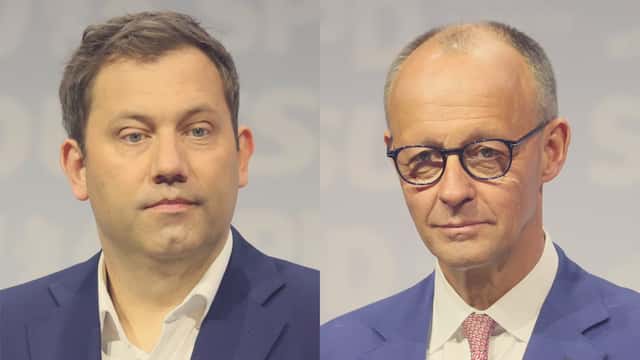
German Chancellor Friedrich Merz says his coalition will agree on Tuesday to cut the electricity tax for every household from 2027. His own finance ministry says the money to pay for it has still not been found. The roughly €5.4 billion a year needed for the cut is missing from the 2027 budget that a Bundestag committee approved last week.
"We will reach agreement tomorrow," Merz said on Monday in Munich, at a joint appearance with Bavarian premier and Christian Social Union (CSU) leader Markus Söder, Reuters reported. He was referring to Tuesday's meeting of the coalition committee, where the leaders of his Christian Democrats (CDU), the CSU and the Social Democrats (SPD) settle disputes.
The finance ministry answered with caution. Funding the cut "is still being discussed," a ministry statement said, according to Reuters. The relief must be financed "in a sound and lasting way," and the ministry rejects "fiscal experiments."
Quotations from German-language sources in this article are 567politics translations.
What Merz promised, and what the SPD says#
Merz said he expects the talks on the tax to be "relatively short."
"Over the weekend we compared the numbers again, so that tomorrow we can reach a decision to cut the electricity tax for 2027 fully to the European minimum, including for private households," he said, according to Reuters.
He said he had spoken about it with Finance Minister and SPD co-chair Lars Klingbeil over the weekend. "The finance minister himself cannot be surprised," Merz said. "He knows this decision is necessary," tagesschau reported him saying.
In the finance ministry, no solution was known on Monday, Der Spiegel reported. Klingbeil has said he is open to the cut but only with sound funding. "I am always open to cutting the electricity tax, but we need a way to pay for it that is marked by solidity and seriousness," he said on Friday, according to dpa-AFX. He said the roughly €5 billion needed had not been found, even in the final budget talks. He also pointed to a possible gap of €25 billion in the 2028 budget. "And we should not make it bigger," he said.
The SPD's parliamentary leader, Matthias Miersch, sounded warmer. "We want the cut too, for all households as well as for businesses," he told the Funke newspapers in an interview published Saturday, carried by the Hamburger Abendblatt. The SPD has made the Union "several proposals" for funding, he said, and "apparently there is movement now." He added a comparison. The cut saves a family about €100 a year, he said. Planned income-tax relief brings a family of four about €600 and is already funded.
That was a shift in tone. In comments to the Funke newspapers reported on November 12, Miersch had said the cut was "so far not financeable," however much the party wanted the relief, tagesschau reported.
The dispute comes as Klingbeil faces a challenge for the SPD leadership from former labor minister Hubertus Heil, as we report separately.
A promise that has slipped before#
The cut for everyone was already in the coalition agreement the three parties signed in 2025. It was supposed to come in 2025, but the government then left households out, tagesschau reported. So far the tax has been cut only for industry, commerce and agriculture. Merz then promised the full cut for 2027 and called it a priority earlier this month. The budget deal did not include it. The Bundestag budget committee approved the 2027 budget early on Friday, November 13, after almost 16 hours of talks, tagesschau reported. It plans more than €560 billion in spending and more than €210 billion in new debt, the second-highest new borrowing in the country's history. The €5.4 billion for a general electricity tax cut is not in it. Our earlier report covered the last-minute changes in that budget session.
The omission angered many in the Union. CDU budget expert Mathias Middelberg said there had been a loud row in the parliamentary group meeting with Merz. "If you go out and promise the public something, you have to keep it in the end," he said on ARD and ZDF's morning show.
- CDU, CSU and SPD sign a coalition agreement that promises a cut for all
- Planned cut for all is limited to businesses; households are left out
- Merz calls the cut for all a priority for the 2027 budget
- Budget committee approves the 2027 budget without the €5.4 billion
- Merz says the coalition will agree the next day
- Coalition committee meets on taxes, pensions and electoral law
Source: tagesschau, tagesschau, Reuters
Where the money could come from#
The parties have floated several ways to pay, and they contradict each other.
Söder ruled out one idea. Some in the CDU had suggested shifting money from the expansion of the "mothers' pension," a pension credit for years spent raising children. The CSU pushed that expansion through in coalition talks, and the Bundestag passed it in December 2025. It is paid from taxes and costs about €5 billion a year from 2027, tagesschau reported. Middelberg had not ruled out redirecting that money.
"We would be in a pretty bad way if we thought we could close a credibility gap on the electricity tax by opening a new one, reversing a law that has already been passed," Söder said on ZDF's "Berlin direkt." "That would honestly make us look ridiculous."
Söder said he believes the cut is affordable. Budget politicians, he said, see "three to four billion" in unused money in the Climate and Transformation Fund, a special federal fund for energy and climate projects. He also said a windfall tax on oil companies was possible. 567politics could not independently verify the fund figure.
Söder added a second demand: the government must also offset "bracket creep," the effect by which inflation pushes taxpayers into higher income-tax rates. Bavaria would contribute its share, he said, because the states and municipalities also lose income-tax revenue. Income tax is split 42.5% to the federal government, 42.5% to the states and 15% to municipalities, Reuters noted. Only Hesse has shown similar willingness, it reported. Other state premiers prefer the electricity tax cut, because only the federal government loses that revenue.
Merz raised a new idea. He said the tax-free allowance for the minimum subsistence level is set "somewhat higher than is actually required" by the government's own subsistence report, and that this should be discussed again. He gave no details. The SPD, for its part, wants the committee to discuss a windfall tax on oil companies and its objections to Economy Minister Katherina Reiche's draft fuel price cap, Reuters reported.
On Friday, the SPD's chief whip Dirk Wiese said relief on the electricity tax "would have to be financed by new debt." He added that the SPD is "not averse" to it, tagesschau reported.
What households would save#
Germany taxes electricity at €20.50 per megawatt hour, or 2.05 cents per kilowatt hour, under section 3 of the Electricity Tax Act. EU law sets a floor of €1 per megawatt hour for non-business use and €0.50 for business use, as a Green bill in the Bundestag sets out.
Cutting the household rate to the EU floor would remove 1.95 cents per kilowatt hour, or about 2.3 cents once the 19% value-added tax on it is included. The chart applies that to three typical annual usage levels. It assumes suppliers pass the full cut on to customers, which the law does not require.
Source: Electricity Tax Act, section 3, Bundestag Drucksache 21/5320
Show the numbers
| Annual usage | Saving |
|---|---|
| 4,000 kWh a year | €93 |
| 2,800 kWh a year | €65 |
| 1,500 kWh a year | €35 |
That is in line with Miersch's estimate of about €100 a year for a family.
What the opposition says#
All three opposition parties back a cut and attack the government for not delivering it.
Britta Haßelmann, who leads the Greens in the Bundestag, called it "a broken promise" on ARD and ZDF's morning show, tagesschau reported. "For many other things, a way is found very quickly in this budget," she said. The Greens have filed their own bill to cut the tax to the EU minimum for everyone, at a cost they put at about €6 billion a year.
Left party leader Ines Schwerdtner, a member of the budget committee, called it a matter of priorities. "560 billion euros, more than ever, and supposedly 5.4 billion is missing for the electricity bills of families and pensioners," she said. The money is not missing, she argued; the government lacks the will.
The AfD's budget expert Michael Espendiller said the budget means "more debt and more taxes and more burden for contributors," and faulted the government for leaving out a cut he called urgently needed. AfD lawmaker Paul Schmidt said on Sunday that "anyone who announces relief and then postpones it again and again gambles away their credibility," in a statement. His party wants to restart Germany's shut-down nuclear plants.
What economists and auditors suggest#
Some experts point to subsidies. Stefan Bach of the German Institute for Economic Research (DIW) told MDR that subsidies and tax breaks total about €360 billion, and that cutting 15% would free about €50 billion a year, MDR reported. He said many of them favor higher earners. Ansgar Heveling, president of the Federal Court of Auditors, told the Rheinische Post that removing proven ineffective or climate-damaging tax breaks alone could free €17 billion a year. These are estimates of potential savings, not plans any party has adopted.
The coalition committee meets on Tuesday. If it agrees, the cut could still be added to the 2027 budget before the Bundestag's final vote at the end of November. That could be done through a floor motion rather than a new committee session, according to the Greens' budget expert Sebastian Schäfer. He called that route "very unusual." The Left's budget expert Dietmar Bartsch called such a late change "technically possible, politically actually irresponsible." Whether the alliance holds through such disputes is the subject of an open 567politics forecast question.
Differing perspectives
Should Germany cut the electricity tax for all households in 2027, and how should the cut be paid for?
Each position is summarized as its supporters make it, with equal weight and in alphabetical order. A summary is not an endorsement; the evidence for each is weighed in the story above.
Back the cut but secure income-tax relief
Who holds it: SPD parliamentary group leader Matthias Miersch
Miersch says the SPD also wants the cut for households and businesses and has offered the Union several ways to fund it. He argues the scale matters: the cut saves a family about €100 a year, while the planned income-tax relief brings a family of four about €600 and is already funded, so that relief must come now. He also wants a tax on excess profits back on the table.
In their words: Hamburger Abendblatt (Funke interview) ↗
Cut it and bring back nuclear power
Who holds it: The AfD parliamentary group, including Bundestag member Paul Schmidt
The AfD argues that the government is repeatedly postponing relief it promised and so losing credibility. It says high electricity costs reduce households' purchasing power, weaken industry and small firms, hold back investment and put jobs at risk. It wants the tax cut delivered and argues that affordable energy also requires restarting Germany's shut-down nuclear power plants.
In their words: Office of Paul Schmidt, AfD member of the Bundestag ↗
Cut it for everyone in 2027 as promised
Who holds it: Chancellor Friedrich Merz and the CDU, CSU leader Markus Söder and Interior Minister Alexander Dobrindt
Union leaders argue that the coalition agreement promised the cut for all and that keeping it is a question of credibility. Merz says a check of the 2027 numbers shows the cut to the EU minimum is affordable. Söder says a budget of €560 billion with €200 billion in borrowing must have room to find the money, but rejects reversing the already-passed mothers' pension expansion to fund it.
In their words: tagesschau (ARD) ↗
Cut it now; the money exists
Who holds it: The Greens, led in the Bundestag by Britta Haßelmann, and the Left, led by Ines Schwerdtner
The Greens and the Left argue that the government is breaking a clear promise. Haßelmann says the budget found money quickly for many other things, and the Greens have tabled a bill to cut the tax to the EU minimum for all. Schwerdtner says that with €560 billion in spending, the €5.4 billion for families' and pensioners' power bills is not missing; the government lacks the will to provide it.
In their words: tagesschau (ARD) ↗
Cut it only with sound, lasting funding
Who holds it: Finance Minister and SPD co-chair Lars Klingbeil and the Federal Ministry of Finance
Klingbeil says he is open to the cut but will not accept fiscal experiments. The roughly €5 billion a year was not found in the budget talks, and he sees a possible €25 billion gap in the 2028 budget that should not grow. He argues the coalition already lowers energy prices through grid fees, the gas storage levy and the fuel discount, and that any further step needs a solid, permanent way to pay.
In their words: dpa-AFX via finanznachrichten.de ↗
Cite this article
567 Politics staff. “Merz promises a power-tax cut for all households. His own finance ministry hasn't found the money.” 567politics. Published 2026-11-16. https://567politics.com/news/germany-merz-electricity-tax-cut-households-coalition-committee-financing-november-2026
Wikipedia citation
{{cite news |title=Merz promises a power-tax cut for all households. His own finance ministry hasn't found the money |url=https://567politics.com/news/germany-merz-electricity-tax-cut-households-coalition-committee-financing-november-2026 |work=567politics |author=567 Politics staff |date=2026-11-16 |language=en}}CSL-JSON for reference managers
{
  "id": "https://567politics.com/news/germany-merz-electricity-tax-cut-households-coalition-committee-financing-november-2026",
  "type": "article-newspaper",
  "title": "Merz promises a power-tax cut for all households. His own finance ministry hasn't found the money",
  "URL": "https://567politics.com/news/germany-merz-electricity-tax-cut-households-coalition-committee-financing-november-2026",
  "container-title": "567politics",
  "language": "en",
  "author": [
    {
      "literal": "567 Politics staff"
    }
  ],
  "issued": {
    "date-parts": [
      [
        2026,
        11,
        16
      ]
    ]
  }
}Citations identify this article and its publication date. Assess the reporting and its linked sources before using it as evidence.
Read this article as Markdown or JSON. Cite the original page and retain its sources, dates and qualifications.
Embed this article summary
Paste this HTML into your page. The summary stays linked to the full story and updates with it. No account required.
<iframe src="https://567politics.com/embed/news/germany-merz-electricity-tax-cut-households-coalition-committee-financing-november-2026?theme=auto" title="Merz promises a power-tax cut for all households. His own finance ministry hasn't found the money by 567politics" width="100%" height="440" style="border:0;max-width:100%" loading="lazy"></iframe>
<p style="font-size:14px">Merz promises a power-tax cut for all households. His own finance ministry hasn't found the money by <a href="https://567politics.com/news/germany-merz-electricity-tax-cut-households-coalition-committee-financing-november-2026" rel="nofollow">567politics</a></p>
<script async src="https://567politics.com/embed.js"></script>
READ BEYOND 567POLITICS
Alternate sources & perspectives
Independent coverage and primary evidence to help you compare arguments. A link is not an endorsement; perspective labels describe the linked material.
- independent analysis
Merz: coalition will cut electricity tax on Tuesday; finance ministry surprised ↗
Reuters (via onvista)
Merz's full Munich remarks, the finance ministry's cautious reply, Söder's bracket-creep demand and the income-tax split between federal, state and local governments.
- right argument
Merz expects agreement on electricity tax in coalition committee ↗
tagesschau (ARD)
Union leaders' case in their own words: Merz, Söder, Interior Minister Dobrindt and CSU group chief Alexander Hoffmann.
- independent analysis
Electricity tax: Friedrich Merz expects agreement in coalition committee ↗
Der Spiegel
Reports that no funding solution was known inside Klingbeil's finance ministry on Monday.
- other perspective
Klingbeil: electricity tax cut only with sound funding ↗
dpa-AFX (via finanznachrichten.de)
The finance minister's conditions, the €25 billion 2028 gap and the €560.9 billion 2027 spending total.
- left argument
Will electricity get cheaper after all? SPD group leader: 'Things are moving' ↗
Hamburger Abendblatt (Funke Mediengruppe)
Miersch's interview: the SPD wants the cut, has offered funding ideas, and compares it with planned income-tax relief.
- right argument
Söder still thinks an electricity tax cut is possible ↗
tagesschau (ARD)
Söder rules out using mothers' pension money and names the climate fund and a windfall tax as options; background on the mothers' pension cost.
- independent analysis
Criticism from the Union too over missing electricity tax cut ↗
tagesschau (ARD)
Budget figures, Middelberg's account of the row in the Union, Wiese's new-debt remark and opposition reactions from Greens, Left and AfD.
- other perspective
No electricity tax cut: in the Union 'there was quite a bang' ↗
tagesschau (ARD)
Miersch's earlier view that the cut was not yet financeable, and Krings' push to settle it in the coalition committee.
- primary evidence
Electricity Tax Act, section 3: tax rate ↗
Federal Ministry of Justice
The statutory rate of €20.50 per megawatt hour used in the savings calculation.
- primary evidence
Bill to cut the electricity tax to the EU minimum (Drucksache 21/5320) ↗
Deutscher Bundestag (Greens parliamentary group)
States the EU floor of €1/MWh for non-business and €0.50/MWh for business use; the Greens' alternative with an estimated €6 billion cost.
- independent analysis
DIW economist: cutting subsidies could save 50 billion euros ↗
MDR
Stefan Bach (DIW) and Federal Court of Auditors president Ansgar Heveling on subsidy cuts as a funding source.
- right argument
Citizens still waiting for electricity tax cut ↗
Office of Paul Schmidt, AfD member of the Bundestag
AfD statement on the delayed cut and the party's call to restart nuclear plants.
Reviewed 2026-11-16. Hand-picked from pages opened in full on Nov. 16, 2026, because the automated discovery search returned only generic pages about Germany. Primary evidence comes from the Electricity Tax Act and a Bundestag bill that sets out the EU minimum rates; EUR-Lex itself refused access, so the directive's figures are taken from that Bundestag document. The household savings chart is a 567politics calculation assuming full pass-through. No statement from Klingbeil himself after Merz's Monday remarks was found; the ministry's reply comes via Reuters and Der Spiegel. The Left and Greens are represented through tagesschau's report of their statements. Wirtschaftswoche's explainer could not be loaded. Titles are translated from German.