CSU rejects putting German MPs into the state pension, offering to mirror every cut instead
The SPD says lawmakers must pay in like everyone else. Hoffmann backs the pension commission's fallback: apply each statutory cut to MPs' pensions.
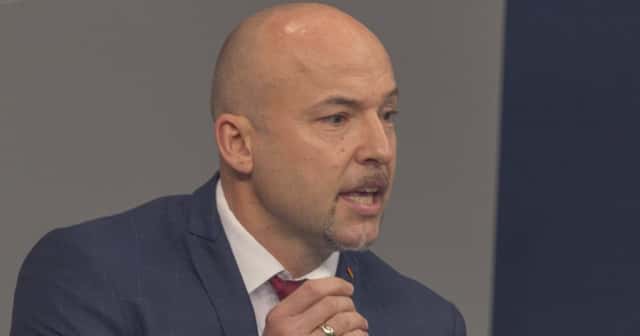
Germany's governing coalition has opened a new front in its pension fight, and this one is about lawmakers' own retirement money. On Tuesday, Alexander Hoffmann rejected the Social Democrats' demand that federal and state legislators start paying into the statutory pension system. Hoffmann leads the CSU's members in the Bundestag. The government's pension commission had recommended the change. He backed the commission's fallback option instead: leave the separate parliamentary pension in place, but apply every future cut to ordinary pensions to it automatically. The SPD says that is not enough and that lawmakers should be in the same system as the people they ask to accept reforms.
The dispute is small in fiscal terms. The commission itself said bringing legislators into the system would have a negligible effect on contribution rates and benefit levels, given how few of them there are. Its weight is symbolic. Both sides treat it as a test for the coalition of the CDU/CSU and SPD under Chancellor Friedrich Merz. The reform may raise the retirement age or curb benefit increases for millions. The question is whether lawmakers will share that pain.
What Hoffmann said on Tuesday#
Speaking in Berlin, Hoffmann said the pension commission had recommended including members of parliament in the statutory pension. But it had also named an alternative, a "wirkungsgleiche Übertragung," or equivalent transfer of its effects, Handelsblatt reported. He warned that both paths would be very complex and that the second might require a separate pension institution for legislators, which would mean parallel structures and extra costs.
Hoffmann had already set out his position in an interview with the Mediengruppe Bayern newspapers, according to a dpa report carried by DieBayern.de. Bringing federal and state lawmakers into the system "does not solve the problem of the statutory pension," he said, in remarks translated from German. Above all, he said, it would mean several systems running side by side for decades.
He described the option he supports in concrete terms. "Every saving, every rise in the retirement age and every slowdown that we decide in the statutory pension must apply automatically and to exactly the same degree to politicians' pensions," he said.
Hoffmann also cited the need to keep the job appealing. "In the interest of our democracy, the job of a member of parliament must be kept attractive enough that people are willing to do it," he said. A mandate must also appeal to the self-employed and to others who might earn more outside politics, he added.
The SPD's case for one system#
The SPD has made the issue a point of principle. "Members of parliament should be among those who pay into the statutory pension insurance," Dirk Wiese, the SPD parliamentary group's chief whip, told the same newspaper group, according to n-tv. He said he was "very surprised" that the Union now wanted to back away from that. The decision would carry high symbolic value, he said, because many citizens "simply feel it is unfair" that lawmakers do not pay in.
SPD general secretary Tim Klüssendorf made the same argument. "Anyone who expects acceptance for change should start with themselves," he said, according to n-tv. In the end everyone should pay into the same system, he said. Nobody claims that including legislators would stabilize pensions on its own, he added. "But it shows that real changes affect everyone without exception, including the members of parliament themselves."
The SPD's position has support further left. In June, Sarah Vollath, pensions spokesperson for the Left party's Bundestag group, criticized lawmakers' pay and pensions. They were at a level that "has absolutely nothing to do with the reality of life for most people in this country," she said, t-online reported, citing her comments to the RedaktionsNetzwerk Deutschland. She called for lawmakers to pay into the statutory system. According to t-online, a Bundestag research service calculation for the Left party found that legislators earn in four years pension rights similar to those an average employee builds up in 28 years. 567 Politics was not able to open that calculation, so the comparison is reported as t-online described it.
No statement from the AfD or the Greens on Tuesday's exchange appeared in the sources 567 Politics reviewed.
What the commission recommended#
The government-appointed pension commission's recommendation 24 is the text both sides are quoting. According to the summary published by the specialist publisher Haufe, the commission recommends bringing members of the Bundestag and of the state parliaments into compulsory statutory pension insurance "zeitnah," or promptly. A supplementary scheme would fill the resulting gap in their provision. As an alternative, the recommendation says, at a minimum any slowdown in pension increases should be transferred in equivalent form to legislators' pensions.
The wording matters for the dispute. The SPD reads the first option as the commission's actual recommendation and the second as a floor. Hoffmann reads the two as equal alternatives. The commission noted that legislators' pensions vary widely between the federal level and the states in minimum service, benefit levels and earliest retirement age. It said the change could take effect from the next legislative term. Because the Bundestag would legislate for its own members and each state parliament for its own, full equal treatment could take a long time.
Hoffmann's comments come as the coalition argues over other parts of the commission's package. The open questions include whether to keep penalty-free retirement after 45 years of contributions, whether to keep mini-jobs and whether to continue the block model of partial retirement. According to Handelsblatt, Merz had spoken in favor of implementing the commission's proposals in full, while Hoffmann said on Tuesday that individual building blocks could be taken out. A dpa report carried by DieBayern.de said Merz and the then labor minister, Bärbel Bas, had originally agreed to implement the commission's concept completely. Heated debates over individual points had since broken out, it said. An earlier 567 Politics report covered the 2027 pension increase and the reform timetable.
How the parliamentary pension works now#
Members of the Bundestag do not pay pension contributions. Under section 20 of the Members of Parliament Act, each year of membership earns a pension, the "Altersentschädigung," of 2.5% of the monthly parliamentary salary, up to a maximum of 65%. Section 19 sets the regular pension age at 67 after at least one year of membership, with early retirement possible from 63 at a reduction of 0.3% per month.
The monthly parliamentary salary is 11,833.47 euros in 2026, after the Bundestag suspended this year's automatic adjustment, which would have added about 500 euros, according to t-online. Pensions of former members are tied to that salary, so they were frozen for 2026 as well. On that basis, a legislator who serves one four-year term is entitled to about 1,183 euros a month at retirement age. One who serves 26 years or more gets the maximum of about 7,692 euros a month, before tax.
Source: Abgeordnetengesetz § 20, t-online
Show the numbers
| Years in the Bundestag | Monthly pension |
|---|---|
| 4 | €1,183 |
| 8 | €2,367 |
| 12 | €3,550 |
| 16 | €4,733 |
| 20 | €5,917 |
| 26 or more | €7,692 |
The chart shows why the issue resonates. One term in the Bundestag produces a pension of about 1,183 euros a month; the statutory system pays its benefits on the basis of contributions over a working life. Defenders of the current arrangement point to the other side of that comparison. Hoffmann's argument is that the mandate must remain attractive to people who give up other careers to serve. The commission itself proposed a supplementary scheme because statutory contributions alone would leave legislators with a gap in their provision. t-online noted that because members are elected for four-year terms, most former legislators accumulate their entitlements in four-year steps.
What the two options would mean#
The "equivalent transfer" Hoffmann favors would keep the 2.5% formula but tie it to the statutory system's changes. If the coalition raised the retirement age, the parliamentary pension age would rise in step. If it slowed annual pension increases, parliamentary pensions would be held back by the same amount. Handelsblatt noted that such a transfer could also mean indexing legislators' pension entitlements to increases in the statutory pension. Either path would require amending the Members of Parliament Act.
Inclusion in the statutory system would instead make legislators contributors like employees, with a supplementary scheme on top, as the commission proposed. That would make them subject to every future statutory reform automatically, which is the SPD's central point. The federal government and each state would legislate separately. As a result, the commission said, full equal treatment could take a long time. Neither side has published a draft law, and 567 Politics found no official estimate of the cost of either option.
Federal and state rules differ#
The dispute is not limited to the Bundestag. The commission's recommendation covers members of the 16 state parliaments as well. It noted strong differences between the federal level and the states in the minimum length of a mandate, the level of benefits and the earliest age at which a pension can be drawn. It said the exemption of legislators from statutory insurance is criticized because of their short qualifying periods and pay that is perceived as high.
That patchwork is part of Hoffmann's argument about complexity. Including legislators in the statutory system would require legislation by the Bundestag and by each of the 16 state parliaments. In the transition, old entitlements under the existing rules would continue alongside new statutory ones, the parallel systems he warned about.
A coalition test#
For the coalition, the question is less the money than the message. The SPD argues that a party asking workers to accept a higher retirement age or lower increases cannot exempt itself. The CSU argues that an equivalent transfer achieves the same fairness without building a new bureaucracy and without deterring capable people from running for parliament. Both positions can point to the commission's text. The coalition has not said whether the issue will be decided on its own or as part of the wider pension bill.
The disagreement adds to a list of coalition disputes over social spending this autumn, including cuts to basic income support. Profiles of the coalition partners, the CSU and the SPD, set out their wider positions on pensions and the welfare state.
Differing perspectives
Should members of Germany's federal and state parliaments pay into the statutory pension system?
Each position is summarized as its supporters make it, with equal weight and in alphabetical order. A summary is not an endorsement; the evidence for each is weighed in the story above.
Apply every statutory pension cut to MPs' pensions
Who holds it: CSU; Alexander Hoffmann, head of the CSU group in the Bundestag
Including federal and state legislators would not solve the statutory system's problems and would mean several systems running side by side for decades, possibly with a new pension institution and extra costs. The commission named an equivalent alternative: every saving, every rise in the retirement age and every slowdown in increases decided for statutory pensions should apply automatically and to exactly the same degree to politicians' pensions, while keeping the mandate attractive.
In their words: DieBayern.de / dpa (quoting Hoffmann) ↗
Bring legislators into the statutory pension system
Who holds it: SPD; chief whip Dirk Wiese and general secretary Tim Klüssendorf
Lawmakers who ask workers to accept pension reforms should start with themselves. Members of the Bundestag and state parliaments should belong to the circle of contributors to the statutory pension insurance, as the pension commission recommended. The change would not stabilize pensions on its own, but it carries high symbolic value for citizens who consider the current exemption simply unfair, and it would show that real changes affect everyone without exception, including legislators.
In their words: n-tv (quoting Wiese and Klüssendorf) ↗
Cut MPs' pension privileges and make them contribute
Who holds it: The Left party's Bundestag group; pensions spokesperson Sarah Vollath
Parliamentary pay and pensions sit at a level that has nothing to do with the lives of most people in Germany. A Bundestag research service calculation for the Left found that four years in parliament earn pension rights similar to 28 years of average employment. The system should change, and legislators should pay into the statutory pension fund like other workers.
In their words: t-online (quoting Vollath) ↗
Cite this article
567 Politics staff. “CSU rejects putting German MPs into the state pension, offering to mirror every cut instead.” 567politics. Published 2026-11-10. https://567politics.com/news/germany-mps-statutory-pension-hoffmann-csu-spd-wiese-kluessendorf-rentenkommission-november-2026
Wikipedia citation
{{cite news |title=CSU rejects putting German MPs into the state pension, offering to mirror every cut instead |url=https://567politics.com/news/germany-mps-statutory-pension-hoffmann-csu-spd-wiese-kluessendorf-rentenkommission-november-2026 |work=567politics |author=567 Politics staff |date=2026-11-10 |language=en}}CSL-JSON for reference managers
{
  "id": "https://567politics.com/news/germany-mps-statutory-pension-hoffmann-csu-spd-wiese-kluessendorf-rentenkommission-november-2026",
  "type": "article-newspaper",
  "title": "CSU rejects putting German MPs into the state pension, offering to mirror every cut instead",
  "URL": "https://567politics.com/news/germany-mps-statutory-pension-hoffmann-csu-spd-wiese-kluessendorf-rentenkommission-november-2026",
  "container-title": "567politics",
  "language": "en",
  "author": [
    {
      "literal": "567 Politics staff"
    }
  ],
  "issued": {
    "date-parts": [
      [
        2026,
        11,
        10
      ]
    ]
  }
}Citations identify this article and its publication date. Assess the reporting and its linked sources before using it as evidence.
Read this article as Markdown or JSON. Cite the original page and retain its sources, dates and qualifications.
Embed this article summary
Paste this HTML into your page. The summary stays linked to the full story and updates with it. No account required.
<iframe src="https://567politics.com/embed/news/germany-mps-statutory-pension-hoffmann-csu-spd-wiese-kluessendorf-rentenkommission-november-2026?theme=auto" title="CSU rejects putting German MPs into the state pension, offering to mirror every cut instead by 567politics" width="100%" height="440" style="border:0;max-width:100%" loading="lazy"></iframe>
<p style="font-size:14px">CSU rejects putting German MPs into the state pension, offering to mirror every cut instead by <a href="https://567politics.com/news/germany-mps-statutory-pension-hoffmann-csu-spd-wiese-kluessendorf-rentenkommission-november-2026" rel="nofollow">567politics</a></p>
<script async src="https://567politics.com/embed.js"></script>
READ BEYOND 567POLITICS
Alternate sources & perspectives
Independent coverage and primary evidence to help you compare arguments. A link is not an endorsement; perspective labels describe the linked material.
- primary evidence
Abgeordnetengesetz § 20: Höhe der Altersentschädigung ↗
Federal Ministry of Justice (gesetze-im-internet.de)
Sets the 2.5% per year accrual rate and the 65% cap.
- primary evidence
Abgeordnetengesetz § 19: Anspruch auf Altersentschädigung ↗
Federal Ministry of Justice (gesetze-im-internet.de)
Sets the pension age of 67 and early retirement from 63 with reductions.
- independent analysis
Rentenkommission 2026: Empfehlung 24 ↗
Haufe
Reproduces the commission's recommendation, its alternative and its impact assessment.
- independent analysis
Rentenreform: Union bremst bei Rente für Bundestagsabgeordnete ↗
Handelsblatt
Report on Hoffmann's Tuesday remarks in Berlin and the wider coalition dispute.
- right argument
Hoffmann (CSU) lehnt Einbeziehung von Abgeordneten in gesetzliche Rentenversicherung ab ↗
DieBayern.de (dpa)
Hoffmann's interview quotes setting out the CSU case for an equivalent transfer.
- left argument
SPD pocht auf Rentenbeiträge für Abgeordnete ↗
n-tv
Quotes SPD chief whip Dirk Wiese and general secretary Tim Klüssendorf.
- independent analysis
Keine Rentenerhöhung für Politiker im Bundestag: Diese Pension gibt es 2026 ↗
t-online
2026 salary freeze, pension table by years served and the Left party's criticism.
Reviewed 2026-11-10. Sources opened in full on Nov. 10, 2026. Primary evidence is the Members of Parliament Act and the pension commission's recommendation 24 as reproduced by Haufe. Party positions come from reports quoting the CSU, SPD and Left directly. A discover_politics_sources search did not return relevant results, so the list was compiled from documents opened directly. The Bundestag research service calculation cited by the Left could not be opened, and no AfD or Green statement on Tuesday's exchange was found.