Courts Block $100,000 H-1B Fee as Debate Over Indian Immigration Widens; Survey and Visa Data Compared
Two courts halted the payment. Carnegie's survey finds half of Indian Americans report discrimination; USCIS data show India-born workers hold 71% of approvals.
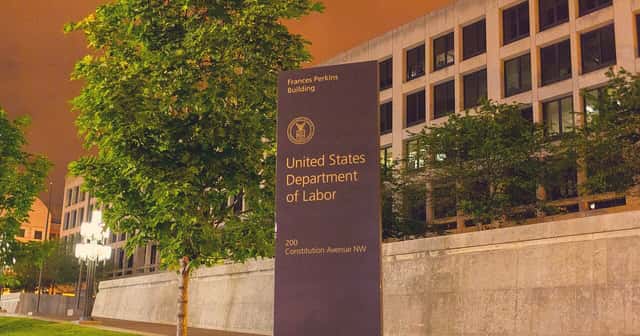
Two federal courts have blocked the Trump administration's $100,000 payment on new H-1B work-visa petitions, and the administration is appealing both rulings while it moves to replace the payment with a proposed $103,265 fee. At the same time, the argument over how many Indian nationals the United States admits on skilled-worker visas has spread from wage rules to the standing of Indian Americans as a group. A Texas statewide candidate's post about students at a football game, a podcast episode titled "The Indian Question," and a Chicago-area terror-threat arrest have all been tied to that shift by the people who commented on them.
Two questions run together in much of the coverage. One is a policy question: whether the H-1B program lowers wages or draws top talent, and whether the White House can charge a fee to restrict it. The other is a question about sentiment: whether hostility toward people of Indian origin is rising, and how much of the H-1B debate is a vehicle for it. The evidence for each is different, and the people on each side do not agree on the link. This report sets out the figures from federal agencies, courts and surveys, and what named participants say they mean. It follows 567 Politics' earlier reporting on the Ohio governor's race, where Republican nominee Vivek Ramaswamy has been at the center of part of this argument, and on deportation numbers.
What the federal visa data show
The most recent U.S. Citizenship and Immigration Services (USCIS) report to Congress on the program, "Characteristics of H-1B Specialty Occupation Workers" for fiscal year 2024 (Oct. 1, 2023 to Sept. 30, 2024), was released April 29, 2025. USCIS received 427,084 H-1B petitions that year, about 10% more than in fiscal 2023, and approved 399,395. Of the approvals, 141,205 were for initial employment (USCIS's country table uses 141,192), which means a worker newly starting in H-1B status, and 258,190 were for continuing employment. USCIS says 63.9% of approved petitions were for computer-related occupations, 46% of beneficiaries held a master's degree, 33% a bachelor's and 8% a doctorate.
By country of birth, India accounts for the largest share by a wide margin.
| Country of birth | Approved petitions, FY 2024 | Share of all approvals |
|---|---|---|
| India | 283,397 | 71.0% |
| China | 46,680 | 11.7% |
| Philippines | 5,248 | 1.3% |
| Canada | 4,222 | 1.1% |
Source: USCIS, FY 2024 H-1B annual report, Figure 5.
For new workers the Indian share is smaller than for continuing ones. USCIS counts 80,449 of 141,192 approved initial-employment petitions, or 57%, for India-born beneficiaries, and 203,306 of 258,186 continuing-employment petitions, or 78.7%. China accounts for 13.9% of initial and 10.5% of continuing approvals. USCIS reports median annual compensation of $120,000 across all approved beneficiaries, and $97,000 for initial-employment petitions, with a 25th percentile of $77,000 for initial petitions.
The report has limits that matter for the debate. It counts petitions approved in a fiscal year, not unique people, and approvals can include extensions of workers already in the country. It does not break compensation out by country of birth, and USCIS says some fields contain errors or unknown values. A Carnegie Endowment report cites the 71% figure as the Indian share of "new H-1B visa petitions," a description that does not match USCIS's table: 71.0% is the share of all approvals, and 57% is the share of initial-employment approvals.
The Center for Immigration Studies (CIS), which favors lower immigration, describes the same population in different terms. In an Aug. 11, 2026 article, analyst John Miano wrote that "nearly all H-1B workers come from one country: India," and that "most Indian H-1B workers come from just two states, Telangana and Andhra Pradesh." Miano's characterization and USCIS's 71% describe the same program in different terms; 567 Politics did not find the basis for the state claim in the article.
The $100,000 payment in court
President Donald Trump signed a proclamation on Sept. 19, 2025 requiring a $100,000 payment with certain new H-1B petitions filed after Sept. 21, 2025. USCIS says the payment is a one-time charge on new petitions and does not apply to renewals or to existing visas. The agency describes the proclamation as "an important, initial, and incremental step to reform the H-1B visa program to curb abuses and protect American workers."
The litigation since then, as summarized by USCIS and by the law firm Burr & Forman:
| Date | Event | Source |
|---|---|---|
| June 8, 2026 | A federal court in Massachusetts vacates USCIS guidance implementing the payment in State of California v. Mullin | USCIS, Burr & Forman |
| June 12, 2026 | The court stays its own order temporarily; USCIS briefly resumes collecting | Burr & Forman |
| July 24, 2026 | The First Circuit denies the government's stay request | USCIS |
| Sept. 18, 2026 | Trump extends the restriction to Sept. 21, 2027 | White House |
| Sept. 30, 2026 | A federal court in California partly grants a preliminary injunction in Global Nurse Force v. Trump | Burr & Forman |
The Massachusetts case is captioned State of California v. Mullin; Markwayne Mullin is the Secretary of Homeland Security. Burr & Forman, which advises employers, reports that the court held the payment functions as a tax rather than a fee and that the Immigration and Nationality Act does not give the president power to levy taxes. In the California case, brought in October 2025 by a coalition of labor unions, employers and nonprofits, Judge Haywood S. Gilliam Jr. wrote that "there is no question here that Agency Defendants failed to consider any alternatives or the reliance interests of the regulated parties," and that the plaintiffs were therefore "likely to succeed" on a claim that the policies are arbitrary and capricious, according to Burr & Forman. The firm says the order bars enforcement until the agencies complete notice-and-comment rulemaking and required small-business analyses, and that it covers the September 2026 extension.
USCIS's website says the Department of Homeland Security "strongly disagrees" with the First Circuit's order but "will comply," and adds: "If this order is later lifted, DHS still plans to collect the payment." Burr & Forman reports that USCIS has indicated it would collect retroactively if the order is reversed, and that the government has appealed the California order to the Ninth Circuit. Burr & Forman concluded that employers are "not currently required" to submit the payment, and advised that the reprieve should be treated as temporary.
The administration's case
The Sept. 18, 2026 proclamation, signed by President Donald Trump, says the H-1B program "has been exploited to replace, not supplement, American workers with lower-paid labor" and that certain employers, "including information technology (IT) staffing and outsourcing firms, have abused the system to suppress wages and displace American workers." It cites these measures of the restriction's effect:
- The largest IT staffing and outsourcing firms cut combined H-1B registrations from 24,946 to 2,055, a 92% decrease.
- Consular processing requests fell nearly 97% between the fiscal 2025 and fiscal 2027 cap seasons.
- Registrations for beneficiaries with at least a U.S. master's degree rose from 45.1% to 66.1% of the total.
- Job offers at the two highest wage levels made up about 46.3% of selections, and those at the lowest level 17.8%.
- The $100,000 payment "has been made for over 700 petitions."
The proclamation also cites a June 2026 unemployment rate of 5.7% for recent college graduates and an underemployment rate of 42%. It describes a Department of Labor finding that average wages paid to H-1B workers, and the prevailing wages assigned to their jobs, "remain well below the average wage earned by comparable American workers." The department proposed a rule on March 27, 2026 (91 Fed. Reg. 15454) to raise prevailing-wage levels, and the Department of Homeland Security finalized a weighted selection process on Dec. 29, 2025 (90 Fed. Reg. 60864) that favors higher-paid offers.
On Aug. 25, 2026, the department proposed a $103,265 fee on cap-subject H-1B petitions (91 Fed. Reg. 54817). It projected 85,000 such petitions a year and revenue of about $8.8 billion. The notice describes the fee as a revenue mechanism to recover part of the costs of administering the lawful immigration system across DHS, the Justice Department, the State Department and the Labor Department. It says cap-subject petitioners are "most willing and able to pay," cites a 2026 study by economist George Borjas finding that H-1B workers are paid 16.1% less than comparable native workers, and says employers "would be less likely to hire an H-1B worker over a qualified and highly-skilled American worker unless the need is legitimate." DHS also estimates a significant economic impact on 11,051 small entities, 76% of the small entities that filed cap-subject petitions in fiscal 2025. Comments closed Sept. 24, 2026. 567 Politics found no final rule in the sources reviewed.
Miano's CIS article argues for the restrictionist side from different data. He wrote that employers classify 82% of H-1B workers at the Labor Department's two lowest wage levels, 31% as entry-level and 51% as qualified. He wrote that "over 90 percent of employer-submitted prevailing wage claims" for approved visas in 2024 were below the Bureau of Labor Statistics' figure for the occupation and location, and that "over 2,000 H-1B visas were approved in 2024 with wages below $60,000." He put the number of new H-1B workers approved in fiscal 2024 at about 141,000, which matches USCIS's count of initial-employment approvals. Miano described the program as one that "works exactly as Congress intended it to work," and recommended that Congress require recruitment of American workers, independent wage verification, priority for "genuinely exceptional applicants" and a ban on replacing American workers with H-1B employees.
The critics' case
The National Foundation for American Policy (NFAP), which describes itself as "a nonpartisan policy research organization," filed a comment on the $103,265 proposal on Sept. 24, 2026. It argues that DHS overestimated revenue by $6.1 billion a year: NFAP calculates $2.6 billion rather than $8.8 billion, after accounting for what it reports as a 91.2% drop in consular initial H-1B petitions following the $100,000 payment. It also notes that the payment has been made for only about 700 petitions, and asks how DHS expects 85,000 individuals to find employers willing to pay $103,265 each. NFAP argues the fee's reasoning has "no limiting principle," and cites economist Britta Glennon's research that companies respond to H-1B limits by hiring more in other countries.
NFAP's May 2026 brief on the Labor Department's wage proposal says the rule would raise required wages by an average of 33% at the lowest level, 24% at Level II, 21% at Level III and 22% at Level IV, figures it attributes to the department. It argues the wage-gap premise compares early-career H-1B workers with all U.S. workers in the same occupations. NFAP says it compared the current Level I wage with Willis Towers Watson private survey data for 55 city-and-occupation combinations and found an average difference of 1%. 567 Politics did not independently verify NFAP's comparison, and the Labor Department's proposal has not been finalized in the sources reviewed.
The plaintiffs in the court cases make a legal argument rather than a labor-market one: that the president cannot impose a tax by proclamation, and that the agencies skipped required procedures. The administration's reply, in USCIS's text and the proclamation, is that the restriction is lawful and has worked as intended.
What surveys find on discrimination
Hostility toward Indian Americans is measured differently from H-1B policy. The best-documented survey in the sources reviewed is the 2026 Indian American Attitudes Survey, published by the Carnegie Endowment for International Peace in February 2026. Authors Sumitra Badrinathan, Devesh Kapur, Andy Robaina and Milan Vaishnav, working with YouGov, surveyed 1,000 Indian American adults online from Nov. 25, 2025 to Jan. 6, 2026, with a margin of error of plus or minus 3.6 percentage points. The report says more than 5.2 million people of Indian origin live in the United States. Earlier waves were taken in 2020 and 2024, and the authors caution that the 2026 sample frame was revised, so comparisons across waves "should be interpreted with appropriate caution."
Selected results from the 2026 wave:
| Experience since the start of 2025 | Share of respondents |
|---|---|
| Personally felt discriminated against (any reason) | About 1 in 2 |
| Saw racist posts targeting Indians "very or somewhat often" | 48% |
| Called a slur | About 1 in 4 |
| Physically threatened | 9% |
| Received hate mail | 8% |
| Property damaged | 6% |
| Physically assaulted | 4% |
Source: Carnegie Endowment, February 2026.
Among respondents who reported personal discrimination, 36% cited skin color, 21% country of origin, 17% religion, 16% gender and 5% caste. The authors say these shares were nearly identical across the 2020, 2024 and 2026 waves. They write that "while some forms of hate—such as online harassment—may be rising, the overall prevalence of reported in-person discrimination has remained stable." Their claim of a rise in online hate rests on "one independent report" of a surge in anti-Indian content on X in late 2025, which they do not name in the text 567 Politics reviewed. The authors describe the period as a "resurgence of nativism."
Respondents also reported changing their behavior. About 31% avoid discussing politics on social media, 21% avoid leaving and re-entering the United States, and 19% avoid wearing Indian dress. On leaving the country, 14% said they had thought about it frequently, 26% occasionally, 22% rarely and 37% never. Among those who had considered leaving, the most common reasons were U.S. politics (58%), cost of living (54%) and safety (41%).
On policy, 74% of respondents opposed deporting immigrants to third countries, and about two-thirds opposed the $100,000 H-1B payment. The survey asked about "levying a $100,000 fee on new H-1B (skilled worker) visa petitions." It surveyed Indian Americans generally, not H-1B holders specifically, and 567 Politics did not find a comparable survey of the general public's views of Indian immigrants.
Three episodes that drew public response
The Texas post. In mid-September, Bo French, the Republican nominee for Texas railroad commissioner, posted a photograph of celebrating students at a University of Texas football game. His caption read: "I heard UT graduation this year looked like this. I didn't believe it. The problem is now obviously far worse than anyone imagined," according to Vox and ThePrint. Vox reported that he added that images like it showed "how many Americans have been displaced by foreigners," and that at least some students in the photograph were U.S. citizens. Sidharth Ram, founder of the Indian American Advocacy Council, told Vox: "He assumed every brown person in that picture is not American, which is scary because he is a politician running for statewide office." Vox's account did not include a response from French, and 567 Politics did not find one in the sources it reviewed.
Gov. Greg Abbott, a Republican, responded publicly. Vox quoted him: "A selective picture of Longhorn fans celebrating our biggest home victory-ever-actually shows a way that Texans unite." He added: "That doesn't mean that Texas cannot also lead in having the toughest immigration laws of any state in America and freezing H1B visas at our universities." Vox wrote that Abbott "tried to split the difference" between nativists and business-oriented Republicans, and that he "has long been close to the Indian community in Texas." Vox also reported that the state's most prominent candidates, including Abbott, had not pulled their support for French.
The podcast. Christopher Rufo and Jonathan Keeperman discussed Indian immigration on the "Rufo & Lomez" show in an episode titled "The Indian Question," released Sept. 26, after the French post, according to ThePrint. Keeperman said: "Indian-Americans are a very successful group. I think a group that has and will assimilate rapidly into a professional-managerial culture of the United States. But that's exactly the rub." He also said: "there is a sense that the H-1B program is radically unfair because it is a way to bring in cheap technological labor and undercut native-born American wages." Rufo said: "Indians are a unique case," and that the subject "is a question of not just race, but actually race is in some ways secondary."
Rep. Raja Krishnamoorthi, a Democrat from Illinois, wrote: "Indian Americans are not an 'Indian Question' to be solved. Treating any American community as a problem because of their ethnicity is racist, xenophobic, and fundamentally un-American." He added: "Indian Americans are as American as anyone. This country belongs to all of us." Writer Jeremiah Johnson criticized what he called the "racial framing" of the discussion. ThePrint's report did not include a response from the hosts to these critics, and 567 Politics did not find one.$
The Illinois arrest. CBS Chicago reported that Alexandros Paporakis, 19, of Palatine, Illinois, was arrested Oct. 11 after coworkers alerted police. Police said they found a rifle, ammunition, body armor and a written manifesto in which he identified as a white supremacist and wrote of hatred for non-white people, including Indians. He was charged with making a terrorist threat and unlawful weapon possession and ordered detained, according to CBS. Police said they had not confirmed the intended location, though the Hindu temple in Aurora may have been a target. The charges are allegations, and he has not been convicted. The Week reported that Krishnamoorthi told The New York Times the plot reflected a "scourge of anti-Indian American, anti-South Asian hate." 567 Politics did not open the Times article.
Posts from commentators
Writer Richard Hanania argued on X that restricting Indian immigration conflicts with conservative principles. On Oct. 31, 2026 at 10:14 a.m. ET he wrote:
The post reads: "Calling to reduce Indian immigration might be the dumbest thing anyone in American politics argues for. I can't find a single perspective from which to look at it and make it sympathetic. I don't think any other issue is like this."
A week earlier, on Oct. 24 at 8:46 a.m. ET, he posted:
That post reads: "The reason why conservatives can't tolerate anti-Indian hate is they have to sacrifice every other right-wing principle: merit, markets, etc / You can't be anti-Indian immigration without conservatism centering around degrowth and ethnic grievance."
Activist Laura Loomer posted on Oct. 22 at 8:14 a.m. ET about Republicans she said were telling people to vote for the Democratic nominee in Ohio over Ramaswamy. The post, which had about 552,000 impressions and 8,700 likes when 567 Politics reviewed it, said "a lot of people on the right have been conditioned to irrationally hate Indians":
Vox describes Loomer as one of the far-right influencers who "do point to poverty in India to denigrate Indians." Loomer's own post used language about Indians that 567 Politics is not reproducing in full. More on the Ohio contest between Ramaswamy and Democrat Amy Acton, including the candidates' money and positions, is in our election-eve report and in an earlier report on the campaign's advertising.
How participants explain the link
The people quoted offer different explanations for why Indians are at the center of this debate, and they disagree about whether the H-1B argument and the ethnic argument can be separated.
- Economic grievance. Keeperman and Miano frame their objections around wages, job competition and the structure of the visa. Keeperman described a "sense of anxiety" about the H-1B program and about the number of "slots available in elite America." Vox's Zaid Jilani wrote that "labor advocates have often raised economic concerns" about H-1B, but that "many of the far-right influencers are combining these economic concerns with a broader culture war against Indians themselves." Ashish Agrawal, a board chair of the Indian American group Disha, told Vox: "I believe it's more of an economic pressure."
- Status anxiety. Vox cited a 2024 study led by Yale economist Leah Boustan that found white enrollment fell in high-income California school districts as Asian enrollment rose. Boustan told Vox her paper could not determine why. Vox's author argued the dynamic might help explain the current hostility, a reading the study itself does not state.
- Historical comparison. Suhag Shukla, executive director of the Hindu American Foundation, told Vox that anti-Indian resentment resembles antisemitism, which "often targets Jews for being too successful." Her argument is that high income, education and community cohesion can make a group a target.
- A conservative objection. Hanania argues that merit and markets, which conservatives usually defend, cut against restricting Indian immigration. Vox wrote that defenders of the program, including Elon Musk, argue it is "another case of meritocracy in action." Vox also reported that Charlie Kirk, the late Turning Point USA founder, once said: "America does not need more visas for people from India."
Miano's article names India as the source of "nearly all" H-1B workers, and the Carnegie authors describe the H-1B fee as "especially salient to the Indian American community." By USCIS's count, Indian-born workers hold about 71% of approved petitions, so a limit on the program falls heavily on Indian nationals in practice, whatever its stated purpose. In Carnegie's survey, about two-thirds of Indian American respondents opposed the $100,000 payment. The White House proclamation and the USCIS FAQ do not name any country; they describe the program in terms of wages, employers and American workers.
What the evidence does not show
- No measure of national trend. The survey data show personal-discrimination rates that did not change across three waves with different sample frames. The report's evidence on rising online hate is a single unnamed outside report. 567 Politics did not find a dataset that tracks anti-Indian incidents over time.
- No wage comparison by country. Miano says H-1B wages are "nowhere close" to U.S. wages for the same jobs; DHS cites Borjas for a 16.1% gap; NFAP cites private surveys showing a 1% difference at the entry level. USCIS's report does not settle the disagreement because it does not compare H-1B pay with that of U.S. workers.
- Unreported fee effects. The White House says the payment deterred low-wage hiring and NFAP says it reduced filings sharply. Neither the proclamation nor the NFAP comment reports the number of workers who did not come or the jobs that moved abroad.
- Intent of individual posts. Whether the French post, the podcast or other commentary was aimed at Indian Americans as a group, or at immigration policy, is the point in dispute. This report gives each side's words and does not rule on it.
- Data sources. 567 Politics checked its government-data sources for this topic and found no federal dataset on discrimination against Indian Americans, so it relied on the USCIS report and Carnegie's survey.
Funding context
Krishnamoorthi's federal campaign committee, Friends of Raja for Congress (FEC ID C00575092), reported receipts from political action committees in the 2026 cycle, according to the Federal Election Commission's public data, which 567 Politics queried on Nov. 2, 2026 at about 7:03 a.m. ET. The line-11C entries included $5,000 from Accenture's PAC (March 24, 2025), $5,000 from Deloitte's PAC (Jan. 24, 2025), $3,500 from Dell's PAC in two payments (Feb. 14 and March 17, 2025), $1,500 from TechNet (March 25, 2025) and $1,000 from Google NetPAC (March 21, 2025). These are employee-funded committees, the snapshot excludes individual donations, and contributions do not show that a member took any position because of a donor. Krishnamoorthi's quoted statements concern bias against Indian Americans, not H-1B policy, and 567 Politics did not find a statement from him on the $100,000 payment. 567 Politics did not verify funding data for Trump, Abbott, Ramaswamy, Acton or Mullin for this report. Ramaswamy's and Acton's finances are covered in the Ohio report linked above.
What to watch
The government's appeals of the Massachusetts and California orders remain pending, according to Burr & Forman, and USCIS says it would collect the $100,000 retroactively if either is reversed. DHS has not finalized the $103,265 proposal, which NFAP and other commenters oppose, and the Labor Department's proposed wage rule remains pending. The Ohio governor's election and the Texas general election, which includes the railroad commissioner race, are both Nov. 3.
Sources
- Federal Register, "Fee for Certain H-1B Petitions," proposed rule, Aug. 25, 2026 (91 FR 54817): https://www.federalregister.gov/d/2026-17324
- Carnegie Endowment for International Peace, "Indian Americans in a Time of Turbulence: 2026 Survey Results," February 2026: https://carnegieendowment.org/research/2026/02/indian-americans-in-a-time-of-turbulence-2026-survey-results
- USCIS, "Characteristics of H-1B Specialty Occupation Workers," FY 2024 report, April 29, 2025: https://www.uscis.gov/sites/default/files/document/reports/ola%5Fsigned%5Fh1b%5Fcharacteristics%5Fcongressional%5Freport%5FFY24.pdf
- USCIS, H-1B FAQ (updated July 28, 2026): https://www.uscis.gov/newsroom/alerts/h-1b-faq
- White House, "Restriction on Entry of Certain Nonimmigrant Workers," Sept. 18, 2026: https://www.whitehouse.gov/presidential-actions/2026/09/restriction-on-entry-of-certain-nonimmigrant-workers-faad/
- Burr & Forman, "H-1B $100,000 Fee . . . Where Are We Now?" Nov. 2, 2026: https://www.burr.com/immigration-law-insights/h-1b-100-000-fee-where-are-we-now
- Center for Immigration Studies, John Miano, Aug. 11, 2026: https://cis.org/Miano/Biggest-Myth-About-H1B-Its-Broken
- National Foundation for American Policy, comment on the H-1B fee rule, Sept. 24, 2026: https://nfap.com/wp-content/uploads/2026/09/NFAP-COMMENT-ON-H-1B-FEE-RULE.pdf
- Vox, "Why is the right obsessed with Indians all of a sudden?" Oct. 7, 2026: https://www.vox.com/politics/505248/texas-bo-french-indian-far-right-hate
- ThePrint, Sept. 29, 2026: https://theprint.in/feature/the-indian-question-us-podcasters-draw-flak-for-discussing-indian-immigration-to-us/3057118/
- CBS News Chicago, Oct. 14, 2026: https://www.cbsnews.com/chicago/news/palatine-teen-arrested-alleged-mass-shooting-plot-hindu-temple/
- The Week, Oct. 23, 2026: https://theweek.com/politics/threats-rise-against-south-asians-in-the-united-states
Differing perspectives
How should the U.S. handle H-1B visas, most of which go to India-born workers, as Indian Americans report discrimination?
Each position is summarized as its supporters make it, with equal weight and in alphabetical order. A summary is not an endorsement; the evidence for each is weighed in the story above.
Ethnic targeting should be separated from visa policy
Who holds it: Rep. Raja Krishnamoorthi; writer Jeremiah Johnson
Krishnamoorthi wrote that Indian Americans are not an "Indian Question" to be solved, that treating any American community as a problem because of its ethnicity is wrong, and that Indian Americans are "as American as anyone." Writer Jeremiah Johnson criticized what he called the "racial framing" of the podcast discussion that used that title.
In their words: ThePrint ↗
Limits on Indian immigration conflict with market principles
Who holds it: Richard Hanania, writer
Hanania wrote on X that conservatives cannot tolerate anti-Indian hate because they would have to give up other right-wing principles, including merit and markets. He wrote that opposing Indian immigration means conservatism "centering around degrowth and ethnic grievance." A later post called reducing Indian immigration "the dumbest thing anyone in American politics argues for."
In their words: Richard Hanania on X ↗
Restriction protects U.S. workers
Who holds it: Trump administration; White House proclamation of Sept. 18, 2026
The administration says the $100,000 payment and the weighted lottery have reduced entry-level H-1B hiring. It cites a 92% drop in registrations from the largest IT staffing and outsourcing firms, a rise in registrations with U.S. master's degrees from 45.1% to 66.1%, a 5.7% unemployment rate for recent graduates, and a Labor Department finding that H-1B wages remain well below those of comparable American workers.
In their words: The White House ↗
The fee exceeds legal and economic limits
Who holds it: National Foundation for American Policy; plaintiffs in Global Nurse Force v. Trump
NFAP argues DHS overestimated the proposed fee's revenue, at $2.6 billion rather than $8.8 billion, after a reported 91.2% drop in consular initial petitions, and that its reasoning has "no limiting principle." In the California case, a coalition of unions, employers and nonprofits won a ruling that the agencies likely acted arbitrarily by not considering alternatives or reliance interests.
In their words: National Foundation for American Policy ↗
Wage and slot concerns are legitimate policy issues
Who holds it: John Miano, Center for Immigration Studies; Jonathan Keeperman, publisher
Miano wrote that employers classify 82% of H-1B workers at the two lowest wage levels, that over 90 percent of prevailing-wage claims for approved visas in 2024 were below federal wage figures, and that the program "works exactly as Congress intended." Keeperman described a "sense of anxiety" about H-1B and about the number of "slots available in elite America."
In their words: Center for Immigration Studies ↗
READ BEYOND 567POLITICS
Alternate sources & perspectives
Independent coverage and primary evidence to help you compare arguments. A link is not an endorsement; perspective labels describe the linked material.
- primary evidence
Indian Americans in a Time of Turbulence: 2026 Survey Results ↗
Carnegie Endowment for International Peace
YouGov online survey of 1,000 Indian American adults, Nov. 25, 2025 to Jan. 6, 2026, margin of error 3.6 points. Source of discrimination, online-exposure, behavior and policy-opposition figures. Carries a caution on cross-wave comparisons.
- primary evidence
Characteristics of H-1B Specialty Occupation Workers, FY 2024 Annual Report to Congress ↗
U.S. Citizenship and Immigration Services
Petition counts, approvals, country of birth (India 71.0% of approvals, 57% of initial), occupation, education and compensation. Counts petitions, not unique workers.
- primary evidence
H-1B FAQ ↗
U.S. Citizenship and Immigration Services
Agency statement on the June 8 Massachusetts order, the First Circuit's July 24 denial of a stay, and DHS's stated plan to collect the payment if the order is lifted.
- primary evidence
Restriction on Entry of Certain Nonimmigrant Workers (proclamation) ↗
The White House
Sept. 18, 2026 extension through Sept. 21, 2027. States the administration's rationale and cites registration, consular and wage-level figures. Figures are the White House's own.
- primary evidence
Fee for Certain H-1B Petitions (proposed rule, 91 FR 54817) ↗
Federal Register / Department of Homeland Security
Proposes a $103,265 fee on cap-subject petitions, 85,000 projected a year, about $8.8 billion. Cites Borjas (2026) on a 16.1% wage gap and a significant impact on 11,051 small entities. Comments closed Sept. 24, 2026.
- independent analysis
H-1B $100,000 Fee . . . Where Are We Now? ↗
Burr & Forman LLP
Law-firm summary dated Nov. 2, 2026 of the Massachusetts and California rulings, the stay history and the pending appeals. Written for employers; opinions were not read directly.
- right argument
The Biggest Myth About H-1B Is That It's 'Broken' ↗
Center for Immigration Studies
John Miano, Aug. 11, 2026. Argues the program is working as designed to supply lower-cost labor. Cites wage-level shares and BLS comparisons without linked data in the text reviewed.
- other perspective
Comment on the DHS proposed H-1B fee rule ↗
National Foundation for American Policy
Sept. 24, 2026 filing disputing DHS's revenue estimate ($2.6 billion versus $8.8 billion), the fee's legal basis and the wage-gap premise. Advocacy filing by a pro-immigration research group.
- left argument
Why is the right obsessed with Indians all of a sudden? ↗
Vox
Zaid Jilani, Oct. 7, 2026. Reports on the Bo French post, Abbott's reply and Indian American reactions. Mixes reporting with the author's own interpretation.
- independent analysis
US podcasters draw flak for discussing Indian immigration ↗
ThePrint
Sept. 29, 2026 report with quotes from Rufo, Keeperman, Krishnamoorthi and critics. No response from the hosts to the criticism was included.
- independent analysis
Palatine teen arrested over alleged mass shooting plot targeting Hindu temple ↗
CBS News Chicago
Oct. 14, 2026 report on the arrest, charges and recovered items. Police had not confirmed the intended location. Charges are allegations.
Reviewed 2026-11-02. Reviewed Nov. 2, 2026. Primary sources opened in full: USCIS FY2024 H-1B report, USCIS H-1B FAQ, the White House proclamation of Sept. 18, 2026, the DHS proposed rule (91 FR 54817), and the Carnegie survey. Court rulings were read through Burr & Forman's summary, not the opinions. Advocacy sources from each side (CIS, NFAP) are labeled as such. The Carnegie claim of rising online hate rests on an unnamed outside report. No relevant government dataset on discrimination was found.