Ohio governor's race on Election Eve: final polls, money, positions and Ramaswamy's critics on the right
Eight final polls show Amy Acton ahead of Vivek Ramaswamy by 2 to 7 points as Ohio's early vote runs 17% above 2022.
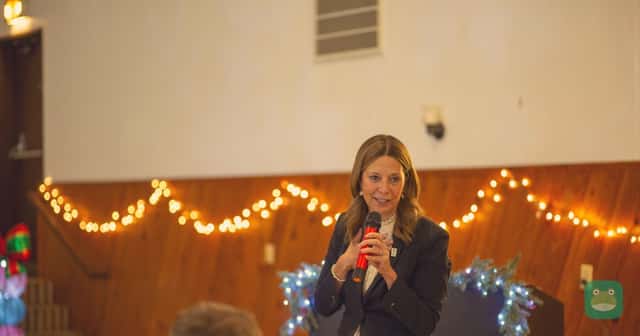
Ohio voters choose a new governor on Tuesday, Nov. 3. The race is between Democrat Amy Acton and Republican Vivek Ramaswamy. Acton is a physician who served as the state's health director early in the COVID-19 pandemic. Ramaswamy is a biotech founder and former presidential candidate. Libertarian Don Kissick is also on the ballot, according to Suffolk's release. Gov. Mike DeWine is term-limited, so the seat is open after 16 years of Republican governors, according to ABC 6 in Columbus. Ohio has not elected a Democratic governor since 2006, and Acton would be the first woman elected to the office.
Every public poll that 567 Politics opened from the final three weeks shows Acton ahead, by margins from 2 to 7 points. The polls differ in size, method and sponsor. This story covers those polls and the early vote. It also covers campaign money, the candidates' positions on the issues that have dominated the race, and the criticism Ramaswamy has drawn on the political right. It does not repeat the reporting in 567 Politics' earlier story on the campaign ad featuring Acton's mother and the late-October polls. The Ohio governor race page tracks results as they arrive, and the same ballot carries the U.S. Senate special election between Sherrod Brown and Jon Husted$, covered in a separate story on the final Siena poll.
The final polls
Eight polls whose releases or methodology statements 567 Politics opened are shown below. They were fielded between Oct. 15 and Nov. 1. Other pollsters also published Ohio governor surveys in that period. Aggregators list some that show a closer race or a Ramaswamy lead. Those are not charted here because 567 Politics did not review their releases.
Source: Siena Research Institute, Rasmussen Reports, YouGov, InsiderAdvantage, Research Co., Suffolk University, Fox News, Marist
Show the numbers
| Poll (field dates) | Acton | Ramaswamy |
|---|---|---|
| Research Co. (Oct. 30 to Nov. 1) | 53% | 46% |
| YouGov (Oct. 26 to 29) | 52% | 46% |
| NYT/Siena (Oct. 26 to Nov. 1) | 49% | 43% |
| InsiderAdvantage (Oct. 29 to 30) | 49% | 46% |
| Rasmussen (Oct. 27 to 31) | 49% | 45% |
| Suffolk (Oct. 21 to 26) | 48% | 44% |
| Fox News (Oct. 15 to 19) | 50% | 48% |
| Marist (Oct. 15 to 18) | 50% | 43% |
The table below gives each poll's sample, method and reported margin of error.
| Pollster | Sample | Method | Margin of error |
|---|---|---|---|
| NYT/Siena | 717 likely voters | Not detailed in the release reviewed | ±4.4 points |
| YouGov | 2,090 likely voters | Text-to-web, voter-file sample | ±2.8 points |
| Rasmussen | 1,119 likely voters | Phone and online, Pulse Opinion Research | ±3 points |
| InsiderAdvantage | 1,200 likely voters | Text and online panel | ±2.83 points |
| Research Co. | 450 likely voters | Online, weighted by age and gender | ±4.6 points |
| Suffolk/USA TODAY | 500 likely voters | Live telephone | ±4.4 points |
| Fox News (Beacon/Shaw) | 1,592 likely voters (of 2,005 registered) | Phone and text-to-web | ±2 points |
| Marist | Likely-voter subsample of 1,176 registered voters | Phone, text and online | ±4.5 points |
Sponsors differ. The Fox News poll is run jointly by Beacon Research, a Democratic firm, and Shaw & Company Research, a Republican firm. Suffolk polled with the USA TODAY Network Ohio. The field dates for the NYT/Siena poll are those listed by the New York Times and the poll tracker Polling Desk; Siena's own release gives the result and margin of error.
A simple unweighted average of the eight results above gives Acton 50.0% and Ramaswamy 45.1%, a lead of 4.9 points. That figure is 567 Politics' own arithmetic. It mixes polls with different samples, methods and treatment of undecided voters, and it is not a forecast. Suffolk's September poll had Acton ahead 50% to 41%, and its October poll had her ahead 48% to 44%, with Kissick at 4% and 3% undecided, according to its release. That is a narrower margin than a month earlier.
Some details inside the polls point in different directions.
- Rasmussen found Acton ahead 54% to 36% among independents. It found women split 48% for Acton and 46% for Ramaswamy, and men favoring Ramaswamy 50% to 43%.
- Marist found Acton leading among independents 53% to 34%, but 49% of Ohio likely voters said they expected Ramaswamy to win, against 45% who expected Acton to win.
- YouGov's sample, which was weighted to 2024 presidential vote, had Trump voters choosing Ramaswamy 86% to 12%. Respondents who said they voted for Kamala Harris chose Acton 99% to 1%.
- President Donald Trump's job approval among Ohio likely voters was 43% in Marist's poll and 43% in Fox's, with disapproval at 55% and 57%. YouGov found 45% approval and 54% disapproval.
On personal finances, Marist found 44% of Ohio likely voters saying their family's finances had gotten worse over the past year, while Fox found 46% saying they were worse off than two years ago. Both campaigns have built their closing arguments around living costs.
Early voting and Election Day rules
Early voting ran from Oct. 6 through Nov. 1, according to the state's early-voting site. The Ohio Capital Journal reported on Nov. 2 that more than 1.7 million Ohioans had cast ballots early, about 17% more than in 2022. Almost 1.1 million voted in person and 632,254 by mail.
Source: Ohio Capital Journal
Show the numbers
| Group | Early ballots cast |
|---|---|
| Unaffiliated | 807,000 |
| Democratic | 468,000 |
| Republican | 432,000 |
Polls are open from 6:30 a.m. to 7:30 p.m. on Election Day, according to the state's early-voting site. The Capital Journal reported that mail ballots must reach county election officials by 7:30 p.m. on Tuesday. There is no postmark grace period. More than 104,000 requested absentee ballots had not yet been returned. Voters must show an acceptable photo ID at the polls.
The early-vote totals describe turnout, not preference. Early ballots do not predict the result. Voters who cast ballots on Election Day are a different group. Unaffiliated voters, the largest early group, have no stated party preference.
The candidates on the issues that have driven the race
Ohio's governor can propose a budget and sign or veto bills, but taxes and spending changes pass through the General Assembly. Signal Ohio reported on Oct. 29 that the Republican-led legislature is virtually certain to stay Republican after this election, so whatever either candidate proposes would need to pass it. Acton has said she thinks "we're going to break the supermajority in this election," which she said would give her "veto powers that even Governor DeWine has not had."
| Issue | Ramaswamy (R) | Acton (D) |
|---|---|---|
| Property taxes | Reset to pre-pandemic levels, then cap growth | Larger homestead exemption and a rebate for spikes above 4% |
| Other taxes | Phase out income tax over 8 to 10 years, starting with capital gains | Working Families Tax Cut with a child tax credit, about $2 billion |
| Data centers | First-day executive order halting new approvals until legislation passes | Conditional moratorium; companies bring their own power |
| School funding | Keep Fair School Funding; support school choice, including private schools | Fully fund Fair School Funding; audit EdChoice vouchers |
| Health care | Pursue Medicaid fraud, which he estimates at $4.7 billion a year | Medical debt relief; concern about Medicaid changes |
Ramaswamy's plan
In an Oct. 14 interview with ABC 6, Ramaswamy described his main tax proposal this way: "Let's reset the property taxes to where they were pre-pandemic, before the end of the pandemic, and then cap the growth from there." He said it can be done "without hurting local police, fire, schools, or veteran services," and that "I haven't said eliminate property taxes." He said the state would "use some of our state surpluses to backstop any shortfalls" in local budgets. He hopes homeowners feel the effect "by this time next year."
On the income tax, he said reaching zero "is going to be an eight to 10 year trajectory." It would start in 2027 with steps such as ending the capital gains tax. He also proposed prosecuting what he called Medicaid fraud, citing "independent estimates" of "$4.7 billion a year" and a deal with the federal government to let Ohio keep any savings. On data centers, he said his legislation would make them pay property taxes and would end abatements. It would also require "free electricity in that neighborhood," clean water and use of old industrial sites, not farmland. His first executive order would halt new projects: "Nothing new until the legislation is passed."
He said he supports the Fair School Funding formula and school choice, including "a school outside of our public school system," and wants to raise average starting teacher pay above about $38,000. In a Sept. 21 interview with the Daily Caller News Foundation he said of Acton, "If my opponent's elected, it's a disaster. Property taxes will double, income taxes will double." He also described her handling of the pandemic as a shutdown "with an ideological objective." Acton defended that record in her interview, and the foundation noted that DeWine has said the pandemic orders were ultimately his decision.
Ohio voted for Trump by 11 points in 2024, according to the Daily Caller News Foundation. Ramaswamy is endorsed by Trump and Vice President JD Vance$, according to the Christian Science Monitor. His running mate is state Senate President Rob McColley, according to NBC News.
Acton's plan
In an Oct. 20 interview with ABC 6, Acton described her first priority as a "Working Families Tax Cut, instead of a tax break for people like my opponent and his friends," including a child tax credit. She said it would cost "in the $2 billion dollar range, but plus or minus." On property taxes, she said "a homestead exemption" and "a property tax spike rebate" for households whose property values rose more than 4% could begin immediately. She said she would not do "what my opponent's calling for, like eliminating all property taxes, which even Governor DeWine has said we don't need."
Ramaswamy says he has not proposed eliminating property taxes, as the quotation above shows. An Acton campaign statement from February cited DeWine telling Cleveland.com that abolishing property taxes "would be absolutely devastating." It also quoted him saying "Sales tax could go up to 17, 18, 19, 20%." 567 Politics did not open the original Cleveland.com article. The Acton campaign says Ramaswamy later moved from that position to a rollback and growth cap; Ramaswamy's interview describes the rollback and cap as his plan.
Acton said she would "fully fund" the bipartisan school funding formula and begin with an audit of EdChoice vouchers, which she described as "an out-of-control, unaccountable voucher system." On data centers she said she supports "guardrails" and has asked for a "conditional moratorium," and that data-center companies must "bring their own energy." She also proposed medical debt relief and called for a "hot wash," or after-action review, of Ohio's pandemic response, which she defended: "I thought Ohio was heroic."
Signal Ohio's comparison reported that Innovation Ohio, a liberal group, estimates Ramaswamy's rollback would cost about $4 billion a year. Much of that would come from local K-12 schools. Signal also reported that both candidates backed a gas tax holiday of roughly $725 million. The ABC 6 interviewer said Acton's expansion of the homestead exemption would make another 55,000 homeowners eligible, for a total of roughly 755,000. Signal Ohio described her spike rebate as limited to households making less than $132,000. The cost estimates cited here come from the campaigns and from an advocacy group; 567 Politics did not find an independent estimate for either plan.
Both candidates have also traded personal attacks. Ramaswamy said Acton's "only qualification for this job is a short-lived stint as health director, and when times got tough, she quit," and that she refuses to debate. Acton said she would not debate because debates are "for civic dialog," and called Ramaswamy "a serial liar." Ramaswamy said CNN and NBC offered debates and that he accepted. The ad dispute and the polling reaction are covered in the earlier 567 Politics story.
Money in the race
Ohio candidates file with the Ohio Secretary of State, not the Federal Election Commission. 567 Politics used the Ohio Capital Journal's Oct. 28 analysis of the last pre-general state reports and did not retrieve the filings. The newspaper noted a reporting quirk. Campaigns report fundraising monthly over the summer, but not spending. The final report therefore shows about two weeks of fundraising and more than four months of spending. The raised and spent figures below do not cover the same period.
| Raised | Spent | Other | |
|---|---|---|---|
| Ramaswamy | $1.5 million | $51.1 million | Another $5 million loan; outstanding debt $41.3 million |
| Acton | $3.9 million | $26.2 million | About $22.3 million on advertising, $1.7 million later refunded |
According to the Capital Journal, Ramaswamy's campaign spent more than $35 million on media and television placements between July and Oct. 14, including nearly $8 million on Oct. 8. His report includes nearly $870,000 in charges tied to private jet travel, including lease payments of almost $386,000 and nearly $484,000 to a charter company. Acton's travel bill, mostly commercial airfare, came to about $57,600. Ramaswamy has faced criticism over his private jet since early in the campaign. The newspaper cited an NBC report in September on unease among Republican officials who urged him to "park the damn jet." The newspaper wrote that he "didn't take their advice." The campaign's response to the jet criticism was not in the material 567 Politics reviewed.
Donors of $10,000 or more to Ramaswamy include American Electric Power, the Ohio branch of the National Federation of Independent Business, Elevance Health and a committee representing Ohio banks. The Winklevoss twins each gave the maximum. Acton's largest contributions were about $262,000 from the Ohio Democratic Party candidate fund. She also got $10,000 or more from committees tied to a county engineer, Columbus teachers, Ohio's life sciences industry and the Ohio Hospital Association. The association's PAC also gave Ramaswamy a maximum $16,615 donation two weeks earlier. Outside groups continue to report independent spending to the FEC.
Critics on the right
Ramaswamy's general-election opponent is a Democrat, but a share of the criticism he has faced during the campaign has come from people on the political right. It falls into four groups: objections to his 2024 defense of the H-1B visa program, attacks on his ancestry and faith from the online right, his primary rival, and unease among Republican officials about tactics. None of the polls 567 Politics reviewed asked voters about these specific criticisms, so their effect on the vote is not measured.
H-1B and the "mediocrity" post
After the 2024 election, Ramaswamy and Elon Musk argued for keeping the H-1B visa program for skilled foreign workers. Ramaswamy wrote that American culture has too often "venerated mediocrity over excellence." The Christian Science Monitor reported the post drew criticism "from a range of Republicans from former South Carolina Gov. Nikki Haley to right-wing activist Laura Loomer." NBC News wrote that "some on the right have not forgiven him" for the December 2024 defense. The Daily Caller News Foundation wrote on Sept. 21 that he still has critics on the right, "particularly immigration hardliners," for backing the program while seeking to reform it. The foundation said his campaign told it before an interview that he does not answer questions on H-1B visas. He offered to discuss immigration policy "holistically." Signal Ohio reported that he "previously has called for the H1-B visa system to be reformed." It added that he has angered some hard-right activists by arguing that U.S. culture and schools, not only immigration policy, drive firms to look abroad for talent. A governor has no authority over the federal visa program.
In December 2025, Ramaswamy pulled out of a keynote at the ITServe Alliance's conference in Puerto Rico after conservatives on X objected to the group's advocacy against H-1B restrictions, Signal Ohio reported. A clip circulated of a speaker at a past ITServe event, Sheela Murthy, ridiculing Trump as anti-immigrant. She said through her law firm that the clip was nearly a decade old and taken out of context. Campaign manager Jonathan Ewing said in a post on X, "The rhetoric displayed in this video is inappropriate, and I can confirm that Vivek will not be participating in this conference." Mike Cernovich, a Trump-aligned influencer, wrote, "Is Vivek trying to lose the Ohio election?" Campaign spokesperson Connie Luck told Signal that Ramaswamy had agreed to speak because the campaign had finance events scheduled in Puerto Rico anyway, and that "it was a tech conference." Signal Ohio noted that some of the backlash was explicitly racist.
Ancestry, faith and the primary
Casey Putsch, a YouTube personality who challenged Ramaswamy in the Republican primary, called him "questionably American," according to the Monitor, and posted a video that critics described as openly racist. He told NBC News: "We don't like you because you don't care about us," and said Ramaswamy has "disdain and contempt for Americans, their heritage and their culture." NBC reported that Putsch used a slur about Ramaswamy's birth and that the term is meant to undermine citizenship guaranteed by the 14th Amendment to U.S.-born children of immigrants. Putsch defended the language to NBC. Putsch won 18% of the primary vote, according to the Monitor; the Daily Caller News Foundation reported that Ramaswamy won the May primary with more than 82%.
Podcaster Nick Fuentes, after Ramaswamy criticized him at a Turning Point USA event, told listeners "we have to deny Vivek Ramaswamy the governorship," the Monitor reported. At a summer speech to Young Americans for Liberty in Cincinnati, a heckler shouted, "I want to deport 50 million foreigners." Ramaswamy replied, "In order to make America great again, you have to understand what made America great the first time." Hecklers booed him off the stage when he finished.
NBC also reported that questions about Ramaswamy's Hindu faith returned when he chose his running mate. Aaron Baer, president of the Center for Christian Virtue, said at the running-mate announcement that Ramaswamy committed to choosing "a strong Christian." Ramaswamy said he had told pastors he was "open to that" and described it as less than a promise.
How Ramaswamy has responded
Ramaswamy has answered the online critics directly. In a New York Times guest essay he wrote that "this new online-right movement doesn't represent the views of most real-world Republican voters." At Turning Point USA's conference, NBC reported, he called the "heritage Americans" idea "loony" and said, "There is no American who is more American than somebody else." He said in January that he had deleted social media apps from his phone, citing racial slurs in his mentions, and added: "I'm a Vivek Ramaswamy Republican."
Vance has described himself as a defender of "heritage Americans," a term the Monitor said Ramaswamy's views contrast with; the two say they are friends, and Vance has endorsed Ramaswamy. Matt Dole, an Ohio Republican consultant, told the Monitor that Ramaswamy "is a Trump Republican through-and-through" who "understands that he needs to widen the tent." State Rep. Ty Moore said Ramaswamy "needs guys like us who are actually from Appalachia and the country to say, 'This is our guy.'"
Republican officials and the Acton ad
A separate round of criticism from Republicans followed the campaign's ad featuring Acton's estranged mother. Signal Ohio reported that Shannon Jones, a Republican former state senator, called it "complete trash," that national Republican commentator Scott Jennings called it "extremely risky," and that DeWine, Frank LaRose, Husted and former Attorney General Dave Yost distanced themselves from it. Vance told fellow Republicans to "stop whining about an advertisement and go win the race." The campaign pulled the ad on Oct. 29, as the earlier 567 Politics story described.
What to watch
Polls close at 7:30 p.m. Eastern. Suffolk's Portage County bellwether sample, a 300-voter survey with a margin of error of ±5.6 points, had the governor's race tied at 47% each, according to the Suffolk release. Results will appear on the race page. For how 567 Politics treats polls, see its methodology.
Differing perspectives
How should Ohio's next governor reduce homeowners' property tax bills?
Each position is summarized as its supporters make it, with equal weight and in alphabetical order. A summary is not an endorsement; the evidence for each is weighed in the story above.
Fund schools fully and target relief to households
Who holds it: Amy Acton (D) and her campaign
Acton argues that the largest relief for homeowners comes from fully funding public schools under the bipartisan Fair School Funding plan and auditing the voucher system, which she says puts pressure on property taxes. She proposes widening the homestead exemption right away and creating a rebate for households whose property values rose more than 4%, aimed at "the folks who most need it to stay afloat." She says she would not eliminate property taxes, and would pair this with a child tax credit and steps to lower electric bills.
In their words: ABC 6 On Your Side (WSYX), interview with Amy Acton, Oct. 20, 2026 ↗
Roll bills back to pre-pandemic levels and cap growth
Who holds it: Vivek Ramaswamy (R) and his campaign
Ramaswamy argues that property taxes "went totally crazy" after the pandemic and are pushing long-time owners, especially seniors, out of homes they own outright. He proposes resetting bills to pre-pandemic levels and capping growth from there, which he says can be done "without hurting local police, fire, schools, or veteran services." He says the state would use surpluses to backstop any local shortfalls, as it did for the gas tax suspension, and that property taxes paid by data centers would fund rebates to homeowners. He hopes homeowners see relief within a year.
In their words: ABC 6 On Your Side (WSYX), interview with Vivek Ramaswamy, Oct. 14, 2026 ↗
READ BEYOND 567POLITICS
Alternate sources & perspectives
Independent coverage and primary evidence to help you compare arguments. A link is not an endorsement; perspective labels describe the linked material.
- right argument
ABC 6 asks GOP gubernatorial candidate Vivek Ramaswamy about taxes, data centers, & more ↗
ABC 6 On Your Side (WSYX)
Ramaswamy's own answers on property taxes, income tax, data centers and schools, Oct. 14, 2026.
- left argument
ABC 6 asks Democratic gubernatorial candidate Amy Acton about property taxes & more ↗
ABC 6 On Your Side (WSYX)
Acton's own answers on the same topics, Oct. 20, 2026.
- primary evidence
NYT/Siena poll of likely voters in Alaska, Iowa, Kansas, Maine, Michigan, Ohio and Texas ↗
Siena Research Institute
Pollster's release with the Ohio governor result and margin of error.
- primary evidence
Suffolk University/USA TODAY Network Ohio poll press release, Oct. 28, 2026 ↗
Suffolk University Political Research Center
Poll release with the governor result, sample, method, margin of error and the Portage County bellwether sample.
- independent analysis
Ohio voters cast more than 1.7 million ballots early, surpassing 2022 totals ↗
Ohio Capital Journal
Early-vote totals, party-status breakdown and Election Day deadlines.
- independent analysis
Final Ohio campaign finance report shows Acton raising more, spending less than Ramaswamy ↗
Ohio Capital Journal
Analysis of the last pre-general state campaign finance reports.
- independent analysis
Amy Acton's and Vivek Ramaswamy's plans to address affordability ↗
Signal Ohio
Side-by-side comparison of the candidates' cost plans and outside cost estimates.
- independent analysis
Ramaswamy cancels speech amid online conservative backlash ↗
Signal Ohio
Reporting on the ITServe withdrawal and right-wing criticism, with campaign responses.
- independent analysis
As MAGA embraces 'heritage Americans,' Ramaswamy navigates a challenging campaign ↗
Christian Science Monitor
Reporting on critics on the online right, the primary and the 'heritage Americans' debate.
- independent analysis
How Vivek Ramaswamy's campaign for Ohio governor returned him to the 'real world' ↗
NBC News
Reporting on the Putsch, faith and running-mate episodes and Ramaswamy's responses.
- right argument
EXCLUSIVE: H-1B Visas Are The One Topic Vivek Ramaswamy Refuses To Talk About ↗
Daily Caller News Foundation
Sept. 21 interview with Ramaswamy, including his comments on Acton and H-1B critics.
Reviewed 2026-11-02. Sources below are pages 567 Politics opened in full while writing the story. The automated source-discovery search returned only unrelated results, so every entry was chosen by hand. The Ohio Secretary of State's campaign-finance pages blocked automated access, so finance figures rest on the Ohio Capital Journal's analysis rather than the filings. X.com was not accessible, so posts by critics are cited as quoted by Signal Ohio, NBC News and the Christian Science Monitor. The original Cleveland.com article quoting Gov. DeWine on property taxes was not opened. No poll asked about the right-wing criticism of Ramaswamy.