Idaho judge pauses his ruling shielding a doctor's health-based abortions, a week after Prop 1 failed
Judge B. Lynn Winmill stayed his ruling for Dr. Julie Seyb after a Ninth Circuit loss. With Prop 1 defeated, the fight over exceptions moves to lawmakers.
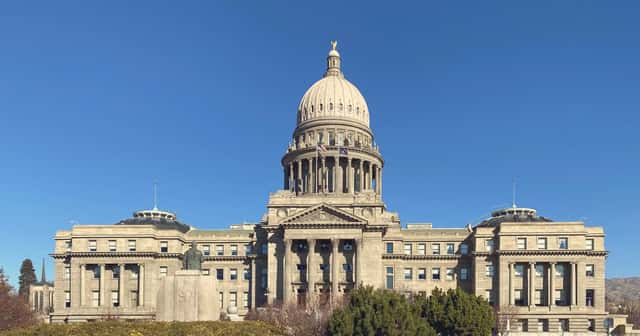
Idaho's abortion ban again applies to the only doctor who had won court protection from part of it. On Tuesday, Nov. 10, U.S. District Judge B. Lynn Winmill stayed his own declaratory judgment in Seyb v. Labrador. That judgment had found that Idaho would violate the 14th Amendment by prosecuting Dr. Julie Seyb for some abortions meant to protect a patient's health or prevent self-harm. Winmill acted after a Ninth Circuit panel ruled 2-1 on Oct. 30 that the state was likely to win on appeal. Law360 reported that he said he is bound by an appellate decision he "strongly disagrees" with. Bloomberg Law reported that the ban "is legal for now."
The pause comes one week after Idaho voters rejected Proposition 1, a citizen initiative that would have allowed abortions up to fetal viability. With all 44 counties reporting, the Idaho Secretary of State's unofficial results show 55.91% voting no and 44.09% voting yes. Together, the court order and the vote leave Idaho's law where it stood before August. Abortion is a crime except to prevent the woman's death, in an ectopic or molar pregnancy, or in some first-trimester rape and incest cases. The open question is whether the courts or the Legislature will add a health exception, and on what terms.
What the Nov. 10 order changed#
The case has two kinds of relief, and the appeals court had dealt with only one of them. In August, Winmill issued an injunction that blocked prosecutors from charging Seyb in certain health-related cases. On Oct. 13 he added a declaratory judgment, a formal statement that the law was unconstitutional as applied to her, according to a Juricue explainer on the appeal. The state filed amended notices of appeal and asked for a stay of that declaration on Oct. 23.
The Ninth Circuit's Oct. 30 order stayed the injunction but did not address the declaratory judgment, Juricue noted. The Nov. 10 order closed that gap. Seyb, a maternal-fetal medicine specialist at St. Luke's, no longer has a court ruling in hand that says the state cannot charge her for the abortions at issue.
567 Politics did not obtain the text of the Nov. 10 order, which sits behind court and subscription paywalls. This account of it relies on the Law360 and Bloomberg Law reports, which agree on the date, the result and the reason.
- Winmill finds a narrow right to abortion when pregnancy threatens health and enjoins enforcement in those cases
- Attorney General Raúl Labrador announces an appeal
- Winmill denies a full stay but limits the injunction to Dr. Seyb
- The Ninth Circuit grants a temporary administrative stay
- Winmill enters a declaratory judgment limited to Dr. Seyb
- The state files amended appeals and seeks a stay of the declaration
- A Ninth Circuit panel stays the injunction 2-1
- Idaho voters reject Proposition 1
- Winmill stays his declaratory judgment
Source: U.S. District Court for Idaho, Ninth Circuit, Juricue, Law360
What Winmill found in August#
Winmill's 81-page findings and conclusions, issued Aug. 13 after a trial, held that "the Due Process and Equal Protection Clauses ... establish a narrow but fundamental right to abortion when a pregnancy threatens the woman's life or health." He wrote that "a pregnant woman's health is not a state resource to be allocated at the legislature's whim."
The injunction barred enforcement of Idaho's two main abortion laws against care where a pregnancy posed a "non-negligible risk of serious and lasting harm" to the woman's health. It also covered cases with a risk of death from self-harm. Winmill tied that second piece to the equal protection clause, reasoning in part that "the brain is an organ of the body." Idaho Capital Sun reporter Laura Guido summarized the ruling as allowing abortion to protect a woman's health or prevent self-harm.
Winmill did not side with the plaintiffs on everything. He rejected a separate claim over fatal fetal conditions. He found the law survives the most lenient test courts apply. "For Idahoans who oppose this law, the solution lies at the ballot box rather than the courthouse," he wrote on that claim. He also dismissed the Idaho Board of Medicine from the case.
On Aug. 25, in a memorandum decision, he denied the state's bid for a full stay. But he narrowed the injunction so it protected only Seyb. He cited the Supreme Court's 2025 ruling in Trump v. CASA, which limited universal injunctions. He wrote that he "would anticipate that the same reasoning and the same result would apply" to any doctor in Seyb's position. He said it was not "necessary nor appropriate" to rule on claims not before him.
How the Ninth Circuit ruled#
The Oct. 30 order was unsigned. Judge Consuelo Callahan and Judge Kim McLane Wardlaw formed the majority, and Wardlaw also wrote a concurrence. Judge Marsha Berzon dissented.
The majority found that the state "made a strong showing of likely success on the merits." It said Dobbs v. Jackson Women's Health Organization "plowed the same ground and held that 'the Constitution does not confer a right to abortion.'" It added: "We think it unlikely that Dr. Seyb will be able to square the district court's perspective on the history and tradition concerning abortions with the Supreme Court's perspective in Dobbs."
On self-harm, the panel went further. "There are other methods for preventing suicide," it wrote, "and Idaho's 'profound interest' in preserving fetal life reasonably supports the use of those means over the termination of pregnancy."
Wardlaw wrote separately. "As an intermediate court of appeals, we are bound by the decisions of the Supreme Court," she said. In her view, Dobbs closed the door to new abortion rights, "particularly one as vague and ill-defined as the right pressed here." In a footnote, she noted that a separate injunction in a St. Luke's Health System case still lets that hospital system provide emergency abortions required by the federal Emergency Medical Treatment and Labor Act (EMTALA). Idaho has not appealed that order.
Berzon wrote that Idaho "has not made a strong showing either that Dobbs overruled the separate holdings in Roe and Casey regarding abortions preserving the life or health of the mother or that history and tradition does not support a right to such abortions." She called the state's showing of harm "decidedly weak." She wrote that "some women with serious pregnancy complications will ... be required to continue their pregnancies at serious, permanent risk to their health." She ended: "I respectfully, but emphatically, dissent."
The appeal itself continues. The order sets briefing deadlines of Dec. 18 for the state, Jan. 22, 2027, for Seyb, and Feb. 19, 2027, for the state's reply. The appellants are Labrador and Ada County Prosecuting Attorney Jan Bennetts.
What Idaho law allows now#
Idaho has two overlapping bans. The Defense of Life Act makes performing an abortion a felony. Winmill's findings describe a prison term of two to five years and loss of a medical license. The Fetal Heartbeat Act adds a private right to sue, with damages of at least $20,000. The stricter Defense of Life Act controls where the two conflict, the findings say.
The criminal law's exceptions cover abortions needed to prevent the woman's death. They also cover ectopic and molar pregnancies, and rape or incest in the first trimester when the crime is reported to police, as the Idaho Capital Sun reported. There is no exception for a threat to health that falls short of a threat to life.
Courts have defined the life exception more than once. In 2023, the Idaho Supreme Court held in Planned Parenthood Great Northwest v. State that a doctor need not show "objective certainty, or a particular level of immediacy." But it also said a prosecutor may challenge a doctor's good faith using other experts, Winmill's findings note. In April 2025, an Ada County judge ruled in Adkins v. State that the exception applies when a patient faces a "non-negligible risk of dying sooner" without an abortion.
The St. Luke's EMTALA order, which Wardlaw mentioned, is the other main carve-out. It covers abortions "necessary to stabilize a patient presenting with an emergency medical condition" at that system's emergency departments.
The state's case#
Labrador has framed the case as a test of who sets abortion policy after Dobbs. When he announced the appeal on Aug. 20, he said: "A federal judge has replaced Idaho's law with his own abortion standard, broad enough to treat even the ordinary risks of a C-section as justification for an abortion." He added that "Dobbs made clear that abortion policy belongs to the people."
The state's emergency motion to the Ninth Circuit called the ruling "the first to re-constitutionalize abortion." It said the ruling creates "expansive rights based on a doctor's subjective assessment of risk." It argued the right would "contradict the vast history of state prohibitions on 'therapeutic' abortions." It described suicide as "a historically unlawful act that abortion does nothing to treat." The motion also told the court that "Idahoans will vote on an abortion law this fall."
After the Oct. 30 order, Labrador said in a statement: "I am thrilled that the Ninth Circuit" ruled as it did. He added: "Idaho's unwavering protection for unborn children and their mothers will continue as intended." His 567 Politics profile covers his record. Labrador holds a state office, so there is no federal campaign finance record for this race.
The Idaho Family Policy Center, which says it drafted the Fetal Heartbeat Act, filed a friend-of-the-court brief for more than 50 state legislators. Its president, Blaine Conzatti, said on Oct. 30: "Pregnant mothers don't have a constitutional right to abortion merely because they threaten to harm themselves. Women in mental health crises need treatment, not abortion."
The plaintiff's case#
Seyb and her lawyers, from the Lawyering Project and Legal Voice, argue that the law forces doctors to wait until patients are near death. "I have been caring for Idaho patients with high-risk pregnancies for nearly 30 years," Seyb told the Idaho Capital Sun in August.
After the appeals ruling, she said in a Lawyering Project statement: "Laws that criminalize abortion make pregnancy less safe." She said she would "continue to advocate for the right of every patient to make important medical decisions without government interference." Stephanie Toti, the group's executive director, said: "People don't surrender their constitutional rights when they become pregnant." She called the stay "a temporary setback." Wendy Heipt of Legal Voice said: "Today's ruling is not the final word."
Checking the numbers each side cites#
Both sides point to Idaho's maternal death data. The figures come from the Idaho Maternal Mortality Review Committee's 2024 summary, published by the Idaho Board of Medicine.
Labrador's Aug. 20 release said: "Since Dobbs, Idaho's pregnancy-related mortality rate has fallen from 18.7 ... in 2018 to 4.29 in 2024." Both figures match the committee's report. But the comparison needs context. The 2018 starting point came four years before Dobbs, which was decided in June 2022. The ratio then rose to 41.8 in 2020 and 40.1 in 2021, before the ban took effect. It was 8.94 in 2022 and 22.6 in 2023. The 2024 figure reflects one pregnancy-related death. The committee itself calls its 2024 findings "statistically insignificant due to the infrequency of maternal deaths." The data show a drop from the 2020-2021 peak. They do not show that the ban caused it.
Source: Idaho Maternal Mortality Review Committee
Show the numbers
| Year | Ratio |
|---|---|
| 2018 | 18.7 |
| 2019 | 13.6 |
| 2020 | 41.8 |
| 2021 | 40.1 |
| 2022 | 8.94 |
| 2023 | 22.6 |
| 2024 | 4.29 |
The plaintiffs' side stresses causes. The Lawyering Project's case page says mental health conditions were the most common cause of pregnancy-related death in Idaho from 2018 to 2024. Winmill made a similar finding. The committee's 2024 summary supports the point for 2020 to 2024, when mental health conditions caused 34.6% of these deaths. That is the basis for the self-harm part of the case. It is also the part the Ninth Circuit majority found weakest.
Source: Idaho Maternal Mortality Review Committee
Show the numbers
| Cause | Share |
|---|---|
| Mental health condition | 34.6% |
| Infection or sepsis | 26.9% |
| Hemorrhage | 11.5% |
| Neurologic or neurovascular | 11.5% |
| Other | 15.3% |
The doctor supply is also contested. Winmill's findings cite a July 2025 study in JAMA Network Open. It found that 35% of OB-GYNs practicing obstetrics in Idaho left after 2022. The Idaho Family Policy Center disputes that study and sued in July over its data, the Idaho Capital Sun reported. Susie Keller, chief executive of the Idaho Medical Association, told the Capital Sun that Idaho has lost a third of its practicing OB-GYNs.
Voters weigh in on Proposition 1#
Proposition 1, the Reproductive Freedom and Privacy Act, would have allowed abortions up to fetal viability. After that point, the state could have regulated the procedure outside of medical emergencies, the Idaho Press reported. The official count shows 406,097 votes against and 320,210 for, a margin of about 86,000. The results are due to be certified by Nov. 24, the Idaho Capital Sun reported.
Source: Idaho Secretary of State
Show the numbers
| Choice | Votes |
|---|---|
| No | 406,097 |
| Yes | 320,210 |
Both campaigns raised millions of dollars. Idahoans United for Women and Families raised $5.8 million, and the Too Extreme for Idaho PAC raised more than $5 million, the Idaho Press reported. Gov. Brad Little and Labrador opposed the measure. So did The Church of Jesus Christ of Latter-day Saints and the Catholic Diocese of Boise, according to the Capital Sun. The Idaho Medical Association took no position.
"The people of Idaho have spoken," said Mary Strow of the Stop Prop 1 campaign, according to the Idaho Press. Melanie Folwell, who led Idahoans United, called the result a "tremendous, frankly gutting, loss."
Idaho Republican Party chair Dorothy Moon told the Capital Sun: "We defeated Prop 1, and that was the biggest issue." Idaho House Republican leaders said in a joint statement: "We are a pro-life state." Conzatti said "a broad majority of Idaho voters support our pro-life laws."
Idaho's result breaks from other abortion votes this fall. Missouri voters rejected the Amendment 3 abortion ban. In Virginia, NBC projected passage of a reproductive freedom amendment. More national context is on the 567 Politics United States abortion page.
Where the fight goes next#
With the courts and the voters both leaving the law in place for now, attention is shifting to the Legislature's 2027 session.
Folwell urged supporters to "demand needed exceptions in the coming session," according to the Capital Sun. Keller said the medical association "will continue to ask the legislature to pass a health exception." The association's 2026 legislative priorities propose specific language. It would allow abortion when needed to "avoid serious risk of substantial impairment of a major bodily function or serious dysfunction of any bodily organ or part." That wording is close to the medical emergency definition in the Fetal Heartbeat Act. The proposal would also state that "no abortion shall be deemed necessary because the physician believes she may or will take action to harm herself." That would reach the health part of Winmill's ruling but not the self-harm part.
The association says that language is "commonly used in Republican-led states with abortion bans." No such bill has passed in Idaho.
After the August ruling, Conzatti noted that civil lawsuits under the Fetal Heartbeat Act were still available. He told the Capital Sun that his group's legal center "stands ready to hold doctors accountable."
Idaho is not the only state where doctors are testing near-total bans in court. In Arkansas, a Pulaski County judge ruled Nov. 6 that a challenge by six women and an OB-GYN can go forward against the attorney general, three prosecutors and the state medical board, the Arkansas Advocate reported. That case is in state court, and the judge has not yet ruled on the request to block the ban.
In Idaho, the Ninth Circuit will hear the full appeal after briefing ends in February 2027. Earlier this month, a separate Idaho case before the same court, over the state's transgender sports law, ended as moot without a ruling on the merits. Whichever side loses the Seyb appeal could ask the full Ninth Circuit or the Supreme Court to step in. Abroad, legislators are reworking abortion law too: Poland's Senate committees backed abortion bills as President Karol Nawrocki weighs a veto.
Differing perspectives
Should Idaho's abortion ban allow abortions to protect a pregnant woman's health, and who should decide?
Each position is summarized as its supporters make it, with equal weight and in alphabetical order. A summary is not an endorsement; the evidence for each is weighed in the story above.
Have the Legislature add a medical exception
Who holds it: Idaho Medical Association (CEO Susie Keller)
Idaho women with pregnancy complications still face delays and denials of care that threaten their lives, health and ability to have children. The Legislature should change the law so doctors can give standard, evidence-based treatment when a pregnancy risks serious impairment of a major bodily function or organ. The proposed wording is common in Republican-led states with bans. It would not treat a risk of self-harm as a reason for abortion, which avoids creating new routes to elective abortion.
In their words: Idaho Medical Association ↗
Keep the current laws and exceptions as written
Who holds it: Idaho Family Policy Center (Blaine Conzatti); more than 50 Idaho legislators backing its amicus brief
Idaho's laws already protect both pregnant women and fetal life, with clear exceptions to prevent a woman's death and for rape or incest. Pregnant mothers do not have a constitutional right to abortion because they threaten to harm themselves; women in a mental health crisis need treatment, not abortion. State policymakers, not unelected federal judges, should have the final say on abortion limits, and the lower court ruling should be reversed on appeal.
In their words: Idaho Family Policy Center ↗
Leave abortion policy to Idaho voters and lawmakers
Who holds it: Idaho Attorney General Raúl Labrador
Dobbs made clear that abortion policy belongs to the people and their elected representatives, not to federal judges. The district court replaced Idaho's law with its own standard, one broad enough to treat even the ordinary risks of a C-section as grounds for an abortion. Idaho's law already allows abortions to save a woman's life, and the state's protection of fetal life and of pregnant women should continue as the Legislature intended.
In their words: Office of the Idaho Attorney General ↗
Recognize a constitutional right to health-preserving abortion
Who holds it: Dr. Julie Seyb; Lawyering Project (Stephanie Toti); Legal Voice (Wendy Heipt)
Pregnant patients do not give up their constitutional rights. Idaho's law forces doctors to wait until a woman is close to death before acting, even when a delay risks lasting harm to her health or future fertility. Laws that criminalize abortion make pregnancy less safe and push specialists out of the state. The courts should protect a narrow right to abortion when a pregnancy threatens a woman's health, and patients should be able to make these medical decisions without government interference.
In their words: Lawyering Project ↗
Cite this article
567 Politics staff. “Idaho judge pauses his ruling shielding a doctor's health-based abortions, a week after Prop 1 failed.” 567politics. Published 2026-11-11. https://567politics.com/news/idaho-seyb-winmill-stays-abortion-health-exception-ruling-prop-1-november-2026
Wikipedia citation
{{cite news |title=Idaho judge pauses his ruling shielding a doctor's health-based abortions, a week after Prop 1 failed |url=https://567politics.com/news/idaho-seyb-winmill-stays-abortion-health-exception-ruling-prop-1-november-2026 |work=567politics |author=567 Politics staff |date=2026-11-11 |language=en}}CSL-JSON for reference managers
{
  "id": "https://567politics.com/news/idaho-seyb-winmill-stays-abortion-health-exception-ruling-prop-1-november-2026",
  "type": "article-newspaper",
  "title": "Idaho judge pauses his ruling shielding a doctor's health-based abortions, a week after Prop 1 failed",
  "URL": "https://567politics.com/news/idaho-seyb-winmill-stays-abortion-health-exception-ruling-prop-1-november-2026",
  "container-title": "567politics",
  "language": "en",
  "author": [
    {
      "literal": "567 Politics staff"
    }
  ],
  "issued": {
    "date-parts": [
      [
        2026,
        11,
        11
      ]
    ]
  }
}Citations identify this article and its publication date. Assess the reporting and its linked sources before using it as evidence.
Read this article as Markdown or JSON. Cite the original page and retain its sources, dates and qualifications.
Embed this article summary
Paste this HTML into your page. The summary stays linked to the full story and updates with it. No account required.
<iframe src="https://567politics.com/embed/news/idaho-seyb-winmill-stays-abortion-health-exception-ruling-prop-1-november-2026?theme=auto" title="Idaho judge pauses his ruling shielding a doctor's health-based abortions, a week after Prop 1 failed by 567politics" width="100%" height="440" style="border:0;max-width:100%" loading="lazy"></iframe>
<p style="font-size:14px">Idaho judge pauses his ruling shielding a doctor's health-based abortions, a week after Prop 1 failed by <a href="https://567politics.com/news/idaho-seyb-winmill-stays-abortion-health-exception-ruling-prop-1-november-2026" rel="nofollow">567politics</a></p>
<script async src="https://567politics.com/embed.js"></script>
READ BEYOND 567POLITICS
Alternate sources & perspectives
Independent coverage and primary evidence to help you compare arguments. A link is not an endorsement; perspective labels describe the linked material.
- primary evidence
Seyb v. Labrador, Nos. 26-5360, 26-5558, 26-6068: order granting stay pending appeal (Oct. 30, 2026) ↗
U.S. Court of Appeals for the Ninth Circuit
The 2-1 stay order, with Judge Wardlaw's concurrence, Judge Berzon's dissent and the briefing schedule.
- primary evidence
Findings of fact and conclusions of law, Seyb v. Idaho Board of Medicine (Aug. 13, 2026) ↗
U.S. District Court for the District of Idaho (hosted by Lawyering Project)
Judge Winmill's 81-page post-trial ruling recognizing a narrow right to health-preserving abortion and rejecting the fetal-anomaly claim.
- primary evidence
Memorandum decision and order narrowing the injunction to Dr. Seyb (Aug. 25, 2026) ↗
U.S. District Court for the District of Idaho (hosted by Lawyering Project)
Denies a full stay but limits relief to the plaintiff, citing Trump v. CASA.
- primary evidence
Idaho Maternal Mortality Review Committee 2024 report summary ↗
Idaho Board of Medicine
Pregnancy-related mortality ratios for 2018-2024 and causes of death for 2020-2024; notes small-number limits.
- primary evidence
November 2026 general election results: state measures ↗
Idaho Secretary of State
Unofficial Proposition 1 results, 55.91% no to 44.09% yes, all 44 counties reporting.
- right argument
AG Labrador appeals ruling that would let doctors override Idaho's pro-life law ↗
Office of the Idaho Attorney General
The state's case that Dobbs returns abortion policy to voters and that the ruling sets an overly broad standard; includes the mortality claim checked in the article.
- right argument
Ninth Circuit allows Idaho pro-life laws to remain in effect ↗
Idaho Family Policy Center
Supporters of the current laws on the stay, the amicus brief for more than 50 legislators, and the self-harm question.
- left argument
Federal Appeals Court Pauses Lower Court Ruling That Allowed Patients Facing Serious Health Risks to Obtain Abortions in Idaho ↗
Lawyering Project
Statements from Dr. Julie Seyb, Stephanie Toti and Legal Voice's Wendy Heipt arguing for a constitutional health exception.
- other perspective
2026 IMA legislative priorities ↗
Idaho Medical Association
The physicians' group's proposed statutory medical exception, which excludes self-harm as a basis for abortion.
- independent analysis
Idaho judge stays abortion relief, citing 9th Circ. ruling ↗
Law360
Reports the Nov. 10 stay of the declaratory judgment and the judge's stated disagreement with the Ninth Circuit.
- independent analysis
Idaho wins pause on ruling declaring abortion ban unlawful ↗
Bloomberg Law
Second independent report on the Nov. 10 order.
- independent analysis
Idaho's abortion bans remain intact after Prop 1's defeat; Idahoans respond with relief, dismay ↗
Idaho Capital Sun
Reaction from both campaigns, party and legislative leaders, the Idaho Medical Association and religious groups; dispute over the OB-GYN study.
Reviewed 2026-11-11. Hand-picked after discover_politics_sources returned only generic Idaho pages. The Nov. 10, 2026, district court order staying the declaratory judgment was not obtained (court docket and Law360/Bloomberg Law paywalls); its description relies on the Law360 and Bloomberg Law reports, which were read only to their opening paragraphs. Ballotpedia was unreachable, so Proposition 1 figures use the Idaho Secretary of State's unofficial results as of Nov. 10. Maternal mortality figures involve very small numbers and the review committee calls the 2024 results statistically insignificant. No FEC record applies to Attorney General Raúl Labrador, a state officeholder.