Parliament sits unprorogued for a record 88 days as delimitation bills wait on two-thirds
The monsoon session has been open since August 13. Congress says Amit Shah is hunting votes for seat expansion; the government says it is still seeking consensus after an April defeat.
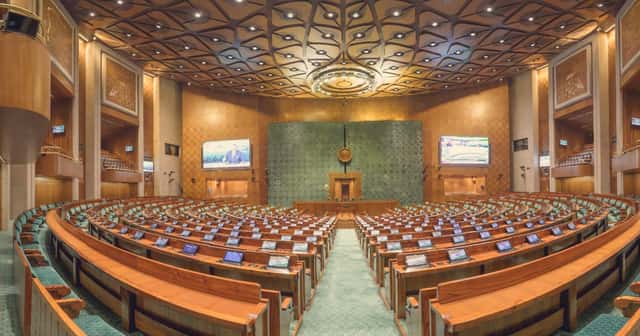
Parliament's monsoon session has now sat unprorogued for a record 88 days. Both Houses were adjourned sine die on August 13. As of the morning of Monday, November 9, 2026, neither the Lok Sabha nor the Rajya Sabha had been formally ended, The Hindu reported.
That gap matters for timing. An extended sitting inside the same session needs only two days' notice. A brand-new session needs at least 14. Keeping the monsoon session open leaves the government a short path back to the floor for constitutional bills that failed in April: raising the Lok Sabha ceiling toward 850 seats and tying that redraw to the delayed start of women's reservation.
Congress says the delay is not a scheduling quirk. It says Home Minister Amit Shah is using the gap to assemble a two-thirds majority. The government says it has sought talks with many parties and that constructive cooperation is still required. This article sets out what the record shows, what each side argues, and what the April vote and later seat shifts imply for the numbers.
The chart above places selected Indian parties on editorial left–right and social axes. Those coordinates are dated estimates, not poll results or a forecast of how any MP will vote on delimitation.
What "unprorogued" means in practice#
Adjournment sine die ends the sitting calendar without ending the session. Prorogation ends the session. The Constitution does not set a deadline for prorogation after an indefinite adjournment, The Hindu noted. Leaving a House unprorogued for a long stretch is not, by itself, a constitutional breach.
Past gaps were shorter than the current one, with one near-miss. The Hindu's tally of earlier unprorogued stretches includes 87 days in 2008, 76 days in 1987, 54 days in 1989, 49 days in both 2006 and 2013, and 41 days in 1963. The 2008 episode is the one the government cites. That year the Lok Sabha met for two days in July on a no-confidence motion against the then UPA government, stayed unprorogued, reconvened in October, and later met again in December.
- 41 days unprorogued
- 76 days
- 49 days
- 87 days after a confidence-vote sitting
- 49 days
- Footnote in Kaul and Shakdher cites a 28-day monsoon gap
- Monsoon session adjourned sine die
- 88 days without prorogation, a new recorded high
Source: The Hindu
Congress communications chief Jairam Ramesh, in an X post reported by The Hindu, pointed to the eighth edition of Practice and Procedure of Parliament (Kaul and Shakdher). He said page 192 describes a usual gap of two to four days between adjournment sine die and prorogation, with a footnote naming 28 days in the 2015 monsoon session as the longest gap in that book.
Parliamentary Affairs Minister Kiren Rijiju, in an October 19 letter to Congress president Mallikarjun Kharge, cited the 2008 monsoon session's 87-day gap. Ramesh called it puzzling that Kaul and Shakdher omits 2008, and said that earlier gap rested on all-party consensus. "Even so, going by the Union Minister's own reckoning, a new record has been set today," he said.
What Congress alleges#
Ramesh's charge is specific. He said the record has been set "to give time to the Union Home Minister to somehow manipulate a super-tainted two-thirds majority in the Lok Sabha to get the dangerous and destructive Delimitation Bills passed." He argued that opposition unity that defeated the bills on April 17 would hold if Shah used "trademark bulldozer tactics."
He also said Kharge had written to Prime Minister Narendra Modi four times in six months asking for an all-party meeting on delimitation before any bill returned, and that Modi had refused. 567politics has not opened those letters. The claim rests on Ramesh's account as reported by The Hindu.
The loaded phrase "super-tainted" is Ramesh's wording, not a finding. The body of this article treats it as an opposition allegation about how a majority might be assembled, not as established fact.
What the government says it wants#
The bills at stake are constitutional. On April 17, 2026, the Constitution (One Hundred and Thirty-First Amendment) Bill, 2026, which sought to raise the Lok Sabha ceiling to 850 seats and implement 33% reservation for women in time for the 2029 general elections, received 298 votes in favor and 230 against in the Lok Sabha, Hindustan Times reported. That fell short of the two-thirds majority required. The government then withdrew linked bills on delimitation based on the latest available census data (2011) and on matching changes for Union Territories.
Parliament had already enacted the Nari Shakti Vandan Adhiniyam in 2023. That statute ties the start of the women's quota to a fresh delimitation. Expanding the House and redrawing seats is therefore the path the government has chosen for putting the quota into force before 2029.
In his October letter to Kharge, Rijiju said the government had held discussions with representatives of the DMK, Samajwadi Party, YSRCP, NCP, Shiv Sena (UBT), AIMIM and BJD, Hindustan Times reported. He denied that the government had stopped seeking consensus. He said constructive cooperation from all parties was still needed.
The Bharatiya Janata Party and the Indian National Congress disagree on whether expanding the House is a precondition for women's reservation or a separate political fight over southern and northern seat shares. Our India political spectrum page summarizes the broader party map; it does not settle how any caucus will vote.
The April arithmetic and what has changed#
A constitutional amendment needs a special majority: a majority of the total membership and two-thirds of members present and voting, in each House. With 543 Lok Sabha seats as the statutory ceiling, two-thirds of a full House is often described in Indian reporting as about 360 votes, though the exact threshold on a given day depends on who is present. The April tally of 298–230 shows the shortfall clearly.
Source: Hindustan Times
Show the numbers
| Side | MPs |
|---|---|
| In favor | 298 |
| Against | 230 |
Since April, reporting says the floor math has moved. India Today, citing government sources in mid-October, said about 20 Trinamool Congress MPs and several Shiv Sena (UBT) MPs had switched toward the ruling side, and that the NDA then had roughly 310 Lok Sabha members. Those figures are attributed to unnamed sources. They are not a substitute for the official division list from any future vote.
The same reporting said the Centre was talking to the DMK after that party split from the INDIA bloc. DMK has 22 Lok Sabha MPs. Hindustan Times noted that on August 12 the Tamil Nadu Assembly backed a resolution urging the Centre to keep the Lok Sabha at 543 seats and to implement the women's quota without linking it to delimitation. Abstention by a large regional bloc would also change the two-thirds math by shrinking the denominator of those present and voting.
Where major opposition parties stood in October#
Hindustan Times summarized party positions after Rijiju's letter:
- Congress wants the women's quota carved from the existing 543 seats and has demanded another long freeze on House strength. Rahul Gandhi called the seat-expansion bill "an attack on Tamil Nadu" and said, "We are not going to let Modi touch Tamil Nadu," in a Chennai student interaction the paper cited.
- Samajwadi Party (37 MPs) helped defeat the April bill. Akhilesh Yadav has given no public sign of a shift. The party argues that redrawing seats without adequate population and caste data could distort representation in Uttar Pradesh.
- DMK voted no in April. After breaking with Congress over Tamil Nadu politics, both national parties have courted M.K. Stalin. The August state resolution still points against expansion.
- Trinamool Congress helped defeat the April bill. After losing the West Bengal election, about 20 of its 28 Lok Sabha MPs left the party fold, according to Hindustan Times, cutting its floor weight. Mamata Banerjee continues to oppose the amendment.
- Shiv Sena (UBT) opposes the bill but holds only three Lok Sabha seats after a split that left Eknath Shinde's Shiv Sena with 13.
- NCP (Sharadchandra Pawar) has hinted at support if seat increases are roughly 50% across states, while worrying that population-based redraws punish states that lowered fertility. Supriya Sule said the party would talk with opposition allies before deciding.
- Left parties (about eight seats combined) oppose the amendment and want the freeze continued.
The Pawar track#
Separately, The Indian Express reported on November 7–8 that the BJP high command was mending fences with Sharad Pawar's NCP (SP), which has eight Lok Sabha MPs. BJP sources tied two gestures to that effort: Modi's phone call while Pawar was in a Pune hospital, and Shah's meeting with an NCP delegation in Delhi.
A senior BJP leader told the Express that every party and MP would count for the delimitation and women's reservation bills, and that "issue-based support from ideological opponents also works." The party said any merger of the two NCP factions was for Sunetra Pawar and Sharad Pawar to decide. The Express also reported that NCP (SP) wins in Maharashtra Legislative Council races, including seats the BJP wanted, had been a setback for the ruling side.
None of that proves Pawar's eight MPs will vote yes. It shows the government is treating regional benches as the path around the April shortfall. For earlier India coverage of election-commission fights that have also shaped the winter calendar, see our report on the INDIA bloc's push against the chief election commissioner.
What is still unknown#
As of November 9 morning, no gazette notice of prorogation had appeared in the reporting reviewed for this article. No date for an extended sitting or a winter session had been locked in the stories opened here. Winter sessions usually begin in late November; if the monsoon session is never reopened, the bills would have to wait for a fresh summons with longer notice.
The southern-state fear is demographic. States that cut fertility earlier worry that a 2011-census-based redraw will shift seats north. The government argues that expanding the House and reserving a third of seats for women can be done together without freezing the map again for decades. Those are competing policy claims. Neither is settled by the 88-day clock alone.
Method and limits#
This article relies on The Hindu's November 9 reporting on the unprorogued record and on Ramesh's allegations; Hindustan Times' October explainer on party positions and the April division; India Today's mid-October sourcing on NDA strength; and the Indian Express's November reporting on outreach to Pawar. Figures attributed to unnamed government or party sources are labeled as such. Vote totals from April are treated as reported division results, not as a forecast of the next attempt.
Campaign finance note: Indian parties file contribution reports with the Election Commission. This article did not review those filings for the MPs whose votes would decide a future amendment.
Photo note#
Photo: The Lok Sabha chamber in India's new Parliament building, New Delhi. Ministry of Parliamentary Affairs / Press Information Bureau, original file, Government Open Data License - India.

Differing perspectives
Should Parliament expand the Lok Sabha toward 850 seats before women's reservation starts?
Each position is summarized as its supporters make it, with equal weight and in alphabetical order. A summary is not an endorsement; the evidence for each is weighed in the story above.
Court regional parties for issue-based support
Who holds it: BJP managers reaching out to Sharad Pawar's NCP (SP)
BJP sources say every party and MP counts for the delimitation and women's reservation bills, including issue-based support from ideological opponents. They point to Modi's call to hospitalised Pawar and Shah's meeting with an NCP delegation, and say NCP (SP)'s eight Lok Sabha MPs matter for the two-thirds math after the April defeat.
In their words: The Indian Express, Nov. 7-8, 2026 ↗
End the unprorogued gap used for majority hunting
Who holds it: Congress communications chief Jairam Ramesh
Ramesh says the 88-day unprorogued record exists to give Home Minister Amit Shah time to assemble a two-thirds majority for delimitation bills that opposition unity defeated on April 17. He cites parliamentary procedure texts that describe short gaps after adjournment sine die and says Kharge's repeated requests for an all-party meeting on delimitation have been refused.
In their words: The Hindu, Nov. 9, 2026 ↗
Pass delimitation and expand the House first
Who holds it: BJP leaders and Parliamentary Affairs Minister Kiren Rijiju
Supporters say the 2023 women's reservation law already ties the quota to a fresh delimitation, so expanding the Lok Sabha ceiling and redrawing seats is the lawful path to put 33% reservation in force for 2029. Rijiju has said the government has held talks with several opposition parties and still needs constructive cooperation to pass the constitutional amendment after the April shortfall.
In their words: Hindustan Times report of Rijiju letter, Oct. 20, 2026 ↗
Cite this article
567 Politics staff. “Parliament sits unprorogued for a record 88 days as delimitation bills wait on two-thirds.” 567politics. Published 2026-11-09. https://567politics.com/news/india-parliament-unprorogued-88-days-delimitation-womens-reservation-november-2026
Wikipedia citation
{{cite news |title=Parliament sits unprorogued for a record 88 days as delimitation bills wait on two-thirds |url=https://567politics.com/news/india-parliament-unprorogued-88-days-delimitation-womens-reservation-november-2026 |work=567politics |author=567 Politics staff |date=2026-11-09 |language=en}}CSL-JSON for reference managers
{
  "id": "https://567politics.com/news/india-parliament-unprorogued-88-days-delimitation-womens-reservation-november-2026",
  "type": "article-newspaper",
  "title": "Parliament sits unprorogued for a record 88 days as delimitation bills wait on two-thirds",
  "URL": "https://567politics.com/news/india-parliament-unprorogued-88-days-delimitation-womens-reservation-november-2026",
  "container-title": "567politics",
  "language": "en",
  "author": [
    {
      "literal": "567 Politics staff"
    }
  ],
  "issued": {
    "date-parts": [
      [
        2026,
        11,
        9
      ]
    ]
  }
}Citations identify this article and its publication date. Assess the reporting and its linked sources before using it as evidence.
Read this article as Markdown or JSON. Cite the original page and retain its sources, dates and qualifications.
Embed this article summary
Paste this HTML into your page. The summary stays linked to the full story and updates with it. No account required.
<iframe src="https://567politics.com/embed/news/india-parliament-unprorogued-88-days-delimitation-womens-reservation-november-2026?theme=auto" title="Parliament sits unprorogued for a record 88 days as delimitation bills wait on two-thirds by 567politics" width="100%" height="440" style="border:0;max-width:100%" loading="lazy"></iframe>
<p style="font-size:14px">Parliament sits unprorogued for a record 88 days as delimitation bills wait on two-thirds by <a href="https://567politics.com/news/india-parliament-unprorogued-88-days-delimitation-womens-reservation-november-2026" rel="nofollow">567politics</a></p>
<script async src="https://567politics.com/embed.js"></script>
READ BEYOND 567POLITICS
Alternate sources & perspectives
Independent coverage and primary evidence to help you compare arguments. A link is not an endorsement; perspective labels describe the linked material.
- primary evidence
Parliament monsoon session remains unprorogued for record 88 days ↗
The Hindu
Establishes the 88-day unprorogued record, notice rules and past gaps including 2008.
- left argument
Delay in proroguing Lok Sabha gives Home Minister time to muster numbers: Congress ↗
The Hindu
Jairam Ramesh allegation that the gap is for assembling a two-thirds majority.
- independent analysis
Where key opposition parties stand on proposals to raise Lok Sabha strength ↗
Hindustan Times
April 298-230 division, Rijiju letter and party-by-party positions.
- right argument
BJP reaches out to Sharad Pawar ahead of key Delimitation, quota Bills ↗
The Indian Express
BJP managers account of outreach to NCP (SP) for issue-based support.
- other perspective
Special Parliament session this month, govt has numbers: Sources ↗
India Today
Mid-October sourcing on NDA strength and talks with DMK; figures attributed to unnamed sources.
Reviewed 2026-11-09. Hand-checked Nov. 9, 2026. Primary procedural facts from The Hindu; April vote and party positions from Hindustan Times; Pawar outreach from Indian Express; mid-October numbers from India Today attributed to unnamed government sources. discover_politics_sources was not relied on. No official Lok Sabha division PDF for April 17 was opened.