Sonia Gandhi's memoir revisits 2004, the Emergency and Modi. The BJP calls it 'whitewashing'
Belonging went on sale Nov. 10. BJP leaders dispute its 1984 account, and Pranab Mukherjee's daughter rejects how it describes her father's ambition.
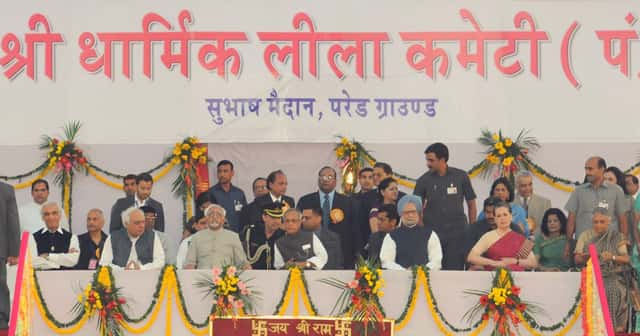
Sonia Gandhi's memoir went on sale on Tuesday, November 10, and drew a sharp reply from the governing Bharatiya Janata Party within hours. Belonging: A Journey of Love, published by HarperCollins India, is the former Congress president's account of her life in Indian politics. It covers her 2004 decision not to become prime minister, the 1975 Emergency, the 1984 assassination of Indira Gandhi, her dealings with Narendra Modi and a 2010 conversation with Pranab Mukherjee.
The BJP said the book rewrites history in the Nehru-Gandhi family's favor. Pranab Mukherjee's daughter disputed how her father was portrayed. The dispute matters beyond the book. Sonia Gandhi chairs the Congress Parliamentary Party, and the Congress remains the main opposition to the BJP at the national level.
This report sets out what the book says, according to excerpts and quotations published by Indian outlets, and how her critics have answered. 567 Politics has not reviewed the full text.
The 2004 decision#
The book's best-known passage concerns May 2004, when the Congress-led United Progressive Alliance (UPA) won the general election. In an excerpt published by The Indian Express, Gandhi writes that months before the vote she had told her children she would "absolutely not" become prime minister. Neither Rahul Gandhi nor Priyanka Gandhi Vadra wanted her to take the post, she writes. "They'd lived through the trauma of their grandmother's assassination and the brutal murder of their father."
After the result, she writes, alliance leaders came to her house and urged her to accept. When she refused, "They physically surround me," she writes. "'We will not take no for an answer.' I am shaken. I feel overpowered." She says she mumbled "Theek hai" ("All right"), and the leaders left believing she had agreed.
Priyanka saw the scene through an open window and ran to Rahul, the excerpt says. "You said yes?" Rahul asked her, she writes. That night she decided to stick to her original position. One reason she gives is political. The BJP and its allies, she writes, "would for certain use my 'foreign origin' as an issue." Before Congress MPs, she said her "inner voice" told her to decline, and she named Manmohan Singh.
The Emergency#
Gandhi calls the Emergency declared by Indira Gandhi in 1975 a mistake, The Hindu reported, citing PTI. She writes that she believes her mother-in-law came to feel the same way.
She also writes that keeping Sanjay Gandhi "in check could have prevented much of the damage that followed," News18 reported. But she does not blame him alone. "It was not only Sanjay, though in the public mind he is often seen as synonymous with the Emergency. There was a lot of pressure from some of her senior colleagues," she says, according to the same report.
She recounts a family argument over whether to declare the Emergency. Rajiv Gandhi, she writes, advised his mother to "wait until the next election," while Sanjay insisted the opposition "would destroy her and had to be stopped." In an interview with The Guardian quoted by News18, she said: "I always feel that Mrs (Indira) Gandhi was a democrat at heart."
Modi and the RSS#
Gandhi writes that she has had "practically no real contact" with Modi in more than twelve years as prime minister, NDTV reported. When they meet at the end of Parliament sessions in the Speaker's chamber, she writes, they greet each other with a formal namaste. "This is different from the past, when leaders across party divides would treat one another with cordiality. He tends to look away, avoiding eye contact."
She adds that they have exchanged birthday and New Year greetings. After her hospital stays, she writes, Modi has asked, "Theek hain aap?" ("Are you all right?").
The book also sets out the ideological gap. "Narendra Modi's idea of India was constructed by the ideologues of the RSS and the experience of his own growing up. It affirmed a fundamentalism in which his faith and culture superseded all others," she writes, according to NDTV. "He was fighting for his vision of India, and I for mine: an India against hegemony, an India that stands for inclusiveness, secularism, and social justice. It wasn't personal."
She also writes that Modi "at times uses the same coarse language he employs in addressing a public rally" when speaking in Parliament. The Prime Minister's Office had not responded publicly to these passages in sources reviewed for this story.
Pranab Mukherjee and the 'change at the top'#
The book's account of Pranab Mukherjee, who served as President from 2012 to 2017 and died in 2020, drew a personal response. According to The Indian Express, Gandhi writes that Mukherjee had "serious differences" with then finance minister P. Chidambaram. In 2010, she writes, "he shocked me with the suggestion that perhaps it was time for a change at the top, which I understood as a hint of his long-held desire to become prime minister."
"I gently changed the subject, and though he may have been disappointed, he never made me feel he held it against me," she writes. The party later chose him as its presidential candidate.
His daughter, former Congress leader Sharmistha Mukherjee, replied on X. "What's there to get 'shocked' about? Is it a crime to be ambitious, especially when that 'ambition' was supported by decades of experience in politics & governance, hard work & a brilliant mind?" she wrote. "There was no-one to serve him positions, including PM-ship, on a platter due to dynastic entitlements." She added that, from his diaries and their conversations, her father "DID NOT hold it against her or anyone else."
The book also rejects claims that Gandhi ran the government from outside. She describes "an unspoken division of responsibility between the prime minister and me ... the government under Dr. Manmohan Singh, and the party under me," according to The Indian Express.
The BJP's response#
BJP national spokesperson C.R. Kesavan said on X that Gandhi "could have titled her memoir as 'Whitewashing' instead of 'Belonging'." He said the book's motive "appears to be sugar coating the historical wrongs perpetrated by the Nehru Gandhi family." He called the way she "tried to justify and normalise the notorious Emergency" "truly appalling," and asked whether she had shed "even a drop of tear" over the 1984 anti-Sikh violence, as The Hindu reported.
The sharpest dispute is over 1984. After Indira Gandhi was killed by her Sikh bodyguards on October 31, 1984, thousands of Sikhs were killed, especially in Delhi. At a BJP press briefing, senior leader Harvinder Singh Phoolka said the book tries "to give her family a clean chit over the massacre of Sikhs," The Hindu reported. He said its account is in "complete contradiction of the official record" because it attributes the delay in deploying the Army to the Army chief, Gen. A.S. Vaidya.
Phoolka cited the Misra Commission, which investigated the violence. "As per the Misra Commission's report, 6,100 soldiers were available in Delhi on the night of October 31 and the morning of November 1, but they were not deployed in time," he said. He said the commission wrote that if 5,000 of them had marched through Delhi on November 1, "at least 2,000 Sikhs could have been saved." These are his citations of the commission's findings. 567 Politics has not checked them against the reports.
Delhi minister Manjinder Singh Sirsa disputed the book's description of Rajiv Gandhi as deeply saddened by the violence. "Rajiv Gandhi was responsible for what happened," he said, according to IANS. He cited Rajiv Gandhi's remark, "When a big tree falls, the earth shakes." He also alleged that Congress leaders accused over the violence were later given political posts. The violence and the role of political leaders "have remained a subject of legal proceedings and political controversy," IANS noted.
Union Minister Giriraj Singh accused Gandhi of being selective in the events she grieved, The Hindu reported. BJP spokesperson Pradeep Bhandari said the book reflected the Congress party's "vote-bank politics."
What the evidence can and cannot settle#
Some of the book's claims are about private moments. Only the people present can confirm them, and several, including Indira Gandhi, Rajiv Gandhi, Sanjay Gandhi, Pranab Mukherjee and Manmohan Singh, have died. On these points, readers have Gandhi's account and, for Mukherjee, his daughter's.
Other claims touch the public record. The timing of the Army's deployment in Delhi in 1984 was examined by official commissions. Whether her account fits their findings can be checked, and Phoolka says it does not. The book's view of the Emergency, that it was a mistake that Indira Gandhi came to regret, is a judgment, not a factual claim. Critics such as Kesavan say it softens a period when fundamental rights were suspended.
Where India's parties sit on economic and social questions is shown in 567politics' spectrum chart for India. The positions are dated editorial estimates, not measured scores.
The arguments, compared#
Gandhi presents the book as a personal account, written from inside a family shaped by assassinations and public duty. In her telling, she declined power in 2004, kept the party and government separate, and opposed a vision of India she calls exclusionary. She concedes the Emergency was a mistake.
Her BJP critics say the book selects and softens. They argue it leaves out or downplays the 1984 violence, the Emergency's harm and the party's record in office. On 1984, they say it conflicts with official findings.
A third line of response is personal rather than partisan. Sharmistha Mukherjee does not dispute that her father spoke of the prime ministership. She disputes the framing, arguing that ambition was legitimate for a politician without a family name behind him.
What to watch#
The book's release opens a new round in a long-running fight over the Congress party's history. The full text will let readers check the excerpts against the whole. Any formal reply from the Congress to the BJP's 1984 claims, or from the Prime Minister's Office to the passages on Modi, would add to the record. So would any further statement from the Mukherjee family based on Pranab Mukherjee's diaries.
Differing perspectives
How should Sonia Gandhi's memoir account of the Congress party's record be judged?
Each position is summarized as its supporters make it, with equal weight and in alphabetical order. A summary is not an endorsement; the evidence for each is weighed in the story above.
A personal account that concedes past mistakes
Who holds it: Sonia Gandhi
Gandhi presents the book as her own story, written from inside a family shaped by assassinations. She writes that she declined the prime ministership in 2004 by following her inner voice, kept the government and party separate under Manmohan Singh, and calls the 1975 Emergency a mistake that keeping Sanjay Gandhi in check could have limited.
In their words: The Indian Express (excerpt by Sonia Gandhi) ↗
An attempt to whitewash the family's record
Who holds it: BJP national spokesperson C.R. Kesavan
Kesavan argues the memoir should have been titled Whitewashing, because its motive appears to be sugar-coating historical wrongs by the Nehru-Gandhi family and camouflaging the Congress party's failures. He says the way it tries to justify and normalize the Emergency, which suspended fundamental rights, is appalling, and asks why it shows no grief for the 1984 anti-Sikh violence.
In their words: The Hindu (PTI) ↗
Its 1984 account conflicts with the official record
Who holds it: BJP leader Harvinder Singh Phoolka
Phoolka argues the book tries to give the Gandhi family a clean chit over the 1984 massacre of Sikhs. He says its account wrongly blames Army chief Gen. A.S. Vaidya for delays, while the Misra Commission found troops were available in Delhi but civil authorities failed to call them in and deploy them in time.
In their words: The Hindu ↗
Cite this article
567 Politics staff. “Sonia Gandhi's memoir revisits 2004, the Emergency and Modi. The BJP calls it 'whitewashing'.” 567politics. Published 2026-11-10. https://567politics.com/news/india-sonia-gandhi-memoir-belonging-bjp-1984-emergency-pranab-mukherjee-november-2026
Wikipedia citation
{{cite news |title=Sonia Gandhi's memoir revisits 2004, the Emergency and Modi. The BJP calls it 'whitewashing' |url=https://567politics.com/news/india-sonia-gandhi-memoir-belonging-bjp-1984-emergency-pranab-mukherjee-november-2026 |work=567politics |author=567 Politics staff |date=2026-11-10 |language=en}}CSL-JSON for reference managers
{
  "id": "https://567politics.com/news/india-sonia-gandhi-memoir-belonging-bjp-1984-emergency-pranab-mukherjee-november-2026",
  "type": "article-newspaper",
  "title": "Sonia Gandhi's memoir revisits 2004, the Emergency and Modi. The BJP calls it 'whitewashing'",
  "URL": "https://567politics.com/news/india-sonia-gandhi-memoir-belonging-bjp-1984-emergency-pranab-mukherjee-november-2026",
  "container-title": "567politics",
  "language": "en",
  "author": [
    {
      "literal": "567 Politics staff"
    }
  ],
  "issued": {
    "date-parts": [
      [
        2026,
        11,
        10
      ]
    ]
  }
}Citations identify this article and its publication date. Assess the reporting and its linked sources before using it as evidence.
Read this article as Markdown or JSON. Cite the original page and retain its sources, dates and qualifications.
Embed this article summary
Paste this HTML into your page. The summary stays linked to the full story and updates with it. No account required.
<iframe src="https://567politics.com/embed/news/india-sonia-gandhi-memoir-belonging-bjp-1984-emergency-pranab-mukherjee-november-2026?theme=auto" title="Sonia Gandhi's memoir revisits 2004, the Emergency and Modi. The BJP calls it 'whitewashing' by 567politics" width="100%" height="440" style="border:0;max-width:100%" loading="lazy"></iframe>
<p style="font-size:14px">Sonia Gandhi's memoir revisits 2004, the Emergency and Modi. The BJP calls it 'whitewashing' by <a href="https://567politics.com/news/india-sonia-gandhi-memoir-belonging-bjp-1984-emergency-pranab-mukherjee-november-2026" rel="nofollow">567politics</a></p>
<script async src="https://567politics.com/embed.js"></script>
READ BEYOND 567POLITICS
Alternate sources & perspectives
Independent coverage and primary evidence to help you compare arguments. A link is not an endorsement; perspective labels describe the linked material.
- primary evidence
Pressured by Congress, Sonia Gandhi said 'yes' to PM post. How Rahul reacted ↗
The Indian Express
Exclusive excerpt written by Sonia Gandhi on the 2004 decision.
- independent analysis
'He shocked me': Sonia Gandhi on Pranab Mukherjee's PM hint ↗
The Indian Express
The 2010 'change at the top' passage and Sharmistha Mukherjee's response.
- other perspective
"He Tends To Look Away, Avoiding Eye Contact": Sonia Gandhi On PM Modi ↗
NDTV
Extended quotations on Modi and the RSS.
- other perspective
'Emergency A Mistake, Keeping Sanjay In Check Could Have...': Sonia Gandhi Recounts 1975 Chapter In Memoir ↗
News18
Emergency passages and Guardian interview quotes.
- right argument
Sonia Gandhi trying to justify Emergency, memoir should've been named 'Whitewashing': BJP ↗
The Hindu (PTI)
Full text of BJP spokesperson C.R. Kesavan's critique.
- right argument
Sonia Gandhi's book attempts to give her family clean chit over 1984 anti-Sikh massacre: BJP ↗
The Hindu
H.S. Phoolka's Misra Commission citations, Giriraj Singh and Pradeep Bhandari.
- other perspective
Manjinder Singh Sirsa accuses Rajiv Gandhi of responsibility for 1984 anti-Sikh riots, rejects Sonia Gandhi's account ↗
IANS
Delhi minister's response on 1984 and Operation Blue Star.
Reviewed 2026-11-10. Hand-picked from pages opened for this story; the connector's source discovery returned no relevant results. The full book was not reviewed; passages are cited from published excerpts and quotations. BJP leaders' claims about commission findings are attributed and were not checked against the commission reports.