Women's group plea against gender self-ID joins India's transgender law case, drawing criticism
India's Supreme Court tagged WDI India's petition with challenges to the 2026 transgender amendment. AIDWA and teacher Jane Kaushik have criticized it.
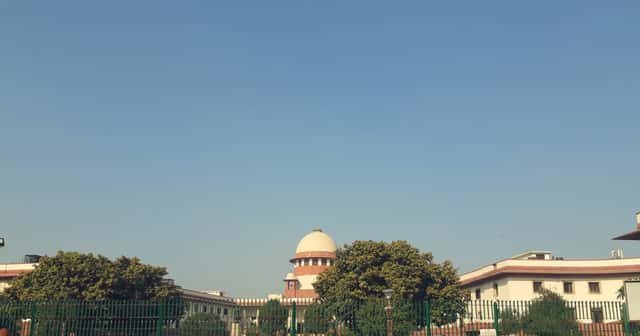
A new petition in India's Supreme Court has opened a second front in the legal fight over the country's transgender law. It has also drawn public criticism from a feminist organization and from a transgender teacher whose case it cites.
The petition was filed by the India chapter of Women's Declaration International (WDI India). It asks the court to rule that eligibility for protections meant for women "shall be determined by biological sex alone," and to read down the court's 2014 judgment recognizing self-identified gender. On October 28, a bench led by Chief Justice Surya Kant issued notice to the central government. It tagged the plea with the pending challenges to the Transgender Persons (Protection of Rights) Amendment Act, 2026. Those challenges come mostly from transgender activists who argue the amendment went too far in the other direction.
Over the following days, the All India Democratic Women's Association (AIDWA) called the petition "utterly misguided," and teacher Jane Kaushik called it "deeply personally offensive," Hindustan Times reported on November 2. This report covers the petition, the reactions, the government's position and where the case stands. It is current as of about 7:45 p.m. ET on November 3. No hearing date for the combined cases was available in the sources we reviewed, and the story will need an update when the central government files its response or the bench next sits.
Background: from NALSA to the 2026 amendment
In 2014, in National Legal Services Authority (NALSA) v. Union of India, the Supreme Court recognized transgender people as a "third gender" and called self-identification of gender a fundamental right, as HT summarized. The Supreme Court Observer notes that the court rejected biological tests for gender identity and adopted a "psychological test" based on self-perception.
Parliament passed the Transgender Persons (Protection of Rights) Act in 2019. In March 2026 it amended that law. The bill was tabled in the Lok Sabha on March 13, passed there on March 24 and cleared the Rajya Sabha the next day, according to the Supreme Court Observer. It received the president's assent on March 30 and came into force on May 25.
According to PRS Legislative Research, the amendment removed the 2019 law's general definition of a transgender person. It dropped the listed categories of trans man, trans woman and genderqueer. It kept socio-cultural identities such as kinner, hijra, aravani and jogta, and people born with intersex variations. It also states that the law does not cover people with "self-perceived sexual identities." The District Magistrate now issues a certificate of identity only after reviewing a recommendation from a designated medical board. The amendment also added offenses, including penalties of 10 years to life in prison for kidnapping or grievous hurt meant to force someone to assume a transgender identity.
The government told Parliament the old definition was too vague. The BBC reported that ministers said a narrower definition would help welfare benefits reach those facing "extreme and oppressive" discrimination and would curb exploitation and trafficking. Opposition leader Rahul Gandhi of the Congress party called the bill a "brazen attack" on transgender rights. Activist Laxmi Narayan Tripathi said, "It has shattered our identity." The BBC also reported that a Supreme Court-appointed advisory panel had asked the government to withdraw the bill.
- Supreme Court's NALSA judgment recognizes self-identified gender
- Parliament passes the Transgender Persons (Protection of Rights) Act
- Mar 13, 2026Amendment bill tabled in the Lok Sabha
- Mar 24-25, 2026Lok Sabha and Rajya Sabha pass the amendment
- Mar 30, 2026President gives assent
- Apr 24, 2026Laxmi Narayan Tripathi files challenge in the Supreme Court
- May 25, 2026Amendment comes into force
- Jun 15, 2026Court stays high court cases on the government's transfer plea
- Aug 3, 2026Hearing on vested rights of existing card holders
- Oct 28, 2026Court issues notice on WDI India petition and tags it
- Oct 30-Nov 2, 2026AIDWA and Jane Kaushik criticize the petition
Source: Supreme Court Observer report, Supreme Court Observer recap, LiveLaw, Hindustan Times, CNBC-TV18
The earlier challenges
Tripathi filed the first challenge directly in the Supreme Court on April 24, arguing the amendment violates Articles 14, 15, 19 and 21 of the Constitution, the Supreme Court Observer reported. Senior advocate A.M. Singhvi argued for her that the amendment reduces the transgender category "to a vanishing point." The court issued notice, sent the matter to a three-judge bench and declined an interim stay because the law had not yet been notified. Other challengers include activist Akkai Padmashali.
On June 15, a bench issued notice on the central government's plea to move challenges pending in several high courts to the Supreme Court. It also stayed proceedings in those courts, according to the Supreme Court Observer.
At the August 3 hearing, petitioners' lawyers said the national portal for transgender identity cards had stopped working and that some doctors had paused hormone therapy. Solicitor General Tushar Mehta replied, "This is not a ration card where you are not getting food," LiveLaw reported. The bench said orally that the amendment is prospective and that rights already conferred should remain unless canceled after notice. It did not issue a general order.
Mehta also set out the government's broader concern, as Hindustan Times reported. "I must point out that at least 169 statutory provisions across different laws will become unworkable if the argument that I am born as a man but I should be treated as a woman is accepted," he said.
What the WDI India petition asks
WDI India describes itself as a feminist, nonpartisan, all-volunteer and all-female group, according to The Hindu. It is the India chapter of the UK-based Women's Declaration International. ThePrint reported that the petition is dated October 8 and was filed through the law firm Shardul Amarchand Mangaldas. HT gave the filing date as October 10.
The petition challenges Section 7 of the 2019 Act as amended, which covers a revised certificate after gender-affirming surgery. It also challenges Rule 7 of the 2020 rules and the UIDAI procedure for changing gender on Aadhaar identity cards. HT reported that it also seeks to strike down Section 18(d), which punishes physical, sexual, emotional, verbal and economic abuse of transgender people.
The petition says it does not challenge transgender people's right to hold or express a gender identity, or their protection against discrimination and violence, ThePrint reported. It argues those protections do not create a right to be treated as the opposite sex for every legal purpose. "Any medical or surgical intervention, however extensive it may be, does not alter the person's biological sex," it states, as quoted by LiveLaw.
It cites cases it says show the stakes. These include a Bombay High Court ruling on a trans woman contesting a panchayat seat reserved for women and a Kerala State Election Commission decision in November 2025 on two candidates. Others involve a Kerala judo championship and a Madras High Court order on a female nursing assistant post. It invokes Articles 14, 15, 16, 19(1)(a), 21 and 25 of the Constitution. The Hindu noted that the petition echoes recent court decisions in the United States and the United Kingdom on sex-based rights. It also comes as India prepares to put the 106th Constitutional Amendment into effect, reserving 33% of Lok Sabha and state assembly seats for women.
The October 28 hearing
The bench of Chief Justice Kant and Justices Joymalya Bagchi and V. Mohana issued notice to the ministries of Social Justice and Empowerment, Law and Justice, and Health and Family Welfare, CNBC-TV18 reported. Senior advocate Sibal argued for WDI India. CNBC-TV18 identified him as Akhil Sibal, while ThePrint named Amit Sibal.
"Our concern is the impact on constitutional and statutory benefits exclusive to biological females," Sibal said, according to CNBC-TV18. "Transgender persons must have equal rights and privileges, but the question is whether those rights can encroach upon protections reserved for biological women."
Justice Bagchi cautioned that more petitions of this kind could delay a batch that was nearly ready for hearing. Mehta said the government was preparing its reply in the main batch and would address the new petition there. He listed women's sports, women's prisons, toilets and rules requiring searches by women officers. He said the issue "was not the right to identify as transgender, but the implications" of rights attached to that identification. When Justice Bagchi raised people assigned male at birth who identify as women, Mehta said that category had been "legislatively excluded," LiveLaw reported. He said the law now covers people born with congenital variations.
The criticism
AIDWA's statement said the petition "propagates a false idea" that recognizing transgender rights discriminates against cisgender women. "The petition is asking the Supreme Court to undo the little protection available to transgender persons and erase their identity," it said, according to HT.
Kaushik's own case, Jane Kaushik v. Union of India, led a two-judge bench in October 2025 to rule that the Union and states have positive obligations to prevent discrimination against transgender people. The WDI India petition cites that case as an example of women staff members being treated as body-shaming for calling the teacher "biologically male." Kaushik disputed that account. "The petition is deeply personally offensive to me, as it repeatedly refers to me as a male," she said. She added that the petition "has effectively rewritten my experience to create an artificial clash between the rights of transwomen and cisgender women."
The petition also prompted debate among lawyers. ThePrint reported that advocate and LGBTQ rights activist Saurabh Kirpal criticized the law firm's involvement as "hypocrisy," and that advocate Gautam Bhatia questioned the use of the "cab-rank rule" to defend it. Advocate Ashish Goel argued that law firms should not use professional ethics to avoid public scrutiny only when it suits them.
How the positions line up
The case now has at least three sides. Transgender petitioners want the 2026 amendment struck down and self-identification restored. The government defends the amendment and its medical certification, and its lawyer has argued against open-ended self-identification. WDI India goes further than the government on documents. It asks the court to bar access to women-specific protections based on legal gender at all. That would include people who changed documents after surgery under Section 7, which the amendment kept.
India's debate parallels others we have covered, including the Hampstead Heath ponds case in England's High Court, the Sandie Peggie tribunal ruling in Scotland and Tasmania's conversion practices bill. For the government's wider record, see our profile of Prime Minister Narendra Modi. For another recent Supreme Court fight over national institutions, see our coverage of the opposition's push against the chief election commissioner.
What to watch
The next steps are the central government's written reply in the main batch, any interim order on existing transgender identity cards and a date for the full hearing. Another question is whether the bench lets WDI India's petition be heard alongside the others or separately, given Justice Bagchi's concern about delay.
Limitations
This story relies on press reports of the October 28 hearing and on quoted extracts from the petition. We did not read the full petition, the government's filings or a court order. Reports differ on the filing date and on which Sibal argued, and we note both. We did not reach WDI India, AIDWA, the Ministry of Social Justice and Empowerment or the petitioners' lawyers for comment. Because the story concerns litigation rather than candidates' finances, we did not review election affidavits. For how we handle sources, see our methodology.
Differing perspectives
How should Indian law recognize gender identity, and who should qualify for protections reserved for women?
Each position is summarized as its supporters make it, with equal weight and in alphabetical order. A summary is not an endorsement; the evidence for each is weighed in the story above.
Base women's protections on biological sex alone
Who holds it: Women's Declaration International India
WDI India says it supports transgender people's right to an identity and protection from discrimination, but argues that legal gender cannot override biological sex when deciding access to women's reservations, sports categories, prisons, hostels and searches by women officers. It says surgery does not change sex, that Section 7 and document-change rules dilute women's rights, and that NALSA should be read down so these protections are reserved for biological females.
In their words: LiveLaw, report quoting the WDI India petition ↗
Keep the 2026 amendment and medical certification
Who holds it: Union government, represented by Solicitor General Tushar Mehta
The government says the 2019 definition was too vague and that a narrower, medically certified category helps welfare reach people facing extreme and oppressive discrimination while curbing exploitation and trafficking. In court, its law officer has argued that open-ended self-identification would make at least 169 statutory provisions unworkable, raising questions about toilets, prisons, sports, searches and succession. It says identifying as transgender is not the issue; the legal rights attached to that identity are.
In their words: Hindustan Times, Supreme Court hearing report ↗
Reject the petition; trans and women's rights do not conflict
Who holds it: All India Democratic Women's Association (AIDWA) and teacher Jane Kaushik
AIDWA calls the WDI India petition utterly misguided and says it spreads a false idea that recognizing transgender rights discriminates against cisgender women. It says the plea asks the court to undo the little protection transgender people have and to erase their identity, leaving them more exposed to violence. Kaushik says the petition refers to her as male despite her legal recognition, misstates the facts of her Supreme Court case and invents a clash between trans women and other women.
In their words: Hindustan Times, reactions to the petition ↗
Strike down the amendment and restore self-identification
Who holds it: Laxmi Narayan Tripathi, Akkai Padmashali and other transgender petitioners
Transgender petitioners say the amendment breaks with the 2014 NALSA judgment, which treated self-perceived gender identity as a constitutional right and rejected biological tests. They argue it shrinks the transgender category to a vanishing point, subjects people to mandatory medical board scrutiny, and violates Articles 14, 15, 19 and 21. They say the change has already disrupted identity cards, travel documents and hormone therapy, and that existing card holders must keep their benefits.
In their words: Supreme Court Observer, hearing report ↗
READ BEYOND 567POLITICS
Alternate sources & perspectives
Independent coverage and primary evidence to help you compare arguments. A link is not an endorsement; perspective labels describe the linked material.
- primary evidence
The Transgender Persons (Protection of Rights) Amendment Bill, 2026: bill summary ↗
PRS Legislative Research
Independent summary of what the amendment changed, including removed categories and the medical board requirement.
- right argument
In Supreme Court, govt flags concerns over gender self-identification ↗
Hindustan Times
Solicitor General's argument that self-identification would make 169 statutory provisions unworkable.
- left argument
New plea in Transgender Act case before SC invites censure from trans, feminist groups ↗
Hindustan Times
AIDWA's statement and Jane Kaushik's response to the WDI India petition.
- other perspective
Can trans women claim women's rights? Women's group moves Supreme Court against Transgender Persons Act ↗
LiveLaw
Detailed account of the WDI India petition's arguments and the Oct. 28 hearing exchanges.
- other perspective
Challenge to Transgender Persons Amendment Act 2026: Supreme Court issues notice, declines interim stay ↗
Supreme Court Observer
Transgender petitioners' arguments through counsel, and the legislative timeline.
- independent analysis
Challenge to the Transgender Persons Amendment Act, 2026 ↗
Supreme Court Observer
Recap of the April petition, the transfer petition and the August hearing.
- independent analysis
Transgender Amendment 2026 cannot cancel vested rights, says Supreme Court orally ↗
LiveLaw
Aug. 3 hearing on existing transgender identity card holders.
- independent analysis
SC seeks Centre's response on PIL on transgender rights law ↗
CNBC-TV18
Report of the Oct. 28 notice and arguments by WDI India's counsel and the Solicitor General.
- independent analysis
Can transwomen access women's shelters, washrooms? Plea brings gender vs sex debate to SC ↗
ThePrint
Explains the petition's grounds and the debate among lawyers over the law firm's role.
- independent analysis
PIL challenges India's gender identity regime post-NALSA ↗
The Hindu
Context on the petition, UIDAI procedures and the women's reservation amendment.
- independent analysis
Transgender Persons Act: What is the PIL challenging the law's impact on women's rights about? ↗
The Hindu
Explainer on the 2019 Act, the 2026 amendment and the petition.
- independent analysis
India parliament passes amendment to redefine transgender identity amid protests ↗
BBC News
Government rationale for the amendment and reactions from opposition leaders and activists.
Reviewed 2026-11-03. Automated discovery returned only unrelated retail pages, so these sources were chosen by hand and each was opened and checked on Nov. 3, 2026. The dispute does not split neatly on left-right lines: a left-oriented women's group (AIDWA) and transgender petitioners oppose the WDI India petition, the BJP-led government defends the 2026 amendment, and WDI India describes itself as nonpartisan. We could not obtain the full petition, the government's written reply or a court order, and relied on court reporting.