Tasmania's lower house passes Greens bill to ban conversion practices; upper house is next
The Premier backed the bill and the Deputy Premier called it flawed. Here is what the bill says, what changed in the House, and what each side argued.
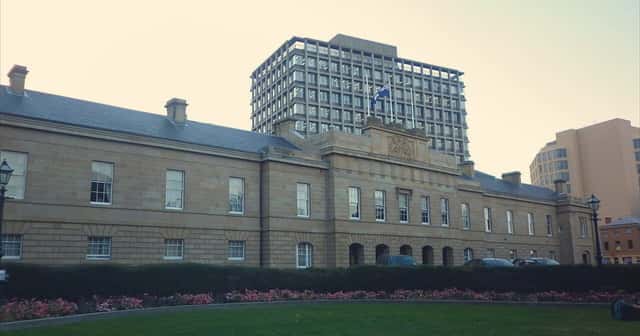
Tasmania's lower house has passed a bill to ban conversion practices, the efforts to change, suppress or eradicate a person's sexual orientation or gender identity. The House of Assembly approved the Greens bill on Thursday, Oct. 29, after almost 20 hours of debate. Wednesday night's sitting ran past 2 a.m. The bill now goes to the Legislative Council, the state's upper house. No date for that debate has been reported.
The vote followed an unusual split inside the governing Liberal Party. Premier Jeremy Rockliff gave his MPs a conscience vote and backed the bill himself. His deputy and attorney-general, Guy Barnett, called it "terribly, terribly flawed." This story covers what the bill does, what changed in the House, what each side argued, and what the upper house faces.
What passed and how
The bill is the Conversion Practices Prohibition Bill 2026 (No. 45). Greens leader Rosalie Woodruff brought it in on Sept. 10. The ABC reports it passed "on the voices," which means the Speaker judged the result by the sound of the chamber and no formal count was recorded. It had the support of Labor, four of the seven independents, and three Liberals: Rockliff, Bridget Archer and Roger Jaensch. Pulse Tasmania reports that Labor backed it with all 10 of its votes.
Before the final vote, the House rejected a motion to refer the bill to a parliamentary committee. Independent MP George Razay moved it. He said the complexity of the legislation and the large number of amendments called for examination by a committee. The ABC reported the motion failed by 21 votes to 11.
Five other Australian jurisdictions already ban the practices: Victoria, the Australian Capital Territory, New South Wales, Queensland and South Australia. If Tasmania's bill becomes law, the ABC says Western Australia and the Northern Territory will be the only places where the practices remain legal. The Western Australian Labor government has made repeated commitments to ban them.
The ban follows a 2022 recommendation from the Tasmanian Law Reform Institute. Research by La Trobe University found that one in 20 young queer Tasmanians have experienced conversion practices. The research links them to a higher risk of suicide.
What the bill says
The text described here is the bill as introduced. The House made amendments, and this story does not have the final amended text.
Section 5 defines a conversion practice as conduct directed at a person, with or without their consent, on the basis of their sexual orientation or gender identity. The conduct must be for the purpose of "changing, suppressing or eradicating" that orientation or identity, or of inducing the person to do so.
The bill lists exclusions. A conversion practice does not include:
- A health service from a registered practitioner that the practitioner, in good faith, considers appropriate and that meets legal, professional and ethical requirements.
- Genuinely helping a person with coping skills, development or identity exploration, including by providing acceptance, support or understanding.
- Taking part in public debate.
- Expressing a belief or principle, including a religious one, through prayer or otherwise.
- Parents discussing sexual orientation, gender identity, sexual activity or religion with their children.
The bill creates several offenses. Section 12 creates an indictable offense, punishable under the Criminal Code, for intentionally engaging in a conversion practice that causes injury when the person is negligent about that risk. Sections 14 and 15 cover taking a person out of Tasmania for a conversion practice. Section 16 bans advertising conversion practices, with fines of up to 60 penalty units for individuals and 300 for companies.
The bill also sets up a civil route. Under it, the state's Anti-Discrimination Commissioner would also serve as the Conversion Practices Commissioner. The office would take reports, facilitate resolution, investigate, and issue compliance notices. It would also run education programs. Matters could go to the Tasmanian tribunal.
What changed in the House
Pulse Tasmania reports that Rockliff worked with the Greens on several amendments. They raise the threshold for investigations. They also require a five-year review of the law to consider freedom of religion, parental rights and the rights of the child.
The House also removed a clause that would have made employers criminally liable for offenses by their staff, and it passed amendments to remove retrospectivity. The ABC describes that employer clause as one that applied "unless the employer could not have known of or prevented the offending."
Rockliff also told the chamber he wanted changes to strengthen religious protections and to handle "vexatious" complaints. Barnett said he would move amendments to exclude certain actions from the definition. The sources reviewed do not list which of those amendments passed beyond the ones named above.
Helen Burnet, an independent who backed the bill, said in her speech that she had received amendments "that go to the heart of the bill at the eleventh hour by the Deputy Premier." She called it challenging.
The case for the bill
Supporters say conversion practices cause serious harm and that existing laws do not stop them. Woodruff told the House that "at the heart of this bill are all those people who suffered the despair, loneliness, shame and years of life lost from such conversion practices." After the vote, she said the Greens were "so proud" and called the result "a result of years of campaigning from the LGBTIQA+ community."
Rockliff said parliament "could not ignore" the evidence that conversion practices cause harm. He framed the question this way: "if we accept that the harm from coercive and degrading conversion practices is real, how do we best prevent that happening in our community?"
Jaensch said he had not heard from a single person subjected to conversion practices who thought they should continue. He asked: "where are all the people who conversion practices have helped?" Archer said that "protecting one person's dignity should not require diminishing another's." Labor leader Josh Willie said his party did not need a conscience vote "because we share the view that conversion practices cause real and lasting harm."
Rodney Croome of Equality Tasmania said the cross-party support "sends a strong message to the upper house that this is an uncontroversial and much-needed reform." On fears about religious freedom and parental rights, he said "the experience interstate shows there's nothing to fear."
Woodruff also told the House there is no way a person can consent to a conversion practice. She said the coercion people often face "is systemic, with multiple institutions convincing people that their self is broken."
Supporters have also disputed claims about what the bill does. Greens MP Tabatha Badger called the campaign against it "cruel." She said some people she spoke with "have not read the bill" and relied on other sources. Burnet said she felt there had been "misinformation peddled in relation to this legislation." Opponents say the wording itself is unclear. Their arguments follow.
The case against, and the call for changes
Opponents say they reject abusive practices but find the bill's wording too broad. Barnett said: "I stand strongly against abusive and coercive practices." He said the bill was fundamentally flawed because its definitions were "vague" and "broad." He argued that, as written, a teacher could be investigated for answering a student's questions because there was no specific exclusion for that.
Police Minister Felix Ellis said he was "not here to tell any trans Tasmanians who they are." He said the bill assumes a consensus on what care parents, psychologists and doctors should give a child distressed about their sex or gender. In his words, the bill "turns the most cautious care for a distressed child into some of the most legally dangerous care that a parent or clinician can offer."
Carlo Di Falco of the Shooters, Fishers and Farmers Party said medical professionals would be unable to give evidence-based care without fear. He said the state should not be "the referee in every sensitive family discussion." He also asked about the cost of the new statutory authority. Woodruff said she expected the scheme to cost about $500,000 a year, against $800,000 in the much larger state of Victoria.
Isla MacGregor of Women Speak Tasmania called the bill an "attack on freedom of speech" and said it should have gone to a committee to examine its "real ramifications and implications." Treasurer Eric Abetz and Barnett were among those the ABC said described the bill as "overreach."
Some critics outside parliament frame their objections around drafting. Archbishop Anthony Ireland of Hobart wrote on Oct. 14 that practices that are "coercive, abusive, or degrading" should have "no place in Tasmania." He argued the law needs to get its drafting right. He objected that "suppressing" is not adequately defined. He also said that because consent is no defense, a competent adult who freely seeks counseling could still expose the person who provides it. He warned of "defensive practice" by teachers and counselors. He also raised the bill's interaction with Tasmania's child-safety and reportable-conduct rules.
Woodruff said religious expression, including prayer, would not be affected, and noted the carve-out for legitimate medical practitioners. Burnet said the bill does not stop parents, pastors, doctors or educators from talking with people who are questioning their identity.
What comes next
The Legislative Council will take up the bill after the House's vote. The Parliament of Tasmania's bill page shows it had its first reading there on Oct. 29. It also records that the House amended the bill and links only to the text as introduced. Its schedule and the likely outcome were not reported in the sources reviewed. Woodruff said the Greens look forward to working with upper house members "over the coming weeks." The upper house can pass the bill, amend it or reject it. Any change would send it back to the House.
This is one of several gender and sexuality disputes before lawmakers and courts this week. In Scotland, a tribunal ruled against a nurse in a union case, as we report in our story on the Sandie Peggie ruling. In Kansas, a new law on driver's licenses and sex at birth is in force during the midterms, covered in our report on SB 244. In Virginia, voters decide on a marriage amendment and a reproductive freedom amendment. Elsewhere in Australia, our story on the Capricornia lower house bid looks at a separate contest.
The main open questions are legal and practical. Lawmakers still have to decide how to define "suppressing," whether consent should matter, how the commissioner's office will work and what it will cost. The bill's backers and critics agree on one point: coercive and abusive treatment should be stopped. They disagree on whether this bill does that without reaching ordinary conversations in families, schools, clinics and churches.
Differing perspectives
Should Tasmania's Legislative Council pass the conversion practices ban as the House of Assembly approved it?
Each position is summarized as its supporters make it, with equal weight and in alphabetical order. A summary is not an endorsement; the evidence for each is weighed in the story above.
Amend the drafting first
Who holds it: Archbishop Anthony Ireland, Catholic Archbishop of Hobart
Archbishop Ireland wrote that practices which are "coercive, abusive, or degrading" should have "no place in Tasmania." He objected that "suppressing" is not adequately defined and that consent does not prevent conduct from falling within the bill. He warned of "defensive practice" by teachers and counselors, and raised the bill's interaction with child-safety and reportable-conduct rules.
In their words: Archdiocese of Hobart ↗
Pass the bill
Who holds it: Helen Burnet, independent MP for Clark
Burnet, an independent who backed the bill, said in her Oct. 28 speech: "Fundamentally, conversion practices are harmful. This bill is a statement from parliament that they are wrong and must stop." She said it does not stop parents, pastors, doctors or educators from talking with people exploring their identity, and that the Greens amended it after medical concerns.
In their words: Helen Burnet MP (Hansard speech) ↗
Refer it to a committee
Who holds it: Isla MacGregor, Women Speak Tasmania
MacGregor called the legislation an "attack on freedom of speech." She said it should have been referred to a parliamentary committee to examine its "real ramifications and implications." The ABC reports that independent MP George Razay's attempt to delay the vote until a committee had examined the bill was defeated on Wednesday evening.
In their words: ABC News ↗
Reject it as drafted
Who holds it: Guy Barnett, Deputy Premier and Attorney-General
Barnett said: "I stand strongly against abusive and coercive practices." He argued the bill is fundamentally flawed because its definitions are "vague" and "broad." In his example, a teacher could be investigated for answering a student's questions, because the bill has no specific exclusion for that. He said he would move amendments to exclude certain actions from the definition.
In their words: ABC News ↗
READ BEYOND 567POLITICS
Alternate sources & perspectives
Independent coverage and primary evidence to help you compare arguments. A link is not an endorsement; perspective labels describe the linked material.
- primary evidence
Conversion Practices Prohibition Bill 2026 (No. 45), as introduced ↗
Parliament of Tasmania
Bill text as introduced; the House later amended it.
- primary evidence
Conversion Practices Prohibition Bill 2026 (45 of 2026): stages ↗
Parliament of Tasmania
Dates of readings in both houses and the record that the House amended the bill.
- independent analysis
Debate starts on Tasmania's conversion practices ban as premier voices support for Greens bill ↗
ABC News
Report of the debate with quotes from Woodruff, Rockliff, Archer, Jaensch, Barnett, Ellis, Di Falco and Willie.
- independent analysis
Conversion practice ban passes Tasmania's lower house of parliament ↗
ABC News
Report of the passage, including Croome, MacGregor and the Razay motion.
- independent analysis
Tasmania's lower house passes Greens' conversion practices ban ↗
Pulse Tasmania
Lists the House amendments and the Liberal split.
- left argument
Conversion Practices Prohibition Bill 2026 (No. 45): speech by Helen Burnet ↗
Helen Burnet MP
Independent MP's speech in support of the bill, Oct. 28.
- right argument
Protecting people and getting the law right ↗
Archdiocese of Hobart
Archbishop Anthony Ireland's objections to the bill's drafting.
Reviewed 2026-11-02. The story rests on the bill text as introduced (read for sections 5, 12 to 16 and 22), the Parliament of Tasmania's bill page, the ABC's two reports of Oct. 28 and 29, Pulse Tasmania's Oct. 29 report, independent MP Helen Burnet's Hansard speech and Archbishop Anthony Ireland's Oct. 14 column. The final amended text of the bill was not available: the Parliament page links only the version as introduced and records that the House amended it, so provisions described in the body may differ from what the Legislative Council receives. The ABC says the bill passed on the voices with no formal count, while Pulse says Labor backed it with all 10 of its votes; the body reports both. Opposing views come from Deputy Premier Guy Barnett (via the ABC), Isla MacGregor of Women Speak Tasmania (via the ABC) and the Archbishop; no direct statement from the Legislative Council members who will decide was found. The automated source-discovery tool returned only unrelated generic pages and was not used.