Indonesia's top court voids Vice President Gibran's school equivalency letter, splitting parties on his future
The ruling does not remove Gibran. His side calls it administrative, PDI-P and two coalition parties want him out, and Gerindra waits for parliament.
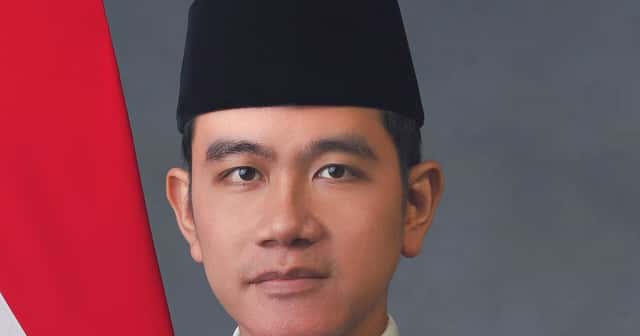
Indonesia's Supreme Court has voided the government letter that certified Vice President Gibran Rakabuming Raka's foreign schooling as equal to a high school education. He used that letter to qualify for the 2024 election. The ruling does not remove him from office. It has, however, set off a debate in Jakarta over whether parliament should try to.
The court decided the case on Friday, October 30. Since then, Gibran's lawyer and allies have said the decision is an administrative matter that cannot undo an election that ended with his inauguration in October 2024. Opposition figures and some legislators from other parties say he no longer meets the constitutional requirements for the job and should resign or be removed. The largest party in President Prabowo Subianto's coalition says it will decide its position when parliament returns from recess.
The full written judgment had not been released as of Tuesday morning. A Supreme Court news conference set for Monday to explain the ruling was called off because the court's own public affairs office had not yet received a copy.
What the court decided
The case, numbered 742 K/TUN/2026, was an appeal in an administrative law dispute. The plaintiff, an advocate named H.M. Subhan, challenged Certificate No. 9149/D.D1/KS/2019, a letter issued on August 6, 2019, by the education ministry's Directorate General of Primary and Secondary Education. The letter declared Gibran's schooling abroad equivalent to an Indonesian senior high school education. The defendant was the Ministry of Primary and Secondary Education.
According to Tirto, a three-judge panel chaired by Justice Yulius, with Justices Maftuh Effendi and Hari Sugiharto, granted the appeal. The operative text, as published in the court's case summary and reported by several outlets, reads: "Granted the cassation. Annulled the judex facti ruling. Decided independently: granted the plaintiff's suit in its entirety." That is our translation. VIV reported that the panel declared the letter invalid and void by law, and ordered it withdrawn and destroyed.
The ruling reversed two lower courts. The Jakarta State Administrative Court ruled against Subhan on May 21, 2026, in case 62/G/2026/PTUN.JKT, and the Jakarta State Administrative High Court upheld that outcome in case 130/B/2026/PT.TUN.JKT, Tirto reported.
According to the General Elections Commission (KPU) records cited in the coverage, Gibran attended Orchid Park Secondary School in Singapore from 2002 to 2004 and UTS Insearch in Sydney from 2004 to 2007. The dispute is over whether that schooling amounts to a completed high school education, which Indonesia's election law requires of presidential and vice presidential candidates.
VIV, in an explainer, set out what the ruling does not do. The case concerned the validity of one document. Voiding it does not automatically cancel the KPU's decisions or the election result, and it is not an automatic removal from office. Further consequences depend on the full written decision.
The Constitutional Court's earlier finding
The Supreme Court ruling follows a separate decision by the Constitutional Court on October 6. According to BBC News Indonesia, the Constitutional Court said it had found no convincing evidence that Gibran held a foreign diploma that could count as a completed senior high school education. It said a certificate of attendance shows attendance in classes, not graduation.
That court still did not disqualify him. It said the question of whether a sitting officeholder met the requirements for candidacy belonged to the institutions with authority over that question under the Constitution. Subhan relied on that finding in his appeal, the BBC reported.
The two rulings now give both sides material. Muhammad Khozin, a lawmaker from the National Awakening Party (PKB), drew a distinction between them. "The Constitutional Court ruling concerns the domain of presidential and vice presidential candidacy requirements," he said. The Supreme Court ruling, he said, "concerns an administrative act through the issuance of a certificate judged invalid," according to CNN Indonesia. That is our translation. He said the rulings added urgency for parliament to take a position.
Gibran's side: an administrative ruling with no effect on the office
Gibran has not made a public statement specifically about the Supreme Court ruling that we could find.
His lawyer, Muhammad Rullyandi, said the decision "does not affect Gibran's position as vice president," as quoted by detikcom and CNN Indonesia. He argued that the ruling came after every stage of the 2024 presidential election had finished and Gibran had been sworn in. For that reason, he said, it cannot be applied retroactively. He cited Article 117(1) of Law 5 of 1986 on administrative courts. In his reading, that provision covers a ruling that cannot be carried out because the legal situation has already changed.
The KPU has made a related point. Commissioner Idham Holik told Kompas that under Article 167(4) of the election law, the election stages end with the inauguration of the winning candidates.
Budi Arie, chairman of the volunteer group Projo, was more direct. Asked whether Gibran would step down, he said, "Nggaklah," or "Of course not," Republika reported. "It's only a certificate," he said. "That is the regime of state administration, not the electoral regime." He spoke while accompanying former President Joko Widodo, Gibran's father, at a meeting with Gibran's volunteers in Surakarta.
The coalition: respect the ruling, wait for parliament
Gerindra, Prabowo's party, has avoided taking a side on Gibran's future. Spokesman Sugiat Santoso said in a written statement on October 31 that "we respect the Supreme Court's ruling as part of the law enforcement process in a democratic state," according to Kompas. He added that the position of the vice president has its own constitutional dimension and legal mechanisms. Gerindra deputy chairman Habiburokhman said the party's faction would settle its position after parliament's recess, detikcom reported.
The National Mandate Party (PAN) is also waiting. Deputy chairman Viva Yoga Mauladi said on Tuesday that the party respects every court ruling and is studying the decision "in full, both its operative part and its legal implications," detikcom reported. He said the matter should be handled calmly and proportionately.
Golkar's Ahmad Doli Kurnia, a deputy party chairman, asked party leaders to meet. "We encourage the political party leaders in parliament to meet urgently to address this issue," he said on Monday, according to Kompas. He said any decision by party leaders should rest on three principles: the interest of the people, obedience to the Constitution and the rules, and preserving the unity and sovereignty of the state, CNN Indonesia reported.
Doli also said a parliamentary inquiry, an interpellation or a special committee would be "not relevant," CNN Indonesia reported. In his view, any follow-up would already concern removing the vice president. That process runs through Articles 7A and 7B of the Constitution and the House's right to state an opinion, he said.
The case for resignation or removal
Other parties have gone further, including two inside the coalition. Tirto noted that PKS and the Democratic Party both belong to the coalition backing the Prabowo-Gibran government, even as most coalition parties have kept quiet. Yusak Farchan of the Citra Institute described their stance to Tirto as "opposition from within the coalition." Jansen Sitindaon, deputy secretary-general of the Democratic Party, said Gibran "no longer meets the requirements" to be vice president, CNN Indonesia reported. He said the choice was for Gibran to resign or for the House of Representatives (DPR) and the People's Consultative Assembly (MPR) to remove him.
Muhammad Kholid, secretary-general of the Prosperous Justice Party (PKS), welcomed the ruling and said the DPR needed to follow it up constitutionally, detikcom reported. Rangga Kusumo, a junior PKS spokesman, told Kompas TV that the party had been talking with the Indonesian Democratic Party of Struggle (PDI-P). He said the two shared "a common view" that the issue should be pursued "through the constitutional channels available," the BBC reported.
PDI-P is the largest party in the DPR but outside the governing coalition. Its secretary-general, Hasto Kristiyanto, said in a written statement that party figures Komarudin and Andreas Pareira had already asked Gibran to step down. "This is the voice of a great many people that keeps growing. This voice must not be ignored," he said, according to CNN Indonesia. He said PDI-P could not launch a parliamentary inquiry on its own with 110 seats and had begun talks with other parties.
Lawyer Denny Indrayana, who had filed and then withdrawn a separate suit over the certificate, said a refusal to resign would amount to "defiance of the Constitution," detikcom reported. Former Constitutional Court Chief Justice Mahfud MD wrote on X that what happens to Gibran's office "is up to politics." He also said the alleged insertion of a clause into a 2023 KPU regulation should be handled as a criminal matter, CNN Indonesia reported.
Subhan, the plaintiff, claimed the most sweeping effect. "The legal consequence of this cassation ruling is that we never had a vice president named Gibran," he said, according to Kompas. He said he believed the ruling must be carried out within 60 days and that he was counting them.
How removal would work
Removing a vice president in Indonesia is slow and requires large majorities. The first step belongs to the DPR. Under Article 7B of the Constitution, it must ask the Constitutional Court to rule on its opinion that the vice president no longer meets the requirements for office. That request needs the support of two-thirds of members present at a plenary session attended by at least two-thirds of all members.
The Constitutional Court then has 90 days to decide. If it agrees, the DPR sends a proposal to the MPR, which has 30 days to decide at a session attended by at least three-quarters of its members. Removal requires the votes of two-thirds of those present, after the vice president has had a chance to explain himself.
The first step, the right to state an opinion, can be proposed by at least 25 DPR members from more than one faction, constitutional law expert Titi Anggraini told the BBC. She said that route, rather than an inquiry, is the appropriate one. Zainal Arifin Mochtar, a constitutional law scholar at Gadjah Mada University, told the BBC that the Constitutional Court's reasoning opens room to debate removal.
The arithmetic matters. The DPR has 580 seats. Two-thirds of a full chamber is 387 votes. PDI-P, PKS and the Democrats together hold 207 seats, according to the KPU's 2024 results. Any removal effort would need several of the parties now urging caution.
Source: KPU results via detikcom
Show the numbers
| Party | Seats |
|---|---|
| PDI-P | 110 |
| Golkar | 102 |
| Gerindra | 86 |
| NasDem | 69 |
| PKB | 68 |
| PKS | 53 |
| PAN | 48 |
| Democratic Party | 44 |
Removal efforts against senior officials often hit the same wall elsewhere. In India, opposition parties that lack the votes to remove the chief election commissioner have staged a symbolic "public impeachment" instead.
What experts say the parties will weigh
Titi Anggraini argued that inaction carries its own risk. If parties in the DPR take no step, she told the BBC, the public will see the issue as "a political instrument" rather than "compliance with the legal process." In her view, public frustration could then shift to Prabowo's government. The BBC's headline summed up the view of several experts it interviewed: the key lies with Prabowo, as leader of the majority coalition.
Doli also warned that whatever is decided must not "disrupt the running of the state" or of government, according to CNN Indonesia. That reflects a concern on the other side. Under Article 7B, a removal effort could run for months between the DPR, the Constitutional Court and the MPR. That would come while the government manages an economy whose output per person still trails the Asian average, as our comparison of Indonesia with Asia shows.
We found no recent, representative public opinion poll on whether Gibran should stay in office. Statements by party officials and online campaigns are not a measure of public opinion.
The court, parliament and the ministry each face decisions
Three things will shape the next phase. The Supreme Court is expected to release the full written ruling and reschedule its explanation. The DPR's new sitting opens on November 10, detikcom reported, when Gerindra and other factions say they will set their positions. And the education ministry, as the defendant, has not said publicly how it will carry out an order to withdraw a letter that was used in a completed election.
How we reported this
This story relies on Indonesian-language reporting by BBC News Indonesia, Kompas, detikcom, CNN Indonesia, Tirto, VIV and Republika, which we read in the original. Translations are ours unless noted. We could not obtain the Supreme Court's full written judgment, which had not been released, and our account of the operative ruling comes from the court's case summary as reported by those outlets. Reports differ on the year in the Constitutional Court's case number, so we do not cite it. We did not find a response from the Ministry of Primary and Secondary Education. Indonesian officials are outside our US campaign finance data, and this story does not concern political donations. Our methodology and editorial standards explain how we source and attribute claims.
Differing perspectives
Should Vice President Gibran leave office after the Supreme Court voided his high school equivalency letter?
Each position is summarized as its supporters make it, with equal weight and in alphabetical order. A summary is not an endorsement; the evidence for each is weighed in the story above.
No, the ruling is administrative and does not touch the office
Who holds it: Gibran's lawyer Muhammad Rullyandi and Projo chairman Budi Arie
Gibran's side says the case concerned one administrative document, not the election. Every stage of the 2024 vote ended with his inauguration, so a later ruling on the certificate cannot be applied retroactively to unseat him. Budi Arie calls the dispute a matter of state administration rather than electoral law and says Gibran will not resign.
In their words: Republika ↗
Respect the court, study the ruling and let parliament decide
Who holds it: Gerindra, PAN and Golkar officials, including Sugiat Santoso, Viva Yoga Mauladi and Ahmad Doli Kurnia
These coalition figures say court rulings must be respected but read carefully for what they actually decide. They note the vice president's position has its own constitutional mechanisms, and want party factions to set positions when parliament returns. Golkar's Doli wants party leaders to meet urgently, guided by the public interest, the Constitution and the unity of the state, without disrupting government.
In their words: CNN Indonesia ↗
Yes, he should resign or parliament should remove him
Who holds it: PDI-P Secretary-General Hasto Kristiyanto, Democratic Party official Jansen Sitindaon, PKS leaders and lawyer Denny Indrayana
These figures say the Constitutional Court found no convincing proof of a completed high school education, and the Supreme Court has now voided the letter that stood in for one. In their view Gibran no longer meets a constitutional requirement for the office. They say he should step down, or the House and the People's Consultative Assembly should use the removal process in Articles 7A and 7B.
In their words: CNN Indonesia ↗
READ BEYOND 567POLITICS
Alternate sources & perspectives
Independent coverage and primary evidence to help you compare arguments. A link is not an endorsement; perspective labels describe the linked material.
- primary evidence
Indonesian Constitution of 2002 (English translation), Articles 7A and 7B ↗
Constitute Project
Text of the removal procedure, including the two-thirds thresholds and the 90-day and 30-day deadlines.
- primary evidence
KPU tetapkan hasil Pileg DPR RI 2024: PDIP raih 110 kursi, Gerindra 86 ↗
detikcom
Election commission's official seat allocation for the 2024-2029 House of Representatives.
- independent analysis
MA kabulkan kasasi gugatan suket penyetaraan ijazah SMA Gibran ↗
Tirto
Case details, panel, operative ruling and lower-court history.
- independent analysis
Putusan MA 742 K/TUN/2026 soal suket Gibran: apa yang batal, apa yang belum berubah ↗
VIV
Explainer on what the ruling does and does not change; reports the postponed court briefing.
- independent analysis
Surat keterangan ijazah Gibran tidak sah dan dibatalkan MA, apa konsekuensinya? ↗
BBC News Indonesia
Consequences of the ruling, the Constitutional Court's October 6 finding and expert views on removal.
- independent analysis
Sejumlah politisi dorong wacana hak angket usai putusan Mahkamah Agung soal surat keterangan ijazah Gibran: 'Kuncinya ada di Presiden Prabowo' ↗
BBC News Indonesia
Experts and party officials on the right to state an opinion and coalition politics.
- other perspective
Babak baru polemik ijazah Gibran usai MA batalkan suket ↗
CNN Indonesia
Statements from PDI-P, the Democratic Party, PKB, Mahfud MD and Gibran's lawyer.
- other perspective
Respons putusan MA, Budi Arie: Wapres Gibran tak akan mundur, suket ijazah hanya soal administrasi ↗
Republika
The case from Gibran's camp that the ruling is administrative only.
- other perspective
Waketum Golkar desak pertemuan ketum parpol bahas ijazah Wapres Gibran ↗
CNN Indonesia
Golkar's call for a party leaders' meeting and its view of the removal route.
- independent analysis
Membaca tujuan PKS-Demokrat serius mendorong pemakzulan Gibran ↗
Tirto
Analysts on why two coalition parties are pressing the issue.
- other perspective
Penggugat suket Gibran menunggu pelaksanaan putusan kasasi MA ↗
Kompas
The plaintiff's view of the ruling's effect.
- other perspective
PAN kaji putusan MA soal polemik ijazah Gibran, perlu disikapi jernih ↗
detikcom
PAN's wait-and-study position.
Reviewed 2026-11-03. The discovery search returned only unrelated machine-learning and software forum pages, so 567 Politics staff found and opened these sources directly. The Supreme Court's full written judgment in case 742 K/TUN/2026 had not been released when we reviewed sources, and its planned news conference was postponed. We found no public response from Vice President Gibran to the ruling itself, none from the Ministry of Primary and Secondary Education, and no recent representative opinion poll.