Eisenkot calls off first Likud talks after Netanyahu's Knesset speech; speaker vote set for Nov. 17
Yashar! said a Wednesday negotiating meeting was canceled over a 'divisive speech.' Likud says it is still open to unity, but not with Ra'am or the Joint List, as Ohana schedules the vote on his successor.
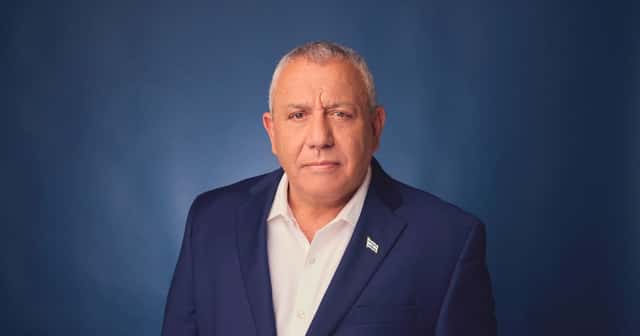
Israel's first formal coalition contact between the two largest parties lasted less than a day. On Tuesday evening, Gadi Eisenkot's Yashar! party said it had scheduled a negotiating meeting with Likud for Wednesday, then announced that Eisenkot had ordered it canceled after Benjamin Netanyahu's speech at the swearing-in of the 26th Knesset. Likud answered that it remained ready to meet "any faction that wants unity," while repeating that it would not cooperate with the Arab-led parties that Eisenkot is still talking to.
Hours later, outgoing Knesset Speaker Amir Ohana said he had received a request from 67 lawmakers to hold a vote on electing his successor, and scheduled it for Tuesday, Nov. 17. The two moves show where Israel's post-election standoff stands two days into Eisenkot's mandate. The anti-Netanyahu bloc can already win procedural votes. It has not yet shown a path to a governing coalition. And the one channel to Likud that had opened is now shut.
What Yashar! said, and why it called off the meeting#
According to the party statement, reported in full by Israel Hayom, the meeting had been arranged after Yashar! invited every Knesset faction to negotiate on the basis of four principles it had set out for forming a government. The statement then said: "In light of the outgoing prime minister's divisive speech and his disgraceful treatment of the Knesset's swearing-in ceremony, along with what little remains of the dignity of state institutions under Netanyahu's rule, Yashar! chairman Gadi Eisenkot has now instructed that the negotiating meeting scheduled for tomorrow with Likud representatives be canceled."
The party added that "unity is an important value for Israel" and that Israeli solidarity is "a component of Israel's national security." It went on: "The outgoing prime minister lashed out at Israeli citizens this evening, providing yet another sad reminder, for anyone who still needed further proof, that Netanyahu does not want unity." The Jerusalem Post and Times of Israel carried the same statement. Their translations from the Hebrew differ slightly. The substance is the same.
The Jerusalem Post also reported that Eisenkot described Netanyahu's address as "delusional, divisive, hateful, and disgraceful." Earlier in the day, Eisenkot told the new Knesset that Israel "is at a crossroads" and that he felt compelled to form an emergency government "as soon as possible," according to Anadolu Agency, citing Yedioth Ahronoth. He said he would seek to do so "without abandoning his principles."
Likud's answer: open to unity, closed to Ra'am and the Joint List#
Likud's response, as quoted by Israel Hayom, made two points. The first was an offer: "Prime Minister Netanyahu will leave no stone unturned in the pursuit of national unity. Likud is prepared to meet with representatives of any faction that wants unity." The second was a condition: "Prime Minister Netanyahu stands by his statement that cooperation with supporters of terrorism is impossible, as is cooperation with those who walked out of the Knesset plenum just this evening during the singing of Hatikvah." Joint List members left the plenum before the anthem ended, the Jerusalem Post's live coverage reported.
"It is puzzling that they are canceling a meeting with Likud while continuing to pursue talks with those very people," the Likud statement said.
The exchange followed Netanyahu's address to the plenum, which 567 Politics covered earlier on Tuesday. In it he said "we must put all other considerations aside and establish a national unity government" and that Israel "cannot rely on a narrow government with supporters of terrorism and enemies of Israel," according to Israel Hayom. After the speech, the Times of Israel counted seven posts on Netanyahu's X account between 6:39 p.m. and 7:36 p.m. Israel time, each captioned in Hebrew, "It is forbidden to establish a dangerous government with terror supporters from Ra'am and the Joint List!"
The terms each side has set#
The canceled meeting would have taken place against conditions that already looked difficult to reconcile. Israel Hayom summarized Eisenkot's four principles for any coalition partner:
- recognition of Israel as a Jewish, democratic, liberal and egalitarian state;
- commitment to the values of Israel's Declaration of Independence;
- mandatory military, national or civilian service for all citizens;
- recognition of Hamas as a terrorist organization and a commitment to destroying its military and governing capabilities in Gaza.
Eisenkot has said any Knesset member who accepts those principles could be a partner in a government he leads. For Likud specifically, Yashar! set three further conditions after Netanyahu's earlier unity appeal: sever its alliance with parties Yashar! described as extremist, accept the four principles, and join a government headed by Eisenkot. Likud has not accepted any of the three in public, and its Tuesday statement framed unity as a government Netanyahu would continue to lead.
So the dispute is not really over whether a unity government is a good idea. It is over who would lead it and which parties would be in it. Netanyahu's offer excludes Ra'am and the Joint List; Eisenkot's conditions exclude several of Netanyahu's current partners and Netanyahu himself at the top.
The arithmetic behind the standoff#
Neither bloc won a majority on Oct. 27. Netanyahu's bloc holds 53 of the Knesset's 120 seats and the bloc led by Eisenkot won 48, according to the Jerusalem Post's election summary. The Arab-led Joint List and Ra'am took 19 seats between them. Likud remains the largest single party, with 27 seats, ahead of Yashar! with 21 and Naftali Bennett's B'Yachad with 12. The certified figures are set out in 567 Politics' report on the final count.
Source: The Jerusalem Post election summary
Show the numbers
| Bloc | Seats |
|---|---|
| Netanyahu bloc | 53 |
| Eisenkot-led bloc | 48 |
| Joint List and Ra'am | 19 |
President Isaac Herzog gave Eisenkot the mandate on Sunday after 67 lawmakers recommended him and 46 recommended Netanyahu, with United Torah Judaism endorsing neither, Israel Hayom reported. Both Ra'am and the Joint List recommended Eisenkot during Herzog's consultations, according to Anadolu. Eisenkot has 28 days to form a government, with a possible extension of up to 14 days.
The 67 recommendations are not a coalition. They include the Arab-led parties, whose role in a government is disputed inside Eisenkot's own camp. They leave out UTJ, whose demands on military service clash with the third of Eisenkot's principles.
Inside Eisenkot's camp, three red lines#
Avigdor Liberman, whose Yisrael Beiteinu backed Eisenkot, told his faction on Tuesday that his criteria were clear, according to Anadolu: "First, end the Netanyahu era. Second, prevent another election. Third, rule out a minority government that relies on the United Arab List (Ra'am) and the Joint List." He said whether to form a national unity government was Eisenkot's decision alone. But he would stay out of one that included Netanyahu: "Just as I will not support a minority government, I will not support any government that includes Netanyahu."
Liberman also said he had dropped his opposition to sitting in a coalition with Shas and UTJ, since the result had left the change bloc short of 61 seats. "We will have to show flexibility and be prepared to make concessions," he said. He also said that if he is elected chair of the Foreign Affairs and Defense Committee, he will first summon the Shin Bet chief and the police commissioner. He wants to question them about what he called suspected foreign interference in the election. The attorney general said on Monday she was unaware of evidence that could affect the result, as 567 Politics reported.
Naftali Bennett said he was doing all he could to help Eisenkot form a government quickly. "We have received the necessary tools to establish a good government in Israel. But there is no time," he said, according to Anadolu.
The Arab-led parties respond#
The two Arab-led factions answered Netanyahu directly. Ra'am chair Mansour Abbas told Channel 12 he was "astounded that the prime minister would exploit a state occasion to lie, to incite and to spread blood libel about the Arab parties," the Times of Israel reported. "We are law-abiding citizens of Israel," he said. "We don't want to establish an Islamist state or an Arab state. This is where the State of Israel was established; we define ourselves within the State of Israel as citizens."
In the same interview, Abbas said Netanyahu had told him during their failed 2021 coalition talks that he and then-Hamas leader Yahya Sinwar "understand each other." Abbas said he was waiting for a state inquiry into Oct. 7 so that he could testify about the conversation. That account is Abbas's alone; the Times of Israel did not report a response from Netanyahu's office, and 567 Politics has not been able to verify it independently.
The Joint List called Netanyahu's address "deranged, inciting and racist" in a statement carried by the Times of Israel. It said it would work to remove what it called his "Kahanist government" as soon as possible. Earlier in the day, Abbas had told a Ra'am faction meeting that participation in government is a "fundamental civil right," as reported in 567 Politics' earlier coverage of the speech.
Next Tuesday's vote on the speaker#
The one test of strength already on the calendar is the speakership. Ohana said on Tuesday evening, according to the Times of Israel: "This evening I received an unusual request from 67 members of the Knesset to place a vote to elect the speaker of the 26th Knesset on the agenda. As such, I have scheduled a debate, followed by a vote, for Tuesday, November 17, at 4 p.m., at the start of the Knesset plenum."
Ohana is a Likud member. He said the request "is intended to advance legislation that would grant immense power to the attorney general, further deepening the imbalance between the elected leadership and the bureaucratic echelon." Despite his "strong opposition" to the bloc's agenda, he said, "I will act as promised: I will respect the will of the majority of Knesset members." The Eisenkot-led bloc has nominated Yashar!'s Matan Kahana for the post. It filed the signatures on the Knesset's opening day, as 567 Politics reported.
A speaker elected with 67 votes would control the plenum's agenda while coalition talks go on. That matters. The same bloc filed a package of bills on the Knesset's first day, including a state inquiry into Oct. 7 and limits on prime ministers' terms. But the 67 signatures again include the Arab-led parties, which Liberman has said he will not rely on to sustain a minority government. A procedural majority on the speaker does not settle whether those same lawmakers can sit together in a cabinet.
What remains unknown#
Several questions were open on Tuesday night. Neither Yashar! nor Likud said whether the canceled meeting would be rescheduled. No party in Netanyahu's bloc has said in public that it would accept any of Eisenkot's four principles as a basis for talks. UTJ, which recommended no one, has not said whether it would support a government that requires universal service. Nor is it clear whether Eisenkot would try a minority government with outside support from Ra'am or the Joint List. Liberman has ruled that out, and Likud has campaigned against it.
If no candidate can form a government within the legal deadlines, the process can end in another election, which every faction leader quoted on Tuesday said they wanted to avoid.
Differing perspectives
On what terms should Israel's next government be formed after the Oct. 27 election?
Each position is summarized as its supporters make it, with equal weight and in alphabetical order. A summary is not an endorsement; the evidence for each is weighed in the story above.
A national unity government that excludes Arab-led parties
Who holds it: Likud and Prime Minister Benjamin Netanyahu
Likud says Netanyahu will leave no stone unturned to reach national unity and that it will meet any faction that wants it, given the security challenges Israel faces, including Iran. It argues that a narrow government relying on Ra'am and the Joint List would depend on parties it describes as supporters of terrorism, citing their walkout during Hatikvah, and says it is puzzling that Yashar! canceled talks with Likud while continuing them with those parties.
In their words: The Jerusalem Post (Likud statement) ↗
A unity government without Netanyahu's current partners
Who holds it: Yashar! and its chair Gadi Eisenkot
Yashar! argues that unity matters for Israel's national security, but that Netanyahu has shown he does not want it. It invites any faction to join on four principles: Israel as a Jewish, democratic, liberal and egalitarian state; the Declaration of Independence; service for all citizens; and destroying Hamas's military and governing power. For Likud it adds conditions: sever its current alliance with several of its partners, accept those principles and join a government Eisenkot heads.
In their words: Israel Hayom (Yashar! statement) ↗
Include Arab-led parties as partners
Who holds it: Ra'am chair Mansour Abbas and the Joint List
Abbas says the prime minister used a state occasion to incite against the Arab parties, and that Ra'am's members are law-abiding citizens who define themselves within the State of Israel and do not seek an Islamist or Arab state. The Joint List says more than half a million citizens voted to remove Netanyahu's government and that it is committed to doing everything in its power to replace it as soon as possible.
In their words: The Times of Israel live blog (Abbas interview, Joint List statement) ↗
No Netanyahu, no minority government, no new election
Who holds it: Yisrael Beiteinu leader Avigdor Liberman
Liberman says his criteria are to end the Netanyahu era, prevent another election and rule out a minority government relying on Ra'am and the Joint List. Because the change bloc fell short of 61 seats, he says it must show flexibility and make concessions, including sitting with Shas and United Torah Judaism, while pursuing a conscription law that can withstand Supreme Court review.
In their words: Anadolu Agency (Liberman faction remarks) ↗
Cite this article
567 Politics staff. “Eisenkot calls off first Likud talks after Netanyahu's Knesset speech; speaker vote set for Nov. 17.” 567politics. Published 2026-11-10. https://567politics.com/news/israel-eisenkot-cancels-likud-talks-netanyahu-speech-ohana-speaker-vote-november-17-november-2026
Wikipedia citation
{{cite news |title=Eisenkot calls off first Likud talks after Netanyahu's Knesset speech; speaker vote set for Nov. 17 |url=https://567politics.com/news/israel-eisenkot-cancels-likud-talks-netanyahu-speech-ohana-speaker-vote-november-17-november-2026 |work=567politics |author=567 Politics staff |date=2026-11-10 |language=en}}CSL-JSON for reference managers
{
  "id": "https://567politics.com/news/israel-eisenkot-cancels-likud-talks-netanyahu-speech-ohana-speaker-vote-november-17-november-2026",
  "type": "article-newspaper",
  "title": "Eisenkot calls off first Likud talks after Netanyahu's Knesset speech; speaker vote set for Nov. 17",
  "URL": "https://567politics.com/news/israel-eisenkot-cancels-likud-talks-netanyahu-speech-ohana-speaker-vote-november-17-november-2026",
  "container-title": "567politics",
  "language": "en",
  "author": [
    {
      "literal": "567 Politics staff"
    }
  ],
  "issued": {
    "date-parts": [
      [
        2026,
        11,
        10
      ]
    ]
  }
}Citations identify this article and its publication date. Assess the reporting and its linked sources before using it as evidence.
Read this article as Markdown or JSON. Cite the original page and retain its sources, dates and qualifications.
Embed this article summary
Paste this HTML into your page. The summary stays linked to the full story and updates with it. No account required.
<iframe src="https://567politics.com/embed/news/israel-eisenkot-cancels-likud-talks-netanyahu-speech-ohana-speaker-vote-november-17-november-2026?theme=auto" title="Eisenkot calls off first Likud talks after Netanyahu's Knesset speech; speaker vote set for Nov. 17 by 567politics" width="100%" height="440" style="border:0;max-width:100%" loading="lazy"></iframe>
<p style="font-size:14px">Eisenkot calls off first Likud talks after Netanyahu's Knesset speech; speaker vote set for Nov. 17 by <a href="https://567politics.com/news/israel-eisenkot-cancels-likud-talks-netanyahu-speech-ohana-speaker-vote-november-17-november-2026" rel="nofollow">567politics</a></p>
<script async src="https://567politics.com/embed.js"></script>
READ BEYOND 567POLITICS
Alternate sources & perspectives
Independent coverage and primary evidence to help you compare arguments. A link is not an endorsement; perspective labels describe the linked material.
- right argument
Eisenkot cancels Likud coalition talks over Netanyahu's Knesset speech ↗
Israel Hayom
Full Yashar! statement and Likud reply, plus Eisenkot's four principles and three conditions for Likud; Israel Hayom is generally regarded as close to the Netanyahu camp.
- independent analysis
Eisenkot cancels coalition talks with Likud after Netanyahu's 'divisive' Knesset speech ↗
The Jerusalem Post
Second translation of both statements and Eisenkot's description of the speech.
- other perspective
Live blog, Nov. 10, 2026: Knesset swearing-in, Yashar cancels Likud talks ↗
The Times of Israel
Ohana's announcement of the Nov. 17 speaker vote, Abbas's Channel 12 interview, the Joint List statement and Netanyahu's posts on X.
- other perspective
Eisenkot calls for swift formation of 'emergency government' amid Israeli coalition talks ↗
Anadolu Agency
Liberman's three criteria and Bennett's remarks; Turkish state news agency reporting from Israeli media.
- primary evidence
Israel Election 2026 live updates ↗
The Jerusalem Post
Seat totals by party and bloc, turnout, and the Joint List walkout during Hatikvah.
Reviewed 2026-11-10. Sources opened in full on Nov. 10, 2026. The Yashar! and Likud statements were checked in three independent English translations (Israel Hayom, The Jerusalem Post, The Times of Israel). Ohana's scheduling announcement, Mansour Abbas's Channel 12 remarks and the Joint List statement come from the Times of Israel live blog; Liberman's and Bennett's remarks from Anadolu Agency, which cites Yedioth Ahronoth. A discover_politics_sources search returned only background profiles of Eisenkot. We did not find the original Hebrew-language statements on the parties' own sites, a response from Netanyahu's office to Abbas's account of their 2021 conversation, or a statement from United Torah Judaism on the canceled talks.