Israel's election chief says results will stand even if foreign-funding suspicions are confirmed
Sohlberg, flanked by the Shin Bet chief and attorney general, says the count holds. Likud says a cloud remains. Herzog starts coalition talks Wednesday.
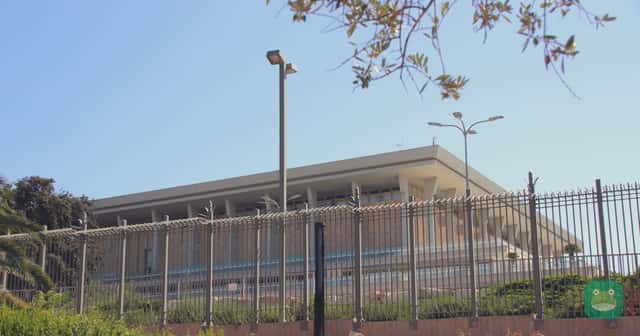
Israel's top election official said on Sunday, November 1, that the results of the October 27 Knesset election will stand, even if a security investigation confirms suspicions of foreign funding. Justice Noam Sohlberg, who chairs the Central Elections Committee, made the statement in a video address. Shin Bet Director David Zini and Attorney General Gali Baharav-Miara stood beside him. Sohlberg said the position was agreed by all three.
The statement answers claims by Prime Minister Benjamin Netanyahu's Likud party that the election was "stolen" through foreign-funded vote-buying in Arab communities. Likud challenged it the same day. Meanwhile, a court released one of the men arrested in a separate bribery case, and President Isaac Herzog set the start of coalition talks for Wednesday, November 4.
Our report on the final count covered the seat totals and how the allegations began. This report covers what changed over the weekend: the joint statement, the reactions, the bribery case and the next steps.
What the three officials said
Sohlberg spoke first and at length. "I can tell you with full responsibility: The elections for the 26th Knesset were conducted properly," he said, according to Ynet. "Any irregularities are currently being examined. The election results reflect the will of the voters."
He did not dismiss the suspicions. "The suspicions presented are serious. We will investigate them thoroughly and get to the bottom of the truth," he said. But he drew a line between intelligence and proof. "Suspicions are suspicions. Challenging election results requires solid evidence."
The key sentence came next. "Our position is that even if the suspicions are confirmed, that would not detract from the integrity of the election process or the election results as a whole," he said, as quoted by Ynet. The Jerusalem Post reported the same sentence in a slightly different translation.
Sohlberg said most media reports about the Shin Bet inquiry in recent days were wrong. He said the inquiry is covert and rests on classified intelligence, so its details cannot be made public. He announced a joint team led by the Shin Bet, the police and the State Attorney's Office. He will monitor its work until it ends.
He also addressed Arab voters directly. "Nothing in what I have said should cast doubt on the voting of Arab society," he said. "Citizens who went out to vote exercised their democratic right."
He closed with the timetable. "The results will be published on time. Your votes have been counted. Your decision will be respected." The official results will be published and handed to Herzog on Wednesday, he said.
What is and is not known about the inquiry
The officials did not name a country. Israel National News reported that the inquiry concerns money from foreign states, including Qatar and Turkey, sent to groups in the Arab community to raise turnout, possibly by illegal means. It said Channel 12 reported that the Shin Bet is examining whether at least two other countries tried to influence the vote. Ynet reported that the suspected Qatari transfers were estimated at tens of millions of shekels. None of these reports has been confirmed by the officials, and Sohlberg said most coverage was inaccurate. Qatar has denied any role, as we reported earlier.
Officials have not said whether any of the money was used to buy votes. That is the question the joint team must answer.
Likud's response
Likud said the statement did not settle the matter. The party called it puzzling that Sohlberg could describe the suspicions as serious and yet conclude, before the inquiry ended, that they would not change the results. "A black cloud hangs over the results" until the inquiry is finished, the party said, as reported by The Jerusalem Post.
Likud also said only 4,612 votes separated Ra'am from losing a seat to the right-wing bloc. The Jerusalem Post pointed out that this figure does not show any vote was cast unlawfully. It added that moving one seat would lift Netanyahu's bloc from 53 to 54 seats, still short of the 61 needed for a majority.
The party is also pursuing a legal route. Ynet reported on October 29 that Likud was preparing a petition to annul results and hold new votes at certain polling stations. Its lawyer, Ilan Bombach, is not alleging forged ballots or falsified totals, Ynet said. The petition centers on alleged bribery and banned methods, including apps that tracked voters at polling stations. Under Israeli law, courts can order a repeat vote at specific stations if violations are proven and could have changed the result. None of Likud's claims has been proven in court.
Netanyahu has also made the case against working with Arab parties. "Cooperation with Mansour Abbas and Tibi is a disaster for Israel," he wrote on X on Saturday, JNS reported. Incoming Likud lawmaker Almog Cohen told JNS that the party's first-place finish showed strong voter trust in Likud. He cited President Donald Trump's written endorsement of Netanyahu in support of that view. Cohen warned that a government relying on the Joint List would "collapse rapidly."
The opposition's response
Gadi Eisenkot, who leads the Yashar party and the rival bloc, welcomed the statement. "The vile and malicious attempt to deny the election results, undermine the public's will, smear an entire community and drag Israel into another election has failed," he said, as quoted by The Jerusalem Post. "The people are sovereign, and they have spoken: the government of failure has no majority, and it has lost."
Eisenkot has also set out terms for partners. In a statement on Saturday, he listed four principles, JNS reported. They are recognizing Israel as a Jewish, democratic, liberal and egalitarian state; commitment to the Declaration of Independence; mandatory military, national or civilian service for all citizens; and recognizing Hamas as a terrorist group whose military and governing power in Gaza must be destroyed. "Any member of Knesset willing to sign on to these principles is a possible partner," he wrote.
Former Prime Minister Naftali Bennett said on Sunday that his Together faction would recommend Eisenkot to Herzog. "Throughout the entire election campaign, I promised to respect the decision of the voter, and that is what I am doing now," Bennett wrote on X, as quoted by JNS.
The bribery case
A separate police case concerns alleged vote-buying for Ra'am, the Islamist party led by Mansour Abbas. It is not the same as the Shin Bet inquiry. Ynet reported that no link between the two has been established.
On Sunday, the Beersheba Magistrate's Court released Dr. Sayaf Abu Riash, one of three men arrested on election day, without restrictive conditions, The Jerusalem Post reported. Investigators are examining whether 10 envelopes, each holding 1,000 shekels, found at one suspect's home were meant for voters. Police still need to link the money to any bribery, the Post said. Four more suspects were arrested on Thursday, and the case moved to the Lahav 433 national crime unit.
The suspects deny wrongdoing. Abu Riash's father called the arrest political persecution and said his son had been working to raise turnout. Ra'am rejected attempts to tie the party to election crimes. It said the activists were arrested at home before polls opened. It accused police of wrongful arrests meant to suppress Arab voting and alleged political misuse of the force by National Security Minister Itamar Ben-Gvir. A lawyer for another suspect said envelopes found at his client's home were charity for poor families, according to Ynet. The arrests and the cash do not, on their own, show that Ra'am organized any bribery.
The coalition timetable
The timetable is set by law. Herzog will receive the official results on Wednesday and begin talks with the elected factions the same day. His office has invited every faction to take part. Herzog has ordered the meetings to be broadcast live, JNS reported. The new Knesset is due to be sworn in on November 10.
After the talks, Herzog picks a lawmaker to try to form a government. He must do so within seven days of the results being published, The Jerusalem Post reported. His choice need not be the leader of the largest party. That person has 28 days, which Herzog can extend by up to 14 days. If that fails, Herzog can give another lawmaker 28 days. If no government is formed, Israel goes to another election in about 90 days, JNS reported. Our guide to Herzog's coalition timetable sets out each stage.
Herzog urged party leaders to come with "an open heart." "The elections are over. The election results are a fact," he said at a memorial for Israel's first president, as quoted by JNS. "This week at the President's Residence, we will try to put up ladders so that our leaders can come down and face this reality in a measured and careful way."
The seat math
The final count gave Netanyahu's bloc 53 of 120 seats and Eisenkot's bloc 48. The two Arab-led lists, Ra'am and the Joint List, won 19 between them. Neither bloc reaches 61 on its own. Likud is the largest single party with 27 seats, and Yashar is second with 21. Our election-night report has the earlier partial figures.
This math is why the dispute matters. An Eisenkot-led government would likely need some form of support from at least one Arab-led list, or defections from Netanyahu's side. Likud's campaign against Arab parties' role, and the opposition's defense of their voters, are both aimed at that choice.
Israel and the wider region
The vote comes as Israel remains a party to the war with Iran. Trump said he and Netanyahu held "very good" talks over the weekend that included Iran, as our report on the Doha talks notes. Whichever government emerges will inherit those decisions.
Funding and disclosure
Israel's party finance is overseen by the State Comptroller, and this story does not report party funding figures. We did not review those filings. Trump is mentioned here only as the author of an endorsement cited by a Likud lawmaker. Our records hold no verified FEC snapshot for him, so we report no figures rather than infer zero.
What remains unknown
The joint team has not said when it will report. No evidence has been made public that links foreign money to any vote. It is not yet known whether Likud has filed its polling-station petition with a court, or how the committee will rule on it. The faction recommendations to Herzog will be made in public starting Wednesday.
Readers can see how we handle contested claims in our methodology.
Differing perspectives
Should Israel certify its election results while the foreign-funding inquiry is still open?
Each position is summarized as its supporters make it, with equal weight and in alphabetical order. A summary is not an endorsement; the evidence for each is weighed in the story above.
A black cloud hangs until the inquiry ends
Who holds it: Likud party, in a statement posted to Prime Minister Netanyahu's X account
Likud said: "It is very puzzling how Justice Sohlberg says these are very serious suspicions of foreign funding, and at the same time determines in advance that they have no effect on the election results before the investigation is concluded." It said only 4,612 votes kept a seat from passing from Ra'am to the right-wing bloc and demanded a swift investigation. It said a "black cloud" hangs over the results.
In their words: JNS, Nov. 2, 2026 ↗
Certify on schedule
Who holds it: Justice Noam Sohlberg, chair of the Central Elections Committee
In a Nov. 2 letter to Likud's representative on the committee, Ilan Bombach, Sohlberg wrote: "Elections have results. Those results do not depend on the consent of the majority group in the outgoing Knesset, or its representatives." He said the committee has no authority to withhold publication and that reading its powers that way would contradict "fundamental democratic principles." Official results go to President Herzog on Wednesday.
In their words: The Jerusalem Post, Nov. 2, 2026 ↗
READ BEYOND 567POLITICS
Alternate sources & perspectives
Independent coverage and primary evidence to help you compare arguments. A link is not an endorsement; perspective labels describe the linked material.
- primary evidence
Election chief says results are valid despite foreign interference probe ↗
Ynet
Extended English translation of Sohlberg's Nov. 1 statement delivered alongside the Shin Bet chief and attorney general.
- independent analysis
Election results stand even if interference suspicions proven - Sohlberg ↗
The Jerusalem Post
Statement, Likud's 'black cloud' response, Eisenkot's reply, the Beersheba court release and the legal timetable.
- right argument
Election Chief: Foreign funding suspicions won't overturn Israel's vote ↗
Israel National News
Right-leaning outlet's account of the statement and reported Qatari and Turkish funding suspicions.
- right argument
Herzog urges factions to seek solutions to avert another election ↗
JNS
Herzog's remarks, Netanyahu's warning against Arab parties, a Likud lawmaker's case, Eisenkot's four principles and Bennett's recommendation.
- other perspective
Four more arrested in election bribery probe as Likud seeks revotes at Arab polling stations ↗
Ynet
Likud's planned polling-station petition, the arrests and the suspects' denials.
Reviewed 2026-11-02. Reviewed November 2, 2026. Automated discovery has returned only general landing pages for recent stories, so sources were selected by hand from pages the article cites and that were opened in full. The Times of Israel report on the joint statement returned 403 and Haaretz is paywalled; AP was blocked to our fetcher. The joint statement was delivered in Hebrew; quotations rely on English translations by Ynet and The Jerusalem Post, which differ slightly in wording. The Central Elections Committee's own website was not reviewed for this update. Reports that the inquiry concerns Qatari and Turkish money come from Israeli media and have not been confirmed by officials. JNS and Israel National News generally reflect right-of-center Israeli viewpoints. No Ra'am or Joint List leader statement was opened directly; Ra'am's response is cited as reported by The Jerusalem Post. No U.S. government dataset applies. Israeli party finance filings with the State Comptroller were not reviewed.