Netanyahu calls for a 'broad national government' as Liberman backs Eisenkot and Arab parties coordinate
Netanyahu offered a broader coalition he would lead as Liberman endorsed Eisenkot but ruled out relying on Arab votes, and the Joint List and Ra'am began coordinating.
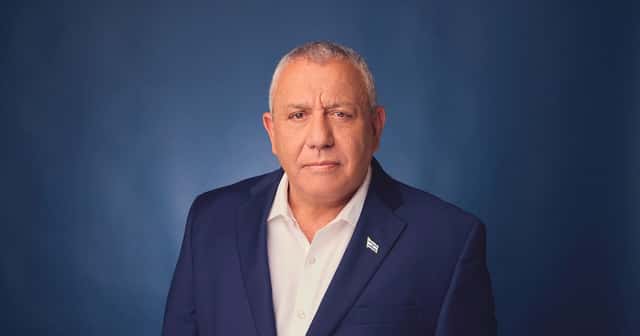
Prime Minister Benjamin Netanyahu on Monday night called for a "broad national government" under his leadership, a change in tone from his election-night demand for a right-wing coalition. He spoke hours after Yisrael Beytenu leader Avigdor Liberman said he would recommend Yashar chairman Gadi Eisenkot for prime minister, and as the two Arab-led parties held their first joint meeting on how to help replace Netanyahu's government.
The moves came two days before President Isaac Herzog begins formal talks with every Knesset faction on Wednesday, November 4. Each party will tell him whom it wants to lead the next government. The arithmetic behind those talks is the central fact of the week. Netanyahu's bloc won 53 of the Knesset's 120 seats, the four Zionist opposition parties won 48, and the Arab-led Joint List and Ra'am won 19, according to the final count covered earlier by 567 Politics. A government needs 61 votes.
What Netanyahu said
Netanyahu posted his statement on social media on Monday evening, Israel time. "The Israeli public does not want a government that depends on Ra'am and the Joint List, parties that support terrorism and reject the existence of the Jewish state," he wrote, according to The Jerusalem Post. "From day one, we have extended our hand toward the formation of a broad national government."
He went on: "A clear majority of the Jewish public chose the Likud as the largest party, and chose me, as prime minister, to lead the next government. We aim to form a broad government with our partners and with any other party that wishes to join, provided they do not support terrorism." He added that he was open to talks on the matter.
The Post reported that it was the first time since the results were published that Netanyahu had called for any specific type of government. The Media Line described the statement as a shift from his call last week for "a strong, national, right-wing coalition." It said the broader government he described would still include the ultra-Orthodox parties and that he would lead it. The Media Line also reported that Likud's coalition whip, Ofir Katz, ruled out a rotation deal under which another leader would share the premiership.
The statement followed a day in which the election committee chair, Justice Noam Sohlberg, turned down a Likud request to delay certifying the results. That dispute is covered in our report on the certification fight and is not repeated here.
Netanyahu's description of the two Arab-led parties is his own characterization. Both parties won their seats in the same election and sit lawfully in the Knesset. His statement did not cite any specific act of support for armed groups by either party. Joint List leader Yousef Jabareen has tied his party's refusal to join any government to Israel's occupation of the West Bank, as described below.
Liberman backs Eisenkot, with limits
Liberman's announcement removed one of the open questions on the opposition side. His party holds seven seats. According to The Jerusalem Post's account of his Monday press conference, he said he would recommend Eisenkot and would back Yesh Atid leader Yair Lapid for Knesset speaker.
He also drew two lines. He said he would not join a unity government with Netanyahu, and he would not support a minority government that relies on the Arab parties. He warned that such a government would last less than a year and that Netanyahu would come back with "70 seats." He called another election "a very bad option."
Liberman was more open toward the ultra-Orthodox parties, Shas and United Torah Judaism. The Post reported that he said he would "have no problem" with any party that accepted his principles, including a law to draft ultra-Orthodox men into the army. He also said he was in contact with members of Likud's slate, without naming them.
On the speakership, Liberman said: "Regarding the Knesset speaker, all the speculation and nonsense – we were not extortionists, and we do not intend to extort… We will support Yair Lapid's candidacy." He added: "Next Tuesday, we will act to collect signatures to replace the Knesset speaker." He said the change was "critical, also for the election of the state comptroller," and accused the current speaker, Likud's Amir Ohana, of having "functioned as a political commissar [and] broke all the rules." Ohana and Likud had not responded to that accusation in the reports reviewed for this story.
The Post said Eisenkot, Bennett, Liberman, Democrats leader Yair Golan and Lapid planned to meet on Tuesday morning. The new Knesset is due to be sworn in on November 10.
The opposition lines up, on paper
With Liberman's decision, all four Zionist opposition parties have now said they will recommend Eisenkot. Naftali Bennett of B'Yachad announced his choice on Sunday, and the Democrats have also said they will back Eisenkot. Together the four parties hold 48 seats: Yashar 21, B'Yachad 12, the Democrats 8 and Yisrael Beytenu 7.
Eisenkot has set out four conditions for any party that wants to join his coalition. As listed by The Jerusalem Post, they are recognizing Israel as a Jewish, democratic, liberal and egalitarian state; committing to the values of the Declaration of Independence; supporting mandatory military, national or civilian service for all citizens; and recognizing Hamas as a terrorist organization, along with the duty to destroy its military and governing power in Gaza. "Any MK willing to sign on to these principles is a potential partner in establishing a new government that will be good for Israel," he said.
Those terms leave open the question that divides the opposition: whether a government could rely on the Arab parties' votes from outside the coalition, without them sitting at the cabinet table.
The Arab parties coordinate
The Joint List, with 11 seats, and Ra'am, with eight, held their first coordination meeting on Monday, the Post reported. Joint List MK Ahmad Tibi said the goal was "to topple the Netanyahu, [National Security Minister Itamar] Ben-Gvir, and [Finance Minister Bezalel] Smotrich government and replace it with a new government of change."
Jabareen set out his party's stance in an interview with The Guardian. He said the Joint List would not join a government but could support one from outside. "As long as the occupation of our people in the West Bank continues, we cannot be part of a government," he said. He called the moment "really a historic moment" and said he wanted a change of speaker and influence over the Knesset's agenda.
Speaking to AFP, as published by Arab News, Jabareen answered Liberman directly. "Lieberman must deal with the political reality and the numbers in the Knesset," he said. He added that Netanyahu's government "cannot be replaced without coordination with the Joint List." AFP reported that he met Ra'am leader Mansour Abbas on Monday and planned to meet Golan on Tuesday. It described Golan as the only opposition leader publicly urging a partnership with the Arab parties.
Ra'am's position differs from the Joint List's. Al Jazeera reported that Abbas said his party would join a government if it received the internal security portfolio. Ra'am sat in the 2021–2022 coalition led by Bennett and Lapid, the first time an Arab-led party joined an Israeli government.
Views inside the Joint List are not uniform. Ynet reported that Hadash's Amjad Shbita called Eisenkot "a coward and a racist," citing an interview with Al Arabiya, yet also said: "We are prepared to take any step that will bring down Netanyahu's government."
The debate has also reached the street. Al Jazeera reported that dozens of people protested outside Eisenkot's home against a government backed by the Arab parties.
Where the religious parties stand
The two ultra-Orthodox parties may decide how the numbers work out. According to Ynet, Shas is very likely to recommend Netanyahu, while United Torah Judaism may recommend no one. Ynet projected that Netanyahu would receive 46 recommendations: Likud's 27 plus Otzma Yehudit, Shas and Religious Zionism.
Netanyahu addressed Shas leader Aryeh Deri directly. "The left is prepared to promise the ultra-Orthodox the moon and the stars, in hypocrisy that cries out to heaven," he said, as quoted by Ynet. "Deri and Shas are important partners of mine and of the right-wing bloc."
UTJ's Avraham Justman sounded less settled. "United Torah Judaism made it clear before the election that it was available to both blocs," he told Ynet. "Right now, it appears that the change bloc has more room to maneuver." He also said that "ultra-Orthodox Jews and Arabs can get along very well. Both are minorities."
The figures below show how the 120 seats line up behind each candidate, based on public announcements and Ynet's projection. They are not final until each party meets Herzog.
Source: The Jerusalem Post, Ynet
Show the numbers
| Group | Seats |
|---|---|
| Announced for Eisenkot | 48 |
| Expected for Netanyahu | 46 |
| Joint List and Ra'am | 19 |
| United Torah Judaism (undecided) | 7 |
The table shows the paths to 61 that the parties' own statements point to.
| Possible base | Seats | Gap to 61 |
|---|---|---|
| Eisenkot's four parties plus Joint List and Ra'am | 67 | Above 61 |
| Eisenkot's four parties plus UTJ and Shas | 61 | None |
| Netanyahu's 53-seat bloc alone | 53 | 8 short |
| Eisenkot's four parties alone | 48 | 13 short |
Each row depends on decisions no party has yet made. Liberman has rejected the first. Shas has signaled it will stay with Netanyahu, which blocks the second. Every opposition party has refused to join Netanyahu, which limits the third.
How Herzog's consultations work
Herzog will hear the parties in order of size, starting with the smallest, The Jerusalem Post reported. On Wednesday he meets Religious Zionism–Zehut at 5 p.m., Shas at 6:15 p.m. and Yisrael Beytenu at 7:30 p.m. Israel time. Ynet listed Yisrael Beytenu's slot as 7:15 p.m. On Thursday he meets UTJ, Otzma Yehudit, the Democrats, Ra'am, the Joint List, B'Yachad and Yashar, with Likud last at 8:30 p.m. The sessions will be streamed live.
Herzog's office said the order was meant to "encourage thinking outside the box." It said he would "exhaust every possibility" and "explore any avenue," including wider talks between the parties, and might hold a second round. Ynet reported that he has repeatedly urged party leaders to consider a unity government. The Media Line wrote that Herzog "has publicly backed" a Netanyahu–opposition unity government, but his office has not described his position in those terms in the statements reviewed here.
Under Israeli law, Herzog must assign the task of forming a government by November 11, according to Ynet. The chosen candidate gets 28 days, and the president can add up to 14 more. If that fails, a second candidate can get 28 days with no extension. Herzog can also say that no one can form a government. That opens a 21-day window in which 61 lawmakers can petition for a named candidate, who then has 14 days. If every step fails, the Knesset dissolves and a new election follows. Our explainer on the coalition timetable sets out those steps in detail.
What each side argues
Netanyahu's camp makes three points. Likud is the largest party by six seats. The right-wing bloc won more seats than the Zionist opposition. And, in Netanyahu's view, a government that needs the Arab parties' votes would not reflect what most Jewish voters chose. Netanyahu's offer of a "broad" government is, in that framing, an invitation to opposition parties to join a majority he would lead.
The Zionist opposition answers that the right-wing bloc fell well short of 61. In Lapid's words, as reported by The Thursday Times, "In a democracy, the winners form the government and the losers head to the opposition." But the opposition parties disagree with each other over the Arab parties. Golan backs a partnership. Liberman rules it out. Eisenkot has set conditions for coalition partners, and the Joint List says it will not join any coalition while the occupation continues.
The Arab parties argue that they won 19 seats on the same ballot as everyone else and that their voters should count. Jabareen's case is that the numbers leave no other route to replacing Netanyahu. Ra'am's stated condition, the internal security portfolio, points to a different approach: a seat at the cabinet table rather than support from outside.
The ultra-Orthodox parties face a different choice. Both have long opposed drafting yeshiva students, and Liberman's demand for a conscription law runs against that position. Netanyahu, for his part, is pressing Shas to stay with his bloc.
What we don't know
Several facts remain unclear. It is not known whether the Joint List and Ra'am will formally recommend Eisenkot to Herzog, or recommend no one. Liberman said he was talking to Likud figures but gave no names. No party has said it would accept a rotation with Netanyahu. And it is not clear what Herzog will do if no candidate shows a credible path to 61. For readers comparing systems, our Israel and United States comparison explains how a parliamentary system turns seat counts into a government.
What comes next
The opposition leaders meet on Tuesday morning. Herzog's consultations run on Wednesday and Thursday evening, Israel time. The Knesset is sworn in on November 10, when the opposition says it will move to replace Ohana as speaker. Herzog's deadline to name a candidate is November 11.
Differing perspectives
Should Israel's next government rely on votes from the Arab-led Joint List and Ra'am?
Each position is summarized as its supporters make it, with equal weight and in alphabetical order. A summary is not an endorsement; the evidence for each is weighed in the story above.
Build a broad government without the Arab parties
Who holds it: Prime Minister Benjamin Netanyahu, Likud and its right-wing and religious partners
Netanyahu argues that Likud is the largest party and that a clear majority of Jewish voters chose him to lead. He says the public does not want a government that depends on Ra'am and the Joint List, which he describes as parties that "support terrorism and reject the existence of the Jewish state." He offers a broad national government with his current partners and any party that accepts that condition, and says he is open to talks.
In their words: The Jerusalem Post (Netanyahu statement) ↗
Join the coalition in exchange for a ministry
Who holds it: Ra'am leader Mansour Abbas and Ra'am
Ra'am's leader says his party is ready to join a government led by Eisenkot, rather than back it from outside, if it receives the internal security portfolio. Ra'am took the same route in 2021, when it became the first Arab-led party to join an Israeli coalition, under Bennett and Lapid. Its position puts a cabinet role, not outside support, at the center of its terms.
In their words: Al Jazeera ↗
Keep both options open for now
Who holds it: United Torah Judaism, as described by its official Avraham Justman
Justman says United Torah Judaism told voters before the election that it was available to both blocs. He says the change bloc currently appears to have more room to maneuver, and that ultra-Orthodox Jews and Arabs, as two minorities, can get along very well. Ynet reports that the party may end up recommending no candidate to the president.
In their words: Ynet ↗
Replace Netanyahu without Arab votes or a unity deal
Who holds it: Yisrael Beytenu leader Avigdor Liberman
Liberman argues for replacing Netanyahu with Eisenkot, but says a minority government resting on the Arab parties would collapse within a year and bring Netanyahu back stronger, with 70 seats. He rules out a unity government with Netanyahu as well. He says ultra-Orthodox parties could join if they accept his principles, including a draft law, and that another election would be a very bad option.
In their words: The Jerusalem Post (Liberman press conference) ↗
Support a change government from outside
Who holds it: Joint List leader Yousef Jabareen and the Joint List
Jabareen argues that the Knesset numbers leave no way to replace Netanyahu's government without the Joint List. He says his party cannot sit in a government while the occupation of the West Bank continues, but can back one from outside on key votes. He calls this a historic moment and wants a new Knesset speaker and influence over the parliamentary agenda in return.
In their words: The Guardian (interview with Yousef Jabareen) ↗
READ BEYOND 567POLITICS
Alternate sources & perspectives
Independent coverage and primary evidence to help you compare arguments. A link is not an endorsement; perspective labels describe the linked material.
- primary evidence
Benjamin Netanyahu calls for 'broad national government' made up of anti-terror parties ↗
The Jerusalem Post
Full English text of Netanyahu's Monday statement and Eisenkot's four coalition principles.
- primary evidence
Gadi Eisenkot, Naftali Bennett, Avigdor Liberman, Golan to hold joint meeting ↗
The Jerusalem Post
Liberman's press conference remarks, the Democrats' recommendation, the first Joint List–Ra'am meeting and Tibi's statement.
- primary evidence
Israel election: Isaac Herzog to begin coalition consultations with smallest parties ↗
The Jerusalem Post
The president's office schedule and stated reasons for hearing the smallest parties first.
- independent analysis
Israel's coalition consultations: The move pressuring undecided parties ↗
Ynet
Projected recommendations, UTJ and Shas positions, Netanyahu's remarks on Deri, and the legal steps if no one forms a government.
- independent analysis
Netanyahu Calls for 'Broad National Government' After Election Results Challenge Rejected ↗
The Media Line
Frames the statement as a shift from Netanyahu's earlier call and reports Likud's rejection of a rotation deal.
- other perspective
Israel has 'historic' opportunity to change direction, says leader of Arab coalition ↗
The Guardian
Interview setting out the Joint List's case for supporting a government from outside while refusing to join it.
- other perspective
Top Arab-Israeli leader tells AFP opposition must join to oust Netanyahu ↗
Arab News (AFP)
Jabareen's direct reply to Liberman and his meetings with Ra'am and the Democrats.
- other perspective
Arab parties back Eisenkot: What's the latest in Israel's coalition talks? ↗
Al Jazeera
Reports Ra'am's condition of the internal security portfolio and protests outside Eisenkot's home.
- independent analysis
Election chief rejects Likud bid to delay certifying the results, as Netanyahu now floats a 'broad national government' ↗
The Thursday Times
Includes Lapid's and Eisenkot's responses to Likud and the opposition parties' refusal to serve under Netanyahu.
Reviewed 2026-11-02. Reviewed November 2, 2026 (evening ET). Automated discovery returned only general pages (Wikipedia, tag pages, older wire stories), so sources were chosen by hand from pages opened in full. Netanyahu's statement was posted in Hebrew on social media; the original post was not opened, so quotations rely on The Jerusalem Post's and The Media Line's English renderings. The Times of Israel blocked our fetcher. No Ra'am statement in Abbas's own words was opened; his condition is cited as reported by Al Jazeera. Ra'am and the Joint List had not confirmed formal recommendations to the president in the reports reviewed. The Media Line's statement that Herzog publicly backed a unity government was not confirmed by the president's office in the material reviewed. Seat projections come from Ynet and are not final until consultations. Israeli party finance filings were not reviewed; no U.S. dataset applies.