‘Weeks away’: A timeline of Israeli warnings about Iran’s nuclear capability
Israeli leaders repeatedly warned that Iran was nearing a nuclear threshold. Their original statements distinguish nuclear material from a completed weapon.
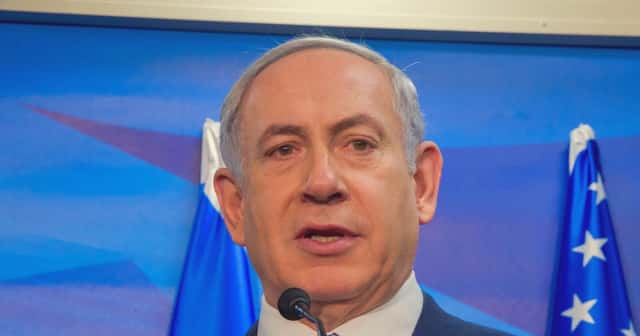
Israeli leaders have repeatedly warned that Iran was nearing a nuclear threshold. Read together, their statements form a long record of urgent appeals for sanctions, diplomatic pressure and, eventually, military action.
But the familiar shorthand that Iran was always “a few weeks away from a nuclear weapon” leaves out crucial differences. Some statements concerned the time needed to produce enough nuclear material. Others described what might happen years later, after restrictions expired. Still others addressed a completed weapon.
This timeline examines six statements from 2012 through June 2025. It preserves each warning’s date, conditions and endpoint. It is a historical review, not an assessment of Iran’s nuclear status today. The linked transcripts and contemporary reports allow readers to compare the wording with the political argument built around it.
The timeline at a glance
- September 2012Netanyahu described a future enrichment threshold, followed by months or possibly weeks to enough uranium.
- March 2015Netanyahu warned of weeks to arsenal fuel after a proposed deal's restrictions expired.
- October 2015Netanyahu repeated a future warning about fissile material after limits ended.
- August 2021Gantz estimated about ten weeks to weapons-grade material.
- May 2022Gantz estimated weeks to enough fissile material for a first bomb.
- June 2025Netanyahu described a weapon as potentially months or a year away if Iran was not stopped.
The sequence should not be read as a single countdown that kept restarting. The speakers were not always measuring the same thing. A useful comparison begins with the object of each prediction: material, a weapon, or the capacity to act after a future policy change.
September 27, 2012: Netanyahu’s bomb diagram at the UN
Prime Minister Benjamin Netanyahu held up a drawing of a bomb during his address to the UN General Assembly. He argued for a clear limit on Iran’s enrichment program and drew a red line on the illustration.
His timetable had two stages. At the pace he described, Iran would complete the medium-enrichment stage by the following spring or summer. From there, he said, it would take “a few months, possibly a few weeks” to obtain enough enriched uranium for a first bomb.
That was an urgent warning about material production after a projected milestone. It was not a statement that Iran would possess a completed weapon within weeks of September 2012. Netanyahu also distinguished enrichment from bomb assembly, while arguing that intelligence services might struggle to detect the latter in time. Official transcript of the September 2012 speech.
The distinction affects how the prediction can fairly be judged. Removing the reference to the following spring or summer changes when the short clock was supposed to begin. Removing the reference to uranium changes what that clock measured.
March 3, 2015: A warning about what could follow a deal
Addressing Congress, Netanyahu warned that the proposed nuclear agreement would eventually leave Iran with expanded enrichment capacity. After restrictions expired, he argued, Iran could produce fuel for an arsenal “in a matter of weeks” once it decided to do so.
This was a warning about a future scenario under the proposed agreement. It was not a prediction that Iran would have an arsenal weeks after his speech. Congressional speech transcript.
July 14, 2015: The argument moves onto Twitter
The prime minister’s office also used Twitter, now X, to press its opposition to the agreement. A July 14 post from @IsraeliPM said Israel did not consider itself bound by the deal and would defend itself against Iran.
The post is embedded here as evidence of the government’s public position. It does not itself give a weeks-to-bomb estimate. That distinction matters: a social media statement about policy should not be presented as a technical forecast that it never made. The post is also reproduced in Ilan Manor’s study of digital diplomacy. Archived reproduction and source identification.
October 1, 2015: Weeks, after restrictions expired
In another UN address, Netanyahu returned to the time limits in the nuclear agreement. He argued that restrictions would disappear after ten or fifteen years, allowing Iran to expand its nuclear infrastructure.
His warning again concerned the speed at which Iran could produce fissile material for an arsenal after those limits ended. The short production period was part of a long-term argument against the agreement, rather than an immediate deadline for a weapon in 2015. Full transcript of the October 2015 UN address.
This was a dispute about how to manage future risk. A reader can question Netanyahu’s assumptions about what Iran would do after restrictions expired. But an accurate account must retain that condition before evaluating whether the warning was right. Treating a hypothetical future breakout as a prediction of an imminent bomb makes the record less useful.
August 4, 2021: Gantz puts the material estimate at ten weeks
Defense Minister Benny Gantz gave a more immediate estimate while briefing ambassadors from countries on the UN Security Council. He said Iran was “only around 10 weeks away from acquiring weapons-grade materials necessary for a nuclear weapon.”
Gantz paired the warning with calls for diplomatic, economic and potentially military action. The context included wider tensions with Iran, but the nuclear wording identified a specific endpoint: weapons-grade material. Contemporary report on Gantz’s briefing.
Compared with the 2015 speeches, this was a different kind of clock. It described a near-term capability estimate, not what might follow the expiration of restrictions years later. Even so, the quoted words did not say that Iran would have a finished nuclear weapon ten weeks after the briefing.
A forecast about capability also does not establish that leaders have decided to use it. That is a separate question for evidence about intent and activity.
May 17, 2022: Gantz says a few weeks to enough fissile material
Speaking at Reichman University in Herzliya, Gantz warned that Iran was only a few weeks from accumulating enough fissile material for a first bomb. He cited Iran’s expanding nuclear expertise and advanced centrifuges as reasons for concern.
His message was that delay would make the problem harder to address. The endpoint, however, remained material sufficient for a bomb. It was not a public demonstration that a completed weapon would exist within weeks. Contemporary report on the May 2022 speech.
This is among the clearest examples of why headlines need to retain the words that follow the time estimate. “Weeks to enough material” and “weeks to a weapon” can sound similar in a political debate. They make different claims, and they require different evidence to verify.
June 13, 2025: Netanyahu speaks of months or a year
When Israel began Operation Rising Lion, Netanyahu argued that Iran was moving toward a weapon and that Israel could not afford to wait. His stated range included a year or a few months if Iran was not stopped.
That was a claim about a weapon, rather than simply enough material. It also was not a claim that the weapon would be ready in a few weeks. The Israeli government later reproduced his remarks in its account of the operation. Israeli Foreign Ministry report and speech citation.
The government’s own account is a primary source for what it argued. It is not independent proof that the underlying intelligence was correct. Readers should apply that distinction to any government’s explanation for military action.
Later that day, @IsraeliPM published a message addressed to the Iranian people about the operation. This embedded post documents the public case being made as the strikes unfolded; the specific nuclear timetable comes from the separately linked speech. Contemporary record of the post.
What U.S. intelligence and inspectors said in 2025
A U.S. Defense Intelligence Agency assessment, prepared with information current as of May 11, 2025, illustrates why material and weapon timelines must be separated. It assessed that Iran almost certainly was not producing nuclear weapons. It also said Iran could probably produce enough weapons-grade uranium for a first device in less than a week.
The same assessment said Iranian leaders probably had not decided to restart the nuclear weapons program suspended in 2003. These were dated intelligence judgments, not guarantees about every later development. DIA’s 2025 assessment.
The International Atomic Energy Agency’s May 31, 2025 report supplied another layer of context. It found no credible indications of an ongoing undeclared structured program of the kind it described from the early 2000s. Yet it also reported unresolved safeguards issues and said it could not assure that Iran’s program was exclusively peaceful.
Those findings should be read together. The report neither verified an imminent completed bomb nor offered Iran a clean bill of health. Its unresolved questions were part of the evidence, not a detail to discard when quoting its more reassuring language. IAEA report, overall assessment and summary.
How to judge the repeated warnings
Repeated warnings deserve scrutiny, especially when leaders use them to support sanctions, reject negotiations or justify force. But repetition alone cannot establish that every warning was fabricated. Nor does the existence of a nuclear risk establish that every public deadline was accurate.
Three questions make the record easier to assess. What precisely was predicted? What conditions had to occur first? And what evidence was available at the time? A claim about enough material must be tested against material evidence. A claim about a completed weapon needs evidence about additional work and the decision to pursue it.
The policy question is broader still. Leaders can argue that action is justified before a weapon exists. That argument concerns acceptable risk, the prospects for diplomacy and the costs of force. It should be debated openly, rather than smuggled into a shortened technical claim.
For readers following the U.S. debate, our review of public support for foreign wars examines a separate question: what Americans support when pollsters ask about specific conflicts. Our report on Republican reactions to Israel and Iran policy covers the political arguments around those choices. Neither public opinion nor party criticism can substitute for evidence about a nuclear program.
This timeline follows our editorial standards by separating attributed claims from established findings. Our methodology explains the broader approach to sources and uncertainty. The six selected statements are not a complete archive of every Israeli warning. They show why preserving the original wording is essential to holding those warnings to account.
Differing perspectives
How should warnings about Iran’s nuclear timeline be understood?
Each position is summarized as its supporters make it, with equal weight and in alphabetical order. A summary is not an endorsement; the evidence for each is weighed in the story above.
Act before Iran reaches a weapon
Who holds it: Benjamin Netanyahu and Israeli government officials
Iran should be stopped before it acquires a nuclear weapon, because the final steps may be difficult for intelligence services to detect in time. Israeli officials therefore argued for action before the danger became irreversible, while giving different estimates at different dates.
In their words: Netanyahu’s September 2012 UN speech ↗
Separate material capability from weapon production
Who holds it: U.S. Defense Intelligence Agency
A short timeframe for producing weapons-grade uranium does not by itself establish that a country is building a nuclear weapon. The May 2025 assessment found both a very short material production timeline and that Iran almost certainly was not producing nuclear weapons.
In their words: DIA 2025 threat assessment ↗
Unresolved safeguards limit assurance
Who holds it: International Atomic Energy Agency
Verification requires credible explanations of undeclared material and adequate cooperation with inspectors. Although the May 2025 report found no credible indication of an ongoing undeclared structured program of the historical type described, unresolved safeguards issues prevented assurance that the program was exclusively peaceful.
In their words: IAEA May 31, 2025 safeguards report ↗