Japan weighs ¥70–80 trillion defense plan, nearly double its current budget
Reuters says Takaichi's government is considering 1.8 times the current five-year plan. Opposition parties question the scale and the taxes to pay for it.
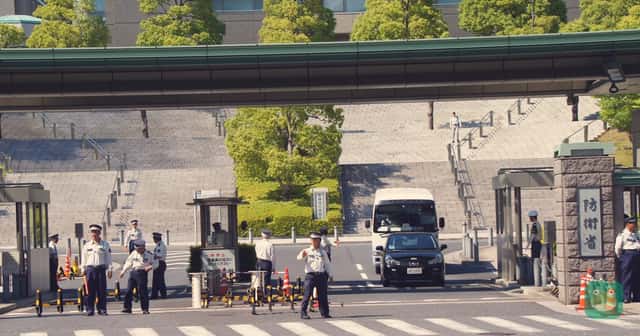
Japan's government and ruling coalition are considering a five-year defense budget of ¥70 trillion to ¥80 trillion ($457 billion to $508 billion). Reuters reported the plan on Monday, November 2, citing two people familiar with the matter. That would be about 1.8 times the roughly ¥43 trillion in the current plan, which began in fiscal 2023.
The proposal would cover the five years from April 2027. It is part of Prime Minister Sanae Takaichi's plan to rewrite Japan's three main security documents by the end of the year. The figure has not been announced by the government. Reuters said it could still change as the budget is compiled. Japan's Defense Ministry said it had no comment.
This article explains what is under discussion, how it compares with past plans, how the government proposes to pay for it, and how opposition parties and China have responded.
What the reported plan includes
According to the Reuters report carried by The Japan Times, one source said the new money is expected to fund purchases such as "large numbers of drones." The same source said a weaker yen has raised the cost of buying defense equipment from abroad.
The second source said the final total could land "in the mid-to-late ¥70 trillion range." That person also questioned whether such a sum would be enough "given the security environment in East Asia." The source said the final figure was still being debated between the government and its coalition partners. A Japanese-language version of the Reuters report, published on Yahoo News Japan, quoted the same person on next steps. The person said the government and ruling parties would need to discuss the total before year-end, with further increases in view. (Our translation.)
Kyodo News had reported a similar range in October, citing unnamed officials, according to Bloomberg in The Japan Times.
The plan sits inside a wider rewrite. In her October 5 policy speech to the Diet, Takaichi said Japan's security environment "is changing at an accelerating pace and becoming increasingly complex and severe." She said: "To fundamentally reinforce our defense capabilities, we will review the Three Strategic Documents by the end of 2026," according to the Prime Minister's Office translation. The three documents are the National Security Strategy, the National Defense Strategy and the Defense Buildup Program. The five-year spending total is set in the last of these.
How the proposal compares with earlier plans
The current program was adopted at the end of 2022 under former Prime Minister Fumio Kishida. It raised planned spending sharply from the ¥27.5 trillion level of the previous plan, Reuters reported. It focused on long-range missiles for counterstrike capability, as well as ammunition and spare parts.
Source: Reuters via The Japan Times, Nov. 2, 2026
Show the numbers
| Plan | Total |
|---|---|
| Earlier plan | 27.5tn yen |
| FY2023-27 plan | 43tn yen |
| Proposal, low end | 70tn yen |
| Proposal, high end | 80tn yen |
The government brought defense spending to 1.9 percent of gross domestic product last fiscal year, or roughly ¥11 trillion, Bloomberg reported. That figure counts some wider security outlays, such as spending on the coast guard. Bloomberg also said Japan has been considering eventually raising defense spending to 3.5 percent of GDP, in line with a target adopted by NATO and other U.S. allies.
Annual budgets are already rising. The Defense Ministry asked for a record of roughly ¥8.9 trillion for fiscal 2027, The Diplomat reported in August. The ministry left about 160 items without a set amount, pending the review of the security documents. The Diplomat said the figure should be seen "less as a final price tag than as an opening bid."
Several points about the numbers are not settled. Reuters did not say how much of the range covers equipment, personnel or broader security spending. It is also not yet clear whether the new plan would formally replace the last year of the current one, which runs through fiscal 2027. We will update this article when the government publishes its figures.
The financing question
A plan of this size would add pressure to a budget that already carries other costly policies.
Finance Minister Satsuki Katayama said on October 20 that ministries were "building up realistic and concrete discussions on the specifics of our defense capabilities and the level of defense spending needed to achieve them." She added: "As for how to finance this, we will consider the necessary measures, giving due consideration to fiscal sustainability, ensuring stable sources of funding." Her remarks followed Kyodo reports that a further corporate tax increase had emerged as a possible funding source. She also said decisions on defense spending would be based entirely on Japan's own judgment.
Takaichi's government passed a record ¥122.3 trillion budget for the year to March 2027 and later added a ¥3.1 trillion supplementary package, The Straits Times reported in August, citing Reuters. It said Takaichi "has yet to explain clearly" how she would pay for a further expansion. Her government is also pursuing a two-year cut to the consumption tax on food, which 567 Politics covered last month.
In her policy speech, Takaichi described her approach as "responsible and proactive public finances." She said the government would "ensure fiscal sustainability even as we increase people's take-home pay." She said reducing the debt-to-GDP ratio steadily was "a core priority."
Taxes are politically sensitive. Kishida faced a public backlash after he decided in 2022 to fund part of the last buildup with tax increases, Bloomberg reported. An income tax increase in that package was postponed several times and is due to take effect next year.
What the opposition says
Japan's opposition parties do not share one position. Some accept the need for a stronger military but question its size and funding. Others oppose the buildup outright.
Tax and scale. In December 2025, Yoshihiko Noda, then leader of the Constitutional Democratic Party of Japan (CDP), opposed the planned income tax increase for defense. He said more than ¥100 billion of the defense budget had gone unspent in each of 2023 and 2024. "Raising taxes when the size comes first is wrong," he said, according to Jiji Press. (567 Politics translated this quote from Japanese.)
In October 2025, CDP policy chief Tomofumi Honjo said many points about the ¥43 trillion plan were still unclear and its financing was not settled. He said it was a leap of a step or two to talk about bringing spending forward or adding more, according to a CDP statement. (Our translation.)
On March 26, 2026, the CDP, the Centrist Reform Alliance and Komeito agreed a joint line on defense taxes. The three parties accepted the need to strengthen defense capabilities, according to a CDP summary of the meeting. But they said an income tax increase was inappropriate while prices are high. They said tobacco and corporate taxes could raise more than ¥1 trillion, and called for the income tax increase to be frozen. (Our translation.)
Opposition to the buildup. Taku Yamazoe, policy chief of the Japanese Communist Party, spoke in December 2025. He said the tax plan was "a step toward a full-scale tax increase for military expansion," and that his party was "firmly opposed," Jiji reported. (Our translation.)
Wait and see. Kazuya Shinba, secretary-general of the Democratic Party for the People, said only that his party wanted "a proper discussion" of how to pay for the buildup, according to Jiji. (Our translation.)
These parties' reactions to Monday's reported figure were not yet available when this article was published. The quotes above are from earlier debates over the current plan and its taxes.
How China has responded
Japan's defense white paper describes China's military activities as Japan's "greatest strategic challenge." China has criticized the buildup for months. In August, a Chinese Defense Ministry spokesperson said that white paper was "filled with false narratives," The Straits Times reported.
On October 30, defense spokesman Zhang Xiaogang spoke about Japan's expanding deployments and military cooperation. He said they show "that Japan is accelerating its remilitarization and is becoming a real threat to regional security," according to China Daily, a state-owned newspaper. He was responding to the U.S.-Japan "Keen Sword 27" exercise.
In September, Foreign Ministry spokesperson Guo Jiakun said China and other "peace-loving countries will resolutely curb Japan's neo-militarism growth," according to the state-run Global Times. He was responding to the white paper and the fiscal 2027 budget request.
Relations worsened after Takaichi said in November 2025 that Japan could deploy its Self-Defense Forces if a Chinese attack on Taiwan also threatened Japan's survival, the Straits Times reported. Beijing demanded that she retract the remark. Takaichi has said that "peace is not something that can be achieved simply by wishing for it," and that her government will pursue diplomacy "while steadily reinforcing our defense capabilities." Japan's white paper argues that investment in defense benefits the wider economy and people's lives, according to a Defense Ministry presentation cited by Reuters.
Arguments for and against a larger plan
For a larger plan. The government says Japan's security environment is growing more severe. Its white paper names China, Russia and North Korea as the main threats, according to The Straits Times. Officials told Reuters in September that Japan is exploring a defense built around drones to intercept long-range attacks, reflecting fighting seen in Ukraine and Iran. One source told Reuters that a weaker yen has raised the cost of equipment. Another said even the mid-to-late ¥70 trillion range might not be enough.
For more scrutiny. The CDP and its partners accept that defense needs strengthening but say the size should not come before the plan's uses are defined. They point to unspent funds and unsettled financing. They also say an income tax increase is wrong while prices are high.
Against the buildup. The Communist Party opposes what it calls a tax increase for military expansion. China calls Japan's course "remilitarization" and a threat to the region. Takaichi's government says it will keep pursuing diplomacy alongside its defense buildup.
On funding. Katayama has stressed "stable sources of funding" and fiscal sustainability. How the plan is paid for may prove as contested as its size.
The timetable for a decision
The government plans to publish the three revised security documents and the new buildup program by the end of 2026. The final five-year total and Japan's fiscal 2027 defense budget are expected at the same time, alongside decisions on tax measures.
Coalition partners will need to agree on the total and on how to pay for it. Opposition parties will have chances to question the plan when the Diet debates the fiscal 2027 budget.
For background on Japan's defense policy, see the defense section of 567 Politics' Japan issues page. Our earlier coverage includes German Chancellor Friedrich Merz's visit with Takaichi in October.
About this article
This article is based on Reuters reporting carried by The Japan Times, the Jakarta Post and Yahoo News Japan. We also used the Prime Minister's Office, Bloomberg, The Straits Times, The Diplomat, Jiji Press, CDP statements and Chinese state media. The spending range comes from unnamed sources and has not been confirmed by the government. Japanese-language quotes were translated by 567 Politics. We did not review political funding reports for the Japanese politicians named here; Japan publishes such reports under its Political Funds Control Act, but none bear directly on this story. Our database of U.S. government datasets does not cover Japanese fiscal data. Read how we handle sources in our editorial standards and methodology.
Differing perspectives
Should Japan nearly double its five-year defense budget to ¥70 trillion to ¥80 trillion?
Each position is summarized as its supporters make it, with equal weight and in alphabetical order. A summary is not an endorsement; the evidence for each is weighed in the story above.
Expand defense spending to match the threat
Who holds it: Prime Minister Sanae Takaichi's government and supporters in the ruling coalition
The government says Japan's security environment is changing at an accelerating pace and growing more complex and severe, so defense capabilities must be fundamentally reinforced through a rewrite of the three security documents by the end of 2026. It argues that peace cannot be achieved simply by wishing for it, and that it will pursue diplomacy while steadily strengthening defense and keeping public finances sustainable.
In their words: Prime Minister's Office of Japan ↗
Japan's buildup threatens regional security
Who holds it: China's government, including Defense Ministry spokesman Zhang Xiaogang
Beijing argues that Japan's missile deployments, expanding presence on its southwestern islands and joint exercises with allies show it is accelerating its remilitarization and becoming a real threat to regional security. It says Japan, as a defeated power in World War II, must respect postwar limits on its military and its own constitution, and should reflect on its history of aggression.
In their words: China Daily ↗
Oppose a tax-funded military expansion
Who holds it: The Japanese Communist Party, including policy chief Taku Yamazoe
The Communist Party argues that the government's defense tax plan is a step toward a full-scale tax increase for military expansion, and its policy chief has said the party is firmly opposed. It rejects both the larger military budget and the new taxes proposed to pay for it, rather than seeking a different way to fund the buildup.
In their words: Jiji Press ↗
Strengthen defense but freeze the income tax increase
Who holds it: The Constitutional Democratic Party of Japan, the Centrist Reform Alliance and Komeito
These parties accept that Japan's defense capabilities need strengthening. They argue that raising income tax to pay for it is wrong while prices are high, and that tobacco and corporate taxes could raise more than ¥1 trillion instead. CDP leaders have also said the size of the plan should not be fixed before its uses and financing are clear, pointing to unspent defense funds.
In their words: Constitutional Democratic Party of Japan ↗
READ BEYOND 567POLITICS
Alternate sources & perspectives
Independent coverage and primary evidence to help you compare arguments. A link is not an endorsement; perspective labels describe the linked material.
- independent analysis
Japan weighs $500 billion defense spending plan, sources say ↗
Reuters via The Japan Times
The original report of the ¥70-80 trillion range.
- independent analysis
Japan considers doubling defense spending over next five years ↗
Reuters via The Jakarta Post
Fuller version of the Reuters report, including drone plans.
- independent analysis
防衛費、政府与党内に5年で80兆円案 ↗
Reuters Japan via Yahoo News Japan
Japanese-language version with additional source comments.
- primary evidence
Policy Speech by Prime Minister Takaichi Sanae to the 222nd Session of the Diet ↗
Prime Minister's Office of Japan
Takaichi's commitment to revise the three security documents and her fiscal approach.
- independent analysis
Japan's Katayama vows fiscal prudence on defense funding ↗
Bloomberg via The Japan Times
Finance minister on funding; spending as a share of GDP.
- independent analysis
Japan's Record 2027 Defense Budget Request Is Only the Opening Bid ↗
The Diplomat
The fiscal 2027 budget request and items left unpriced.
- independent analysis
Japan casts military buildup as path to economic prosperity ↗
Reuters via The Straits Times
The 2026 white paper, budget pressures and China's response.
- left argument
立民代表、防衛増税に反対 「規模ありき」と批判 ↗
Jiji Press
CDP, Communist Party and DPFP positions on defense taxes.
- left argument
第6回三党政調審議会を開催 ↗
Constitutional Democratic Party of Japan
Three-party call to freeze the defense income tax increase.
- left argument
政調会長会見:防衛費増額前倒し ↗
Constitutional Democratic Party of Japan
Honjo on the unclear ¥43 trillion plan.
- other perspective
China slams Japan's remilitarization bid ↗
China Daily (state-owned)
China's Defense Ministry on Japan's buildup.
- other perspective
China and peace-loving countries to curb growth of Japan's 'neo-militarism': FM ↗
Global Times (state-run)
China's Foreign Ministry on the white paper and budget request.
Reviewed 2026-11-02. Sources chosen by hand after opening each page. The spending range comes from unnamed sources cited by Reuters. Japanese-language sources were read in the original. Opposition reactions to the November 2 report were not yet available.