Final Kansas polls show Hamilton ahead of Sen. Roger Marshall by 1 to 5 points; governor race splits
NYT/Siena has Adam Hamilton up 49% to 44% and YouGov up 50% to 49%; the polls split by a point on Holscher vs. Masterson for governor.
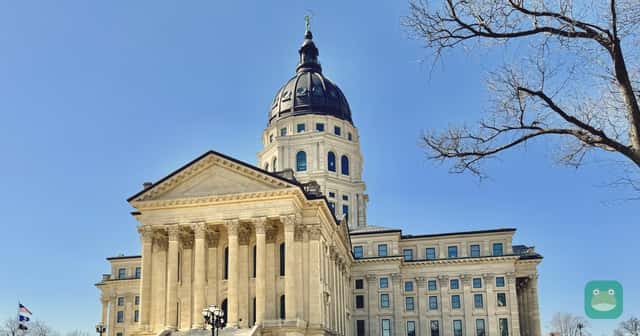
Kansas has not elected a Democrat to the U.S. Senate since 1932, KCUR noted, but the last public polls before Tuesday's election show Republican Sen. Roger Marshall trailing or effectively tied with Democrat Adam Hamilton, a Methodist pastor from suburban Kansas City. The final New York Times/Siena poll, released Sunday, November 1, found Hamilton at 49%, Marshall at 44% and Libertarian David Graham at 4% among likely voters. A YouGov poll released the same day put Hamilton ahead 50% to 49%. In the open race for governor, the two polls split by a single point. Siena has Democrat Cindy Holscher at 48% and Republican Ty Masterson at 47%, while YouGov has Masterson at 50% and Holscher at 49%.
The Senate contest matters beyond Kansas because Republicans hold a 53-47 majority, and a Hamilton win would cut into the party's margin for keeping control, as USA TODAY reported. Our Senate control page tracks the national arithmetic, and our race pages follow the Kansas Senate contest and the Kansas governor's race.
A poll measures what respondents said during its field dates. It is not a forecast of the count.
What the final polls found
The Siena Research Institute release reported Kansas as part of a set of seven state polls conducted for The New York Times. It lists the Senate result as Hamilton 49%, Marshall 44% and Graham 4%, and the governor result as Holscher 48% and Masterson 47%. Don Levy, the institute's executive director, said the final Senate polls showed "Democrats with leads of 5 to 11 points in Kansas (5), Ohio (5), Maine (6), Texas (7), and Michigan (11)." He described the Kansas governor's race as "too close to call." He also cautioned that "with so many races within the poll's total margin of error, a Senate majority for either party remains possible."
The YouGov Kansas results document reports a survey of 2,092 likely voters conducted October 26-29, with a margin of error of plus or minus 2.8 points. Respondents who had already voted were asked whom they had voted for. Undecided respondents were asked which candidate they leaned toward, and those leaners are included in the totals. On that basis Hamilton had 50%, Marshall 49% and other candidates 1%. For governor, Masterson had 50% and Holscher 49%.
The same YouGov document reports that 46% of Kansas likely voters approved of President Donald Trump's job performance and 53% disapproved, including 49% who strongly disapproved. The sample's self-reported party registration was 50% Republican, 27% Democratic and 22% other or no party.
How the polls were done, and what we could not verify
Siena's release gives a margin of sampling error of plus or minus 4.4 points for Kansas, including a design effect of 1.30. A design effect is an adjustment for the precision lost when a sample is weighted to match the expected electorate. The 270toWin poll tracker lists the Siena survey at 736 likely voters with a margin of 4.1 points. We use Siena's own, larger figure. We were not able to open The Times's full Kansas toplines, so we have not verified Siena's field dates, interview method, exact question wording or weighting targets for this state.
YouGov's methodology note says its state polls draw a stratified random sample from the state's list of registered voters. Selected voters are contacted by text message and interviewed online. The sample is weighted to gender, age, geography, party registration, and imputed education and 2024 vote. Likely voters are identified with a model based on past voting, demographics and stated likelihood of voting. Because YouGov pushes undecided respondents to a choice, its numbers leave almost no one undecided.
The key point for readers is that neither Kansas Senate result is a large lead. Hamilton's one-point margin in YouGov is well inside that poll's error. Siena's five-point margin is close to its own 4.4-point error on each candidate's share, and the error on the gap between two candidates is larger than the error on either share. Our methodology page explains how we report sampling error.
How the last week's polls compare
Other polls released in the final week also show Hamilton ahead, by margins from one to nine points. The Emerson College Polling survey of 800 likely voters was conducted October 26-28 by text-to-web, interactive voice response and an online panel. It found Hamilton at 49%, Marshall at 45% and Graham at 3%, with 3% undecided. With leaners, it was Hamilton 50% and Marshall 47%. Emerson found Masterson ahead for governor, 50% to 46%, and 53% to 48% with leaners.
A Washington Post-Schar School poll of 801 likely voters, conducted October 22-26, found Hamilton ahead 52% to 43%, according to USA TODAY. The paper reported that the pollsters themselves warned their results could overstate Democratic support because Democrats were more willing than Republicans to respond. Our earlier report covered the CNN/SSRS polls released October 29, which had Hamilton up four points in Kansas, inside the margin of error.
The governor's race shows more disagreement. The 270toWin governor tracker lists five final-week polls. Two have Holscher ahead (Siena by one, Washington Post-Schar by six) and three have Masterson ahead (YouGov by one, Emerson by four and CNN/SSRS by five). Its five-poll average was Masterson 48.4% and Holscher 47.8%. We have not reviewed every tracker entry against its original release. The Cook Political Report moved the race from "Lean Republican" to "Toss-Up" in late October, The Kansas City Star reported.
Several polls also measured a gap between people who have already voted and those who have not. Emerson found that respondents who had already voted favored Hamilton 66% to 32%, while those who had not yet voted favored Marshall 48% to 45%. That means the final result depends heavily on Election Day turnout among voters who have not yet cast ballots.
Our earlier report on early voting in Senate battlegrounds describes the national picture.
Source: 270toWin Kansas Senate polls, Siena Research Institute release, Emerson College Polling
Show the numbers
| Poll (release date) | Hamilton | Marshall |
|---|---|---|
| CNN/SSRS (Oct. 29) | 49% | 45% |
| Emerson (Oct. 30) | 49% | 45% |
| NYT/Siena (Nov. 1) | 49% | 44% |
| YouGov (Nov. 1) | 50% | 49% |
The closing case for Marshall
Trump held his final rally of the campaign in Salina on Sunday night, his second Kansas visit for Marshall. "I'm closing it down tonight. This is it. I had to come here to make sure that Roger got elected," Trump said, KCUR reported. He urged supporters to "pretend I'm on the ballot." Trump praised Marshall as "one of the most effective people in the Senate," KMBC reported.
The Republican argument is that Hamilton is too liberal for Kansas and that Marshall's seat is needed to keep the Senate in Republican hands. Trump called Hamilton "a radical left candidate" and questioned his positions on guns, immigration and social issues, KMBC reported. Marshall told the crowd that Hamilton "calls himself a uniter, but he was the leading voice that pushed the Methodist Church left until it finally split." Marshall also urged frustrated Republicans to vote. "Listen, your anger doesn't count unless it's at the ballot box," he said.
Marshall's campaign has also had to answer criticism of his medical practice. He is an obstetrician who practiced for decades in central Kansas. A New York Times investigation found that he and his practice sued more than 700 patients over unpaid bills, The Washington Post reported. In a 60-second video shared by Republican accounts over the weekend, Marshall said that "to ensure that 40,000 Kansans still had access to care, we did have to keep the lights on." He said his practice wrote off hundreds of bills each month and that one-fifth of his patients received free care. "My involvement in any patient's account ended the minute it was turned over to an outside agency," he said. "I never had anyone arrested, not once." Marshall and his lawyers have disputed specific accounts in the Times story and say collecting medical debt is a common practice for doctors, USA TODAY reported.
The closing case for Hamilton
Hamilton answered Trump's visit with a video aimed at Republicans and independents, KCUR reported. He said he had voted for Ronald Reagan and had at different times been registered as a Republican, a Democrat and an independent. "The person on the ballot has always mattered to me more than the letter after their name," he said. "I'm not going to Washington to play partisan games. I'm running to be a senator for every Kansan." He pointed to rising health care costs and to the effect of the war with Iran on fuel and fertilizer prices. "To every Republican who feels Washington has stopped listening and is making life harder: I'd be honored to have your vote," he said.
The Democratic case against Marshall has centered on the patient lawsuits. Hamilton's ads have featured Meischa Zimmerman, a former patient who was arrested while eight months pregnant. Zimmerman filed a class-action lawsuit against Marshall and his practice last week, the Post reported. The suit alleges that she paid about 18% interest on nearly $3,600 in debt, above what it says is Kansas's 15% legal limit. These are allegations in a complaint and have not been tested in court. Marshall's campaign sent Hamilton a cease-and-desist letter over one ad, saying Zimmerman was arrested for repeatedly failing to appear in court, not for missing a payment.
Trump argued in Salina that Marshall "was mandated" to sue patients who did not pay. KCUR noted that The Hill and other outlets have reported that no law required Marshall to sue patients. As stated, Trump's claim is a factual dispute about legal requirements, not a matter of opinion, and the available reporting does not support it.
Checking the claims about Hamilton
Two attacks on Hamilton have drawn fact checks. The first is the claim that he split the United Methodist Church. About a quarter of the denomination's congregations left between 2019 and 2024, mainly over policies on LGBTQ clergy and same-sex weddings, the Kansas News Service reported. Hamilton backed the 2019 One Church Plan, which would have let local churches and regional bodies set their own policies. An ordained United Methodist elder told the news service that she did not think he "had a big role in disaffiliation." Hamilton was an influential figure in that debate, and supporters of the Traditional Plan can reasonably criticize the positions he took. Assigning the departure of roughly 7,500 churches to one pastor, however, attributes a complex outcome with many causes to a single person, and the reporting does not support that.
The second concerns abuse at a retreat connected to Hamilton's Church of the Resurrection in the mid-2000s. A Senate Leadership Fund ad said Hamilton's church "swept it under the rug." The Kansas City Star rated that ad misleading, citing court records. Those records show that the church's 2005 internal investigation was inconclusive and that church officials went to law enforcement when another boy came forward in 2006. The local prosecutor declined to file charges, and the church barred the volunteer, Scott Preston Moore, from working with children. Moore was convicted in an unrelated case in 2013. Hamilton has said he was not involved in the decision to let Moore return in 2006, and he has acknowledged he would handle the case differently today. Critics of the church's handling can point to the volunteer's return after the first report; the court records the Star reviewed do not show Hamilton personally shielding him.
The governor's race: taxes, schools and data centers
Democratic Gov. Laura Kelly, who has served two terms, is not on the ballot. Holscher, a Democratic state senator from Johnson County, has tied Masterson, the Republican Senate president, to former Gov. Sam Brownback's tax cuts, which the Legislature later repealed. In a statement to the Star, she said: "This election is about whether we fund our schools and roads, lower property taxes for working families and build a brighter future for our kids, or put wealthy special interests first."
Masterson has highlighted bipartisan tax measures. In his own statement to the Star, he said: "I've worked with people who don't always agree with me to cut the grocery tax and the tax on Social Security, and I'll bring that to the governor's office." His campaign has run an ad featuring Kelly's criticism of Holscher during the Democratic primary. A Republican ad says Holscher "voted against tax cuts, and against property tax relief."
A Newman University professor interviewed by KWCH said there was "some truth" to the property-tax claim, noting Holscher voted against capping property-tax growth at 3%. He also said Masterson was, "if not the architect, certainly" close to Brownback on the tax plan, and asked why a Republican supermajority led by Masterson had not passed broader tax reform.
Holscher outraised Masterson $2.3 million to $2 million between July 24 and October 22, according to state filings cited by the Star. A new pro-data center super PAC, Building the Future, has announced plans to contribute at least $1.5 million to support Masterson. Both candidates voted in 2025 for tax breaks for data center developers, the Star reported, but Holscher now supports a moratorium on new data center projects until stricter rules are adopted. Governor candidates report to the Kansas Governmental Ethics Commission, and we did not review those filings directly.
Money in the Senate race
We checked Federal Election Commission candidate totals on November 2 for filings through October 14, 2026.
- Marshall's campaign reported $7.55 million in receipts for the 2021-2026 election period. That includes $2.92 million in itemized individual contributions, $2.91 million from other political committees, such as PACs, and $1.12 million in transfers from other authorized committees. It reported $810,000 in cash on hand.
- Hamilton's campaign reported $19.18 million in receipts since his committee began reporting in February 2026. That includes $11.85 million in itemized individual contributions, $245,500 from other political committees and $2.31 million in transfers. It reported $2.87 million in cash on hand and $50,000 in debts.
These are candidate-committee figures only. They exclude unitemized small contributions in the itemized lines above, outside spending by super PACs and party committees, and anything filed after October 14. The 567 Politics funding tool had no verified FEC snapshot for Marshall's profile when we checked, so we used the FEC's own candidate summaries. A contribution does not show that a donor shaped a candidate's positions.
What remains unknown
The polls agree that Hamilton has led in the final week, but they disagree on the size of that lead, and the governor's race has no consistent leader. The size of Graham's Libertarian vote could also matter in a close Senate count. YouGov's own sample was half registered Republicans, and Emerson found Marshall ahead among people who had not yet voted, so Tuesday's turnout will decide whether the late polls were right. No poll can settle that before the votes are counted.
Differing perspectives
What should Kansas's next U.S. senator do to lower health care costs for Kansas families?
Each position is summarized as its supporters make it, with equal weight and in alphabetical order. A summary is not an endorsement; the evidence for each is weighed in the story above.
Expand Medicare negotiation and restore ACA and Medicaid funding
Who holds it: Adam Hamilton and his campaign
Hamilton says Kansas families are squeezed by health care costs. His issues page proposes expanding Medicare drug price negotiation and extending the savings to private insurance, reversing the Medicaid cuts and restoring the enhanced ACA premium tax credits, and investing in rural hospitals. He would also cap interest on medical debt, limit wage garnishment and reform prior authorization.
In their words: Adam Hamilton for Kansas issues page ↗
Protect rural hospitals and require price transparency
Who holds it: Sen. Roger Marshall and his campaign
Marshall says he is working to protect rural hospitals, noting that 82 of Kansas's 124 hospitals are Critical Access hospitals. His campaign says he leads bills to set 24- and 72-hour deadlines for prior authorization decisions and to require hospitals and labs to publish upfront prices. He also cosponsors a bill to make telehealth flexibilities permanent.
In their words: Marshall campaign, 'Rural Healthcare: the record' ↗
READ BEYOND 567POLITICS
Alternate sources & perspectives
Independent coverage and primary evidence to help you compare arguments. A link is not an endorsement; perspective labels describe the linked material.
- primary evidence
NYTimes/Siena Poll of Likely Voters – Alaska, Iowa, Kansas, Maine, Michigan, Ohio, and Texas ↗
Siena Research Institute
Pollster release with Kansas Senate and governor toplines and the 4.4-point margin of error including design effect.
- primary evidence
Kansas General Election 2026 – Likely Voters (results document) ↗
YouGov
Full question wording, field dates (Oct. 26-29), sample of 2,092 likely voters and crosstabs for the Senate and governor questions.
- primary evidence
October 2026 Kansas Poll: Hamilton Maintains Edge over Marshall in Toss-up Election ↗
Emerson College Polling
Separate final-week poll with methodology, leaner results and the early-voter versus not-yet-voted split.
- primary evidence
Hamilton (S6KS00312) and Marshall (S0KS00315) candidate financial summaries ↗
Federal Election Commission
Official candidate-committee receipts and cash on hand through Oct. 14, 2026; Hamilton's page is at fec.gov/data/candidate/S6KS00312.
- independent analysis
2026 Polls: Kansas Senate ↗
270toWin
Tracker listing sample sizes and all final-week Kansas Senate polls; the governor tracker is at the same site.
- independent analysis
Trump visits Kansas again for final pitch in Senate race that could decide control of the chamber ↗
KCUR / Kansas News Service
Report on Trump's Salina rally, Marshall's remarks and Hamilton's closing video, with context on disputed claims.
- right argument
Trump holds second rally in Kansas as new polls show close race between Sen. Roger Marshall, Adam Hamilton ↗
KMBC
Reports the Republican closing case for Marshall as made by Trump and Marshall in Salina.
- right argument
Marshall's closing message in Kansas is a defense of his lawsuits against patients ↗
The Washington Post
Marshall's own defense of his medical practice's debt collection, alongside the class-action allegations against him.
- left argument
Kansas Senate polls show Democrat leading by up to 9 points ↗
USA TODAY
Reports the polling case Democrats cite for a Hamilton win, with the Post-Schar pollsters' caveat about Democratic response rates.
- independent analysis
Kansas Senate race attacks say Hamilton 'split' the Methodist church. What are the facts? ↗
KCUR / Kansas News Service
Examines the Republican claim about Hamilton's role in the United Methodist schism.
- independent analysis
Fact Check: Attack ad says Hamilton's church swept abuse under the rug. Is that true? ↗
The Kansas City Star
Court-records review of the Senate Leadership Fund ad about abuse at a church retreat.
- other perspective
The Kansas governor race is now rated a 'toss-up.' Here's why it may matter the most ↗
The Kansas City Star
Both governor candidates' closing statements, state fundraising figures and the data-center super PAC.
Reviewed 2026-11-02. Sources picked by hand because automated discovery returned only general pages about Kansas (tourism, encyclopedia, a rock band). The New York Times Kansas toplines were not readable, so Siena's field dates, interview method and question wording are unverified and disclosed in the article; the sample size comes from 270toWin and the margin of error from Siena. The Washington Post-Schar School figures are as reported by USA TODAY; we did not open the poll document. The 567 Politics funding tool had no FEC snapshot for Roger Marshall, so FEC candidate pages were used. Governor campaign filings with the Kansas Governmental Ethics Commission were not reviewed directly. Right and left argument sources are reports of each campaign's closing case rather than advocacy pieces.