Lukoil's foreign oil empire is for sale. The lead bid includes investors tied to Kushner's deals
A Treasury license for negotiations expires Nov. 21; Kushner says the talks were never about personal gain, and no official body has found wrongdoing.
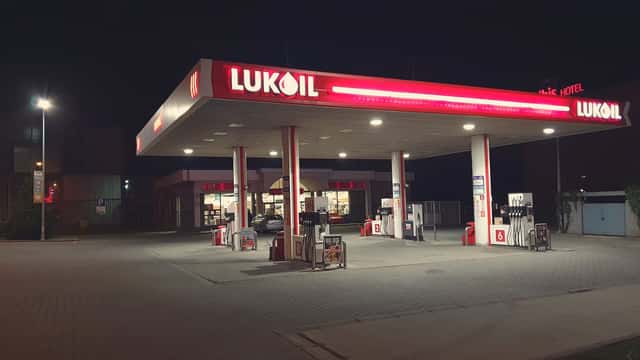
A U.S. permission slip that lets bidders negotiate for the foreign empire of Russian oil giant Lukoil runs out at 12:01 a.m. Eastern on Friday, Nov. 21. The group reported to be in the lead includes investors with business ties to Jared Kushner, President Trump's son-in-law and unpaid envoy, who has helped negotiate the deal's terms for the government while also leading U.S. talks with Moscow over the war in Ukraine. OFAC General License 131K
No court or official body has found wrongdoing by Kushner in the matter, and The New York Times, which first reported the talks, wrote that "there is no indication that Mr. Kushner and Mr. Witkoff themselves stand to profit." New York Times, Oct. 3 Kushner says the commercial talks concern benefits for the United States, never personal opportunities. Democrats and some ethics specialists say the overlap between the buyers and the negotiators' business circle is itself the problem. Republicans in Congress have pressed a different worry: that a sale could leave Russia a path back to the assets.
What happens before Friday matters for each of those arguments. The Treasury Department can let the license lapse, extend it again, or approve a sale. Each choice would say something about how Washington is weighing sanctions pressure, peace talks and the people at the negotiating table.
What is for sale, and what Treasury allows#
The Treasury Department's Office of Foreign Assets Control (OFAC) sanctioned Lukoil on Oct. 22, 2025, "to increase pressure on Russia's energy sector and degrade Russia's ability to raise revenue for its war machine," according to its own guidance. OFAC FAQ 1224 Lukoil then moved to sell Lukoil International GmbH (LIG), the subsidiary that holds most of its business outside Russia.
That portfolio is large. S&P Global's Platts lists stakes in three European refineries, Bulgaria's Neftohim Burgas, Romania's Petrotel and the Zeeland plant in the Netherlands, with combined capacity of 400,000 barrels a day, plus fuel-station networks in Central and Eastern Europe and upstream projects in Iraq, Azerbaijan, Egypt and elsewhere. S&P Global, Oct. 9 Reuters reported that the sale process initially valued the assets at $22 billion and that their value has since slipped as some stopped operating. Reuters via The Moscow Times, Nov. 3
General License 131K, signed by OFAC Director Bradley T. Smith on Oct. 21, authorizes only negotiations and "contingent contracts" through Nov. 21. Any deal must be "expressly contingent upon the receipt of separate authorization" from OFAC. The license replaced version 131J, dated Sept. 18. GL 131K$
OFAC has also set out what it expects from any sale. A deal must "completely sever LIG's ties with Lukoil," hold any money owed to Lukoil in a blocked account under U.S. jurisdiction until sanctions are lifted, and "not provide a windfall to Lukoil, such as by providing up-front value to Lukoil, including through asset or share swaps." Buyers would also have to seek OFAC review before reselling material assets. OFAC FAQ 1224
The bid at the front of the line#
Earlier buyers did not get through. Treasury publicly rejected the commodity trader Gunvor in November 2025, calling it "the Kremlin's puppet." Lukoil signed a conditional agreement with the U.S. private equity firm Carlyle in January 2026, but Lukoil told Austrian authorities the agreement "expired at the end of July because it was not approved by OFAC." Carlyle told Platts on Oct. 9 that it was no longer "actively pursuing" the purchase. S&P Global
That left a consortium led by Todd Boehly, the Los Angeles Dodgers co-owner, in the lead. Reuters reported on Nov. 3, citing four people close to the process, that the group is preparing a cashless securities swap and expects a deal "within weeks." A bank acting for the group has bought billions of dollars of frozen Lukoil securities from Western funds, priced at about 30 cents on the dollar, to exchange for the foreign assets. Two people told Reuters the group got this far by promising to place the shares in escrow rather than hand them to Lukoil. Reuters via The Moscow Times
That structure sits close to the line OFAC drew. Its guidance warns against up-front value to Lukoil "through asset or share swaps," while the reported plan relies on a swap with escrow as the safeguard. Whether escrow meets the test is a question only OFAC can answer, and it has not said publicly.
Reuters named the consortium members as Boehly, the Emirati investors International Holding Company (IHC) and Al Hail Holding, the Syrian-born Qatari brothers Moutaz and Ramez Al-Khayyat, and the U.S. International Development Finance Corporation (DFC), a federal agency. Boehly's representatives did not respond to Reuters. An IHC spokesperson said it does not comment on potential investments. Al Hail, the Al-Khayyats, the DFC and Lukoil did not respond.
Where Kushner's business circle meets the buyers#
The conflict-of-interest questions come from who those buyers are. The Times reported that the deal "would benefit Middle Eastern business executives with ties to the two main U.S. negotiators, Steve Witkoff and Jared Kushner." New York Times According to the Times and the Financial Times, as summarized by Meduza, the Al-Khayyat brothers are developing a resort in Albania with Kushner and Ivanka Trump, and Sheikh Tahnoon bin Zayed Al Nahyan, the UAE's national security adviser, has invested in projects involving Kushner, Witkoff and Trump's sons. Meduza, Oct. 5
The Kushner side of those ties has documented pieces. Affinity Partners, Kushner's investment firm, took an additional $1.5 billion in late 2024 from the Qatar Investment Authority and Lunate, an Abu Dhabi fund, raising its assets to $4.6 billion. AGBI, Dec. 22, 2024 The Times reported that Tahnoon helps oversee Lunate; 567 Politics has not seen a filing that sets out that control. Earlier coverage traced how Abu Dhabi money sits behind Affinity while Kushner leads Ukraine talks there and Tahnoon-linked investment in World Liberty Financial, the crypto venture tied to the Trump and Witkoff families.
The Albania link comes with a qualification. In June, a public relations agency answering for Affinity told the Albanian outlet Exit that Affinity is not part of the development at Zvërnec and that any investor in it takes part "in a personal capacity." Exit's review of ownership records found that formal control appeared to rest with the Al-Khayyat brothers. Exit, June 10 Background is in what the reporting establishes about the Albania land seller and in the Democratic probe that asks whether the Foreign Corrupt Practices Act applies there.
None of this shows that Kushner or Affinity holds an interest in the Lukoil bid. No filing or report reviewed for this story places Affinity in the consortium. The concern critics raise is narrower: that people with money in Kushner's business world stand to gain from a deal he helped shape.
How the deal entered the peace talks#
The Times reported, citing three people familiar with the meeting, that President Vladimir Putin raised the Lukoil sale when Kushner and Witkoff visited the Kremlin on Sept. 5, proposing it as a way of showing Russians that they can do business with the United States. Meduza
The Lukoil talks are one of several commercial ideas that have run alongside the diplomacy. Reuters reported on Oct. 8 that Kushner and Putin adviser Kirill Dmitriev had discussed bringing a U.S. investor into the Nord Stream pipelines, and had also discussed the Lukoil sale under a plan in which the DFC and Qatari and Emirati investors would buy the assets and Washington would lift sanctions on them. A White House official said there had been "no Nord Stream discussions recently." bne IntelliNews summary of Reuters
The administration describes the envoys' Lukoil role as protecting taxpayers. "On Lukoil, Steve (Witkoff) and Jared (Kushner) worked with DFC to negotiate a substantial upfront payment and profits interest for the United States," a White House official said, adding that any deals "must benefit United States taxpayers and companies." bne IntelliNews
The talks have since widened. After U.S.-brokered meetings with Ukrainian and Russian delegations in Abu Dhabi on Nov. 10 and 11, Kushner wrote on Nov. 14 that "our focus now is on facilitating direct engagement between Moscow and European partners and preparing the agenda for the next round of trilateral talks." He said "several new ideas emerged" and that NATO "will remain a critical pillar of European security." Kyiv Independent, Nov. 14 His statement did not mention Lukoil.
- Treasury sanctions Lukoil
- Lukoil signs a conditional sale agreement with Carlyle
- Three Republican senators warn against "shell game" deals
- The Carlyle agreement expires without OFAC approval
- Putin raises the Lukoil sale with Kushner and Witkoff, the Times reports
- Trump signs the Graham sanctions act; OFAC issues license 131J
- The Times reports the deal has entered the Ukraine talks
- Shaheen and Wicker flag the deal in a letter to Rubio and Bessent
- Meeks introduces the Prohibit Corrupt Russia Oil Deals Act
- Executive Order 14436 waives most of the Graham Act's sanctions
- OFAC issues license 131K
- Reuters reports the Boehly group is preparing a securities swap
- License 131K expires at 12:01 a.m. Eastern
Source: OFAC FAQ 1224, GL 131K, S&P Global, Meduza, Executive Order 14436, Reuters via The Moscow Times
What critics allege#
Democrats have made the sale part of a broader argument about Kushner's dual roles. Rep. Gregory Meeks of New York, the top Democrat on the House Foreign Affairs Committee, introduced H.R. 10828, the Prohibit Corrupt Russia Oil Deals Act, on Oct. 15 with 14 Democratic cosponsors. It would bar the DFC from "being a party to any deal or financial arrangement, that pertains to energy owned by a Russian foreign person, regardless of whether the assets at issue in the deal are located outside of the Russia Federation." It would also cancel several Treasury licenses for Russian oil and diesel and widen congressional review of sanctions relief. H.R. 10828 text It was referred to the Foreign Affairs Committee and five others; no later action on it was found for this story.$
Sen. Jon Ossoff of Georgia put the allegation more sharply at an Oct. 17 campaign rally, according to a clip his campaign posted and a transcript published by Combat Rated. He said the envoys were "negotiating with Putin to sell billions in Russian oil fields and refineries and gas stations to the president's friends." Combat Rated, Oct. 19 That is a campaign characterization. The reporting it draws on describes ties between the buyers and the envoys' business circles, not a payment to the envoys.$
Hui Chen, a former Justice Department prosecutor and ethics adviser, told the Times the ties raise a conflict-of-interest question and show why the president's friends and family should not serve as his foreign-policy advisers, according to Meduza's summary. Meduza In Germany, lawmaker Michael Kellner said of the broader energy proposals: "This threatens to be a dirty deal that will cost Europe dearly. Americans and Russians will share the profits." bne IntelliNews
House Democrats take committee gavels and subpoena power in January. What they have already sought from Kushner and Witkoff suggests the Lukoil talks could become a target if a sale closes first.
Republican concerns run on a different track#
Republican objections have focused on Russia, not on Kushner. In February, Sens. Tim Sheehy and Steve Daines of Montana and John Barrasso of Wyoming warned Treasury Secretary Scott Bessent against "caretaker or custodial arrangements" that could return the assets to Lukoil if sanctions eased. "We cannot allow U.S. adversaries to regain control over these valuable assets that have funded so much of Russia's aggression," they wrote. Fox Business, Feb. 16$$$
Six Texas and North Dakota House Republicans led by Rep. August Pfluger later urged Treasury "to scrutinize every detail of the various proposals to ensure that any sale of LIG's assets 'completely severs' ties with the Russian parent company," while praising the administration's sanctions. Office of Rep. August Pfluger$
On Oct. 6, Sen. Jeanne Shaheen, a New Hampshire Democrat, and Sen. Roger Wicker, a Mississippi Republican, wrote to Secretary of State Marco Rubio and Bessent that the new Graham sanctions law's bans on new U.S. investment in Russia and on Russian sovereign debt "are germane to efforts, recently reported publicly, to conclude a multi-billion-dollar deal for Lukoil's international assets." Shaheen-Wicker letter Ten days later, Executive Order 14436 waived most of the act's sanctions provisions, certifying to Congress that the waiver was "in the national interests of the United States." Executive Order 14436 The order says it does not affect sanctions already imposed under earlier executive orders, which include the Lukoil designation.$$
What Kushner and the administration say#
Kushner addressed the Russian business deals directly in an Oct. 8 essay on his website. "Commercial issues are an important component of the negotiations, but the discussions in which I have participated have concerned potential economic benefits for the United States and the parties to an eventual peace agreement; never personal business opportunities for me, Affinity, Steve Witkoff or other members of the negotiating team," he wrote. Jared Kushner, Oct. 8
He argued that sanctioned Russian resources now flow to China "on favorable terms" and that early commercial talks show Russians that a real economic relationship with the United States is possible if the war ends. "I have never sought or discussed compensation, an investment, a contract or any other personal financial benefit in connection with these negotiations," he wrote, adding that outside ethics counsel and the White House Counsel's Office have confirmed he complies with ethics rules. Jared Kushner
No statement from Affinity Partners specifically about the Lukoil bid was found for this story. On the Russian side, Putin pitched the sale as proof that Russians can do business with the United States, according to one person cited by the Times; Lukoil did not respond to Reuters. Meduza
What the record does and does not show#
The documents establish that Treasury sanctioned Lukoil, set conditions for a sale and has authorized only negotiations, with a deadline of Nov. 21. Reporting by Reuters and the Times, based on unnamed sources, places investors with ties to Kushner's business circle in the leading bid, and a White House official confirms the envoys negotiated the government's terms.
The record does not show that Kushner or Affinity has a stake in the deal, what equity each consortium member would hold, how the escrow would work or whether OFAC will approve it. The DFC's terms have not been published. Kushner's denial is specific about his own conduct but does not address the overlap between the buyers and his business relationships. Critics' allegations rest on that overlap, not on evidence of a payment or a policy decision made for private gain. A roundup of 567 Politics' Kushner coverage shows the same pattern across earlier matters: documented ties, disputed inferences and no official finding of wrongdoing.
Friday's deadline is the next fixed point. A further extension would keep the bidding open. An approval would require a separate OFAC license, and its terms would show for the first time how Treasury applied its own no-windfall test.
Differing perspectives
Should Treasury approve a sale of Lukoil's foreign assets to the Boehly-led group that Kushner and Witkoff helped negotiate?
Each position is summarized as its supporters make it, with equal weight and in alphabetical order. A summary is not an endorsement; the evidence for each is weighed in the story above.
Approve a sale that pays the United States
Who holds it: The White House and administration officials speaking for the envoys and the DFC
Administration officials argue that the envoys used the sale to win value for taxpayers. A White House official said Witkoff and Kushner "worked with DFC to negotiate a substantial upfront payment and profits interest for the United States," and that any deal with Russia must be negotiated through the DFC and Treasury and "must benefit United States taxpayers and companies." On this view, a federal stake turns a forced sanctions sale into a gain for the public.
In their words: bne IntelliNews, quoting a White House official ↗
Approve only a permanent break from Russia
Who holds it: Republican lawmakers including Sens. Tim Sheehy, Steve Daines and John Barrasso and Rep. August Pfluger
These Republicans support the Lukoil sanctions and accept a sale in principle, but argue that Treasury must make sure the assets never return to Russia or pass to another adversary. They warn against caretaker or buy-and-flip arrangements and urge Treasury to scrutinize every detail of the bids so that any sale "completely severs" ties with the Russian parent and favors buyers who will invest in and build the assets in line with American interests.
In their words: Office of Rep. August Pfluger ↗
Bar federal finance from Russian energy deals
Who holds it: Rep. Gregory Meeks and 14 Democratic cosponsors of H.R. 10828
The sponsors of the Prohibit Corrupt Russia Oil Deals Act argue that the U.S. government should not be a party to Russian energy transactions while the war continues. Their bill would bar the DFC from any deal pertaining to energy owned by a Russian person, wherever the assets sit, cancel several Treasury licenses for Russian oil and diesel, block similar new licenses for three years and give Congress review over energy-related sanctions relief.
In their words: U.S. Government Publishing Office, H.R. 10828 as introduced ↗
Use commercial deals as an incentive for peace
Who holds it: Jared Kushner, unpaid U.S. envoy and founder of Affinity Partners
Kushner argues that economic ties are a legitimate part of ending the war. He says sanctioned Russian resources now flow to China on favorable terms, and that early commercial talks show Russians a real economic relationship with the United States is possible if the fighting stops. He says these talks have concerned benefits for the United States and the parties, "never personal business opportunities" for him, Affinity or Witkoff, and that he has never sought any personal benefit from them.
In their words: Jared Kushner's website ↗
Cite this article
567 Politics staff. “Lukoil's foreign oil empire is for sale. The lead bid includes investors tied to Kushner's deals.” 567politics. Published 2026-11-16. https://567politics.com/news/kushner-lukoil-sale-ofac-license-131k-deadline-gulf-investors-november-2026
Wikipedia citation
{{cite news |title=Lukoil's foreign oil empire is for sale. The lead bid includes investors tied to Kushner's deals |url=https://567politics.com/news/kushner-lukoil-sale-ofac-license-131k-deadline-gulf-investors-november-2026 |work=567politics |author=567 Politics staff |date=2026-11-16 |language=en}}CSL-JSON for reference managers
{
  "id": "https://567politics.com/news/kushner-lukoil-sale-ofac-license-131k-deadline-gulf-investors-november-2026",
  "type": "article-newspaper",
  "title": "Lukoil's foreign oil empire is for sale. The lead bid includes investors tied to Kushner's deals",
  "URL": "https://567politics.com/news/kushner-lukoil-sale-ofac-license-131k-deadline-gulf-investors-november-2026",
  "container-title": "567politics",
  "language": "en",
  "author": [
    {
      "literal": "567 Politics staff"
    }
  ],
  "issued": {
    "date-parts": [
      [
        2026,
        11,
        16
      ]
    ]
  }
}Citations identify this article and its publication date. Assess the reporting and its linked sources before using it as evidence.
Read this article as Markdown or JSON. Cite the original page and retain its sources, dates and qualifications.
Embed this article summary
Paste this HTML into your page. The summary stays linked to the full story and updates with it. No account required.
<iframe src="https://567politics.com/embed/news/kushner-lukoil-sale-ofac-license-131k-deadline-gulf-investors-november-2026?theme=auto" title="Lukoil's foreign oil empire is for sale. The lead bid includes investors tied to Kushner's deals by 567politics" width="100%" height="440" style="border:0;max-width:100%" loading="lazy"></iframe>
<p style="font-size:14px">Lukoil's foreign oil empire is for sale. The lead bid includes investors tied to Kushner's deals by <a href="https://567politics.com/news/kushner-lukoil-sale-ofac-license-131k-deadline-gulf-investors-november-2026" rel="nofollow">567politics</a></p>
<script async src="https://567politics.com/embed.js"></script>
READ BEYOND 567POLITICS
Alternate sources & perspectives
Independent coverage and primary evidence to help you compare arguments. A link is not an endorsement; perspective labels describe the linked material.
- primary evidence
OFAC Russia-related General License 131K (Lukoil International GmbH negotiations) ↗
U.S. Treasury, Office of Foreign Assets Control
The license text: negotiations and contingent contracts only, through 12:01 a.m. EST on Nov. 21, 2026; supersedes 131J of Sept. 18.
- primary evidence
OFAC FAQ 1224: conditions for any sale of Lukoil International ↗
U.S. Treasury, Office of Foreign Assets Control
Treasury's stated tests for a sale: sever ties with Lukoil, block proceeds and no windfall, including through asset or share swaps.
- primary evidence
Executive Order 14436, Implementing the Lindsey O. Graham Sanctioning Russia and Iran Act of 2026 ↗
The White House
Oct. 16 order waiving most of the act's sanctions and duties as in the national interest, while preserving earlier executive-order sanctions.
- left argument
H.R. 10828, Prohibit Corrupt Russia Oil Deals Act, as introduced ↗
U.S. Government Publishing Office
Rep. Gregory Meeks's bill, with 14 Democratic cosponsors, to bar DFC participation in Russian energy deals and cancel Russian oil and diesel licenses.
- primary evidence
Shaheen and Wicker letter to Rubio and Bessent on Graham Act implementation ↗
Senate Foreign Relations Committee
Bipartisan Oct. 6 letter saying the act's investment and sovereign-debt bans are germane to the reported Lukoil deal.
- right argument
Pfluger, colleagues urge any Lukoil asset sale to permanently sever Russian control ↗
Office of Rep. August Pfluger
Six House Republicans back the sanctions and ask Treasury to ensure any sale completely severs ties with the Russian parent.
- right argument
GOP senators warn Bessent against 'shell game' proposals in Lukoil divestment talks ↗
Fox Business
Sens. Sheehy, Daines and Barrasso's February letter warning against caretaker and buy-and-flip deals.
- other perspective
My Response to The New Yorker ↗
Jared Kushner
Kushner's Oct. 8 essay; section 12 says commercial talks with Russia concern U.S. benefits and never personal opportunities for him or Affinity.
- independent analysis
Lukoil's foreign asset sale becomes part of U.S.-Russia talks on ending Ukraine war, NYT reports ↗
Meduza
Summarizes the Times and FT accounts of Putin's Sept. 5 pitch, the consortium's ties to the Trump and Witkoff families and Hui Chen's ethics concern.
- independent analysis
American billionaire leads swap plan to buy Lukoil's overseas assets, sources say ↗
Reuters, via The Moscow Times
Reuters' Nov. 3 account of the Boehly group's securities-swap plan, escrow promise, members and the $22 billion initial valuation.
- independent analysis
Carlyle ends active pursuit of Lukoil's international oil assets ↗
S&P Global Commodity Insights (Platts)
Lukoil's filing that the Carlyle agreement expired without OFAC approval, and an inventory of the foreign assets.
- independent analysis
Kushner, Dmitriev discuss US investor for Russia's Nord Stream pipelines ↗
bne IntelliNews
Summarizes Reuters' Oct. 8 report and quotes the White House official on the envoys' DFC negotiation and a German lawmaker's criticism.
Reviewed 2026-11-16. Hand-picked from pages opened on Nov. 16, 2026; discover_politics_sources returned only generic Kushner pages (Wikipedia, Kushner Companies, Forbes) unrelated to the Lukoil sale. The New York Times Oct. 3 report was only partly accessible, so its consortium details are cited through Meduza's summary; the Times' Oct. 8 follow-up, the Financial Times and Reuters originals were paywalled or blocked, and Reuters reporting is cited through The Moscow Times and bne IntelliNews republications. No OFAC decision on a Boehly-group license, no published DFC terms, no statement from Affinity Partners on the Lukoil bid and no Kremlin comment were found. A DOJ FARA registrant search for 'Lukoil' returned no active registrant records; foreign-principal filings were not separately reviewed.