Mexican Senate committees back platform-liability copyright reform critics call 'Ley Antimemes'
Committees voted 19-7 to make providers co-responsible for some user infringements and require cutoffs for repeat infringers. A floor vote is expected Nov. 4.
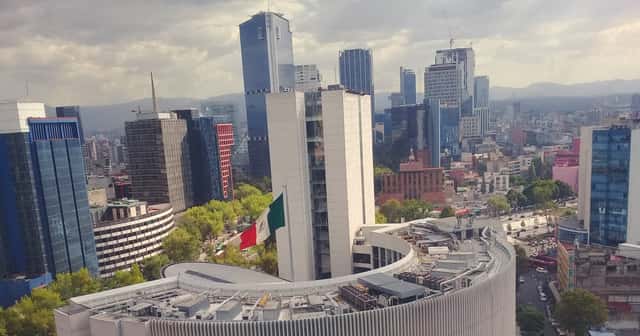
Two Mexican Senate committees on Tuesday, November 3, approved a copyright reform that would make internet providers and online platforms share legal responsibility for some of their users' infringements. The vote in the joint Economy and First Legislative Studies committees was 19 in favor and 7 against, La Razón reported. The full Senate is expected to take it up on Wednesday, November 4.
The bill is President Claudia Sheinbaum's initiative. Her government and the governing Morena coalition describe it as a way to align Mexican law with the United States-Mexico-Canada Agreement (USMCA, known in Mexico as T-MEC) and to protect creators from piracy. Opposition senators and digital-rights groups have called it part of a "Ley Antimemes" (anti-meme law). They argue it would push platforms to remove content and cut off users without a court order. The government says the label is misleading. This report explains what the text does, how the votes have gone and what each side says. It is current as of about 7:30 p.m. ET on November 3, and it will need an update after the Senate floor vote.
What the bill changes
The reform amends Article 114 Octies of the Federal Copyright Law (Ley Federal del Derecho de Autor, LFDA) and adds Articles 114 Nonies and 232 Septies. According to El Economista's summary of the committee report, the goal is to "harmonize" copyright law with standards in the trade agreement. The committee text describes a "safe harbor" system that limits a provider's liability for what users post, as long as the provider meets certain duties. These include the expedited removal of infringing content and steps against repeat infringers.
Three changes draw the most attention.
First, to keep safe-harbor protection, a provider would need "a policy that provides for the termination of the provision of service to repeat infringers," which must be public to users. That wording comes from the text as quoted by El Economista on October 7 and by ARTICLE 19. Policies must also be built into the terms of service.
Second, the new Article 114 Nonies would make a provider "responsible for the same infringements committed by the user" in two situations. One is where it "contributes to, induces or causes the infringing conduct, and has knowledge of it." The other is where it can control the user's conduct and gets a financial benefit directly attributable to the infringement.
Third, the Mexican Institute of Industrial Property (IMPI) could fine providers that fail to meet the safe-harbor conditions. El Economista reported fines of 5,000 to 40,000 times the UMA, Mexico's unit of measure for fines, or about 4.6 million pesos at the top. El Universal put the maximum at more than 4.3 million pesos. WIRED en Español gave a range starting at 500 UMA, plus 100 to 500 UMA for repeat violations. We could not reconcile the lower bound from the text available to us. El Universal also reported that the bill tightens controls on unauthorized use of faces, voices or images altered with digital tools and artificial intelligence.
The committees approved the text exactly as the Chamber of Deputies passed it. If the full Senate approves it without changes, El Economista reported, it would go straight to the executive for publication in the Official Journal (Diario Oficial de la Federación) and take effect.
Two different bills, one nickname
The "Ley Antimemes" label covers two separate measures, a point both critics and supporters make. The Digital Media Observatory at Tecnológico de Monterrey explains that the phrase is "not the official name of a law." It refers to the copyright reform on platform liability and to a separate bill on impersonating public institutions.
That second bill amends the Federal Law for the Protection of Industrial Property and the Federal Penal Code. The Senate approved it on September 30 by 72 votes to 34 in general and 68 to 34 on the details, N+ reported, and sent it to the Chamber of Deputies. Its new Article 403 Bis carries one to five years in prison for using official government identity "at commercial scale" to mislead people. The deception must concern the official origin of a communication and be done with intent to commit an offense. The Tec de Monterrey observatory notes that copying a government logo is not enough on its own. Prosecutors would also need to prove commercial scale, intent to deceive and intent to commit an offense.
On October 1, Sheinbaum told her morning news conference that "the supposed 'Ley Antimemes' does not prohibit any meme," El Universal reported. She said it is a copyright law and "has nothing to do with memes." She gave the example of fake social media posts using her image to lure people into investment scams. Presidential legal counsel Luisa Alcalde said the measures regulate piracy and, in the penal code article, "the theft of the government's identity to try to deceive a person to commit an offense."
How the votes have gone
The copyright bill has moved quickly since the Chamber of Deputies' Economy committee approved it on September 29, by 18 votes to 6, according to ARTICLE 19. On October 7, the full Chamber approved it in general by 325 votes to 114 with one abstention after more than five hours of debate, Excélsior reported. It then approved the details by 310 votes to 97.
Source: ARTICLE 19, Excélsior, La Razón
Show the numbers
| Stage | For | Against |
|---|---|---|
| Deputies committee, Sep 29 | 18 | 6 |
| Chamber, in general, Oct 7 | 325 | 114 |
| Chamber, details, Oct 7 | 310 | 97 |
| Senate committees, Nov 3 | 19 | 7 |
Morena and its allies hold large majorities in both chambers, so the main suspense is whether the Senate changes the text. La Razón reported that the committees sent the reservations and dissenting votes filed by PRI and PAN senators to the floor for possible debate.
What supporters say
Supporters argue the bill updates rules Mexico agreed to in the trade deal and gives creators a working tool against piracy. Labor Party (PT) floor leader Reginaldo Sandoval told the Chamber of Deputies that the provisions set up ways for providers to cooperate with rights holders. He said the aim is to deter unauthorized storage and transmission of protected content. "The reform under discussion harmonizes Mexican legislation with this international framework," he said, according to El Economista. He also said it gives "greater legal certainty" about each actor's responsibilities.
Sandoval rejected the nickname. "The anti-memes issue is false," he said during the debate, as Excélsior reported. Morena deputy Claudia Selene Ávila Flores said: "We are not imposing a gag."
The Senate committee report, as summarized by El Economista, says platforms play "a central role" in spreading content online and should take on "an appropriate level of co-responsibility." It also says the system keeps technological neutrality and avoids "general monitoring obligations" so as not to limit innovation or the free flow of information.
What opponents say
Opponents from the National Action Party (PAN), the Institutional Revolutionary Party (PRI) and Citizens' Movement (MC) say the bill hands private companies the power to punish users without due process.
In the Senate committees on November 3, PRI Senator Carolina Viggiano Austria said the text does not spell out enough protections for users before their service is canceled. "We are talking about something more serious than taking down a post. We are talking about cutting off internet service to a household," she said, according to La Razón. She said a complaint about a single video or image could affect every family member sharing a connection.
PAN Senator Miguel Márquez Márquez warned that the new duties could encourage providers to remove posts preventively "without sufficiently checking whether there really is an infringement." He said his party agrees with defending copyright and strengthening trade ties, "but that this should not limit something fundamental for the life of all Mexicans, which is freedom of expression."
In the October 7 Chamber debate, PAN deputy Kenia López Rabadán called it a "digital gag law," Excélsior reported. PAN deputy Marcelo de Jesús Torres Cofiño said Morena wanted to force companies to take down accounts and suspend service "without due process or a judge's order." PRI deputy Mario Zamora Gastélum said, "They are taking away parody from us, they are taking away criticism." MC deputy Alfonso Vidales said no one opposes protecting creators; the problem, he argued, is "the power they intend to create to do it."
Digital-rights groups
ARTICLE 19's Mexico and Central America office and the digital-rights group R3D (Red en Defensa de los Derechos Digitales) have asked lawmakers to scrap the bill. Their analyses, published in September with SocialTIC, make three main arguments. They say the existing notice-and-takedown system already lets private complaints remove content before any judge rules. They say the terms "contribute," "induce" and "cause" are undefined and would in practice push providers to monitor users. And they argue that cutting off "repeat infringers" would block future posts whose legality no court has assessed. ARTICLE 19 calls that a form of prior censorship barred by Mexico's constitutional and treaty framework.
ARTICLE 19 also says the plan conflicts with the principle that internet intermediaries are not liable for third-party content, which it says Mexico's Supreme Court has recognized as part of free expression.
The trade-agreement question
Both sides cite the USMCA. Its intellectual property chapter, published by the Office of the U.S. Trade Representative, requires each country to condition safe-harbor protection on a provider "adopting and reasonably implementing a policy that provides for termination in appropriate circumstances of the accounts of repeat infringers." The same article states that a provider's failure to qualify for the safe harbor "does not itself result in liability."
Telecommunications lawyer Irene Levy, president of the policy group Observatel, takes a middle position. In an El Universal column, she writes that the copyright reform "does have a clear relationship with the T-MEC" and that much of the safe-harbor system has been in Mexican law since 2020. She cites Article 20.89; in the USTR text, the repeat-infringer wording appears in Article 20.88. Her objection is to the drafting. The bill replaces "termination of accounts" with termination of service, "and clearly it is not the same," she writes. It also does not define who is a repeat infringer, who decides or what safeguards apply. "There Mexico exceeds what the T-MEC requires," she argues, and "this must be modified."
Levy also asks why, if censorship was never the intent, lawmakers did not accept an explicit exception for satire, parody or journalism in the impersonation bill.
How this fits regional coverage
Mexico's debate is one of several in the region over how governments regulate speech, platforms and public spending. For other recent legislative fights in Latin America, see our coverage of Colombia's economic rescue bill in Congress and Paraguay's Senate vote on sex education. For a European approach to digital policy, see Germany's AI roadmap and digital summit.
What to watch
The Senate floor is expected to vote on Wednesday, November 4. Points to watch include whether any reservation from the PRI or PAN is adopted, which would send the bill back to the Chamber of Deputies, and how the executive handles publication. A second point is whether ARTICLE 19, R3D or opposition lawmakers bring a constitutional challenge after publication. A third is how IMPI writes the regulations that would define repeat infringement in practice.
Limitations
We did not obtain the full committee report or the final Senate text and relied on press summaries and the quotations published by El Economista, La Razón, El Universal and Excélsior. Sources differ on the lower bound of the fines. Quotes from Spanish-language sources are our translations. We did not reach the Senate's Morena caucus, IMPI or platform companies for comment. We have not seen statements from internet providers or creators' collecting societies, so the views of those directly regulated or protected are missing. Sheinbaum does not yet have a 567politics profile, and Mexican officials file asset declarations through Mexico's federal disclosure system rather than U.S. campaign finance filings. We did not review those because this story concerns legislation, not her finances. For how we source and translate, see our methodology and editorial standards.
Differing perspectives
Should Mexico make platforms and internet providers co-responsible for users' copyright infringements and require service cutoffs for repeat infringers?
Each position is summarized as its supporters make it, with equal weight and in alphabetical order. A summary is not an endorsement; the evidence for each is weighed in the story above.
Discard the bill as a form of prior censorship
Who holds it: ARTICLE 19 Mexico and Central America, R3D and SocialTIC
Digital-rights groups say the notice-and-takedown model already removes content on private complaints before any court rules. They argue the undefined terms contribute, induce and cause will push providers to monitor users, and that terminating service for repeat infringers blocks future speech never reviewed by a judge, which they call prior censorship. They say the plan conflicts with intermediary non-liability recognized by Mexico's Supreme Court and ask Congress to discard it and hold an open parliament.
In their words: ARTICLE 19 Mexico and Central America ↗
Keep the treaty goal but narrow the drafting
Who holds it: Irene Levy, telecom lawyer and president of Observatel
Levy says the copyright reform has a clear link to the T-MEC and that much of the safe-harbor system has existed since 2020. Her objection is the wording: the treaty speaks of terminating accounts, while the bill speaks of terminating service, which is not the same. She says the text does not define a repeat infringer, who decides or what safeguards apply, so it exceeds what the treaty requires and should be modified rather than passed as written.
In their words: El Universal, Irene Levy column ↗
No, it lets companies punish users without due process
Who holds it: PAN and PRI senators and deputies
Opposition lawmakers say they support copyright but object to giving private companies the power to remove posts and cut off service without a judge's order. They warn that providers will take content down preventively to avoid fines, and that one complaint about a video could cut internet access for a whole household. They say the text lacks clear protections for users before cancellation and could chill parody, criticism and other political expression online.
In their words: La Razón, Senate committee debate ↗
Yes, it aligns Mexico with the T-MEC and protects creators
Who holds it: President Claudia Sheinbaum, Morena and the Labor Party (PT)
Supporters say the reform is a copyright law, not a meme ban, and that it harmonizes Mexican rules with the trade agreement with the United States and Canada. They argue platforms play a central role in spreading content and should accept an appropriate level of co-responsibility, while the system avoids general monitoring duties. They say it gives creators a working tool against piracy, gives every actor more legal certainty and helps fight scams that impersonate public figures and institutions.
In their words: El Universal, Sheinbaum press conference ↗
READ BEYOND 567POLITICS
Alternate sources & perspectives
Independent coverage and primary evidence to help you compare arguments. A link is not an endorsement; perspective labels describe the linked material.
- primary evidence
USMCA Chapter 20: Intellectual Property Rights (Article 20.88, safe harbors and repeat infringers) ↗
Office of the U.S. Trade Representative
Treaty text both sides cite; requires a policy to terminate accounts of repeat infringers in appropriate circumstances.
- left argument
Sheinbaum rejects that memes are banned; says the bill defends authors ↗
El Universal
The president and her legal counsel make the government's case at the Oct. 1 morning briefing.
- right argument
Second part of the 'Ley Antimemes' advances in Senate committees ↗
La Razón
Reports the 19-7 committee vote and PRI and PAN senators' objections on due process and service cutoffs.
- other perspective
Reform to the Federal Copyright Law would worsen censorship and monitoring on the internet ↗
ARTICLE 19 Mexico and Central America
Civil-liberties analysis calling the repeat-infringer cutoff prior censorship; records the 18-6 Deputies committee vote.
- other perspective
Copyright law reforms could worsen prior censorship and monitoring of online expression ↗
R3D: Red en Defensa de los Derechos Digitales
Digital-rights group's analysis and joint call to discard the bill.
- independent analysis
The problem is not its intention, it is its wording ↗
El Universal (Irene Levy, Observatel)
Telecom lawyer argues the bill has a real treaty basis but exceeds the T-MEC by cutting service rather than accounts.
- independent analysis
Senators prepare to approve copyright reforms proposed by Sheinbaum ↗
El Economista
Summary of the Senate committee report, fines and next steps.
- independent analysis
Deputies approve 'Ley Antimemes'; opposition warns of censorship ↗
El Economista
Oct. 7 Chamber vote and statements from PT and opposition deputies.
- independent analysis
Deputies approve 'Ley Antimemes' in general ↗
Excélsior
Vote counts and debate quotes from the Oct. 7 session.
- independent analysis
Mexico seeks to hold platforms liable for users' copyright infringements ↗
WIRED en Español
Explains the secondary-liability and fine provisions.
- independent analysis
On the so-called 'Ley Antimemes' and freedom of expression in Mexico ↗
Observatorio de Medios Digitales, Tecnológico de Monterrey
Academic explainer separating the copyright bill from the impersonation bill.
- independent analysis
Senate approves in general reform to industrial property law and Penal Code ↗
N+
Sept. 30 Senate votes on the separate impersonation bill.
Reviewed 2026-11-03. Automated discovery returned only dictionary and unrelated pages, so these sources were chosen by hand and each was opened and checked on Nov. 3, 2026. Mexico's left-right lines do not map neatly onto U.S. labels: the governing Morena coalition is on the left and the PAN on the right, while digital-rights groups oppose the bill from a civil-liberties position. We did not find public statements from internet providers, platforms or creators' collecting societies, and we could not obtain the final Senate committee report.