Nigeria's Senate leader revives plan for 182 seats reserved for women, but the bill still awaits a vote
Senate Leader Opeyemi Bamidele says an amendment adding 74 federal and 108 state seats for women for 16 years is still alive, after the House put off a vote again in June.
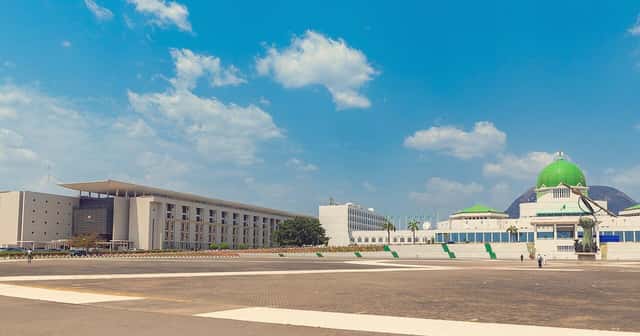
Nigeria's Senate leader says a plan to add 182 legislative seats reserved for women is still alive. The bill behind it cleared its second reading more than two years ago, and the House of Representatives put off a vote on it again five months ago.
On Monday, November 2, Senate Leader Opeyemi Bamidele spoke at a law week organized by the Ekiti State chapter of the International Federation of Women Lawyers (FIDA). He said the constitutional amendment was "receiving our attention at the National Assembly." He described a plan that would add 37 seats to the Senate, 37 to the House of Representatives and three to each of the 36 state Houses of Assembly, all reserved for women. The arrangement would last 16 years before a full review.
His remarks, reported by THEWILL, Punch, BusinessDay and The Guardian Nigeria, revive one of the most contested items in Nigeria's current constitution review. They do not change where the bill stands. Neither chamber has voted on it, and it was not among the amendments sent to the states for approval.
What Bamidele said
Bamidele is also vice chairman of the Senate committee reviewing the 1999 Constitution. He said the proposal grew out of "extensive consultation and consensus-building" and was meant to expand women's representation "without displacing any existing electoral seats."
"The proposal, as it stands, is meticulous in its design. It seeks to add 37 seats in the Senate and 37 seats in the House of Representatives," he said, according to the texts published by THEWILL and Punch. "This suggests that if finally approved, each state of the federation, including FCT, will have one additional seat in each of the Houses of the National Assembly."
On the time limit, he said: "This arrangement is proposed to run for a period of 16 years, four electoral cycles, before a comprehensive review. This is a sunset clause designed to ensure sustainability and to allow for the organic development of a more inclusive political culture."
He also described lobbying aimed at the states, which must approve any constitutional change. "We are actively and strategically engaging with the State Houses of Assembly, as their concurrence is a constitutional sine qua non for bringing this reform to fruition," he said. The Guardian reported that he expressed confidence the proposal would win the support of at least two-thirds of the state assemblies.
Bamidele, a senator from Ekiti Central in the governing All Progressives Congress (APC), rejected the idea that the plan serves one party. He called the initiative "a historic imperative." He added: "A democracy that systematically excludes over half of its population from the decision-making tables that determine their futures is, at best, a flawed democracy and, at worst, a veiled oligarchy." He credited advocacy by the First Lady, Senator Oluremi Tinubu, wife of President Bola Tinubu, for strengthening the National Assembly's resolve.
He did not say when either chamber would vote, and none of the published accounts reported a new date.
What the bill would do
The proposal is House Bill 1349, the Constitution of the Federal Republic of Nigeria (Alteration) Reserved Seats for Women Bill, 2024. Its lead sponsor is Deputy Speaker Benjamin Kalu, who chairs the House constitution review committee, along with 12 other members.
The bill passed its second reading in July 2024. At the time, Punch reported that it would amend sections 48, 49, 71 and 117 of the Constitution. It would create one "special seat reserved exclusively for women" per state and the Federal Capital Territory (FCT) in each federal chamber. It would also alter Section 91 to add three women-only seats to each state assembly. The new seats would take effect after the current National Assembly's term ends.
A December 2025 explainer by Premium Times set out the scale. The Senate would grow from 109 to 146 members, the House from 360 to 397, and the state assemblies to about 1,098 members combined. Women elected to the new seats would have the same powers and privileges as other lawmakers. They could still run for regular seats.
Several design questions remain open. Under the current text, Premium Times reported, a woman seeking a reserved seat would campaign across an entire state, as a governor does. Chidozie Ajah, legislative adviser to the deputy speaker, told the paper that an implementation law would settle the details. Those include whether the seats are contested statewide or in smaller zones and how parties would pick candidates. The Legislative Information Portal run by Legis360 records a later text with a different layout. It lists 12 Senate seats, two per geopolitical zone, plus one House seat per state and the FCT. It also lists one state assembly seat per senatorial district, filled through an electoral college run by the Independent National Electoral Commission. Bamidele's Monday description matched the original 37-37-108 layout, so it is unclear which version the committees will put to a vote.
How a constitutional amendment passes
Section 9 of the Constitution sets a high bar. An amendment needs the votes of at least two-thirds of the members of each chamber of the National Assembly. It then needs approval by at least two-thirds of the 36 state Houses of Assembly before it goes to the president for assent, as BusinessDay noted in its report on Bamidele's speech. That means at least 24 states.
That threshold has defeated similar proposals before. In the March 2022 constitution review, an earlier reserved-seats bill failed in both chambers. Legis360's records show 81 House members voted for it and 208 against, when 240 votes were needed. In the Senate, 30 voted for it and 58 against, when at least 73 were needed.
Source: Legis360 Legislative Information Portal
Show the numbers
| Chamber | Voted for | Voted against | Needed to pass |
|---|---|---|---|
| House of Representatives | 81 | 208 | 240 |
| Senate | 30 | 58 | 73 |
The 2022 version was larger. According to a Premium Times analysis in May 2026, it was sponsored by former Rep. Nkeiruka Onyejeocha with 85 co-sponsors and would have created 111 additional federal seats. The current bill cut that number to 74, the paper reported, in response to concerns about the size of the legislature, and kept the 16-year sunset clause.
A bill that keeps slipping
The current bill has repeatedly been scheduled and then pulled. Premium Times reported that Kalu had promised a vote by the fourth quarter of 2025. Committee votes set for October 2025 moved to November and then did not happen.
On June 11, 2026, the House again stepped down a scheduled floor vote on HB 1349 after disagreements broke out on the floor, Naija Feminists Media reported. The same sitting passed the state police amendment. Legis360 records that only the state police bill had been sent to the state assemblies as of September 2026.
Nanchin Lawrence is program lead at TOS Foundation Africa, a group campaigning for the bill. He responded to the June deferral by saying: "While this development means we must exercise further patience, our trajectory remains clear. We will continue to engage key legislative stakeholders, monitor developments closely, and strategically prepare for the next floor session."
Timing now works against the bill's backers for the next election. Premium Times reported in May that party primaries for the 2027 general elections had begun. Amendments generally need to be in force before primaries to affect who gets nominated. Lagos State commissioner Folashade Ambrose told the paper that a bill passed after the primaries would not shape candidate selection. Bamidele did not say whether the seats could still apply in 2027.
The numbers behind the push
Women hold few federal seats in Nigeria. According to Premium Times, citing figures from the 10th Assembly, four of the 109 senators are women, or 3.7%, and 16 of the 360 House members are women, or 4.4%.
| Chamber | Total seats | Women | Share |
|---|---|---|---|
| Senate | 109 | 4 | 3.7% |
| House of Representatives | 360 | 16 | 4.4% |
Earlier assemblies were similar. Citing data from the Centre for Democracy and Development, Premium Times reported that women held 2.8% of Senate seats from 1999 to 2003 and reached a peak of 8.3% in the 2007-11 Senate. Joshua Gana, a co-sponsor of HB 1349 from Niger State, told the House in 2024 that women held 2.7% of Senate seats in the 9th Assembly.
Interest among women candidates appears to be growing ahead of 2027. Legis360 notes reports that 123 women entered the 2027 Senate race, though entering a race is not the same as winning a party nomination.
We did not find a recent, nationally representative poll asking Nigerians whether they support reserved seats for women. Statements by advocacy groups and lawmakers on either side should not be read as a measure of public opinion.
The case for the bill
Backers argue that decades of voluntary approaches have not changed the numbers. Gana, speaking at the 2024 second reading, said the bill was "anchored on the fundamental principle of equitable representation." He cited Rwanda as a country where affirmative action had raised women's representation. Kingsley Chinda, the House minority leader at the time, backed the bill, saying, "We must make a deliberate effort to solve problems where we see them," Punch reported.
Advocates also argue that representation itself matters. Ene Obi, a leader of the Women Political Participation coalition, spoke at a February 2026 protest at the National Assembly. She argued that women must be able to represent themselves rather than rely on male colleagues, Premium Times reported.
Supporters respond to cost objections with figures of their own. Premium Times reported that studies by the Policy and Legal Advocacy Centre (PLAC) and other groups estimate the added cost at less than 1% of the National Assembly's budget. Ajah argued that the legislature's share of the federal budget is small next to the executive branch.
The case against
Opponents in the chamber have raised both legal and practical objections. During the July 2024 debate, Ghali Tijani, a House member from Kano State, said political parties should use their own mechanisms to raise women's participation rather than reserve seats, according to Punch. Olamijuwonlo Alao-Akala of Oyo, Patrick Umoh of Akwa Ibom and Billy Osawaru of Edo opposed the bill on the grounds that it was at variance with the Constitution.
Some civic groups object to the cost and size of the legislature. Debo Adeniran, chairman of the Centre for Anti-Corruption and Open Leadership, told Punch: "It will be superfluous because we already have an overcrowded National Assembly. There is no reason why we should create more." Gerald Katchy of the Initiative Against Human Rights Abuse and Torture called the plan "a waste of resources." He argued that a better approach would be a law requiring every registered party "to give 30% slots to the women."
Some critics, Premium Times reported, say the statewide design could raise campaign costs for women, the very barrier the bill aims to lower. The paper also reported broader criticism that Nigeria's legislature is already too large and too expensive at a time of fiscal strain.
Where the leadership stands
Senate President Godswill Akpabio and House Speaker Tajudeen Abbas preside over the chambers that would hold the votes. We did not find a new public statement from either of them on the bill after Bamidele's remarks. Abbas is the sponsor of a separate bill, HB1931, which would create special seats for people with disabilities, according to Legis360.
A related gender proposal has a long history of defeat. Premium Times recounted the history of the Gender and Equal Opportunities Bill, first introduced in 2010. It has repeatedly failed after some senators argued that parts of it conflicted with religious and cultural values or that the Constitution already protected women's rights.
What to watch
The next concrete test is whether the committees schedule HB 1349 for a recorded vote in both chambers. If it passes there, attention shifts to the state assemblies, where Bamidele says lobbying has begun. The final text also matters. The seat layout Bamidele described differs from the latest version recorded by Legis360, and an implementation law would still need to decide how candidates are chosen.
Readers following Nigeria's broader constitution review can compare this bill with the state police amendment, the only alteration Legis360 records as having been sent to the states so far.
How we reported this
This story draws on four Nigerian newspapers' accounts of Bamidele's November 2 speech, which closely match a statement circulated by his office. It also relies on Legis360's bill record and vote tallies, Premium Times explainers from December 2025 and May 2026, and Punch's report on the July 2024 second-reading debate. We could not open the National Assembly's own bill text, so the seat layout comes from the sponsors' statements and press reports. Nigerian lawmakers are outside our US campaign finance data, and we did not find a public Nigerian disclosure record relevant to this bill. Our methodology explains how we source and attribute claims.
Differing perspectives
Should Nigeria amend its Constitution to add legislative seats reserved for women?
Each position is summarized as its supporters make it, with equal weight and in alphabetical order. A summary is not an endorsement; the evidence for each is weighed in the story above.
Back the goal, but settle the design first
Who holds it: Chidozie Ajah, legislative adviser to the deputy speaker, and other stakeholders cited by Premium Times
This group says the Constitution only sets a framework and that an implementation law must decide how candidates are nominated and whether seats are contested statewide or in smaller zones. They warn that statewide races could impose governor-scale campaign costs on women. They cite estimates that the added cost would be under 1 percent of the National Assembly's budget.
In their words: Premium Times ↗
No, parties should act and the legislature is big enough
Who holds it: Some House members, including Ghali Tijani, and civic groups such as the Centre for Anti-Corruption and Open Leadership
These lawmakers say parties should use their own mechanisms to raise women's participation, and several argue the proposal is at variance with the Constitution. Civic critics add that the National Assembly is already overcrowded and costly. They say gender balance should be pursued at election time, for example by requiring every party to give 30 percent of candidate slots to women.
In their words: Punch ↗
Yes, reserved seats are needed to fix low representation
Who holds it: Senate Leader Opeyemi Bamidele, bill sponsor Deputy Speaker Benjamin Kalu and co-sponsors
Supporters say women have held only a small share of federal seats since 1999 and that voluntary measures have not changed that. They argue that adding seats, rather than taking existing ones, expands representation without displacing anyone. The 16-year sunset clause, they say, makes the measure temporary and reviewable, and they describe the effort as non-partisan.
In their words: THEWILL ↗
READ BEYOND 567POLITICS
Alternate sources & perspectives
Independent coverage and primary evidence to help you compare arguments. A link is not an endorsement; perspective labels describe the linked material.
- independent analysis
N'Assembly moves to break male dominance, proposes 74 extra seats for women, 108 in state assemblies ↗
THEWILL
Full account of Senate Leader Bamidele's November 2 remarks, including the 37-37-108 layout and sunset clause.
- independent analysis
Constitution review: N'Assembly proposes 74 legislative seats for women ↗
Punch
Second independent report of the speech with extended quotes.
- independent analysis
National Assembly considering 74 additional seats for Women – Bamidele ↗
BusinessDay
Report on the speech that explains the Section 9 amendment thresholds.
- independent analysis
NASS considers 74 extra seats for women under new constitutional plan ↗
The Guardian Nigeria
Report noting Bamidele's confidence in winning two-thirds of state assemblies.
- primary evidence
HB1349 — Reserved Seats for Women Bill, 2024 ↗
Legis360 Legislative Information Portal
Bill record with stages, the 2022 vote tallies, related bills and the later text's seat layout.
- other perspective
CSOs fault Assembly's move to create 74 more legislative seats ↗
Punch
July 2024 second-reading debate, with supporters' arguments and objections from lawmakers and civic groups on constitutionality and cost.
- independent analysis
ANALYSIS: Dissecting Nigeria's Reserved Seats Bill for Women ↗
Premium Times
Explainer on seat counts, nomination and campaign-cost questions, cost estimates and other countries' models.
- independent analysis
ANALYSIS: Again, Nigeria begins another electoral cycle without resolving women's reserved seats bill ↗
Premium Times
History of the bill's delays, the 2022 version and earlier gender bills.
- left argument
Nigeria House of Rep. Steps Down Vote on Reserved Seats for Women Bill Again ↗
Naija Feminists Media
Advocacy outlet's report on the June 11, 2026 deferral, with a campaigner's response.
- independent analysis
Nat'l Assembly moves to create 74 additional seats for women ↗
Politics Nigeria
Additional report of the November 2 speech.
Reviewed 2026-11-03. The discovery search returned only unrelated retail and dictionary pages, so 567 Politics staff found and opened these sources directly. The National Assembly's own bill text could not be located online; the seat layout comes from sponsors' statements, press reports and Legis360's bill record. We found no recent nationally representative poll on reserved seats for women, and no new public statements from Senate President Akpabio or Speaker Abbas after November 2.