NYC’s rainy-day target faces a dispute over what counts as usable savings
Proposal 5 sets a reserve goal, but deposit rules and account definitions will determine how much protection the city actually builds.
New York City's proposed reserve target has exposed a disagreement that is less about whether the city should save than about what counts as saving. Proposal 5 on the November 3 ballot would set a goal for reserves tied to tax revenue and require a published method for deposits. Supporters say that would create needed discipline. Critics say the design could leave an impressive target without a dependable reserve behind it.
The distinction matters because a fund balance is not the same thing as a rule for adding to it. Nor is every account labeled a reserve necessarily available for the same emergency. The policy test is whether the city would build money it can actually use when revenues fall, without obscuring the decisions that determine deposits and withdrawals.
City & State reported on election night that all five charter proposals had passed. This report does not treat that account as a certified canvass or present a live vote tally. It examines the official explanation of Proposal 5 and the documented dispute over how the reserve framework would work.
A target based on the previous year's taxes
The measure would establish a goal of holding reserves equal to at least 12% of the previous year's city tax revenue. The denominator matters. It is not a promise to set aside 12% of every dollar in the total budget, and it is not a statement that the target amount has already been deposited.
The official guide says the target could include the Rainy Day Fund or other reserves. It also says deposits could be made over several years, skipped during financial hardship and approved through the normal annual budget process. Those qualifications are central to the measure, not exceptions that can be left out of a headline about mandatory saving.
A target can be valuable even when it does not compel an immediate transfer. It creates a reference point against which officials have to explain their decisions. But the meaning of that reference point depends on what balances count and whether the public can distinguish the amount available for an economic downturn from money reserved for other purposes.
The next decision belongs to the methodology
The proposal would require the Office of Management and Budget, in consultation with the comptroller, to publish a deposit methodology by May 2027. The official guide describes a later update in May 2030 and regular updates after that. The methodology is therefore a substantive part of the policy, not simply an administrative attachment.
A usable formula needs to tell people when a deposit should occur and how its size is determined. It should explain what happens when the fund is below target and the city faces competing spending pressures. It also needs to make the treatment of unusual revenues and other reserves understandable. Without those definitions, different officials can describe the same financial position differently.
The charter question does not answer every one of those issues in a single percentage. A resident checking whether the promise has been kept will need the formula, the annual budget action and the resulting balance. Comparing only the target from one announcement with the headline number from another can miss the decisions between them.
Why the comptroller supports a stronger framework
Comptroller Mark Levine has argued for a reserve fund with a target, predictable deposits, withdrawal rules and public reporting. In his July 21 statement on the commission's proposal, he welcomed progress while stressing that important details remained unresolved. That is support for strengthening the framework, not a finding that every possible version would be equally effective.
The comptroller's July 8 testimony also argued for a structure that combines guardrails with flexibility. The tradeoff is real. A city that cannot use savings during a serious downturn has a reserve that cannot serve its purpose. A city that can bypass deposit and withdrawal rules whenever it chooses has little predictable protection.
Those positions are useful because they identify what should be examined next. The relevant question is not simply whether an official favors reserves. It is whether the final definitions and annual decisions make reserves available for the reason they were created.
A supporter can disagree with the design
The official voter-guide record identifies supportive submissions from D9 Harlem Votes and the Hotel and Gaming Trades Council, among others. Their arguments emphasize preserving essential services during difficult financial periods and making saving more accountable. They treat a published target as a step toward a more responsible budget process.
That argument should not be confused with a claim that all future cuts can be prevented. A reserve can help absorb a shock, but its usefulness depends on its size, the duration of the shortfall and the rules governing access. The existence of a fund cannot remove every difficult spending or revenue decision.
Nor should an election result be reported as a representative poll on every feature of the proposal. A yes-or-no vote answers the bundled charter question. It does not reveal which detail each voter preferred, how much a household thinks the city should save or which service that household would prioritize when tradeoffs arise.
Why Reinvent Albany objects
Reinvent Albany opposed the measure in its submission reproduced by NYC Votes. Its criticism focuses on whether the charter change would produce a genuinely usable rainy-day reserve. It argued that the accounting framework could count accounts intended for other purposes and that a mayor's choices about the operating surplus could affect the amount that appears available to deposit.
The organization also raised concerns about the discretion surrounding withdrawals. The official guide says the measure would make permanent a rule limiting withdrawals to half of the fund unless the mayor certifies a compelling fiscal reason. The argument is therefore about both the stated limit and the authority to invoke an exception.
These are design objections, not evidence that officials have already manipulated the new framework. Reporting a theoretical risk as a completed act would go beyond the record. Equally, the fact that the rules include public procedures does not by itself answer whether the definitions are sufficiently precise. The methodology can make those questions easier or harder to evaluate.
A reserve is a stock; the budget is a flow
A reserve balance is an amount held at a point in time. A deposit or withdrawal changes that balance. Annual revenue and spending are flows over a period. Keeping those concepts separate prevents a common confusion in political debate: describing a one-time use of savings as though it were recurring revenue.
The city can use a reserve to bridge a temporary shortfall. It cannot use the same dollars repeatedly without replenishing them. That does not mean a withdrawal is inherently irresponsible. The point of having accessible savings is to be able to use them when the specified need occurs. The question is whether the reason and the plan to rebuild are clear.
Our New York City local desk will track those decisions alongside the budget's service commitments. No current balance or recession forecast is asserted here. The figures and dates in this article describe the ballot framework, not a fresh measurement of the city's financial position.
What a public report should distinguish
The first useful disclosure would separate the Rainy Day Fund's own balance from any other account counted toward the target. It should explain what each account can legally be used for and whether the same dollars are supporting more than one headline claim. That would let residents assess availability, rather than rely on a label.
Annual reporting should also show the deposit suggested by the methodology and the deposit actually approved. If they differ, officials can explain the financial conditions or policy choices behind the difference. A gap between a formula and a budget decision need not prove misconduct. Leaving the gap unexplained would make meaningful scrutiny harder.
Withdrawal reports need the same discipline: the amount, the reason, the applicable authority and the remaining balance. If the mayor invokes the compelling-need exception, the public should be able to read that explanation with the budget record. A framework becomes more credible when ordinary residents can follow it without reconstructing the story from separate press releases.
A budget vote still has consequences
The annual approval requirement gives elected officials a continuing role even after a target is written into the charter. A decision to make a deposit uses resources that could otherwise be assigned in that year's budget. A decision not to make one leaves less protection available later. Neither choice can be evaluated responsibly without the financial conditions and the alternatives officials considered.
The important discipline is to explain the tradeoff in the same terms each year. Calling a decision prudent in a good year and necessary in a difficult one is not enough unless the record shows why. A published methodology can make those explanations comparable. It can also reveal when the city departs from its own normal approach. That is the practical accountability benefit of a rule that residents can read, even when the final appropriation still requires political judgment.
The link to the rest of the efficiency agenda
Proposal 5 differs from the contracting amendment, which changes how public agreements move through review. It also differs from construction-permitting reform, where the management problem is a fragmented approval route. Fiscal resilience cannot be measured by the same yardstick as processing time.
The public-space proposal offers another contrast. Making a hearing optional shifts a particular decision toward an agency. Establishing a reserve methodology creates an ongoing cycle of definitions and budget choices. In both cases, the record officials publish will determine whether the public can tell how the promised change is being used.
The next milestone for the reserve proposal is therefore not a victory statement about a percentage. It is a clear account of the money, the deposit rule and the circumstances in which the city can use what it has saved. That is where supporters' promise of fiscal protection and critics' demand for a stronger design can be tested against the same evidence.
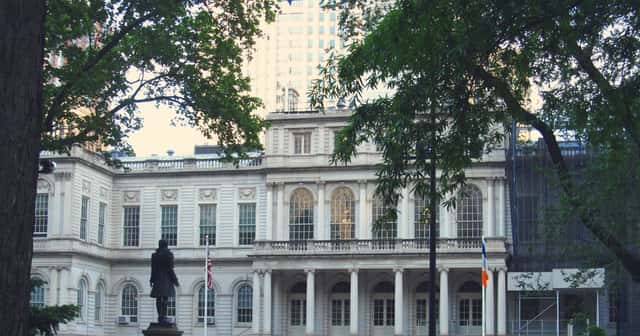
Representative archive photograph: New York City Hall, May 2012. Ken Lund / Wikimedia Commons, CC BY-SA 2.0. Cropped; adapted photograph remains under the same license. Not an image of the 2026 event.

Differing perspectives
Would the reserve-target amendment provide dependable protection against future budget shocks?
Each position is summarized as its supporters make it, with equal weight and in alphabetical order. A summary is not an endorsement; the evidence for each is weighed in the story above.
Build a stronger reserve framework
Who holds it: New York City Comptroller Mark Levine
The comptroller argues that the city needs a clear reserve target, predictable deposits, withdrawal rules and public reporting before the next economic shock. He supports strengthening the framework while stressing that the final definitions and implementation details must provide genuine fiscal safeguards, rather than leave important questions unresolved.
In their words: Office of the New York City Comptroller ↗
Require a more dependable design
Who holds it: Reinvent Albany
The organization argues that the proposal may count accounts that cannot cover a budget gap and leave too much discretion over deposits and withdrawals. It wants rules that produce accessible savings, warning that a headline target and a published methodology do not necessarily create a reliable rainy-day reserve.
In their words: NYC Votes: published organizational statements ↗
READ BEYOND 567POLITICS
Alternate sources & perspectives
Independent coverage and primary evidence to help you compare arguments. A link is not an endorsement; perspective labels describe the linked material.
- primary evidence
Official ballot explanation and submitted positions ↗
NYC Votes
Original source for the specified policy and documented arguments; read with dates and the qualifications in the article.
- primary evidence
Official policy case and administrative objectives ↗
Office of the New York City Comptroller
Original source for the specified policy and documented arguments; read with dates and the qualifications in the article.
- other perspective
Public Advocate’s November 2 explanation of his positions ↗
NYC Public Advocate
Original source for the specified policy and documented arguments; read with dates and the qualifications in the article.
- independent analysis
Election-night reporting on all five charter questions ↗
City & State New York
Original source for the specified policy and documented arguments; read with dates and the qualifications in the article.
Reviewed 2026-11-04. Reviewed the official ballot provisions and named organizations’ arguments, mayoral and other city-official statements, and independent election-night reporting. No independent election call or certified result is claimed. Ballot-guide submissions are selected advocacy statements, not a representative opinion poll. Administrative forecasts are distinguished from observed results. No campaign-funding amounts or causal claims are inferred. Related articles are part of this reviewed city batch.