PLO says Palestinian vote will come in 2027, possibly sooner, and sets tests for Israel's next government
The PLO kept the 2027 vote it set in October, restated its one-armed-force demand aimed at Hamas and said its stance on Israel will follow conduct on the ground.
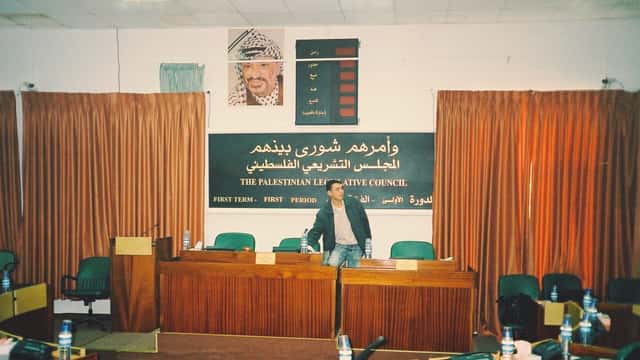
The Palestine Liberation Organization's Executive Committee said on Sunday that Palestinian elections for president and parliament will take place in 2027. The vote would cover Gaza, the West Bank and East Jerusalem. It could come sooner "if the obstacles facing the process are removed." The statement, published by the official WAFA news agency, also set out how the PLO will judge Israel's next government. The test is whether it halts settlement growth and joins talks toward two states. Palestinians have not voted for a president since 2005 or a parliament since 2006. In October, the PLO itself pushed this year's planned vote back by about 10 months.
The new statement does not change the calendar set in October. What it adds is a set of terms. The PLO restated that parties taking part in Palestinian politics should accept "one state, one law and one legitimate armed force," a formula aimed at Hamas's weapons. It also tied its stance toward Israel to conduct on the ground. Israel's own government is still unsettled after its October 27 election.
What the PLO said on Sunday#
The committee said ending the Israeli occupation and establishing a Palestinian state on the June 4, 1967 lines, with East Jerusalem as its capital, remain the national priority. It called on the UN Security Council to act "within a clear timetable" on its resolutions, naming Resolution 2334 on settlements, and urged more countries to recognize the State of Palestine.
On Gaza, it called for a firmer ceasefire and open crossings. It also called for the second phase of the plan set out in Security Council Resolution 2803, "leading to a complete Israeli withdrawal from the Strip." It said Gaza and the West Bank must stay one territory with one set of institutions. It rejected any cut to the mandate or staff of UNRWA, the UN agency for Palestinian refugees. That echoes the PLO's recent clash with the agency's leadership over job cuts in Gaza.
On Israel's election, the committee said its position toward "any incoming Israeli government would be determined by its policies and actions on the ground." It listed the tests: halting settlement expansion, annexation and settler violence; implementing Resolutions 2803 and 2334; respecting Palestinian self-determination; and engaging in "a serious political process" toward two states. Two weeks earlier, Vice President Hussein al-Sheikh called Israel's vote "an internal Israeli matter" and said he hoped a partner committed to ending the occupation would emerge.
On the US midterms, the committee urged continued engagement with the Trump administration, "both chambers of Congress" and other US political forces, and asked Washington to recognize the State of Palestine.
Money, settlements and the West Bank#
Much of the statement dealt with the West Bank. The committee warned of "accelerating settlement expansion and annexation plans," singling out the E1 project east of Jerusalem. It said E1 "threatens to isolate Jerusalem from its Palestinian surroundings and sever geographical continuity between the northern and southern West Bank."
The committee also called for international protection for Palestinians and for keeping the status of holy sites in Jerusalem and Hebron. It sought "the release of withheld Palestinian clearance revenues and the resumption of their regular transfer." Clearance revenues are the taxes Israel collects on goods bound for Palestinian markets and is meant to pass on to the Palestinian Authority (PA) each month.
The PA's government pressed the same point on Monday. Prime Minister Mohammad Mustafa asked Japan's foreign minister, Toshimitsu Motegi, to "take effective action to secure the release of Palestinian clearance revenues withheld by Israel," WAFA reported. Mustafa also urged Japan to back European efforts to impose penalties on settlers involved in attacks. Motegi expressed "deep concern over settler attacks in the West Bank" and offered more humanitarian aid for Gaza, according to WAFA.
How the vote slipped to 2027#
Palestinian legislative elections had been set for November 28, 2026, with a presidential vote to follow in early 2027. On October 10, the Executive Committee approved postponing the legislative vote to September 2027, to be held together with the presidential election. President Mahmoud Abbas, who heads the committee, issued a decree setting September 11, 2027, Al Jazeera reported.
The committee gave several reasons. It said Security Council Resolution 2803 had not been carried out, no international stabilization force or Palestinian police had deployed in Gaza, and Israeli forces remained there. It said Israel barred the Central Elections Commission and observers from entering Gaza. It also pointed to settler attacks and checkpoints in the West Bank and to Israel's withholding of Palestinian clearance revenues, which it said had approached $7 billion. Factions meeting in Cairo had also called for a delay to allow national talks first.
Sunday's wording, "2027" with the option of an earlier date, keeps that schedule while leaving room to move it. The committee did not name a date or say which obstacles would have to be lifted first.
- Abbas wins the last presidential election
- Hamas wins the last legislative election
- The Palestinian Legislative Council is dissolved
- PLO approves delay; Abbas decree sets September 11, 2027
- PLO says elections will be held in 2027, possibly earlier
Source: WAFA, Al Jazeera, EU SEE
What Palestinians told pollsters before the delay#
Most Palestinians wanted the vote held on time. A survey taken October 7 to 11 ended the day the delay was decreed. In it, 53% backed holding legislative elections on schedule in late November, 21% favored a delay of up to six months and 20% opposed holding elections at all, according to the Palestinian Center for Policy and Survey Research (PSR). The face-to-face poll of 1,400 adults in the West Bank and Gaza had a margin of error of 3.5 percentage points.
The same poll suggests why the timing is politically charged. Neither of the two big movements leads. Asked which party they support, 22% named Fatah and 19% Hamas, while a 33% plurality chose "none of the above." Among likely voters who had settled on a list, two challengers to the official Fatah slate ran first.
Source: PSR October 2026 Election Poll
Show the numbers
| List | Share |
|---|---|
| Marwan Barghouti-backed list | 22% |
| Bashar al-Masri's independent list | 22% |
| Joint Hamas-Dahlan list | 20% |
| Official Fatah list (Abbas-backed) | 13% |
| National Initiative and independents | 13% |
The list backed by jailed Fatah leader Marwan Barghouti drew 39% in the West Bank but 7% in Gaza. The joint Hamas-Dahlan list showed the reverse pattern, at 30% in Gaza and 7% in the West Bank, PSR found. PSR also reported that Hamas's party support had fallen from 35% in late 2025 to 24% in August 2026 and 19% in October. Polls taken before a delay do not predict a vote 10 months later. PSR also notes that 30% of Gaza respondents said their identity documents were lost or destroyed during the war, a hurdle for any future vote there.
The delay also froze a campaign already under way. Competing lists had formally submitted their papers to the Central Elections Commission before Abbas's decree, PSR noted. The official Fatah list is headed by Vice President Hussein al-Sheikh and backed by Abbas. Asked who could best manage economic recovery, respondents gave the highest rating to businessman Bashar al-Masri, at 30%, and Mustafa Barghouti, at 29%. Al-Sheikh drew 8% and Fatah official Jibril Rajoub 6%. Marwan Barghouti, who is imprisoned in Israel, had the widest name recognition: 67% said they had heard a lot about him.
Hamas, critics and Israel read the delay differently#
Hamas did not oppose the postponement. In an October 10 statement reported by Naba Palestine 24, it cited the lack of "political, security and field conditions" for a vote. It said the delay should lead to national talks that are "serious and fruitful." It said it was ready to agree on "clear and binding outcomes," including how to rebuild the PLO's National Council and the Legislative Council. The PLO's call for "one legitimate armed force" goes to the core of those talks, which have stalled amid mutual accusations between Fatah and Hamas.
Others wanted the vote kept. Mustafa Barghouti, head of the Palestinian National Initiative, told Al Jazeera there was "great disappointment" over the decision and called two decades without elections "totally unacceptable." A Palestinian civic group, the Civil Coalition for Elections, also rejected the delay. It called for a binding date in the first three months of 2027, according to the EU SEE monitoring network. The Carter Center, which has observed past Palestinian votes, said it "regrets the decision." It urged renewed voter registration in Gaza and called on Israel to withdraw from Gaza, curb settler violence and lift restrictions on movement.
Israel's government rejects the PLO's account of the delay. Foreign Minister Gideon Sa'ar wrote on X that Abbas had "once again deceived the international community" and that his claim that Israel blocked the vote was false. Sa'ar said Abbas's promised reforms, including ending payments to prisoners' and attackers' families, had not been carried out. 567 Politics found no public response from Israel's government to Sunday's statement.
What to watch#
Three questions now sit with the PLO. One is whether it sets a firm date earlier than September, as civil society groups ask. Another is whether national talks with Hamas can resolve the weapons issue before any vote. The third is how it deals with Israel's next government. That may be led by Gadi Eisenkot, whose coalition talks still turn on the Arab-led parties and the Haredi parties. Or it may be led again by Benjamin Netanyahu, whose government withheld the revenues the PLO cites. The committee's statement leaves each of those open.
Differing perspectives
When and on what terms should Palestinians hold their first national elections since 2006?
Each position is summarized as its supporters make it, with equal weight and in alphabetical order. A summary is not an endorsement; the evidence for each is weighed in the story above.
Hold Abbas and the PA responsible for the delay
Who holds it: Israeli Foreign Minister Gideon Sa'ar; Israel's government
Sa'ar says Abbas has not held elections in over 20 years and has once again deceived the international community. He says Abbas's claim that Israel blocked the vote is false and an attempt to evade responsibility. He says promised reforms, including ending payments to attackers' families and incitement in schools, were never carried out.
In their words: Gideon Sa'ar on X ↗
Hold national talks before any vote
Who holds it: Hamas
Hamas says the delay, given the absence of the political, security and field conditions needed to vote across the territories, including Jerusalem, should lead to comprehensive, serious and fruitful national talks. It says it is ready to agree on clear and binding outcomes for all parties, including how to rebuild the National and Legislative Councils and a shared national strategy for the transition.
In their words: Naba Palestine 24 (Hamas statement) ↗
Start concrete election preparations now
Who holds it: The Carter Center; Palestinian civil society groups
The Carter Center regrets the postponement and says two decades of delays have kept Palestinians from choosing their representatives. It calls for inclusive national talks with a concrete roadmap, broader representation in the PLO, protection of freedoms of assembly and expression, and renewed voter registration in Gaza. It says Israel, as the occupying power, should withdraw from Gaza and lift restrictions on movement.
In their words: The Carter Center ↗
Vote in 2027 on the PLO's program
Who holds it: PLO Executive Committee; President Mahmoud Abbas
The PLO says presidential and legislative elections will be held in 2027 in Gaza, the West Bank and East Jerusalem, and earlier if the obstacles are removed. It calls for an end to settlement expansion, the release of withheld revenues and a full Israeli withdrawal from Gaza. It says parties taking part should adhere to the PLO's program and international commitments under one state, one law and one legitimate armed force.
In their words: WAFA (PLO Executive Committee statement) ↗
Cite this article
567 Politics staff. “PLO says Palestinian vote will come in 2027, possibly sooner, and sets tests for Israel's next government.” 567politics. Published 2026-11-16. https://567politics.com/news/palestine-plo-executive-committee-elections-2027-israel-next-government-tests-november-2026
Wikipedia citation
{{cite news |title=PLO says Palestinian vote will come in 2027, possibly sooner, and sets tests for Israel's next government |url=https://567politics.com/news/palestine-plo-executive-committee-elections-2027-israel-next-government-tests-november-2026 |work=567politics |author=567 Politics staff |date=2026-11-16 |language=en}}CSL-JSON for reference managers
{
  "id": "https://567politics.com/news/palestine-plo-executive-committee-elections-2027-israel-next-government-tests-november-2026",
  "type": "article-newspaper",
  "title": "PLO says Palestinian vote will come in 2027, possibly sooner, and sets tests for Israel's next government",
  "URL": "https://567politics.com/news/palestine-plo-executive-committee-elections-2027-israel-next-government-tests-november-2026",
  "container-title": "567politics",
  "language": "en",
  "author": [
    {
      "literal": "567 Politics staff"
    }
  ],
  "issued": {
    "date-parts": [
      [
        2026,
        11,
        16
      ]
    ]
  }
}Citations identify this article and its publication date. Assess the reporting and its linked sources before using it as evidence.
Read this article as Markdown or JSON. Cite the original page and retain its sources, dates and qualifications.
Embed this article summary
Paste this HTML into your page. The summary stays linked to the full story and updates with it. No account required.
<iframe src="https://567politics.com/embed/news/palestine-plo-executive-committee-elections-2027-israel-next-government-tests-november-2026?theme=auto" title="PLO says Palestinian vote will come in 2027, possibly sooner, and sets tests for Israel's next government by 567politics" width="100%" height="440" style="border:0;max-width:100%" loading="lazy"></iframe>
<p style="font-size:14px">PLO says Palestinian vote will come in 2027, possibly sooner, and sets tests for Israel's next government by <a href="https://567politics.com/news/palestine-plo-executive-committee-elections-2027-israel-next-government-tests-november-2026" rel="nofollow">567politics</a></p>
<script async src="https://567politics.com/embed.js"></script>
READ BEYOND 567POLITICS
Alternate sources & perspectives
Independent coverage and primary evidence to help you compare arguments. A link is not an endorsement; perspective labels describe the linked material.
- primary evidence
PLO Executive Committee sets 2027 as target year for Palestinian presidential and legislative elections ↗
WAFA (Palestinian News and Info Agency)
Full text summary of the November 15 Executive Committee statement on elections, Gaza, the West Bank, the incoming Israeli government and the US.
- primary evidence
PLO Executive Committee approves postponement of Palestinian elections to September 2027 ↗
WAFA (Palestinian News and Info Agency)
The October 10 decision and the reasons the committee gave, including Israeli restrictions in Gaza and withheld clearance revenues.
- independent analysis
Abbas postpones Palestinian legislative elections to September 2027 ↗
Al Jazeera
Report on the decree setting September 11, 2027, with reaction from Mustafa Barghouti and Israeli Foreign Minister Gideon Sa'ar.
- primary evidence
Hamas comments on Abbas's decision to postpone elections ↗
Naba Palestine 24
Hamas statement calling for national talks with binding outcomes after the postponement.
- other perspective
The Carter Center calls for concrete steps toward credible Palestinian national elections ↗
The Carter Center
Election observer's statement regretting the delay and listing steps for Palestinian authorities and Israel.
- other perspective
Postponement of Palestinian elections raises concerns over political participation and democratic accountability ↗
EU SEE (Hivos)
Civic-space monitoring alert reporting the Civil Coalition for Elections' rejection of the delay and its call for a binding date in early 2027.
- primary evidence
PSR October 2026 Election Poll ↗
Palestinian Center for Policy and Survey Research
Survey of 1,400 adults, October 7-11, 2026, on election timing, party identification and list preferences; margin of error 3.5 points.
- primary evidence
Gideon Sa'ar on Abbas and the postponement (X post, October 10, 2026) ↗
Gideon Sa'ar on X
The Israeli foreign minister's statement rejecting the PA's claim that Israel obstructed the vote.
- primary evidence
Prime Minister urges Japan to take effective action to secure release of withheld clearance revenues ↗
WAFA (Palestinian News and Info Agency)
Account of Prime Minister Mohammad Mustafa's November 16 call with Japanese Foreign Minister Toshimitsu Motegi.
Reviewed 2026-11-16. Compiled 2026-11-16. The site's discovery tool has been returning unrelated results, so every source here was chosen by hand from pages opened and read. The PLO statement is available here through WAFA, the official Palestinian news agency. No Israeli government response to the November 15 statement was found; Israel's position on the postponement is represented by the foreign minister's October posts. The Civil Coalition for Elections' own statement was not reviewed directly; its position is cited through the EU SEE alert.