Senegal's Assembly rejects revised 2026 budget without debate, clouding a $2.2 billion IMF deal
Sonko's Pastef majority killed the bill with a procedural motion, calling its deficit figures unrealistic. The government says the vote blocks energy subsidies and arrears payments.
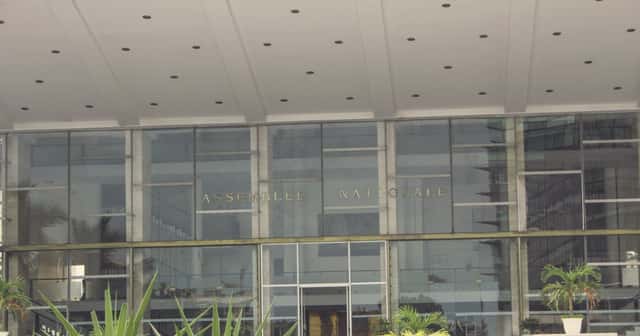
Senegal's National Assembly on Tuesday, Nov. 3, threw out the government's revised budget for 2026 without debating its contents. The vote deepens a standoff between President Bassirou Diomaye Faye's government and the governing party's own parliamentary majority, which is led by former Prime Minister Ousmane Sonko, now the Assembly's president. It also puts at risk the timing of a roughly $2.2 billion loan program that Senegal has negotiated with the International Monetary Fund (IMF).
The bill is known in French as the loi de finances rectificative, or LFR. It is a mid-year budget that updates the spending and revenue plan passed for the year. The government says it needs it to pay overdue bills to private firms and electricity suppliers and to keep buying fuel for power plants. The majority party, Pastef, says the bill's numbers are not realistic and that it will not approve the text as written.
This story explains what happened on Tuesday, what each side argues, what the IMF agreement requires, and what is still unclear.
What happened on Nov. 3
The rejection came through a procedural motion. Pastef deputy Amadou Ba moved a question préalable, a motion that, if adopted, rejects a bill before the House debates it. Under Article 83 of the Assembly's rules, its adoption means the bill is rejected without a general discussion, Dakaractu reported.
The motion first passed with 109 votes in favor, 20 against and 3 abstentions, according to the results shown in the chamber. Dakaractu said 132 of the Assembly's 165 deputies took part. Reuters, in a report carried by CNBC Africa, gave the same count, citing the Assembly's first vice president.
Later on Tuesday, the Assembly issued a correction. It said a technical problem during the count meant 17 proxy votes had not been included, PressAfrik reported. With those added, the Assembly put the total in favor of rejection at 126. The counts against and abstaining did not change. RFI also reported 126 votes in favor. Early reports, including several cited here, used the first count of 109.
Source: PressAfrik, citing the National Assembly's corrected count
Show the numbers
| Vote | Deputies |
|---|---|
| In favor of rejection (corrected) | 126 |
| Against rejection | 20 |
| Abstained | 3 |
The Assembly's finance committee had already turned the bill down. It rejected the text on Oct. 30 after the government asked for a second review, and the government made no changes to the bill between the two committee sessions, according to a Pastef communique published by SeneNews.
Why Pastef rejected the bill
Pastef holds 130 of the 165 seats, Al Jazeera reported in May. Its group leader, Ayib Daffé, said the main dispute was over sincérité budgétaire, a legal rule that budget forecasts must be honest and realistic. He cited Article 30 of the organic law on finance laws, which he said requires that forecasts of revenue and spending "must be realistic, must be prudent and must be based on reliable information," PressAfrik reported. Quotations from French-language sources in this story are 567politics translations.
Daffé argued that the bill assumes the state will spend far more on investment than it can by year-end, given low spending rates as of the end of September. He said a more realistic assumption would cut investment spending by about 450 billion CFA francs. That, he argued, would lower the projected deficit of 7.6% of GDP by 1.6 to 2 points, to between 5% and 6%. A smaller deficit would mean less borrowing. "We have had the problem of hidden debt, we cannot also have a problem of a hidden budget," he said.
Pastef also objects to cuts to social projects. Daffé pointed to a large water transfer project funded at 50 billion CFA francs in the original 2026 budget, 35 health centers worth 60 billion in payment credits that he said were removed entirely, and a program to replace temporary school shelters with 46 elementary schools at 9.7 billion.
The party's Oct. 30 communique listed five points of disagreement:
- a lack of budget sincerity on the deficit and debt;
- weak measures against the high cost of living;
- inconsistent choices on public investment and social priorities;
- a lack of transparency, including the government's refusal to share documents such as an audit by Forvis Mazars, a report by the state finance inspectorate on non-financial debt, and the September budget execution report;
- a refusal to streamline state agencies and regulate special funds.
The communique said the group remained open to "constructive dialog." Amadou Ba, who moved the motion, said he was not questioning the need for an agreement with the IMF, Dakaractu reported.
What the government says
Finance Minister Cheikh Diba rejected Pastef's case on the floor. "You therefore have only the pretext of budget sincerity to call into question a bill as important as the revised finance bill," he said, according to PressAfrik.
Diba argued that the revised bill is itself an exercise in honest budgeting because it admits that new taxes raised less than planned. Under the government's Economic and Social Recovery Plan, known by its French initials PRES, the state expected 762 billion CFA francs from new taxes in 2026. By the end of September it had raised 173.3 billion, Diba said. The revised bill lowers the year-end target to 311 billion. "That is budget sincerity!" he said of the change. He called 311 billion "appreciable" and "remarkable" and said the money had already paid for several measures discussed in committee.
Source: PressAfrik, remarks of Finance Minister Cheikh Diba, Nov. 3, 2026
Show the numbers
| Measure | CFA francs (billions) |
|---|---|
| Original 2026 target | 762 |
| Raised by end of September | 173.3 |
| Revised year-end target | 311 |
Diba also said deputies could have judged how the budget was being carried out when they reviewed the loi de règlement, the annual law that closes out a past budget. He accused the majority of trying to "flee the debate," Dakaractu reported.
The government's case for urgency rests on unpaid bills. The bill is needed to pay debts owed to private companies and power suppliers and to keep fuel flowing to power stations, RFI reported. After the vote, Diba told reporters that the Middle East crisis had pushed up oil and energy prices. The original budget set aside 250 billion CFA francs for energy subsidies, he said, against 790.3 billion now judged necessary, Dakaractu reported. He said the next step was up to President Faye. "The president will assume his responsibilities and will take the necessary measures," he said, without saying what those would be.
The regional outlet Afreeque, citing the state daily Le Soleil, reported that the bill projected a deficit of 1,735.2 billion CFA francs and cut about 555 billion from public investment funds. This story could not open the bill text itself.
What the opposition says
The 20 votes against the motion came mainly from the opposition, which wanted the bill debated. Aïssata Tall Sall, who leads the Takku Wallu Sénégal group, said the Assembly's president had used a House rule "to prevent us from speaking," Dakaractu reported. She called the majority's arguments "far-fetched" and said her group would make a public statement against the rejection.
Deputy Thierno Alassane Sall, in a statement titled "Pastef confesses," said the majority had "smothered all debate," according to Dakaractu. He said Pastef had become "the very negation of our democratic gains." Those are his characterizations. Pastef says it used a procedure the rules allow and that it remains ready for dialog.
The opposition's complaint and Pastef's defense are both about procedure. The question préalable is a lawful tool under the Assembly's rules. Whether it was the right tool for a budget bill is a political judgment on which the sides differ.
The IMF program at stake
On Sept. 1, IMF staff and the Senegalese government reached a staff-level agreement on a 36-month Extended Credit Facility of about $2.2 billion, the IMF said in a press release. A staff-level agreement is a deal between the IMF's negotiating team and a government. It is not final until the IMF's management and Executive Board approve it.
The IMF set conditions. The agreement "requires decisive corrective actions" to support Senegal's request for a waiver in what the Fund calls "the misreporting case," and it requires financing assurances from Senegal's partners. The misreporting refers to borrowing under the previous administration that was not fully reported. The Fund says Senegal's debt reached 132% of GDP by the end of 2024, as reported by Africanews and AFP. The program aims to restore debt sustainability while raising social spending, and the government has said it will seek a debt treatment, the IMF release said.
Africanews reported that the deadlock could derail hopes of an Executive Board vote as early as next month. The IMF has not commented publicly on Tuesday's vote in any source reviewed for this story. Economist Seydou Sow told Seneweb, as summarized by Afreeque, that a delay of the IMF review is more likely than a cancellation. That is one analyst's view, not an IMF statement. Sow put the state's arrears to businesses at about 1,956 billion CFA francs and said the bill provided 300 billion to keep paying them down. He also noted that Senegal raised 55 billion CFA francs on the regional market on Oct. 23, against 90 billion planned, at rates above 8%.
The IMF also reported some strengths. Senegal's economy grew 6.7% in 2025 and inflation was 1.4%, the Fund said.
The political split behind the budget
The budget fight sits inside a wider break between Senegal's two most powerful figures. Faye won the presidency in March 2024 and named Sonko, his former mentor, as prime minister. Sonko had been barred from running himself because of a defamation conviction. Faye dismissed Sonko and his government in May 2026 after months of tension over how to handle the debt crisis, Al Jazeera reported. Days later, the Assembly elected Sonko its president with 132 votes. Faye named economist Ahmadou Al Aminou Lo as prime minister.
Africanews describes the parliament as "opposition-dominated," because the majority now opposes the government it once led. Pastef remains Sonko's party, and its deputies frame the vote as oversight of the executive's numbers. Government supporters frame it as a political fight that blocks urgent payments. Both readings appear in Senegalese coverage. Neither side has published evidence that settles the other's motive, and this story does not speculate about motives.
Senegal is not the only country where a budget has split a governing camp this autumn. In Belgium, Prime Minister Bart De Wever offered his government's resignation after coalition partners failed to agree a budget. In Colombia, the president's own allies balked at tax rises in a rescue bill. In South Korea, the opposition vowed deep cuts to a record budget. The rules and stakes differ in each country.
Weighing the competing claims
Both sides make factual claims that can be tested only with documents the public has not seen.
Pastef's central claim is that the 7.6% deficit forecast is inflated because the government cannot spend its planned investment budget by December. That depends on the September budget execution report, which Pastef says the government refused to share. If spending is running as slowly as Pastef says, a lower deficit forecast would be more realistic. If not, cutting the forecast could hide real needs.
The government's central claim is that the bill already corrects its own forecasts, as with the drop in expected new-tax revenue from 762 billion to 311 billion CFA francs. That correction is on the record. But it does not answer Pastef's separate point about investment spending. The two sides are arguing about different lines of the budget, and each describes the other's case in terms the other would not accept.
There are costs either way. Without a revised budget, the government says it cannot clear arrears or fund energy subsidies through the budget. Economist Sow argued, as Afreeque summarized, that the state might then have to spend outside the budget or raise fuel and power prices. Pastef argues that approving numbers it believes are unrealistic would repeat the past problem of debt that was not fully reported.
Open questions after the vote
Several questions remain open:
- A new bill. RFI said the government must "revise its copy." No source reviewed says when, or whether, it will file a new version.
- Talks. Pastef says it is open to talks. No meeting between the government and the majority has been announced.
- The IMF Board. No date for a Board vote has been announced. The IMF has not said whether a revised 2026 budget is a condition for it.
- The 2027 budget. The annual budget for next year will need to pass the same Assembly.
- Public opinion. This story found no recent representative poll on the budget dispute.
Our methodology page explains how 567politics sources and labels claims.
Differing perspectives
Should Senegal's National Assembly adopt the government's 2026 revised budget as submitted?
Each position is summarized as its supporters make it, with equal weight and in alphabetical order. A summary is not an endorsement; the evidence for each is weighed in the story above.
Adopt the revised budget now
Who holds it: Government of President Bassirou Diomaye Faye; Finance Minister Cheikh Diba
The revised budget is itself an honest correction, because it openly lowers expected revenue from new taxes from 762 billion to 311 billion CFA francs. It adds money for energy subsidies made necessary by higher oil prices and helps clear arrears to firms and suppliers. Rejecting it on a pretext blocks support for households, delays payments and puts the IMF program at risk.
In their words: PressAfrik (remarks of Cheikh Diba) ↗
Debate the bill in full before any vote
Who holds it: Takku Wallu Sénégal opposition group, led by Aïssata Tall Sall
Deputies should have debated the revised budget openly instead of using a House rule to reject it without discussion. The Assembly's president relied on that rule to stop the opposition from speaking on the bill. The majority's arguments are far-fetched and should have been tested in public debate. Takku Wallu says it will make its case against the rejection publicly.
In their words: Dakaractu (remarks of Aïssata Tall Sall) ↗
Reject it until a realistic budget is filed
Who holds it: Pastef parliamentary majority, led in the chamber by group president Ayib Daffé
The revised budget fails the legal test of budget sincerity in the organic finance law. Its 7.6% deficit assumes investment spending the state cannot reach by year-end, which inflates borrowing needs. It also cuts health centers, schools and water projects, while the government has withheld key audit and execution reports. Senegal has already suffered from hidden debt and should not now adopt a hidden budget. Pastef remains open to talks on a realistic text.
In their words: PressAfrik (remarks of Ayib Daffé) ↗
READ BEYOND 567POLITICS
Alternate sources & perspectives
Independent coverage and primary evidence to help you compare arguments. A link is not an endorsement; perspective labels describe the linked material.
- primary evidence
Assemblée nationale : Le projet de LFR 2026 rejeté sans discussion générale ↗
Dakaractu
Initial vote count (109-20-3), turnout and the Article 83 procedure behind the rejection.
- primary evidence
Projet de LFR 2026 : l'Assemblée nationale corrige le vote sur le rejet, le nombre de voix passe à 126 ↗
PressAfrik
The Assembly's correction adding 17 proxy votes, for a total of 126 in favor of rejection.
- other perspective
Sénégal: pourquoi la majorité parlementaire de Sonko a-t-elle rejeté le projet de Loi de finances rectificative ? ↗
PressAfrik
Pastef group president Ayib Daffé's case that the bill breaches budget sincerity rules.
- other perspective
Nouveau rejet du PLFR 2026 : Les cinq raisons pour lesquelles PASTEF refuse de voter le texte ↗
SeneNews
Pastef's Oct. 30 communique listing its five objections, including documents it says were withheld.
- other perspective
Cheikh Diba : le Pastef n'a que « le prétexte de la sincérité budgétaire » ↗
PressAfrik
Finance Minister's defense of the bill and the government's figures on new-tax revenue.
- other perspective
Cheikh Diba après le rejet de la LFR : « Le président va assumer ses responsabilités » ↗
Dakaractu
Diba's post-vote remarks on energy subsidies and the next steps, which he said belong to President Faye.
- other perspective
LFR rejetée : « Pastef a clairement fuit le débat » (Aïssata Tall Sall) ↗
Dakaractu
Opposition Takku Wallu leader's objection to the rejection without debate.
- primary evidence
IMF Reaches Staff-Level Agreement on an Extended Credit Facility Arrangement with Senegal ↗
International Monetary Fund
Terms and conditions of the roughly $2.2 billion staff-level agreement, which still needs Board approval.
- independent analysis
Senegal parliament votes against revised budget bill ↗
Reuters via CNBC Africa
Wire report of the vote and the standoff with Assembly President Ousmane Sonko.
- independent analysis
Senegalese lawmakers reject key budget in major setback for IMF talks ↗
Africanews (AFP)
Context on debt levels and the possible timing of an IMF Board vote.
- independent analysis
Budget rejection could delay Senegal's $2.2 billion IMF loan ↗
Afreeque (summarizing Seneweb)
Economist Seydou Sow's view that an IMF delay is more likely than cancellation, with arrears and market-borrowing figures.
Reviewed 2026-11-03. The discovery search returned only generic Senegal pages, so 567 Politics staff found and opened these sources directly. Left and right labels do not map onto this dispute, which divides the governing camp, so party and government positions are labeled other perspective. The bill text, the finance committee report and the Assembly's own communique were not available online at review; the corrected vote count comes from PressAfrik's account of that communique. The IMF had not commented on the vote in any source found. No recent representative poll on the dispute was found. Most Senegalese sources are in French; quotations are 567politics translations.