Seoul High Court upholds Yoon's election-law conviction, putting 39.7 billion won of party funds at stake
The appeals court kept the suspended 18-month term for two false campaign statements in 2021 and 2022. If the Supreme Court agrees, Yoon's 2022 win is voided and the People Power Party must repay its reimbursed campaign costs. The party points to the stalled case against President Lee.
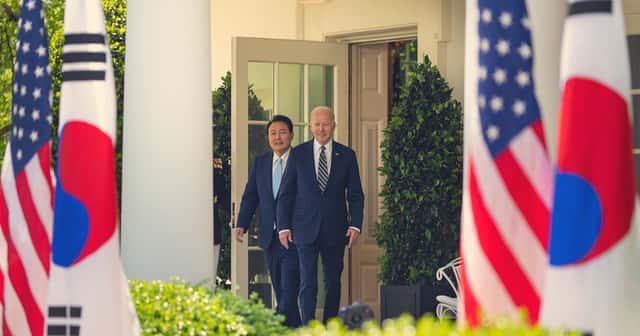
The Seoul High Court on Wednesday, Nov. 4, 2026, upheld former President Yoon Suk Yeol's conviction for publishing false statements as a candidate in the 2022 presidential election, and kept the sentence the trial court imposed in July: one year and six months in prison, suspended for three years. Criminal Division 2-1, presided over by Judge Baek Seung-yeop, dismissed Yoon's appeal shortly after 2 p.m. Korea time, finding no error of fact or law in the first-instance judgment, the Kyunghyang Shinmun reported. The hearing was broadcast live at the request of broadcasters and the special counsel, the Korea JoongAng Daily had reported.
The ruling is not final. Yoon can appeal to the Supreme Court. But if it stands, two things follow under South Korea's Public Official Election Act: Yoon's 2022 election would be formally invalidated, more than four years after he took office and a year and a half after the Constitutional Court removed him, and his former party, the People Power Party, would have to repay the state about 39.7 billion won, roughly $30 million, in reimbursed campaign costs, the Korea Times reported. That repayment is the reason a case about two sentences spoken in 2021 and 2022 has become a live fight between the governing Democratic Party and the opposition.
Two statements, 0.73 points
The case concerns two things Yoon said while campaigning. On Dec. 14, 2021, at a debate hosted by the Kwanhun Club, a journalists' association, he said he had never introduced the lawyer Lee Nam-seok to Yoon Woo-jin, a former head of the Yongsan tax office who was under investigation for bribery and whose younger brother, former prosecutor Yoon Dae-jin, had been a close aide. On Jan. 17, 2022, at the launch of a Buddhist leaders' forum, he said he had been introduced to Jeon Seong-bae, a shaman known as "Geonjin," by a party official, and had never met Jeon together with his wife, Kim Keon-hee. The statement came days after a video showed Jeon at Yoon's campaign office, per the JoongAng Daily.
A special counsel team led by Min Jung-gi, appointed to investigate allegations involving Kim Keon-hee, concluded both statements were false and that Yoon made them out of concern that his approval ratings would fall. It indicted him in December 2025. Prosecutors argued that the statements could have affected the result of an election Yoon won by 0.73 percentage points, the Hankook Ilbo reported.
On July 27, 2026, the Seoul Central District Court's 21st Criminal Division, under presiding judge Cho Soon-pyo, found both statements false and imposed the suspended 18-month term, OhmyNews reported. On appeal, the special counsel asked at the Oct. 13 closing hearing for the same sentence; the defense asked for acquittal.
Wednesday's panel sided with the prosecution. A party-nominated candidate in a presidential election "has a duty to submit correct materials, yet he failed to do so," the court said, and "the electoral system that guarantees representative democracy was infringed," per the Kyunghyang Shinmun's account of the ruling.
Yoon's defense
Yoon has denied the charges throughout. At the first appeal hearing on Sept. 8, speaking for himself, he told the court that if answering "that's not it" in two or three seconds counts as publishing false facts, it is doubtful that election campaigning is realistically possible, the Weekly Kyunghyang reported. In his final statement at trial, he argued that his remark about the lawyer used "introduce" in a legal sense and that his answer about Jeon should be read against the question he was asked, per the Hankook Ilbo.
His lawyers made three further arguments. They said his answers in debates and interviews were spontaneous and defensive and that the trial court read them too formalistically. They pointed to a proposal by Cho Kuk, the policy chief of the Rebuilding Korea Party, to narrow the false-statement offense by deleting its vaguest element, arguing the offense invites arbitrary punishment. And they raised fairness: President Lee Jae-myung faces a remanded election-law case over his own 2022 campaign statements, and that case has been suspended since he took office, so punishing only the loser, they argued, is unequal. The appeals court did not accept any of these arguments.
Why a suspended sentence voids an election
The Public Official Election Act voids the election of a winner who receives a final sentence of a fine of 1 million won or more for an election crime. A prison term, suspended or not, is a heavier penalty than that threshold, so Yoon's sentence qualifies, the OhmyNews report explains. The same act fully reimburses the campaign expenses of a presidential candidate who wins or takes at least 15% of the vote, and requires the reimbursement to be returned if the candidate's election is later voided by such a sentence. For a party-nominated candidate, the party pays.
The National Election Commission reimbursed the People Power Party 39.756 billion won after the 2022 election, including the return of its deposit, per OhmyNews. The Democratic Party, which nominated Lee, received about 43.4 billion won, the Financial News reported. Neither sum is owed today. Each depends on a final Supreme Court judgment against the party's candidate.
| Case | Candidate | Stage on Nov. 4 | Reimbursement at stake |
|---|---|---|---|
| False statements, 2022 campaign | Yoon Suk Yeol (PPP) | Appeal upheld; Supreme Court next | 39.7 billion won |
| False statements, 2022 campaign | Lee Jae-myung (DP) | Remanded by Supreme Court in 2025; retrial suspended | 43.4 billion won |
Sources: Kyunghyang Shinmun and OhmyNews for the Yoon case; Financial News for the Lee case and the Democratic Party figure. Amounts are the parties' reimbursements as reported; the Lee figure would be owed only if a sentence voiding his election became final.
The People Power Party's finances make the number matter. After the July ruling, the Kyunghyang Shinmun reported that the party had about 131.5 billion won in total assets as of February, mostly real estate and lease deposits, with only about 11.6 billion won in cash and deposit-like assets, in its report on the party's response. Asked then whether the party would sell its headquarters, chief spokesperson Park Sung-hoon said that was not a realistic option and that a working-level team was preparing measures.
What the parties said
The People Power Party decided in advance not to comment. "We are leaning toward not issuing one," chief spokesperson Park Chung-kwon told OhmyNews before the ruling, saying the party had not commented on individual trials and would hold to that whichever way the court went. Party leader Jang Dong-hyeok had no public schedule for the afternoon. A party leadership official told the Herald Business that the Supreme Court could be considered after the ruling, and turned to the Lee case: because Lee's remanded trial has stalled, the Democratic Party has not returned its own funds, and "this unfairness must be resolved first," the Herald reported.
That argument has circulated on the right for weeks. Yoo Seung-min, a former lawmaker, wrote on Facebook on Oct. 11 that if both cases involve the same violation but only the losing side faces the law, "then the law is neither fair nor equitable," and asked the Supreme Court for a ruling "the public can accept," saying both trials should either proceed or both be suspended, per the Financial News. After the July verdict, lawmaker Kwon Young-se said Lee's remanded case should resume immediately if Yoon's conviction is upheld, per the Kyunghyang Shinmun.
The Democratic Party pressed the opposite point. Spokesperson Lee Woo-yong said in a written briefing on Nov. 1 that courts have held even evasive answers such as "I don't remember" to be false statements when they aim to deny facts, that Yoon's flat denials left him no route to acquittal, and that if the conviction were confirmed the People Power Party should return "the 39.7 billion won in taxpayer-funded election expenses" and apologize for fielding a "false candidate," the Herald reported. Floor spokesperson Lee Ju-hee said on Nov. 3 that "this week is a test of the judiciary's credibility," per OhmyNews. After the July ruling, acting leader Han Byung-do wrote that the court had "brought the hammer down" on Yoon's false claims.
The two parties' arguments pass each other. The Democratic Party's claim is about Yoon's conduct; the People Power Party's is about unequal process. Both can be true. Whether Lee's case should proceed while he is in office is a separate legal question, one on which the Constitution's provision that a sitting president shall not be prosecuted except for insurrection or treason is read differently by the two camps. The appeals court's job was narrower: whether Yoon's two statements were false and whether the trial court's sentence was lawful. It said yes to both.
The other cases
This is the lighter of Yoon's two major trials. In the insurrection case arising from his Dec. 3, 2024, martial law declaration, a first-instance court sentenced him to life imprisonment, finding that sending troops to the National Assembly met the legal definition of a riot with an anti-constitutional purpose. On appeal before the Seoul High Court's Criminal Division 12-1, the special counsel led by Cho Eun-seok sought the death penalty on Oct. 29; closing arguments were set for Nov. 3 and Nov. 5, after which a verdict date will be set, per the Hankook Ilbo. Yoon's position is that declaring martial law was a constitutional power of the president and that no insurrection occurred.
South Korea is not alone in having courts decide the political fate of leaders over campaign conduct. 567politics has followed Marine Le Pen's fight over her eligibility during her appeal in France and the detention and trial of Istanbul's mayor, Ekrem İmamoğlu in Turkey. In each country the governing side calls the proceedings the rule of law and the opposition calls them selective; the Korean case is unusual in that the same statute now hangs over both the former and the sitting president.
The ruling also lands as Lee's government asks the National Assembly for a record budget, which 567politics covered in its report on his budget speech, and days after his summit with Turkey's president. Lee did not comment on the ruling in the reports we read on Wednesday afternoon.
What people are saying online, and the limits
567politics did not quote social media posts in this article. Reddit's listings, including r/worldnews and r/geopolitics, could not be loaded during this run, X's pages could not be read, and our tool for verifying a post's text against its permalink failed on every attempt. We found no representative poll of South Korean adults on the ruling, which was delivered hours before publication. Nothing here should be read as a measure of Korean public opinion. Readers of Korean can watch the court's own broadcast of the sentencing, which the Seoul High Court filmed and distributed to broadcasters.
What remains unknown
Whether Yoon appeals, and when the Supreme Court rules. South Korean election-law cases are meant to move quickly, but the court set no timetable.
Whether and when Lee's remanded case resumes. The People Power Party says it should; the Democratic Party has not called for it to resume, and the case has not moved since Lee took office.
How the People Power Party would pay. Its spokesman ruled out selling the headquarters in July and has not said what the alternative is.
Whether the insurrection appeal, with closing arguments this week, produces a verdict before the Supreme Court takes up the election case. The two proceedings run on separate tracks and neither depends on the other.
Differing perspectives
Should the People Power Party repay the 39.7 billion won if Yoon's election-law conviction becomes final, while President Lee's own case is suspended?
Each position is summarized as its supporters make it, with equal weight and in alphabetical order. A summary is not an endorsement; the evidence for each is weighed in the story above.
Acquit: brief campaign answers are not false statements
Who holds it: Former President Yoon Suk Yeol and his defense lawyers
Yoon argues that answering "that's not it" in two or three seconds during a live debate cannot be a crime of publishing false facts, or no candidate could campaign at all. His lawyers say his remarks were spontaneous and defensive, that the trial court read them too formalistically, that "introduce" was used in a legal sense, and that his answer about Jeon Seong-bae must be read against the question asked. They point to a proposal by Rebuilding Korea Party policy chief Cho Kuk to narrow the offense as evidence that even the governing camp finds it vague, and say that punishing only the loser while the winner's case is suspended is unequal.
In their words: Weekly Kyunghyang, reporting Yoon's statement at the Sept. 8 appeal hearing ↗
Narrow the false-statement offense by law so both cases end
Who holds it: Cho Kuk, head of the Rebuilding Korea Party's policy institute, and supporters of amending the Public Official Election Act
Cho Kuk argues that the word "conduct" in the false-statement offense is so broad and unclear that any words or attitudes can be punished, which invites arbitrary enforcement and the judicialization of politics. He wants the National Assembly to pass an amendment that has sat in committee for about a year and a half, deleting that element, so that pending cases end in dismissal rather than through a withdrawal of charges, which he says would bring political and legal trouble for the Democratic Party. On this view the fairness problem lies in the statute, the fix applies to Yoon's case first and to Lee's after his term, and the remedy belongs to lawmakers rather than prosecutors.
In their words: Weekly Kyunghyang, reporting Cho Kuk's Sept. 6 proposal ↗
Treat both presidents alike: resume Lee's case or suspend Yoon's
Who holds it: The People Power Party leadership, lawmaker Kwon Young-se and former lawmaker Yoo Seung-min
The People Power Party and allied conservatives argue that the same statute and the same election produced two prosecutions, and that only one is moving. President Lee's case was remanded by the Supreme Court in 2025 and has been suspended since he took office, so the Democratic Party faces no repayment of its own 43.4 billion won. They say the law is neither fair nor equitable if it reaches only the losing side, that Lee's remanded trial should resume at once if Yoon's conviction is upheld, and that this unfairness must be resolved before any repayment is demanded. Guilt should be judged strictly by law, but both trials should proceed or both should wait.
In their words: Financial News, reporting Yoo Seung-min's Facebook post and the party figures ↗
Uphold the conviction and make the party repay the funds
Who holds it: The Democratic Party of Korea, including spokespersons Lee Woo-yong and Lee Ju-hee and acting leader Han Byung-do
The Democratic Party argues that the courts have long treated even evasive denials as false statements when their purpose is to deny facts, so Yoon's flat denials about the lawyer and the shaman could not survive scrutiny. The law ties public reimbursement of campaign costs to lawful campaigning, and a party that nominated a candidate who lied to voters should return the taxpayers' money and apologize. They say the appeals ruling is a test of judicial credibility that the court passed, and that the People Power Party's attempt to tie the question to President Lee's case is a diversion from Yoon's own conduct.
In their words: Herald Business, reporting Democratic Party spokesperson Lee Woo-yong's briefing ↗
READ BEYOND 567POLITICS
Alternate sources & perspectives
Independent coverage and primary evidence to help you compare arguments. A link is not an endorsement; perspective labels describe the linked material.
- primary evidence
Court again hands down a suspended prison term on appeal in 'Yoon Suk-yeol false-information announcement' case ↗
Kyunghyang Shinmun (English)
Same-day account of the ruling with the panel, the court's quoted reasoning, the two statements at issue and the sentence.
- independent analysis
Appeals court upholds Yoon's election law conviction, putting PPP funds at risk ↗
The Korea Times
English-language report explaining the reimbursement rule and the dollar value of the 39.7 billion won.
- right argument
Yoon's 'two to three seconds' defense at the appeal's first hearing ↗
Weekly Kyunghyang (Korean)
Yoon's own words to the court and his lawyers' arguments for acquittal, including the fairness comparison with President Lee's case.
- left argument
Democratic Party: Yoon cannot avoid an election-law conviction; the PPP must return 39.7 billion won ↗
Herald Business (Korean)
Spokesperson Lee Woo-yong's Nov. 1 briefing demanding repayment and an apology.
- right argument
PPP's 39.7 billion won on the line: the political world watches the Yoon appeal ruling ↗
Herald Business (Korean)
A PPP leadership official's 'this unfairness must be resolved first' argument tying the repayment to the stalled Lee case.
- right argument
'Either halt both Yoon's and Lee's trials': Yoo Seung-min on the two election-law cases ↗
Financial News (English)
Yoo's Facebook argument for equal treatment and the 39.7 billion versus 43.4 billion won comparison, with the status of Lee's remanded case.
- other perspective
Cho Kuk: the president's case should end through an election-law amendment, not a withdrawal of charges ↗
Weekly Kyunghyang (Korean)
The Rebuilding Korea Party policy chief's proposal to delete the 'conduct' element of the offense, and the backlash from pro-Lee Democrats.
- independent analysis
'Yoon presidential election expenses' refund crisis: PPP counterattacks over Lee's trial ↗
Kyunghyang Shinmun (English)
July reporting on the PPP's finances (131.5 billion won in assets, 11.6 billion liquid), spokesman Park Sung-hoon's remarks and Democratic acting leader Han Byung-do's response.
- independent analysis
Yoon election-law appeal ruling with 39.7 billion won at stake; insurrection appeal also closing ↗
Hankook Ilbo (Korean)
Preview with the special counsel's 0.73-point argument, Yoon's final statement at trial and the schedule of the separate insurrection appeal.
Reviewed 2026-11-04. Reviewed on Nov. 4, 2026, within hours of the ruling. The Seoul High Court has not published the written judgment; the court's reasoning is carried through Korean press accounts of the broadcast sentencing. The discovery tool returned no relevant candidates, so this list was built from Korean outlets opened directly, in Korean and in English. The People Power Party chose not to issue a statement; its view is represented through its spokesman's pre-ruling remarks and allied figures' earlier posts. X and Reddit were unreachable and no representative poll exists yet. Statutory article numbers of the Public Official Election Act were not confirmed from the statute text and are described rather than cited.