Turkey and South Korea sign Sinop nuclear financing memo as Erdoğan meets Lee in Seoul
A Korea Eximbank memorandum signed November 3 opens financing talks for Turkey's planned Sinop nuclear plant. No builder has been chosen, and local groups oppose it.
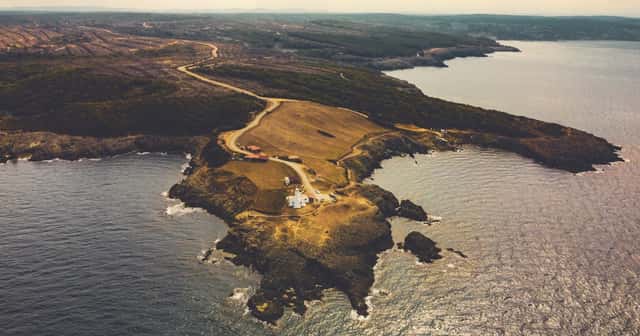
Turkey and South Korea signed four agreements in Seoul on Tuesday, November 3. One of them sets up talks on how Korean lenders could help pay for a planned nuclear power plant at Sinop, on Turkey's Black Sea coast. President Recep Tayyip Erdoğan and President Lee Jae Myung also agreed to look for more joint arms production and to push two-way trade toward a $15 billion target.
The deal does not pick a builder for the Sinop plant. Erdoğan said before the trip that Turkey still weighs other countries' offers. Even so, the financing memorandum is the most concrete step yet toward a Korean role in the project. Local groups in Sinop have opposed a nuclear plant there for years, and they restated that view this week.
This report sets out what was signed, what each leader said, what the trade figures show, and where the dispute over Sinop stands.
What was signed in Seoul
Four memorandums of understanding were signed before the two leaders spoke to the press, according to the Turkish presidency's account of the day. A memorandum of understanding is a statement of intent. It does not bind either side to a contract or a price.
| Agreement | Turkish signer | Korean signer |
|---|---|---|
| Science, technology and innovation | Foreign Minister Hakan Fidan, for the Industry Ministry | Science and ICT Minister Bae Kyung-hoon |
| Natural resources and mining | Energy Minister Alparslan Bayraktar | Trade, Industry and Resources Minister Kim Jung-kwan |
| Energy cooperation | Energy Minister Alparslan Bayraktar | Climate, Energy and Environment Minister Kim Sung-whan |
| Nuclear project financing | Necati Yamaç, head of Türkiye Nükleer Enerji AŞ | Hwang Ki-yeon, head of Korea Eximbank |
The financing memorandum links Türkiye Nükleer Enerji AŞ, the state company set up to run new nuclear projects, with the Export-Import Bank of Korea. It covers sharing project information, studying whether financing is feasible and finding possible sources of funds, The Korea Times reported.
"With this MOU, we will be able to proactively help Korean companies participate in new Turkish nuclear power plant projects," Lee said at the joint press event, according to The Korea Times.
The science memorandum covers joint research and staff exchanges in six fields, including AI, biotechnology, advanced telecommunications and materials. The energy memorandum covers renewables, power grids and nuclear power. The mining memorandum covers critical minerals and rare earth projects, the paper said.
What the leaders said
Erdoğan called South Korea a "strategic partner" and a close friend. He noted it was his first visit in eight years, according to the presidency. Lee had visited Turkey in November 2025 and again in July. He said the two sides discussed steps to lift trade to the $15 billion goal "in a balanced and sustainable way." He said they also discussed updating their free trade agreement, which took effect in 2013, The Korea Times noted.
On defense, Erdoğan said: "The defense industry is one of the primary areas where our strategic partnership has yielded concrete results." He added that the two sides wanted more joint projects "such as Firtina howitzers and the Altay tank," Reuters reported via Nikkei Asia. Turkey's Altay battle tank was built on technology from Hyundai Rotem's K2 tank, the Korea JoongAng Daily noted.
Lee said the two countries would expand joint production and look for chances to sell arms together in other countries. He did not name any. He said work on the Sinop project, "including site assessment work and the operation of a joint working group," was going smoothly, the JoongAng Daily reported.
The two leaders also spoke about the war in Ukraine and the Middle East, according to Korean reports. Erdoğan said Turkey backs a "dialog-based approach" to lasting peace on the Korean Peninsula, the presidency said. Lee said Turkey restated its support for his government's policy toward North Korea, according to Reuters.
The visit comes two days after Lee asked his own parliament to pass a record budget, which 567politics covered here. For a side-by-side look at the two political systems, see our South Korea and Türkiye comparison.
The Sinop project and what is still open
Turkey's first nuclear plant is being built at Akkuyu on the Mediterranean coast by Russia's state nuclear company, Rosatom. It has four units. The second plant is planned for the İnceburun headland at Sinop, and a third for the Thrace region, Yeniçağ reported.
The JoongAng Daily put the Sinop plan at four reactors of 1,400 megawatts each. It put the cost at about 40 trillion won, or $30 billion. Evrensel gave the same $30 billion estimate but a lower total capacity of 4,560 megawatts. 567politics could not find an official Turkish document that settles the size. The Korea Times said Turkey aims to start making power at Sinop before 2035.
The site has a long history. Evrensel recounts that Turkey talked with Japan in 2013, that a Japanese, French and Turkish group was to build it, and that the plan stopped in 2019 after cost estimates doubled. Talks with Russia followed in 2022, and Korea's state utility, KEPCO, made an offer in January 2023, the paper said.
In a written interview with Yonhap published on November 2, Erdoğan said: "We regard the Republic of Korea as a great potential collaborator on this initiative." He said Turkey had done "extensive preliminary feasibility studies" with KEPCO. But he said the final choice would weigh "power generation costs, financing arrangements and the project's potential benefits for the Turkish economy." He added: "We are taking into account our contacts with other countries and examining all possible choices in light of our national interests."
That leaves three matters unsettled: the choice of builder, the price at which the state would buy the plant's power, and who would carry the cost of any overrun.
The price question matters because of Akkuyu. A state power company has agreed to buy Akkuyu's electricity at 12.35 US cents per kilowatt-hour, according to Yeniçağ and Evrensel. Evrensel estimated that a Sinop deal could carry a 20-year guarantee of 11 to 12 cents. That figure is the paper's own estimate. No such term has been announced.
Trade has grown, with a large Turkish deficit
Trade between the two countries has risen since the free trade deal. It reached $11.4 billion in 2025, according to Anadolu Agency. In the first nine months of 2026 it was $8.7 billion.
Source: Anadolu Agency
Show the numbers
| Year | Trade volume |
|---|---|
| 2020 | $6.8bn |
| 2021 | $8.6bn |
| 2022 | $10.1bn |
| 2023 | $10.5bn |
| 2024 | $10.2bn |
| 2025 | $11.4bn |
Sources do not agree on the exact level. Korean outlets, including The Korea Times and the JoongAng Daily, put 2025 trade at a record $10.7 billion. The gap may reflect how each country records shipments, but neither outlet explained it.
Both sides agree that most of the trade flows from Korea to Turkey. In the Yonhap interview, Erdoğan said Turkey sold about $1.14 billion of goods to South Korea in 2025 and bought $10.26 billion. "We prioritize developing a more balanced trade structure," he said. Anadolu reported that Turkish sales to Korea came to $920.3 million in the first nine months of 2026. Pharmaceutical products led the list, at $321.8 million.
Korea has its own list of concerns. The Korea Times reported that the leaders agreed to tackle import limits and customs delays. It said they would also keep working on the trouble Koreans face in getting Turkish work permits.
The dispute over a plant at Sinop
The financing deal brings a long local fight back into view. The Sinop Anti-Nuclear Platform, a group of local residents and environmental groups, held a rally in Sinop in April to mark 40 years since the Chernobyl disaster. Its call for the rally said the plants would do lasting harm to nature and to living things.
Mehmet Horuş, a lawyer for the platform, told Yeniçağ this week that the group opposes every reactor design. "We are categorically against nuclear power being built," he said. "One kills faster, one kills slower," he said of the different reactor models. He said the group sees no need to find a financier. "Because it is an unnecessary investment, even a single penny is a loss," he said. He said the platform has sued over the plant's environmental impact report and zoning plans. In those cases it argues, citing data from experts at the Chamber of Electrical Engineers, that Turkey has no public need for a new nuclear plant.
Necdet Pamir, an energy analyst, made a narrower case to the same paper. He said Turkey's installed power plants, if well run, could produce 40 to 45 percent more electricity than the country needs at its August peak. "We have no urgent need for such a thing right now," he said. He said a purchase guarantee like Akkuyu's would push up power bills. He also said the costs of taking plants apart at the end of their lives, and of handling their waste, are "never discussed." Pamir said he could not judge the Korean terms because no deal or tender has been made public.
Evrensel reported that local fishers fear warm water released from the plant could harm Black Sea fish stocks. It said residents also worry about forest loss at İnceburun and about the risk of an accident. Opposition parties describe the use of foreign state-backed groups as handing "the homeland's soil" to foreign countries for up to 100 years, the paper said. It did not name the parties.
The government's case rests on cost, supply and growth. Erdoğan told Yonhap the choice of partner would turn on generation costs, financing and benefits to the Turkish economy. Supporters of nuclear power point to its low carbon output and steady supply in any weather, Yeniçağ noted.
567politics found no recent representative poll of opinion in Sinop or nationwide on a second nuclear plant. The views above are those of named groups and officials, not measures of public opinion.
Links to Turkey's wider foreign policy
The Seoul visit is part of a busy autumn for Turkish diplomacy. The parliament in Ankara is expected to vote as soon as Wednesday on a defense pact with Saudi Arabia and Pakistan, which 567politics reported on. Lee and Erdoğan last met in Ankara in July, on the sidelines of a NATO meeting, the JoongAng Daily said.
Energy costs are also a live issue at home. Finance Minister Mehmet Şimşek has said that rising energy prices slowed the fall in inflation, which rose to 29.77 percent in October, as 567politics reported. In the Yonhap interview, Erdoğan cited serious risks to energy markets and trade routes, including the Strait of Hormuz. He called for more Korean investment in Turkey's transport and logistics networks.
Next steps for the agreements and for Sinop
The memorandums set up talks, not contracts. The next steps include a first meeting of a joint science committee and a new energy transition forum, The Korea Times reported. The two countries will mark 70 years of diplomatic ties in 2027, and Erdoğan said special events are planned.
For Sinop, the key test will be whether Turkey opens formal talks with a Korean group on price, financing and who bears the risk. Erdoğan has said no final choice has been made. The anti-nuclear platform says it will keep up its legal challenges.
How we reported this: 567politics read the Turkish presidency's statement and reports from Yonhap, Reuters, The Korea Times, the Korea JoongAng Daily, DW Türkçe, Anadolu Agency, Yeniçağ and Evrensel. Quotes from Turkish-language sources are our translations. Our editorial standards explain how we handle conflicting figures.
Differing perspectives
Should Turkey build its second nuclear power plant at Sinop with South Korean partners?
Each position is summarized as its supporters make it, with equal weight and in alphabetical order. A summary is not an endorsement; the evidence for each is weighed in the story above.
Back Korean firms to build Sinop with state financing
Who holds it: President Lee Jae Myung and the South Korean government
Seoul says work on Sinop is going smoothly, with site studies and a joint working group under way since the 2025 nuclear agreement. The new Korea Eximbank memorandum lets Korea help its companies win the project by studying financing and finding funds early. Lee presents the plant as part of a wider partnership with Turkey that also covers defense, minerals, clean energy and trade, which both sides say they want to make more balanced.
In their words: Korea JoongAng Daily, reporting Lee's joint press statement ↗
Delay new reactors and use existing capacity first
Who holds it: Energy analyst Necdet Pamir
Pamir says Turkey has no urgent need for a new nuclear plant. If well maintained and run, its existing plants could supply 40 to 45 percent more power than the August peak. He warns that a purchase guarantee like Akkuyu's 12.35 cents per kilowatt-hour would raise bills. He says the costs of taking plants apart and of storing waste are never set out, and that a deal cannot be judged until its terms are public.
In their words: Yeniçağ, interview with Necdet Pamir ↗
Pursue Korea as a partner, if costs and financing fit
Who holds it: President Recep Tayyip Erdoğan and the Turkish government
Turkey calls South Korea a great potential partner for Sinop and has done extensive feasibility studies with KEPCO. The government wants more nuclear power to cut its reliance on imported energy. It says the final choice will weigh generation costs, financing terms and benefits to the Turkish economy. It is also weighing other countries' offers and says it will judge every option by Turkey's national interests before it signs a deal.
In their words: Yonhap News Agency, written interview with Erdoğan ↗
Stop the Sinop nuclear plant entirely
Who holds it: Sinop Anti-Nuclear Platform, local residents and environmental groups
The platform wants nuclear plant projects in Turkey scrapped, not handed to a different builder. It says nuclear facilities do lasting and irreversible harm to nature, ecosystems and living things. Forty years after Chernobyl, local people still remember that accident, and the group's slogans warn that Sinop must not become another Chernobyl. It argues that a Turkey without nuclear power is possible, and it presents its local resistance as part of a wider objection to nuclear energy.
In their words: Sinop Anti-Nuclear Platform (NKP) ↗
READ BEYOND 567POLITICS
Alternate sources & perspectives
Independent coverage and primary evidence to help you compare arguments. A link is not an endorsement; perspective labels describe the linked material.
- primary evidence
Güney Kore ile çok taraflı platformlardaki iş birliğimizi daha ilerilere taşımakta kararlıyız ↗
Presidency of the Republic of Türkiye
Official account of the Seoul talks, Erdoğan's statement and the four memorandums with their signers.
- primary evidence
(Yonhap Interview) Erdogan seeks stronger S. Korea partnership in energy, tech, logistics amid global uncertainties ↗
Yonhap News Agency
Erdoğan's written interview before the trip: criteria for choosing a Sinop partner, 2025 export and import figures, and the $15 billion trade target.
- independent analysis
Korea, Turkey deepen Sinop nuclear plant cooperation at Seoul summit ↗
The Korea Times
Details of the Eximbank financing memorandum, Lee's remarks, the 2035 target, and trade and work-permit issues.
- independent analysis
South Korea, Turkey sign Sinop nuclear plant financing deal at Seoul summit ↗
Korea JoongAng Daily
Reactor count and cost estimate, Lee's statement on site assessment, and the Altay tank's K2 origins.
- independent analysis
South Korea, Turkey to cooperate in nuclear, defense, infrastructure ↗
Nikkei Asia (Reuters)
Reuters report with Erdoğan's defense remarks and Turkey's plans for Sinop and Thrace.
- independent analysis
Erdoğan ile Güney Kore Devlet Başkanı Lee görüştü: Dört anlaşma imzalandı ↗
DW Türkçe
Turkish-language report on the agreements and the leaders' defense cooperation message.
- independent analysis
Türkiye ve Güney Kore yeni ekonomik işbirliklerine odaklanıyor ↗
Anadolu Ajansı
Bilateral trade series used in the chart, plus 2026 export figures by product.
- other perspective
Nükleer santral için Güney Kore işaret edildi: Çevresel riskler, güvenlik endişeleri, ekonomik maliyetler unutuldu ↗
Evrensel
History of the Sinop project and a summary of environmental, safety and cost objections, including a purchase-price estimate.
- other perspective
Sinop Nükleer Santrali'nde Güney Kore dönemi mi? Yeniçağ'a konuştular ↗
Yeniçağ
Interviews with energy analyst Necdet Pamir and Sinop Anti-Nuclear Platform lawyer Mehmet Horuş.
- other perspective
Çernobil nükleer felaketinin 40. yılında Sinop'ta 'Nükleer santrallara hayır' mitingi düzenliyoruz ↗
Nükleer Karşıtı Platform
The anti-nuclear platform's own statement of its opposition to the Sinop plant.
Reviewed 2026-11-03. Sources were hand-picked because the discovery tool returned only unrelated pages (dictionaries, medical guidelines, job listings). Every source below was opened in full on November 3, 2026. The Turkish presidency's account is the primary record of the four memorandums and their signers; the memorandum texts themselves were not published. Trade figures differ between Anadolu Agency ($11.4 billion for 2025) and Korean outlets ($10.7 billion); neither explains the gap. Sinop capacity figures also differ between the Korea JoongAng Daily and Evrensel, and no official Turkish document settling them was found. No recent representative poll on a second nuclear plant was found. The opposing positions come from a local anti-nuclear platform and an energy analyst; no statement from a Turkish opposition party specifically on the Korean financing memorandum was found by publication.