Spain's Supreme Court lets 190,000 children of 'grandchildren's law' citizens vote. Their parents stay barred
The court said its own logic reaches the children but it is too late to act before Nov. 29. Vox and Iustitia Europa are pushing back.
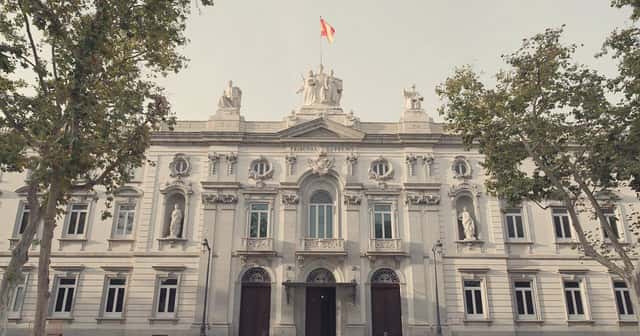
About 190,000 Spaniards abroad will be able to vote in the November 29 general election, even though Spain's Supreme Court says the logic of its own earlier rulings points the other way. In two orders dated November 9, the court's administrative chamber refused requests from Vox and the small party Iustitia Europa to suspend the votes of 189,678 adult children. Their parents became Spanish under the 2022 Democratic Memory Law, the so-called "ley de nietos" or grandchildren's law. In the same session it kept in place its September suspension of the parents' votes. That leaves roughly 162,000 people who gained citizenship under the law unable to vote on November 29, while their children, who are Spanish only because their parents are, can.
The court did not say the children's position is safer than their parents'. It said the opposite. "If the census registration of the parents is questioned, in pure logic the same must be done for their children," the majority wrote, El País reported. It refused anyway because, three weeks before the vote, it doubted the suspension could be carried out in time. On November 10 Iustitia Europa asked the court to reconsider, and Vox leader Santiago Abascal said his party would seek "clarifications." The ruling has turned a dispute over a 2022 law into a live question about who is on the electoral roll for a close national election.
What the court decided#
The orders came from the Fourth Section of the Supreme Court's Contentious-Administrative Chamber, a panel of six judges. The CGPJ, the judiciary's governing council, published them on November 9. There were two related decisions.
First, the court denied the request to extend its interim measures to the children. The order in Iustitia Europa's case, case 1013/2026, was written by Judge Antonio Narváez Rodríguez. Judge Antonio Jesús Fonseca-Herrero dissented. Judge María Alicia Millán agreed with the result but not the reasoning. A parallel order resolved Vox's case, 1015/2026.
Second, the court rejected objections from associations and individuals affected by the earlier suspension. Its orders of September 10 and October 12 "are maintained in their entirety," the CGPJ said. Millán dissented from that decision, as she has from each earlier one.
The table sets out who can and cannot vote under the court's orders, using the figures in the November 9 ruling. Those figures come from the State Attorney's October 28 filing and an October 8 Foreign Ministry report.
| Group | People | Vote on Nov. 29? |
|---|---|---|
| Nationalized as descendants of exiles (Annex I) | 163,355 | Suspended |
| Of those, with consular proof of real exile | 901 | Yes |
| Adult children of the newly nationalized (Annex III) | 189,678 | Yes |
Source: Supreme Court order, Nov. 9, 2026 (case 1013/2026)
Show the numbers
| Group | People |
|---|---|
| Annex I, vote suspended | 162,454 |
| Annex I, exile certified | 901 |
| Annex III children, may vote | 189,678 |
Reported totals for the first group differ slightly. The order's text cites 163,020 people in places, while RTVE, El País and El Español quote the same order's figure as 163,355. Both accounts give 162,454 people suspended after the 901 are removed. The gap does not change the outcome.
Why the court let the children vote#
The majority's reasoning was about timing, not merits. The order concedes that Iustitia Europa "could have included" the request when it first filed its appeal. It also accepts that the scale only became clear with the October 8 Foreign Ministry figures. But the request is being decided when "more than half of the electoral period" has passed. The judges noted it comes a week before the campaign opens on November 13 and two weeks before voters abroad start depositing ballots at consulates. Starting a review of the roll of absentee voters, known as the CERA, "is contrary to the requirements of the principles of legal certainty and electoral stability," the judges wrote. On balance, granting it could cause "serious disruption of the general interest."
The court said it had "serious doubts" the measure could be carried out. A suspension would need the government to identify each person, the census office to flag them, notice to each to let them object, rulings on those objections and custody of their ballots. All of that depends "on the action of multiple administrations and third parties," it said. The census office was still struggling with the first suspension: on October 28 it reported 30,482 records not yet identified, El País reported from the order.
The State Attorney, who represents the government, had argued the children's votes could make little difference, citing low turnout among CERA voters in past elections. The court rejected that. Future turnout cannot be known, it said, and the children are a larger group than the parents it had already suspended. The lawyer for the Cortes and the Central Electoral Board asked the court to deny the request on grounds of legal certainty and roll stability, and the court agreed with that part.
The dissent and the concurrence#
Fonseca-Herrero said the majority was inconsistent. "If in the first case the interim measure was necessary to guarantee the future judgment, in the second it is equally necessary," he wrote. He also said the job was smaller than the majority implied. Officials would only need to check which of the 189,678 are children of the 901 parents with certified exile. In his view that was "not a task of such complexity" that it could not be done before the vote. He added that once the votes are cast and counted, no later fix is possible.
Millán reached the same result as the majority by a different route. In her view, the children hold nationality under a separate clause of the law, so doubts about how their parents qualified do not reach them directly. She cited Article 25.2 of the Civil Code, which protects third parties acting in good faith even when a grant of nationality is later voided. She also noted that no fraud is attributed to the parents or the children. The dispute, she wrote, is about a government interpretation, not the conduct of those who applied. She also dissented on the parents. There she wrote that invoking "the purity or regularity of the electoral census" does not by itself justify suspending the vote of Spanish citizens added to the roll "by fully effective acts." She put the suspended group at about 0.42 percent of the 38,728,356 voters on the roll for this election, RTVE reported.
How the dispute began#
The Democratic Memory Law of 2022 lets descendants of Spaniards who went into exile claim Spanish nationality. The exile must have been for political, ideological or religious reasons, or because of sexual orientation or identity. A Justice Ministry instruction of October 25, 2022 told consulates to presume exile for anyone who left Spain between July 18, 1936 and December 31, 1955. That instruction is now the core of the case.
In September the court said the instruction "does not appear to conform" to the law. Its view in the November 9 orders is that the data "increase still further the rational indications of alleged irregularities of great relevance" in the CERA, El Español reported. Of the 163,355 people naturalized under that route, only 901 had shown direct proof of exile by late October, according to the State Attorney's figures. The court calls that an "extraordinary figure." Those 901 can vote.
The court has not ruled on the merits. Its suspension is an interim measure that lasts while the case is pending. A final judgment could still find the instruction lawful or unlawful.
The children are a different legal category. They gained nationality under a separate clause of the same law, Annex III of the instruction, as adult children of the newly nationalized. Vox and Iustitia Europa argued that this makes their status depend entirely on their parents'. The court agreed in principle and refused in practice.
- Justice Ministry instruction presumes exile for 1936-1955 emigrants
- Central Electoral Board declines to purge the absentee roll
- Supreme Court suspends the votes of the newly nationalized
- Cortes dissolved; election called for Nov. 29
- Court upholds suspension and applies it to Nov. 29
- Iustitia Europa asks to extend it to their children
- Court refuses the extension and keeps the parents' suspension
- Iustitia Europa files for reconsideration; Vox seeks clarification
- Official campaign begins
- General election
What the parties say#
The question splits the main parties along the lines of the coming election, though not in the same words. The interactive party spectrum for Spain places them as dated editorial estimates; the positions below come from the parties' own statements.
Vox. Vox brought one of the two cases. Abascal spoke to COPE radio on November 10. He said the court "agrees with us on the substance" but accepts that "the administration does not have the material capacity" to remove the children from the roll, Europa Press reported. He disagreed: "We think it is not so difficult, because really only 900 people met the requirements, so only the children of those 900 should be able to vote." He called the law a "trap" by Pedro Sánchez's government to distort the result and said Vox would seek "some kind of clarification." That claim of intent is his. The court has questioned the instruction's legality but has made no finding about motive.
Iustitia Europa. Its lawyer, Luis María Pardo, filed a request for reconsideration on November 10, Europa Press reported. He argues that "once the elections are held and the votes counted, later correction of the census may be useless to repair its effects on the result." A group of nearly 190,000, he wrote, "may be decisive where the award of the last seat depends on small differences." He also says the risk cannot be measured without knowing how many of the children are on the roll and in which provinces.
The government and PSOE. The PSOE-led government welcomed the ruling. Government sources told RTVE it was "in line" with the State Attorney's position. They called it a "brake on the strategy" of what they called "ultra-right organizations (Vox and Iustitia Europa)" to "suppress fundamental rights progressively and massively and cast doubt on the electoral result." They added that the PP had "made this strategy its own." The same sources said they regret that the court did not apply that reasoning to the parents who gained nationality under the law.
PP. No statement from the People's Party on the November 9 orders was found in the sources reviewed. Its earlier position is on record. After the October 12 ruling, Alberto Núñez Feijóo said that "in an election there can be no doubts about the census. None," Europa Press reported. The next day he said "there is no democratic cleanliness if there is no cleanliness of the census." He said the PP does not oppose citizenship for "the grandchildren of exiles, as the law says," only an instruction that in his view opened the vote "indiscriminately," Teleprensa reported.
The parties' claims about intent cut both ways and are hard to test. The government says its opponents want to cast doubt on the result. Vox says the government wanted to add votes. Neither side has offered evidence of intent, and the court has not addressed it. What the court has said is narrower: the instruction may not match the law, and the roll should include "solely and exclusively" those who meet the legal requirements.
The people affected#
Associations of descendants have taken part in the case as co-defendants. In this round, the Association of Spanish Descendants in the World, the Cubans for Democracy association and Extranjeristas en Red took part as respondents, according to the order. Along with the State Attorney, respondents argued that the new request had no proper link to the subject of the original appeal. The court disagreed on that point but denied the request on other grounds.
The Argentina-based Center of United Spanish Descendants (Cedeu), represented by former Supreme Court judge José Antonio Martín Pallín and lawyer Eduardo Ranz, has fought the parents' suspension since October. It calls it "a clear discrimination" compared with other groups, such as descendants of Sephardic Jews and veterans of the International Brigades. It also says the vote "is not removed even in times of war," El País reported. The group says on its website that it has more than 14,000 members in 10 countries. That figure has not been independently checked.
These groups say the state granted the nationality, so the burden should not now fall on the citizen. One Costa Rica resident told the court the suspension causes "irreparable harm" because losing the vote in a given election cannot be undone, El País reported. That point mirrors Iustitia Europa's argument from the other side.
Whether the votes could change a seat#
No one can yet say whether these votes could change a seat. The majority said the people already suspended are spread across all of Spain's constituencies. Their participation "could be relevant to the electoral result," the judges wrote, elDiario.es reported. Seats are allocated province by province, so a small number of votes can matter where the last seat is close. Our report on the latest 40dB poll found the PP and Vox together still projected above a majority, with the PSOE about two points behind the PP. But turnout among absentee voters is unknown for this election, and how the children would vote is unknown. A forecast of seat effects would need provincial counts that have not been published.
Pending appeals and the main case#
The court must now rule on Iustitia Europa's request for reconsideration and on whatever Vox files. Each ruling has to come before ballots abroad are counted. The main case, on whether the 2022 instruction is lawful, remains open. If the court eventually finds the instruction lawful, the parents will have been kept from voting in an election they were entitled to vote in. If it finds the instruction unlawful, the children's votes will already have been counted. The court chose which of those risks to accept on November 9, and it said so.
Differing perspectives
Should the votes of people made Spanish under the 'grandchildren's law', and of their children, be suspended for the Nov. 29 election?
Each position is summarized as its supporters make it, with equal weight and in alphabetical order. A summary is not an endorsement; the evidence for each is weighed in the story above.
Do not extend it, and restore the parents' vote
Who holds it: Spanish government (PSOE-led), via government sources and the State Attorney
The government welcomes the refusal to suspend the children as a protection of the electoral system and of all Spaniards' fundamental rights, and as a check on what it calls a strategy by Vox and Iustitia Europa, later adopted by the PP, to cast doubt on the result. It regrets that the court did not apply the same reasoning to the parents.
In their words: RTVE ↗
Keep the roll limited to those who meet the law
Who holds it: People's Party (Alberto Núñez Feijóo)
There can be no doubts about the electoral roll in an election, and there is no clean democracy without a clean roll. The PP says it does not oppose citizenship for real grandchildren of exiles, as the law provides, but objects to a ministry instruction that in its view opened nationality and the vote indiscriminately.
In their words: Europa Press ↗
Lift the suspension for everyone affected
Who holds it: Descendants' associations such as Cedeu (lawyers José Antonio Martín Pallín and Eduardo Ranz)
The state granted the nationality, so citizens should not lose a vote over an administrative interpretation they did not write. Suspending them discriminates against them compared with other groups granted nationality by law, such as Sephardic descendants and International Brigades veterans, and the right to vote is not removed even in wartime. A lost vote in a given election cannot be repaired later.
In their words: El País ↗
Suspend the children's votes too
Who holds it: Vox (Santiago Abascal) and Iustitia Europa (lawyer Luis María Pardo)
The children hold nationality only because their parents do, so if the parents' registration is in doubt, the children's is too, as the court itself said. Only about 900 parents have proved exile, so officials would only need to identify their children. Once votes are cast and counted, fixing the roll later cannot undo the effect on the result, and nearly 190,000 votes could decide the last seat in close provinces.
In their words: Europa Press ↗
Cite this article
567 Politics staff. “Spain's Supreme Court lets 190,000 children of 'grandchildren's law' citizens vote. Their parents stay barred.” 567politics. Published 2026-11-11. https://567politics.com/news/spain-supreme-court-ley-de-nietos-children-vote-ruling-november-2026
Wikipedia citation
{{cite news |title=Spain's Supreme Court lets 190,000 children of 'grandchildren's law' citizens vote. Their parents stay barred |url=https://567politics.com/news/spain-supreme-court-ley-de-nietos-children-vote-ruling-november-2026 |work=567politics |author=567 Politics staff |date=2026-11-11 |language=en}}CSL-JSON for reference managers
{
  "id": "https://567politics.com/news/spain-supreme-court-ley-de-nietos-children-vote-ruling-november-2026",
  "type": "article-newspaper",
  "title": "Spain's Supreme Court lets 190,000 children of 'grandchildren's law' citizens vote. Their parents stay barred",
  "URL": "https://567politics.com/news/spain-supreme-court-ley-de-nietos-children-vote-ruling-november-2026",
  "container-title": "567politics",
  "language": "en",
  "author": [
    {
      "literal": "567 Politics staff"
    }
  ],
  "issued": {
    "date-parts": [
      [
        2026,
        11,
        11
      ]
    ]
  }
}Citations identify this article and its publication date. Assess the reporting and its linked sources before using it as evidence.
Read this article as Markdown or JSON. Cite the original page and retain its sources, dates and qualifications.
Embed this article summary
Paste this HTML into your page. The summary stays linked to the full story and updates with it. No account required.
<iframe src="https://567politics.com/embed/news/spain-supreme-court-ley-de-nietos-children-vote-ruling-november-2026?theme=auto" title="Spain's Supreme Court lets 190,000 children of 'grandchildren's law' citizens vote. Their parents stay barred by 567politics" width="100%" height="440" style="border:0;max-width:100%" loading="lazy"></iframe>
<p style="font-size:14px">Spain's Supreme Court lets 190,000 children of 'grandchildren's law' citizens vote. Their parents stay barred by <a href="https://567politics.com/news/spain-supreme-court-ley-de-nietos-children-vote-ruling-november-2026" rel="nofollow">567politics</a></p>
<script async src="https://567politics.com/embed.js"></script>
READ BEYOND 567POLITICS
Alternate sources & perspectives
Independent coverage and primary evidence to help you compare arguments. A link is not an endorsement; perspective labels describe the linked material.
- primary evidence
El Tribunal Supremo deniega las medidas cautelares solicitadas por Iustitia Europa y VOX en relación al voto de hijos de personas nacionalizadas por la 'Ley de Nietos' ↗
Consejo General del Poder Judicial
Official court communication summarizing both Nov. 9 orders: refusal to extend the suspension to the children and confirmation of the parents' suspension.
- primary evidence
Auto de 9 de noviembre de 2026, recurso 1013/2026 (pieza de medidas cautelares), anonimizado ↗
Tribunal Supremo, Sala Tercera, Sección Cuarta
Full order with the 189,678, 901 and 162,454 figures, the majority's timing reasoning, Judge Fonseca-Herrero's dissent and Judge Millán's concurrence.
- left argument
El Supremo rechaza suspender el derecho a voto a los hijos de los nacionalizados por la 'ley de nietos' ↗
RTVE
News report quoting the order, Judge Millán's dissent on the parents, and government sources who call the ruling a brake on what they describe as an ultra-right strategy.
- independent analysis
El Supremo rechaza suspender también el voto de los hijos de los nacionalizados por la 'ley de nietos' ↗
El País
Detailed account of the majority's reasoning, the census office's 30,482 unidentified records and the dissent.
- independent analysis
El Supremo no suspende el voto de los que se nacionalizaron españoles por ser hijos de los favorecidos por la 'ley de nietos' ↗
El Español
Report on the order's findings on the instruction and the 'extraordinary figure' of nationalized people versus certified exiles.
- independent analysis
El Supremo rechaza la petición de Vox de impedir votar el 29N también a los hijos de los nacionalizados por la ley de nietos ↗
elDiario.es
Report including the judges' view that the suspended group's spread across constituencies could affect the result, plus government reaction.
- independent analysis
El Supremo rechaza extender la suspensión del voto para el 29N a los hijos de los nacionalizados por la 'ley de nietos' pero sí mantiene la medida cautelar para los ya afectados ↗
El Constitucional
Legal-news account of both orders and Judge Millán's dissent on 'fully effective acts'.
- right argument
Vox pedirá aclaraciones al Supremo por rechazar suspender el voto a hijos de nacionalizados por la 'ley de nietos' ↗
Europa Press
Santiago Abascal's Nov. 10 COPE interview: the court agrees on substance; only the children of about 900 certified parents should vote.
- right argument
Iustitia Europa recurre la no suspensión del voto a hijos de la 'ley de nietos' por su posible efecto en las urnas ↗
Europa Press
Iustitia Europa's Nov. 10 reconsideration request: correction after the count may be useless and nearly 190,000 votes could decide a last seat.
- right argument
El PP celebra el rechazo del TS a la 'ley de nietos' y señala que la decisión limita "la irresponsabilidad" del Gobierno ↗
Europa Press
PP and Alberto Núñez Feijóo's reaction to the Oct. 12 ruling: 'there can be no doubts about the census.'
- other perspective
Una asociación de descendientes de españoles se persona en el Supremo contra la suspensión del voto de los nacionalizados por la 'ley de nietos' ↗
El País
Cedeu's case against the suspension, represented by José Antonio Martín Pallín and Eduardo Ranz, and an affected Costa Rica resident's filing.
- other perspective
Una asociación argentina de descendientes de españoles recurre ante el Supremo: "Ni siquiera en tiempos de guerra se suspende el derecho al voto" ↗
Público
The affected descendants' argument that the suspension discriminates against them compared with Sephardic descendants and International Brigades veterans.
Reviewed 2026-11-11. Sources were opened and checked on Nov. 10-11, 2026 (ET). The Nov. 9 order in case 1013/2026 was read in full from the CGPJ's anonymized PDF; the parallel Vox order (1015/2026) was not located and is described from the CGPJ note and press reports. Iustitia Europa's Nov. 10 reconsideration filing was not found on an official site and is described from Europa Press and El Constitucional. No PP statement on the Nov. 9 orders was found, so the PP's position is taken from Alberto Núñez Feijóo's Oct. 12-13 remarks. The government's reaction comes from unnamed government sources quoted by RTVE and elDiario.es. Totals for the first group differ between the order's text (163,020) and press quotations of it (163,355). discover_politics_sources returned only unrelated retail and dictionary pages, so this list was picked by hand.