Justices press both sides on LGBTQ rule in Colorado Catholic preschool case
A majority seemed open to stricter review of Colorado's equal-opportunity rule, while several justices asked how a ruling could be kept from reaching race or public schools.
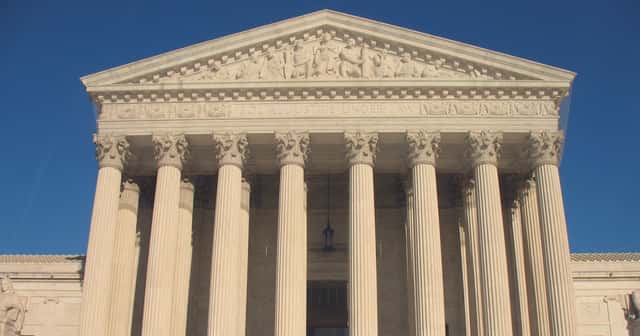
The Supreme Court heard two hours of argument on Tuesday, Nov. 3, in St. Mary Catholic Parish v. Roy, No. 25-581. The case asks whether Colorado may keep Catholic preschools out of its free Universal Preschool program because they will not sign on to a rule that bars turning away families based on sexual orientation or gender identity. Questioning began at 10:07 a.m. Eastern and the case was submitted at 12:09 p.m., according to the official transcript.
Most press accounts read the bench the same way. Amy Howe of SCOTUSblog wrote that a majority seemed ready to apply a stricter test to Colorado's rule, either by applying it directly or by sending the case back for a lower court to do so. The questions also showed sharp disagreement over how far such a ruling would reach. Several justices tested whether a religious objection to gay parents could be separated from one based on race, and whether a new rule for public funding could be limited to schools.
567 Politics previewed the case on Monday. This report covers what the lawyers said and what the justices asked. A decision is expected by the end of the term in June 2027.
What the case is about
Colorado voters approved Proposition EE in 2020, a nicotine tax measure that helps pay for the program, and Universal Preschool opened to families in 2023. It gives every child in the year before kindergarten 15 hours a week of free preschool. Becket, the religious liberty law firm representing the parishes, puts the value at more than $6,000 a year per child. Families can use the benefit at public schools, private centers, and religious preschools.
Every provider must agree to the same terms. In the words of the state's merits brief, each preschool must "provide eligible children an equal opportunity to enroll and receive preschool services regardless of race, ethnicity, religious affiliation, sexual orientation, gender identity, lack of housing, income level, or disability."
The Archdiocese of Denver asks families who enroll to support Catholic teaching, including on marriage and sex. Two parishes, St. Mary in Littleton and St. Bernadette, along with Catholic parents, sued the state in 2023. St. Bernadette is no longer part of the case, as Norton confirmed at the argument. The parishes said that agreeing to the sexual orientation and gender identity terms would conflict with the archdiocese's religious admissions policy. A federal district court ruled for the state after a trial. The U.S. Court of Appeals for the Tenth Circuit affirmed in September 2025. The Supreme Court agreed to hear the case on April 20, 2026.
- November 2020Colorado voters approve Proposition EE, which funds universal preschool
- Universal Preschool opens; parishes and Catholic families sue the state
- Federal district court rules for Colorado after a trial
- September 2025Tenth Circuit affirms
- April 20, 2026Supreme Court grants review
- November 3, 2026Oral argument
- By June 2027Decision expected
Source: Supreme Court of the United States, Becket, SCOTUSblog
The legal question turns on the Court's free exercise cases. Under Employment Division v. Smith (1990), a law that is neutral toward religion and applies to everyone generally gets only light review, even if it burdens a religious practice. A string of more recent decisions, Trinity Lutheran (2017), Espinoza (2020) and Carson v. Makin (2022), held that a state that funds private schools may not exclude religious ones because they are religious. Colorado says its rule is the first kind of law. The parishes say it is the second.
Who argued
| Advocate | Role | Allotted time |
|---|---|---|
| Nicholas R. Reaves, Becket | For the parishes and families (petitioners) | 20 minutes plus rebuttal |
| Sarah M. Harris, principal deputy solicitor general | For the United States, supporting the petitioners | 10 minutes |
| Helen Norton, Colorado deputy solicitor general | For the state (respondents) | 30 minutes |
The parishes' case
Reaves opened with the schools' mission. "The Archdiocese of Denver schools exist to pass on the faith to the next generation," he said. He told the justices that Colorado lets other providers organize around "specific competencies or interests" but refused that flexibility to the Catholic schools. "This is not a zero-sum game," he added. Letting families use the benefit at Catholic schools, he said, "won't take away a single seat from the over 2,000 preschools already participating in the program."
Chief Justice John Roberts pushed on the limits of that position. Carson, Trinity Lutheran and Espinoza, he noted, involved laws that singled out religious schools on their face. If the parishes' rule applied to any public benefit with conditions, he asked, "would it not in your view apply to things like drivers' licenses, employment benefits, Social Security? I'm not quite sure how you limit the applicability of your principle." Reaves answered that the rule would cover situations where the government subsidizes private parties and that a license is a regulation, not a benefit.
Justice Elena Kagan questioned the idea that Colorado was hiding hostility behind a neutral rule. "I think it would be a bit far-fetched to say that the government is doing this surreptitiously to get at religious schools," she said, describing the case instead as one of "the state trying to enforce its own nondiscrimination principles."
Reaves replied that the program already lets more than 2,300 schools limit enrollment for many reasons. "You can have a school that says, we're only going to admit vegetarians who speak two languages," he said. "But you won't allow Catholic schools to limit enrollment in this one particular way."
Justice Sonia Sotomayor then asked him directly: "Your Catholic schools will reject a child merely because their parents are homosexual?" Reaves said that if it was "the sincere religious exercise of the Petitioner, then I think that would be permitted." Sotomayor followed with the same question about race. Reaves said no and pointed to the Court's tax case on race discrimination at Bob Jones University and to its 2021 decision in Fulton v. City of Philadelphia.
Justice Neil Gorsuch was the most openly sympathetic. If everything turned on whether a law discriminated in its text, he asked, what would be left of the Court's older unemployment-benefit cases, Sherbert v. Verner and Thomas v. Review Board? "The Constitution tends to deal in substances, not in shadows and procedures," he said.
Justice Brett Kavanaugh drew out a fact that came up again later. "My understanding is that the Catholic preschools here do not categorically exclude students with parents in same-sex marriages for that reason alone, correct?" he asked. "That is correct," Reaves said. Justice Ketanji Brown Jackson asked whether the parishes' rule would revive the worry in Smith about religious objectors becoming "a law unto themself."
The federal government's case
Harris told the Court there were "two main paths to reversal." The Court could hold that benefit programs requiring recipients to give up lawful religious practice trigger strict scrutiny, or it could hold that Colorado's program is not generally applicable because it lets some schools set their own admissions criteria.
Sotomayor said the first path would conflict with a footnote in Christian Legal Society v. Martinez (2010). "There is absolutely tension with that footnote," Harris acknowledged, calling it a "drive-by ruling." Later, Sotomayor told Harris that "no matter what line of cases we follow, there will be tremendous problems and a great cost to someone." Harris said she disagreed "with the idea that there is no way out of this," adding later in the exchange: "I think the Court currently has a mess."
Gorsuch noted that the federal government already applies strict scrutiny to religious claims under the Religious Freedom Restoration Act, and "there are 40 states that already have to do this."
Kagan asked whether public schools count as public benefits. Harris said yes, citing the Court's 2025 decision in Mahmoud v. Taylor. "So is the next case parents in a public school saying it's really important to my religious beliefs that my child not be educated with children of same-sex parents?" Kagan asked.
Jackson pressed the race comparison further. "There's no principled basis, I think, to distinguish between a entity that says my religious faith says my children can't go to school with the children of gay people from a religious entity that says my religion says my children can't go to school" with Black children, she said. Harris replied that the answer would likely come out differently under strict scrutiny. Kavanaugh noted that in the Fulton argument both the religious group and the United States had agreed the government "has a compelling interest in eradicating racial discrimination." Harris said she still agreed.
Colorado's case
"Colorado welcomes religious preschools to UPK," Norton began. "The only thing Colorado asks is that they comply with the same conditions that every publicly funded preschool must meet, religious and secular alike." She said the state chose to include religious providers before Carson was decided and that faith-based schools in the program may teach their beliefs. In answer to Roberts, she said a participating preschool could spend 80 percent of its time teaching religion.
On the claim that the state was targeting religion, she said "there is zero evidence of Colorado's intent." Roberts was not persuaded that the distinction from Carson mattered. "The effect of the law in Carson is pretty much the same as the effect of the law here," he said.
Justice Samuel Alito listed rules that look neutral but would fall hardest on religious minorities, including a ban on head coverings that would keep "Orthodox Jewish men and many Muslim women" from arguing before the Court, and a requirement to stun animals before slaughter that "would outlaw kosher and halal slaughterhouses."
Kavanaugh asked why the state had not looked for a compromise. "Why not seek the win/win?" he said. "There are 2,000 schools. There are only 34 Catholic schools." Calling the dispute "a would-be solution in search of a problem," he asked, "why has this been provoked when there's an ability for everyone to go to the school, a good school that's a fit for them and respect religious rights?" He also noted that under the current rules a Jewish, Muslim or Catholic school in the program cannot give preference to families of its own faith. He then cited trial testimony in which a program official said she was not aware that Catholics had historically faced discrimination, and asked whether that was the state's view. "Not at all, Your Honor," Norton replied.
Justice Amy Coney Barrett asked whether the record showed any LGBTQ parents being turned away. Norton pointed to a fifth-grader at St. Bernadette, which is no longer part of the case. Barrett then asked whether any entity other than religious ones had sought an exemption from the equal-opportunity mandate. "No, Your Honor," Norton said. SCOTUSblog reported that Barrett also cited a New York Times opinion essay by law professor Aaron Tang.
Norton returned several times to the state's goal: public money should support schools that offer "equal opportunity, not some opportunity." In closing, she warned that the parishes' approach would "create a standing entitlement of claimant-specific strict scrutiny" for every neutral, generally applicable condition on public funding.
Rebuttal
In rebuttal, Reaves argued that the harm Colorado describes is hypothetical. He said the Catholic schools had been licensed "for decades and there was not a single complaint" of anyone being turned away based on LGBTQ status. He also said there are "two UPK preschools currently in the program today within three miles of every single Catholic preschool in the Archdiocese," and that "Colorado's own expert said any harm was speculative."
How each side framed the day
Outside the courtroom, both sides stayed on message. "Colorado's Catholics-need-not-apply rules make a mockery of our nation's laws and commitment to religious freedom," Reaves said in a Becket statement. Becket said enrollment at archdiocesan preschools has fallen 20 percent since the program began and that two schools have closed. Dan and Lisa Sheley, Catholic parents of seven who are plaintiffs, said: "Universal should mean everyone."
Lambda Legal, which filed a friend-of-the-court brief with GLAD Law supporting Colorado, said that some justices "appeared ready to accept the petitioners' invitation to upend the established framework," while others recognized the state's commitment to protecting children with LGBTQ parents. "No four-year-old should be turned away from a taxpayer-funded classroom because of who their parents are," said Karen Loewy, the group's senior counsel. Chalkbeat, which covers Colorado schools, highlighted the same exchanges on race and on Kavanaugh's question about why the dispute had reached the Court.
What a ruling could change
The narrowest outcome would leave Smith in place but find that Colorado's program is not "generally applicable" because it allows other admissions preferences. That would send the case back for strict-scrutiny review, under which Colorado would need to show its rule serves a compelling interest by the least restrictive means. A broader ruling would adopt the federal government's first path and require strict scrutiny whenever a benefit condition requires giving up lawful religious practice. That would reach well beyond preschool, as Roberts's and Kagan's questions suggested.
The case sits within a wider fight over LGBTQ rights and religious claims in federal policy this fall, including the Marine Corps' transgender separations, the HHS rule on gender dysphoria under Section 504, and the transgender school sports measures on several state ballots today. 567 Politics tracks these disputes on its United States LGBTQ issue page.
None of the justices signaled when the Court would rule. Opinions in argued cases usually take months, and the biggest ones often come at the end of June.
Differing perspectives
Should Colorado be allowed to require religious preschools in its free pre-K program to accept families regardless of sexual orientation or gender identity?
Each position is summarized as its supporters make it, with equal weight and in alphabetical order. A summary is not an endorsement; the evidence for each is weighed in the story above.
Apply strict scrutiny to funding conditions on religion
Who holds it: The Trump administration, through the U.S. solicitor general's office, supporting the parishes
The federal government told the Court there were two main paths to reversal. A benefit program that conditions eligibility on giving up otherwise lawful religious exercise should face strict scrutiny, the rule it says Carson set out. Alternatively, Colorado's program is not generally applicable because it lets providers set other admissions criteria. It notes that federal law and 40 states already apply strict scrutiny to many religious claims, and says race discrimination would likely still fail that test.
In their words: Supreme Court of the United States, argument transcript ↗
Keep one equal-opportunity rule for every provider
Who holds it: State of Colorado, Colorado Department of Early Childhood, Attorney General Phil Weiser's office
Colorado says religious preschools remain welcome in the program, can teach their faith and shape their curricula, and many, including Catholic preschools, already take part. Every publicly funded provider, religious or secular, must give children an equal opportunity to enroll regardless of race, religion, sexual orientation, gender identity, income or disability. The state says this is a neutral, generally applicable condition on public money, adopted before Carson, and that families should not be turned away from a funded school because of protected status.
In their words: Colorado Attorney General, respondents' merits brief ↗
Let Catholic preschools join on their own terms
Who holds it: St. Mary Catholic Parish, Catholic parents including Dan and Lisa Sheley, and their lawyers at Becket
The parishes and parents say Colorado promised universal preschool and then shut out every Archdiocese of Denver preschool because those schools ask families to support Catholic teaching. They say the Supreme Court has already held in Carson, Espinoza and Trinity Lutheran that states may not exclude religious schools from public benefits because of their religious beliefs or practice. They note that enrollment at archdiocesan preschools has fallen 20 percent and two schools have closed since the program began, and that families have paid thousands of dollars out of pocket as a result.
In their words: Becket ↗
Protect children of LGBTQ parents in funded schools
Who holds it: Lambda Legal and GLAD Law, LGBTQ legal groups that filed a brief supporting Colorado
The groups say that when the state pays schools to provide preschool, the schoolhouse door must be open to every family. Religious schools can set their own admissions rules when privately funded, but no school should take taxpayer money and turn away a four-year-old because of who their parents are. They argue Colorado has a compelling interest in shielding children of LGBTQ parents from discrimination, and that a ruling for the parishes could invite discrimination in health care and social services too.
In their words: Lambda Legal ↗
READ BEYOND 567POLITICS
Alternate sources & perspectives
Independent coverage and primary evidence to help you compare arguments. A link is not an endorsement; perspective labels describe the linked material.
- primary evidence
Oral argument transcript, St. Mary Catholic Parish v. Roy, No. 25-581 ↗
Supreme Court of the United States
Official transcript of the Nov. 3, 2026 argument; source for all quotations from the justices and advocates.
- primary evidence
Brief on the merits for respondents ↗
Colorado Attorney General
Colorado's full defense of the equal-opportunity requirement, including the statutory text.
- right argument
Catholic parents & preschools fight for equal treatment at Supreme Court ↗
Becket
Statement from the petitioners' lawyers and client families after the argument, including enrollment and closure figures.
- left argument
U.S. Supreme Court Hears Argument on Whether Taxpayer-Funded Preschools Can Turn Away LGBTQ+ Families ↗
Lambda Legal
LGBTQ legal group that filed an amicus brief with GLAD Law supporting Colorado; post-argument statement.
- independent analysis
Court seems poised to side with Catholic preschools in religious discrimination dispute ↗
SCOTUSblog
Amy Howe's argument analysis, including the possibility of a remand for strict scrutiny.
- independent analysis
Supreme Court debates Colorado's Catholic preschool case ↗
Chalkbeat Colorado
Education-beat coverage from Colorado focusing on what the case means for the state's preschool program.
Reviewed 2026-11-03. discover_politics_sources returned only unrelated results (STMicroelectronics, retail and transit pages), so these sources were chosen by hand and each page was opened and checked on Nov. 3, 2026.