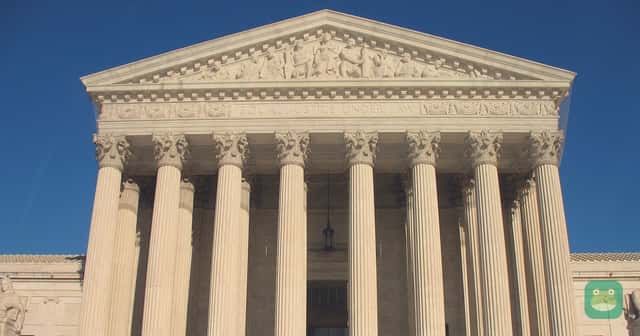
The Supreme Court will hear a religious liberty case on Tuesday, Nov. 3, which is Election Day. The question is whether Colorado can keep Catholic preschools out of its free preschool program. The schools will not agree to admit children regardless of sexual orientation or gender identity. That includes the children of same-sex parents.
The case, St. Mary Catholic Parish v. Roy, No. 25-581, is the only argument scheduled for Tuesday in the court's November session, according to the court's argument calendar. It pits the Archdiocese of Denver and two parish preschools against Colorado's Department of Early Childhood. The Trump administration has filed a brief supporting the Catholic schools, and the court granted the solicitor general's request to take part in the argument.
The dispute touches several lines of recent Supreme Court decisions on religion and public money. Commentators expect the ruling to clarify how far those decisions extend. This preview sets out the facts, the questions the justices agreed to decide, and the main arguments from each side. Our US issue page on LGBTQ rights tracks related policy positions.
The program and the rule at issue
Colorado voters approved Proposition EE in 2020, which raised money for a free preschool program. The state legislature then created the universal preschool program, known as UPK, and a new Department of Early Childhood to run it. UPK pays for 15 hours a week of preschool for every 4-year-old in the year before kindergarten, at public, private or faith-based providers that sign up. The petitioners' brief cites a state press release. It says Colorado values the benefit at about $6,300 per child on average and has provided it to more than 87,000 children since 2023.
To join, a preschool must sign an equal-opportunity agreement, SCOTUSblog's Amy Howe reported. It must let children enroll "regardless of race, ethnicity, religious affiliation, sexual orientation, gender identity, lack of housing, income level, or disability."
The Archdiocese's preschools ask families to support the Catholic Church's teaching on marriage and sex. According to Colorado's brief, witnesses for the schools testified that they would not enroll the children of same-sex parents. They also said an enrolled child who later identified as transgender could not stay. The petitioners' brief says school leaders are told to be "abundantly clear" with families about what the schools teach. It adds that the Archdiocese knows of no complaint from an LGBTQ family.
Colorado refused to exempt the schools from the equal-opportunity agreement. The state's brief quotes a Feb. 28, 2023 letter from the department's executive director, Lisa Roy. She wrote that she did "not have the authority to create an exemption that excludes faith-based providers" from the statute.
Becket, the religious liberty law firm representing the schools, says more than 1,500 children at more than 30 Catholic preschools were left ineligible for the funding. The petitioners' brief says enrollment at their preschools has dropped almost 20% and that one plaintiff parish, St. Bernadette, closed its preschool. The Washington Post, in a Nov. 1 report, described one St. Mary parent who chose the parish preschool for her children and gave up the state assistance as a result.
How the lower courts ruled
After a three-day bench trial, a federal district judge in Colorado largely ruled for the state. The U.S. Court of Appeals for the 10th Circuit affirmed on Sept. 30, 2025. It held that Colorado "did not exclude" religious preschools but instead "welcomed and actively solicited their participation," and that the equal-opportunity rule applies to every provider. That made the rule a neutral law of general applicability under Employment Division v. Smith, the 1990 decision holding that such laws generally do not violate the Free Exercise Clause even if they burden religious practice.
The schools asked the Supreme Court to intervene in November 2025. The court granted review on April 20, 2026, limited to two questions.
The two questions before the court
The first concerns Carson v. Makin, a 2022 decision in which the court struck down a Maine tuition program that paid for private schools but not religious ones. The 10th Circuit held that Carson applies only when a state openly excludes religious schools. The justices will decide whether it reaches more broadly, to conditions that burden religious practice.
The second concerns Smith itself. Under Smith, a law that is not "generally applicable" faces the strictest form of review. That happens if it treats similar secular conduct better than religious exercise, or if it allows case-by-case exemptions. The justices will decide what a challenger must show to meet that test.
Neither question asks the court to overrule Smith. Erwin Chemerinsky, a constitutional law scholar writing for SCOTUSblog, argues that the question "certainly underlies the case." He notes that three justices urged overruling Smith in a 2021 concurrence. Two others said they agreed with much of that reasoning but saw no need to decide it then.
The case for the Catholic preschools
The schools, represented by Becket, argue that the case should be "an uncomplicated one." Their merits brief says Colorado "knowingly excluded Catholic preschools solely on account of their religious exercise." It says that under Carson, Trinity Lutheran and Espinoza, a state may not deny a public benefit because of a recipient's religious practice. They say the 10th Circuit's reading would "dramatically narrow Carson and make it easy to evade."
They also argue the rule fails even under Smith because Colorado lets other preschools limit enrollment. The petitioners' brief lists 10 enrollment preferences in the state's March 2024 regulations. Head Start programs may limit enrollment to low-income families. Some preschools may serve only children with certain disabilities. A "catchall" preference lets the state approve other preferences. The schools say the state's witnesses testified it could allow preferences for "gender-nonconforming children," "children of color" or "the LGBTQ community." Their brief says: "Petitioners have no objection to Colorado's decision to allow over 1,000 UPK preschools to selectively serve the communities they are designed to serve—Petitioners simply want the same accommodation extended to them."
The brief also argues that Colorado lacks a compelling interest. It calls any harm to an LGBTQ family as "entirely speculative" while thousands of Catholic families have "zero Catholic UPK preschools available to them."
The Justice Department's brief takes a similar line. It argues that Colorado's law "treats comparable secular conduct better than religious exercise." The state allows enrollment limits based on disability or income but not on "sincere religious beliefs," the brief says. It also calls the catchall preference a system of individualized exemptions. Separately, it argues that strict scrutiny applies when a state ties school funding or other benefits to giving up lawful religious practice. It cites Sherbert v. Verner, a pre-Smith case, and says Carson confirmed that test. A group of 43 members of Congress, a coalition of states led by West Virginia and the U.S. Conference of Catholic Bishops are among those that filed briefs supporting the schools, according to the court's docket.
The case for Colorado
Colorado, represented by its Department of Law, argues that the schools "remain welcome to participate" in UPK. They must do so on the same terms as "all other publicly funded preschools—public and private, secular and religious." Its brief says many religious preschools, including Catholic preschools, take part. Faith-based providers "may continue to teach and shape their curricula according to their faith."
The state says Carson "applied the settled principle that government may not target religion for disfavored treatment" and did not displace Smith. It says the schools want "a sweeping new rule requiring strict scrutiny of any burden on religious conduct arising from neutral, generally applicable public-benefits conditions," and offer "no workable boundary."
On general applicability, Colorado argues that serving children with disabilities and low-income families is not an exception to the equal-opportunity rule. It says the UPK statute expressly prioritizes those children, and that specialized services for them advance equal access rather than undermine it. It says the matching preferences can be used "only when" they do not violate the equal-opportunity requirements, and that the department has no power to grant exceptions. The district court, the state notes, found no evidence of hostility toward religion.
The state also argues that its rule would survive strict scrutiny if that test applied. Its brief says the rules ensure that "all Colorado parents—Catholic, Jewish, Muslim, gay, or straight—can trust that their four-year-olds will not be turned away from publicly funded preschools because of religion, sexual orientation, gender identity, or other protected characteristic." The district court had reached the same alternative conclusion.
Chemerinsky argues that the case raises the question of whether the Free Exercise Clause should "provide a right to harm others by discriminating against them." He notes that the law "does not limit the ability of the Catholic schools to teach whatever they choose." Groups that filed briefs backing Colorado include a coalition of states led by Massachusetts and a group of members of Congress, according to the docket. The NAACP Legal Defense and Educational Fund and GLBTQ Legal Advocates & Defenders also filed.
Where the case fits
The court has sided with religious claimants in a run of recent cases. These include Trinity Lutheran (2017), Espinoza (2020) and Carson (2022) on public funding; Fulton v. City of Philadelphia (2021) on a Catholic foster-care agency; and Mahmoud v. Taylor (2025), which required notice and opt-outs for parents objecting to LGBTQ-inclusive storybooks. Colorado has been on the losing side of Masterpiece Cakeshop, 303 Creative and Chiles v. Salazar, a point Becket highlights on its case page.
The administration also has matters pending on the court's emergency docket; our recent coverage includes the Big Bend border wall filings.
SCOTUSblog's weekly roundup, citing USA Today, reported that candidates in both parties have raised the court's membership, size and ethics in the midterms. Some point to the chance of a vacancy during President Donald Trump [Funding: campaign funding data not verified]'s final two years. Senate control after Tuesday's vote, tracked on our US elections hub, would shape any future confirmation.
Timing
Argument begins at 10 a.m. Eastern on Tuesday. The court usually issues decisions in argued cases by the end of its term in late June or early July, though it can rule sooner. A ruling for the schools could require Colorado to grant a religious exemption or change the program. A ruling for the state would leave the 10th Circuit's decision in place. Chemerinsky writes that the case could let the court's conservative majority "dramatically change the law." Becket argues the case is about ensuring families "equal access" to a benefit Colorado describes as universal.
Funding note
Under our methodology, we check federal campaign finance records for politicians discussed in a policy context. The federal position in this case is presented by the Justice Department in Trump's administration. 567 Politics checked its funding records for Trump on Nov. 1 and has no verified FEC snapshot on file for his profile, so this story includes no campaign finance figures. Missing data should not be read as zero. No other elected officials are discussed by name.