Steve Witkoff and Jeffrey Epstein: what the reviewed records actually establish
A 2015 email about real-estate financing and a later Senate speech show indirect references. They do not establish a personal relationship between the two men.
Steve Witkoff’s name appears in material connected to Jeffrey Epstein, but the records reviewed for this article do not establish that the two men had a direct personal or business relationship. The clearest document is a short email in which someone else sent Epstein a news story about real-estate financing involving Witkoff’s developments. A separate Senate speech places Witkoff within a broader argument about overlapping political and financial networks. Those are different kinds of evidence, and neither should be presented as proof that Witkoff participated in Epstein’s crimes.
The distinction matters because a name can appear in an investigative collection for many reasons. A person may be writing a message, receiving one, being discussed by others or appearing in an attached news article. The document’s contents determine which description is justified. A search result or a network diagram cannot make those categories interchangeable.
The July 2015 email: a news link sent to Epstein
The Justice Department’s document EFTA02495035 is a one-page email dated July 13, 2015. Its header identifies Richard Kahn as the sender and Jeffrey Epstein as the recipient. The subject is “EB5.” The body contains a link to a July 10 article in The Real Deal about financing for developments associated with Michael Shvo, Witkoff and other developers. Original DOJ document
Witkoff is not listed as the sender or recipient. The visible message contains no note from him, no invitation to meet and no agreement to do business with Epstein. It does not identify Epstein as a lender or investor in a Witkoff project. What it establishes is narrower: Kahn sent Epstein a published article whose subject included Witkoff’s real-estate activity.
The original was visually reviewed on November 5, 2026. Its date, sender, recipient, subject and linked article were checked against the page itself. An open-source archive, Ithildin, had indexed the same document and supplied a useful lead; the finding here rests on the DOJ page rather than the archive’s characterization. Archive source record
The financing story was about four projects
The linked report, by Konrad Putzier, described efforts by the U.S. Immigration Fund to arrange $800 million in mezzanine financing across four Manhattan projects. These included 125 Greenwich Street, associated with Shvo and other developers, and Witkoff-linked projects at 111 Murray Street, the Times Square Edition and 1 Park Lane. The report concerned financing through the EB-5 investment program. The Real Deal, July 10, 2015
The $800 million was an aggregate figure across those projects. It was not described as an Epstein investment, a payment to Epstein or a transfer from Epstein to Witkoff. Treating the headline’s financing total as money connecting the two men would change what the source says.
The report also distinguished financing already arranged from fundraising still underway. That matters when reading an old headline: a proposed funding package is not automatically a completed transaction. Neither the article nor Kahn’s act of forwarding it establishes that Epstein took part in the financing.
What EB-5 meant in the 2015 financing report
EB-5 is an immigrant-investor program. In its August 2015 review, the Government Accountability Office described the rules then in effect. Investors generally had to put $1 million into a business intended to create at least 10 jobs. The amount could be $500,000 for qualifying rural or high-unemployment areas. Those were historical requirements, not a description of today’s investment thresholds.
This helps explain why a real-estate article could discuss a large financing package tied to immigration. The program could bring capital from several investors into a development. It does not follow that every person who received news about a project was an investor, an applicant for a visa or a participant in arranging the financing.
There are separate questions about the project, the investment vehicle and the source of each investor’s funds. A newspaper report about the first two cannot identify the third without naming investors or providing transaction records. The one-page email does not add that information.
GAO’s review addressed oversight of the program as a whole. It is useful background on the financing mechanism. It is not a finding about Witkoff, Epstein or the four projects in the linked story. Applying a program-wide concern to a specific person without project-level evidence would create another unsupported inference.
The separate connection raised in the Senate
In a March 5, 2026 Senate speech, Sen. Sheldon Whitehouse$, a Rhode Island Democrat, discussed Epstein’s reported contacts with Sergei Belyakov. Whitehouse said Belyakov later told Epstein he had joined the Russian Direct Investment Fund, headed by Kirill Dmitriev. He separately referred to Witkoff’s dealings with Dmitriev in diplomacy concerning Russia. Congressional Record, pages S872–S875
Whitehouse used those connections as part of a broader political argument about Trump, Epstein and Russia. His office published the speech and its bibliography on March 10. A Senate speech is primary evidence of what the senator argued. It does not, by itself, verify every underlying assertion. Whitehouse’s published speech
The route he described is indirect. It runs through different people, an institution and events at different times. His discussion does not establish that Witkoff communicated with Epstein through that route. Establishing such a connection would require evidence of the communication, rather than the observation that both men had links to people connected to the same institution.
What each source supports
| Material reviewed | What it establishes | What it does not establish |
|---|---|---|
| DOJ email, July 2015 | Kahn sent Epstein a news link | Direct Witkoff–Epstein contact |
| Real-estate report, July 2015 | A multi-project financing effort | Epstein’s participation in it |
| Senate speech, March 2026 | Whitehouse’s argument about overlapping networks | A finding of a personal relationship |
These limits do not make the records irrelevant. The email shows that Kahn sent Epstein news of Witkoff-linked developments. The speech shows how a senator connected diplomatic and financial networks in a public argument. Both can be reported accurately without turning an indirect reference into an established association.
The same care applies in the other direction. These sources do not prove the two men never met or communicated. A limited review cannot establish a universal negative. The defensible statement is that the material examined here does not demonstrate a direct relationship.
Why the wider release needs document-by-document scrutiny
The Justice Department said its January 30, 2026 release brought the total production under the Epstein Files Transparency Act to nearly 3.5 million pages. It described material collected from multiple investigations and warned that the production included items submitted to the FBI by members of the public, some of which could be false. DOJ release statement
That warning does not make an individual record false. It explains why release by the government should not be treated as government endorsement of every statement in a file. An email, an interview allegation, an attached newspaper article and a judicial finding carry different evidentiary weight.
For Witkoff, a stronger account of a direct association would need further documentation: correspondence involving him, a substantiated meeting record, an authenticated transaction or supported testimony describing contact. None of the sources reviewed here supplies that missing link. This article therefore reports the documented references without describing Witkoff as an Epstein associate or suggesting involvement in sexual abuse.
Why the distinction matters in the current debate
Demands for more Epstein records have become part of a broader political argument about accountability. Our report on Carrie Prejean’s exchange with Benny Johnson describes one example. A demand for disclosure can be reported without assuming that a particular person’s guilt has already been established.
The same issue arises in coverage of claims about the FBI’s handling of Epstein material. A criticism of an agency’s conduct and evidence about an individual’s relationship with Epstein are different matters. One cannot substitute for the other.
Court cases also answer specific questions. Our report on Trump’s defamation suit over the Journal’s Epstein-letter story separates the legal dispute from questions about the underlying document. Readers should apply the same discipline here: identify the proposition each record can support, rather than treating every official document as a ruling on all related claims.
For this article, the remaining question is concrete. Is there a record showing Witkoff communicating, meeting or transacting with Epstein? The sources examined do not supply one. Further evidence could change that account. A new source would need its own authentication and context, including its date, author and what it actually says. The existing indirect references should not be used to fill that gap.
That approach follows our editorial standards on evidence and uncertainty. It allows scrutiny of a public official while keeping the finding proportionate to the record. It also tells readers what additional material would matter, instead of asking them to infer a relationship from proximity in a document collection.
Reporting note: Reviewed November 5, 2026. This is a focused examination of identified sources, not an exhaustive search of every Epstein-related record. No interview with Witkoff or new response from his representatives was obtained for this article. The article makes no claim that the absence of evidence in these sources settles every possible question about contact.
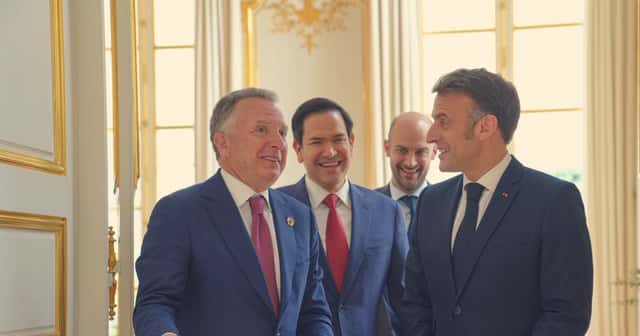
Photo: Freddie Everett / U.S. Department of State, public domain; original source. Archival image.

Differing perspectives
How should the indirect references involving Witkoff and Epstein be assessed?
Each position is summarized as its supporters make it, with equal weight and in alphabetical order. A summary is not an endorsement; the evidence for each is weighed in the story above.
Distinguish indirect references from direct contact
Who holds it: Ithildin archive
The archive identifies an email forwarding news of Witkoff-linked real-estate activity to Epstein, while explicitly distinguishing that reference from evidence of a direct relationship. Its position separates people discussed in correspondence from people who actually took part in it, and treats intermediary connections as indirect rather than proof of personal contact.
In their words: Ithildin, Steve Witkoff dossier ↗
Scrutinize overlapping political and financial networks
Who holds it: Sen. Sheldon Whitehouse
Whitehouse argues that Epstein’s reported connections to Russian figures warrant scrutiny alongside the Trump administration’s dealings with Russia. He draws attention to links through the Russian Direct Investment Fund and calls for examination of circumstantial evidence. His position favors investigating the wider network while acknowledging that what all the connections mean remains unresolved.
In their words: Office of Sen. Sheldon Whitehouse, March 10, 2026 ↗
READ BEYOND 567POLITICS
Alternate sources & perspectives
Independent coverage and primary evidence to help you compare arguments. A link is not an endorsement; perspective labels describe the linked material.
- primary evidence
EFTA02495035: Kahn forwards an EB-5 news link to Epstein ↗
U.S. Department of Justice
One-page July 13, 2015 email. Witkoff is neither sender nor recipient. Establishes a forwarded article, not a personal or financial relationship.
- independent analysis
Shvo, Witkoff look to get $800M in EB-5 funding ↗
The Real Deal
July 10, 2015 reporting on financing across four real-estate projects. The aggregate financing figure is not evidence of Epstein investment.
- left argument
Whitehouse speech on Trump-Epstein-Russia triangle ↗
Senator Sheldon Whitehouse
Primary source for the senator's political argument about indirect network links. It does not establish direct contact between Witkoff and Epstein.
- primary evidence
Department of Justice publishes 3.5 million responsive pages ↗
U.S. Department of Justice
Release context and limits. Inclusion in a document release is not government endorsement of every statement it contains.
- primary evidence
The EB-5 program in 2015 ↗
Government Accountability Office
August 12, 2015 review supplies historical investment and job-creation requirements. Its program-wide findings are not allegations about the named projects or people.
Reviewed 2026-11-05. DOJ EFTA02495035 was inspected visually in Chrome after the user authorized the DOJ age confirmation. It is an email from Richard Kahn to Epstein forwarding a news link, not correspondence with Witkoff. Indirect political-network claims are attributed, not treated as proof of contact. The connector discovery search returned irrelevant Microsoft results; none were used. No verified Witkoff funding snapshot was available. Publication review adds historical EB-5 context and related coverage; no direct association is inferred.