Taiwan protests China's emailed invitation to APEC summit in Shenzhen
Foreign Minister Lin Chia-lung says Beijing broke with past practice, but Taiwan will still attend the Nov. 18-19 leaders' meeting.
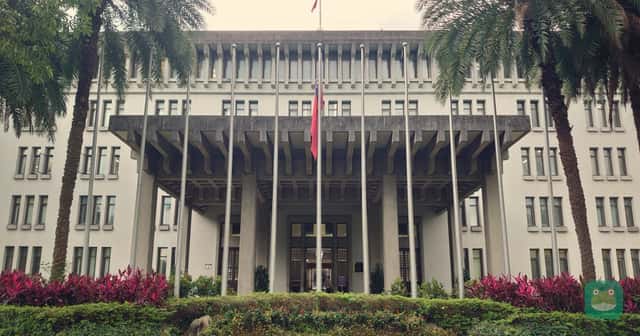
Taiwan says China is treating it differently from other members ahead of this month's Asia-Pacific Economic Cooperation (APEC) summit in Shenzhen. On Monday, November 2, Foreign Minister Lin Chia-lung said Beijing had sent Taiwan its summit invitation by email. In past years, a host has had the invitation delivered in person.
Lin said Taiwan had protested. He also said Taiwan would still attend the leaders' meeting on November 18 and 19. His words were reported by Focus Taiwan, the English service of Taiwan's Central News Agency (CNA). "We will lodge an immediate protest against any action that violates established practices, but we will not, as a result, forfeit our right to participate," he said.
The dispute is the latest test of how China, as host, will handle a member it claims as its own territory. This article explains what each side has said, how China handled the same question in 2001 and 2014, and who might represent Taiwan in Shenzhen.
What Taiwan says happened
The story began with a report in the Liberty Times early on Monday. Citing unnamed government sources, it said China had sent Taiwan a letter rather than a formal invitation. The Taipei Times, the Liberty Times' English sister paper, carried the same account. It said the letter did not call Taiwan "Chinese Taipei," the name Taiwan uses in APEC.
An official quoted anonymously by the Taipei Times said the government was assessing whether it could accept the arrangements. The official said Taiwan's representative had already been chosen and that Beijing had been told. The Presidential Office would announce the choice, the official said.
The official argued that staying silent would be a mistake. Failing to protest, the official said, could let Beijing use the same approach in the future.
Taiwan's Ministry of Foreign Affairs said it had lodged a strong protest. It said Taiwan was preparing to take part "in accordance with past practice."
What Lin said on Monday
Lin spoke to reporters later on Monday after an event in Taipei. His account differed in one respect from the Monday morning report.
He confirmed that China had not sent an official to deliver the invitation. Instead it came by email. But Lin said the email did use "Chinese Taipei," according to Focus Taiwan. The United Daily News reported that Lin did not say whether the invitation itself contained any other unequal treatment.
Lin said Taiwan is a full APEC member and has taken part in leaders' summits on an equal footing. He said China had promised, when it bid to host, to follow APEC's rules and customs. He said it had also promised to ensure that all delegates are treated equally and kept safe.
Lin said China had treated Taiwan differently at several APEC meetings this year. Each time, he said, the ministry protested right away, according to CNA's Chinese-language report.
He also pointed to a tool Taiwan holds. APEC works by consensus, so each member can affect the wording of joint statements. Lin said that if China treats Taiwan unequally, Taiwan will reflect that in how it responds to China's own proposals. If China does not follow the rules, "that is their problem," he said, according to the United Daily News, in a translation by 567 Politics.
Two summits China hosted before
China has hosted the APEC leaders' meeting twice before. The two cases show how much the handling of Taiwan has depended on relations across the Taiwan Strait.
2001, Shanghai. Chen Shui-bian of the Democratic Progressive Party (DPP) was Taiwan's president. According to the Taipei Times, Beijing sent an unsigned fax. It also rejected Chen's chosen envoy, former Vice President Li Yuan-tsu. Taiwan then stayed away from the summit.
2014, Beijing. Ma Ying-jeou of the Kuomintang (KMT) was president, and ties with Beijing were warmer. China sent Gong Qinggai, then a deputy director of its Taiwan Affairs Office. He handed the invitation to Wang Yu-chi, then head of Taiwan's Mainland Affairs Council, at the Taipei Guest House. Former Vice President Vincent Siew then attended the Beijing summit for Taiwan, the United Daily News reported.
Lai Ching-te of the DPP is now president. Beijing refuses to talk to him and calls him a "separatist," according to Reuters.
Why the name matters
APEC was founded in 1989 and has 21 member economies, Focus Taiwan noted. Both China and Taiwan are full members. It is one of the few international bodies Taiwan belongs to. No APEC member has formal diplomatic ties with Taiwan, Reuters noted.
Taiwan joined in 1991 under a memorandum of understanding signed with that year's host, South Korea. In November 2025, Taiwan's foreign ministry said the memorandum names Taiwan "Chinese Taipei." It said the text contains no reference to a "one China" principle. It also said the text lets Taiwan take part "on an equal basis," CNA reported. The ministry said China's own memorandum only "takes note of" Beijing's one-China position.
Beijing reads the arrangement differently. On September 16, 2026, Taiwan Affairs Office spokeswoman Zhu Fenglian set out its view. She said Taiwan takes part in APEC under the one-China principle, as a regional economy. Zhu called this "an important political premise," China News Service reported. She said all sides must follow the memorandums and APEC practice.
There is a detail that English hides. Both sides say "Chinese Taipei" in English, but the Chinese terms differ. Taiwan's foreign ministry uses Zhonghua Taibei. The Taiwan Affairs Office uses Zhongguo Taibei, which reads more directly as "China's Taipei." In November 2025, Taiwan's ministry said a statement using that term was seriously at odds with the facts, CNA reported. The gap helps explain why Taipei watches the wording of every letter.
A dispute building for a year
The argument over the Shenzhen summit is not new. On November 5, 2025, Lin said China had "added a lot of conditions" to Taiwan's attendance, Reuters reported. He said China had made a written commitment in 2024, while bidding to host, to support Taiwan's equal participation and its delegates' safety.
A Taiwan Affairs Office spokesman, Zhang Han, replied the same day. He said China would handle Taiwan's participation "in accordance with the one China principle" and APEC's memorandums and practices.
The United States weighed in that week. A State Department spokesperson said Washington "insists on the full and equal participation of all APEC member economies," including Taiwan, according to Reuters via CNA. The spokesperson said this was "consistent with APEC's guidelines, rules and established practice, as affirmed by China in its offer to host in 2026." Chinese Foreign Ministry spokeswoman Mao Ning said China would fulfill its duties as host.
For context on the wider rivalry, see our comparison of China and the United States.
How this year's meetings have gone
Taiwan has sent ministers to APEC meetings across China this year. According to the United Daily News, former minister without portfolio Jenny Yang led Taiwan's team at the trade ministers' meeting in Suzhou in May. Deputy Digital Minister Hou Yi-hsiu went to the digital and artificial intelligence meeting in Chengdu in July. Labor Minister Hung Sun-han attended the human resources meeting in Nanjing in September.
In May, a foreign ministry official, Chang Chih-sa, described the early meetings. Chang said Chinese officials had at times used belittling language about Taiwan in written replies or at news briefings. After Taiwan protested, Chang said, its participation had been equal and smooth, Storm Media reported.
Who might go to Shenzhen
Taiwan's president does not attend APEC summits. Instead, the president names a representative. Lai chose Lin Hsin-i, chairman of Taiwania Capital, for the 2024 and 2025 summits, the Presidential Office said last year. Lin Hsin-i had also attended in 2005.
The United Daily News reported that the government first wanted Lin Hsin-i again this year. It said he declined for health reasons. The paper said the government is leaning toward a business leader. It named three possible choices: Acer founder Stan Shih, TSMC Chairman C.C. Wei, and TTY Biopharm Chairman Lin Chuan. The government has not confirmed any name.
For more on regional tensions with China, see our report on Japan's defense spending debate and our China and Japan comparison.
Reaction in Taiwan and in Chinese media
Not everyone in Taiwan backed the way the government handled the matter. Huang Kuo-chang, chairman of the opposition Taiwan People's Party, questioned the approach, the United Daily News reported. He said the government should explain such a serious matter to the public directly. He asked why officials were speaking anonymously and protesting in private.
We did not find a public response from China's Taiwan Affairs Office or Foreign Ministry to Lin's Monday remarks by the time of publication.
A commentary on the Chinese platform NetEase by an account called Guanruiqi took Beijing's side. It argued that the emailed invitation followed the rules. It said a personal delivery would have given Taipei symbolic status it had not earned. The writer also linked the protest to Taiwan's local elections. The commentary is opinion and does not speak for the Chinese government.
Those elections are on November 28, ten days after the summit. About 19.65 million people are eligible to vote for 11,051 local posts, according to Taiwan's Central Election Commission.
The open questions before the summit
Several points remain unsettled:
- Who will represent Taiwan. The Presidential Office is expected to announce the name soon.
- Whether Taiwan accepts the terms. An anonymous official said the government was still assessing the arrangements.
- How Beijing responds. China has not yet commented on Lin's remarks about the invitation.
- How Taiwan's delegates are treated. Officials in Taipei have said they will watch for any downgrading of Taiwan's status in Shenzhen.
The leaders' meeting runs November 18 and 19. 567 Politics will update this story when Taiwan names its representative.
About this article
This article is based on reporting by Focus Taiwan and CNA, the Taipei Times, the United Daily News, Storm Media and China News Service. We also used Reuters reports carried by The Straits Times and CNA of Singapore, and statements from Taiwan's Presidential Office and Central Election Commission. Chinese-language material was translated by 567 Politics. Claims from unnamed officials are labeled as such. We could not reach the Liberty Times' Chinese-language report directly and relied on the Taipei Times' account. No chart is included because the story turns on diplomatic practice, not figures. We did not review political funding records for the officials named; they do not bear on this dispute. Read how we handle sources in our editorial standards and methodology.
Differing perspectives
Did China break with APEC practice in how it invited Taiwan to the Shenzhen summit?
Each position is summarized as its supporters make it, with equal weight and in alphabetical order. A summary is not an endorsement; the evidence for each is weighed in the story above.
China must honor equal participation
Who holds it: The U.S. State Department
Washington says it insists on the full and equal participation of every APEC member economy, including Taiwan, in line with APEC's guidelines, rules and established practice. It notes that China affirmed this standard when it offered to host in 2026 and says it will press for safe arrangements for all delegates.
In their words: CNA (Reuters) ↗
Taiwan's role is set by the one-China principle
Who holds it: China's Taiwan Affairs Office, including spokeswoman Zhu Fenglian
Beijing says Taiwan takes part in APEC only as a regional economy under the one-China principle, using the name it renders as China's Taipei. It calls this an important political premise of Taiwan's membership and says all sides must follow the relevant memorandums and established APEC practice.
In their words: China News Service ↗
The government should explain the dispute openly
Who holds it: Taiwan People's Party Chairman Huang Kuo-chang
Huang does not dispute that the matter is serious. He argues that the government should explain it directly to the public, and he questions why officials spoke to the press anonymously and lodged their protest in private rather than handling the issue openly.
In their words: United Daily News ↗
Yes, Beijing is treating Taiwan unequally
Who holds it: Taiwan's government, including Foreign Minister Lin Chia-lung
Taiwan says it is a full APEC member that has always joined summits on an equal footing. It argues that China, which promised to follow APEC rules when it bid to host, broke with custom by emailing the invitation instead of delivering it in person. Taiwan says it will protest each breach but still attend.
In their words: Focus Taiwan (CNA) ↗
READ BEYOND 567POLITICS
Alternate sources & perspectives
Independent coverage and primary evidence to help you compare arguments. A link is not an endorsement; perspective labels describe the linked material.
- independent analysis
FM Lin calls on China to follow established practice for APEC summits ↗
Focus Taiwan (CNA)
Lin's November 2 remarks, the email invitation, and the 2001 and 2014 precedents.
- independent analysis
林佳龍揭中國以電郵邀台出席APEC峰會 盼中遵守慣例 ↗
Central News Agency
Chinese-language account of Lin's remarks, including the consensus point.
- independent analysis
Taiwan protests APEC 'discrimination' ↗
Taipei Times
Anonymous official's account of the letter and the government's assessment.
- independent analysis
林佳龍:收到APEC電子邀請函 不因對台有差別待遇就放棄參與 ↗
United Daily News
Lin's remarks and the 2014 attendance by Vincent Siew.
- independent analysis
APEC峰會代表 我擬指派企業人士 ↗
United Daily News
Possible envoys, this year's ministerial meetings, and Huang Kuo-chang's criticism.
- other perspective
国台办回应中国台北参与APEC ↗
China News Service (state-run)
Taiwan Affairs Office statement on the terms of Taiwan's participation.
- primary evidence
外交部:台灣以中華台北加入APEC 入會備忘錄未提一中 ↗
Central News Agency
Taiwan foreign ministry statement on its 1991 APEC memorandum.
- independent analysis
Taiwan says China has added conditions to its attendance at Apec summit ↗
Reuters via The Straits Times
The November 2025 dispute and Beijing's reply.
- independent analysis
Taiwan must be allowed equal participation when China hosts APEC, US says ↗
Reuters via CNA
U.S. State Department statement and China's Foreign Ministry response.
- primary evidence
President Lai names Taiwania Capital Chairman Lin Hsin-i as 2025 APEC envoy ↗
Office of the President, Taiwan
Taiwan's past leaders' representatives.
- independent analysis
中國主辦APEC恐打壓台灣?林佳龍喊「嚴陣以待」 ↗
Storm Media
Foreign ministry briefing in May on Taiwan's treatment at earlier meetings.
- other perspective
中国大陆发给台湾邀请函,岛内不满递送方式 ↗
NetEase (Guanruiqi account)
Mainland commentary defending Beijing's emailed invitation.
Reviewed 2026-11-02. Sources chosen by hand after opening each page. Chinese-language reports were read in the original. The Liberty Times' Chinese report could not be loaded, so its account is cited through the Taipei Times. We found no Chinese government response to Lin Chia-lung's November 2 remarks at publication time. The NetEase item is a commentary by a self-published account, not an official statement.