Arınç urges raising Turkish judges' retirement age to 72 as 156 high-court terms near a 2028 cutoff
Former parliament speaker Bülent Arınç wants a one-article constitutional change. MHP's Feti Yıldız warned that 2016 term limits will push 156 Court of Cassation and Council of State members out on July 23, 2028.
Bülent Arınç, a former Speaker of Turkey's parliament, called on Monday, Nov. 16, for a constitutional amendment that would let judges and prosecutors serve until age 72 instead of 65. In a statement on social media, reported by T24, he said the change should be made "urgently and as a single article." He also offered to negotiate it with the parties in parliament if President Recep Tayyip Erdoğan gave him the task.
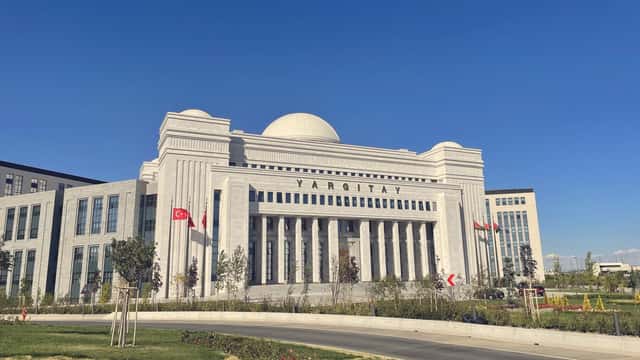
Arınç was responding to a warning issued 12 days earlier by Feti Yıldız, a deputy chairman of the Nationalist Movement Party (MHP), the governing AKP's alliance partner. Yıldız said that if current law stays in place, 156 members of Turkey's two top appeals courts, the Court of Cassation (Yargıtay) and the Council of State (Danıştay), will lose their seats on July 23, 2028, before reaching the retirement age. They would be leaving, he said, "in the most productive and experienced period of their careers."
The two men are proposing different fixes. Arınç wants to raise the retirement age for the whole judiciary, which requires changing the Constitution. Yıldız wants to exempt judges who first joined the high courts before 2016 from a 12-year term limit set by an ordinary law. Neither proposal has been introduced in parliament. The AKP, Justice Minister Akın Gürlek and the opposition parties had not responded publicly to Arınç by the time of publication, as far as 567 Politics could find.
What Arınç proposed#
Article 140 of the Turkish Constitution says judges and prosecutors "serve until they complete the age of sixty-five." Arınç said that limit is costing the courts their most experienced members. "The definitive solution is only possible by changing this article of the Constitution," he wrote, according to T24.
He offered two options. The age limit in Article 140 could be raised to "at least 72," or the provision could be repealed and the subject handled in a separate article. Either way, he said, the change would let the courts keep "today's experienced judges and prosecutors" for "at least seven more years."
Arınç linked the problem to the purge that followed the July 15, 2016, coup attempt. He said about 5,000 people were expelled from the judiciary afterward, and that young, inexperienced judges and prosecutors were moved into important posts. 567 Politics did not independently check that figure.
To make his point, he told a story he said he had heard from a senior member of the Court of Cassation. A young judge had been appointed as a rapporteur judge at the court soon after starting his career, "in a way that was not possible before." The senior member asked about his previous posts. The young judge, Arınç wrote, answered: "I was the party's district chairman, sir." Arınç did not name the judge or the party. "The person who gave this answer will perhaps read a few folders of case files at the Court of Cassation and give an opinion on reversing or upholding," he wrote. "The situation is grave." 567 Politics could not verify the account.
He was specific about how the change should be negotiated. He wrote that the justice minister "may not want to be a party to this" because of his position. He also said he "would definitely not want" the presidency's Legal Policies Board involved, because "their agenda is very different." Instead, he wrote, Erdoğan could give the job to "one of our valuable people who served as justice minister, or to me," an offer Cumhuriyet highlighted in its headline. He added that judges who fail to do their jobs or commit crimes "must be punished and expelled from the profession."
Arınç said he expected all sides to find the idea "reasonable." "Of course there may be contradictions and objections on some issues," he wrote, "but I think this will be the common complaint of the parties in the judicial process we are living through."
The July 2028 cliff#
Yıldız made his case in a social media statement on Nov. 4, which the daily Karar published in full. It rests on a 2016 law, No. 6723, which set a single 12-year term for members of the Court of Cassation and the Council of State and barred anyone from being elected twice. Before that, members of both courts served until the mandatory retirement age of 65.
Law 6723 was published in the Official Gazette on July 23, 2016, eight days after the coup attempt. It also ended the terms of all sitting members on that day. The Supreme Board of Judges and Prosecutors (then HSYK, now HSK) re-elected 267 people to the Court of Cassation on July 25, 2016, Yıldız wrote. On July 27, the president re-elected 24 people to the Council of State from among those whose terms had ended. Because they were re-elected under the new law, their 12-year terms all end on the same day, July 23, 2028.
Yıldız gave the current numbers. Of the Council of State's 104 members, 44 will reach the end of their terms before turning 65. Of the Court of Cassation's 324 members, 112 will. That is 156 judges in all, a little more than a third of the two courts' combined membership.
Source: Feti Yıldız statement via Karar, Nov. 4, 2026
Show the numbers
| Court | Term ends July 2028 | Other members |
|---|---|---|
| Court of Cassation (Yargıtay) | 112 | 212 |
| Council of State (Danıştay) | 44 | 60 |
Yıldız's main request concerns the members who were first elected before 2016. They joined the courts expecting to serve until 65, he wrote. Cutting their service short after re-electing them is "a disproportionate interference with their career gains and legitimate expectations." In his view, that amounts to an acquired right.
He also floated a separate idea for the longer term: a minimum age of 50 for election to the high courts and a term of 15 years. He warned that sending members back to first-instance courts when their terms end could harm judicial independence, T24 reported.
Why the limit was introduced#
Law 6723 was part of a larger change to Turkey's court system. On July 20, 2016, new regional appeals courts began work nationwide. That added a middle tier between the first-instance courts and the two high courts, which until then had heard appeals directly.
The law's rationale projected that the new tier would settle roughly 90% of ordinary court decisions and roughly 80% of administrative court decisions before they reached the high courts. That is how the Constitutional Court summarized the reasoning when it later reviewed the law. With less work, the high courts needed fewer chambers and fewer members. The law cut the Council of State's cadre of professional members from 195 to 116 and the Court of Cassation's from 516 to 310. The stated aim was to turn both into true precedent-setting courts.
Source: Constitutional Court press release ND 29/21, Oct. 1, 2021
Show the numbers
| Court | Before Law 6723 | After Law 6723 |
|---|---|---|
| Court of Cassation (Yargıtay) | 516 | 310 |
| Council of State (Danıştay) | 195 | 116 |
The law's critics took it to the Constitutional Court. The press release does not name the applicants. They argued that the 12-year limit and the one-term rule violated the independence of the courts and the security of tenure that the Constitution guarantees judges. They said that weakening the judiciary against the other branches breached the rule of law. They also argued that ending the terms of sitting members removed the guarantees that let judges work independently. And they said it was unequal to let some members be re-elected while others were not.
On Dec. 10, 2020, the court rejected those claims (case E.2016/144). It published a summary on Oct. 1, 2021. The court said that neither the Constitution nor the laws on the two courts set a term for their members, and that nothing in the Constitution requires membership to last until 65. A fixed term, it said, does not stop judges from ruling according to the law and their conscience, and does not let any other body influence them.
On ending the sitting members' terms, the court said that without compelling reasons this would breach judges' tenure guarantees. But it found that the move to a three-tier system was such a reason. It noted that the people re-elected in July 2016 had all served on the courts before. "In other words, no one who had not previously been a member of the Council of State and the Court of Cassation was elected to that membership for the first time under the rules," the summary said. In the court's view, this showed that the law's real aim was not to replace sitting members with others. It also said the term limit does not remove members from the judiciary or force them to retire before the age set in the Constitution.
- Constitutional amendment Law 5982 sets 12-year terms for Constitutional Court members but lets sitting members serve to 65
- Regional appeals courts begin work nationwide
- Law 6723 limits high-court terms to 12 years and ends sitting members' terms
- Judicial board re-elects 267 members to the Court of Cassation
- President re-elects 24 members to the Council of State
- Constitutional Court rejects the challenge to the term limit
- MHP's Feti Yıldız warns 156 members will leave in 2028
- Bülent Arınç calls for raising the retirement age to 72
- 12-year terms of members re-elected in 2016 end
Source: Constitution, Provisional Article 18, Constitutional Court, Karar, T24
The 2010 precedent#
Yıldız's main argument is a comparison. In 2010, a constitutional amendment (Law No. 5982 of May 7, 2010) also set 12-year terms for members of the Constitutional Court and barred anyone from serving twice. That rule is now in Article 147 of the Constitution.
But the 2010 package included a transitional clause, Provisional Article 18. It said that those who were members when the amendment took effect "shall continue in their posts until the age limit." The Constitutional Court judges who were sitting at the time kept their seats until 65.
Members of the Court of Cassation and the Council of State got no such protection in 2016. "That high-court members given a 12-year term by Law 6723 are treated differently from Constitutional Court members, for whom a similar arrangement was made, will also damage the principle of equality," Yıldız wrote.
The Constitutional Court did not address that comparison in the summary of its 2020 ruling. It said only that the legislature has discretion to decide what serves the public interest. When it reviews a law, the court said, it checks whether the law was made to favor or harm particular people, not whether the legislature judged the public interest correctly.

Who gets to sit on the high courts#
The Better Judiciary Association (Daha İyi Yargı Derneği), a group that campaigns for judicial reform, has argued that both men are asking the wrong question. In a note on Yıldız's proposal, it said the real issue is not "at what age and for how long" members serve. It is "how the most competent jurists, who combine theory and practice and deserve it on merit, are to be selected" for the two courts.
According to Yeni Asya's report on the statement, published on Nov. 11, the association called on parliament, all political parties, the Justice Ministry, the HSK, the high courts, the bar associations and academia to consider its proposals together. These include a unified career plan for the legal professions and merit-based, open competition for judicial appointments. It said that public trust in the judiciary should be increased.
Arınç's story about the young rapporteur judge points at the same concern about appointments. His remedy, though, is to keep older judges on longer rather than to change how new ones are picked.
The debate comes as the courts face heavy political pressure. Justice Minister Gürlek has been defending his ministry's handling of the investment fund probe in parliament. An Istanbul court is hearing the municipal corruption trial of Ekrem İmamoğlu. And parliament faces a debate over lifting lawmakers' immunity that involves YENİ Parti leader Özgür Özel and independent deputy Mustafa Sarıgül.
What a change would take#
The two routes have very different hurdles. Yıldız's proposal concerns terms set by an ordinary law, Law 6723. Parliament set those terms by ordinary legislation in 2016 and could amend them the same way. The Constitutional Court's 2020 ruling treated the length of the terms as a matter for the legislature's discretion.
Arınç's proposal requires a constitutional amendment. Under Article 175 of the Constitution, at least one-third of the 600-member parliament must propose an amendment in writing. It is debated twice in the full chamber and passes with a secret-ballot vote of at least three-fifths of all members, or 360. An amendment that wins between 360 and 400 votes goes to a referendum unless the president sends it back. One that wins two-thirds, or 400 votes, can take effect directly, though the president may still put it to a referendum.
Source: Constitution of the Republic of Türkiye, Article 175
Show the numbers
| Step | Lawmakers needed |
|---|---|
| Propose an amendment (1/3) | 200 |
| Pass and send to referendum (3/5) | 360 |
| Pass, referendum optional (2/3) | 400 |
| All members | 600 |
The 2028 deadline is about 20 months away. Arınç has asked for a mandate he does not yet have. Yıldız's party is part of the governing alliance, but neither the AKP nor the government had taken a public position on either proposal by the time of publication, as far as 567 Politics could find. Raising the retirement age for all judges and prosecutors would also reach far beyond the 156 high-court members whose terms are ending.
Differing perspectives
How should Turkey handle the 2028 expiry of 156 high-court members' terms?
Each position is summarized as its supporters make it, with equal weight and in alphabetical order. A summary is not an endorsement; the evidence for each is weighed in the story above.
Fixed terms are compatible with judicial independence
Who holds it: Constitutional Court of Türkiye (Dec. 10, 2020 ruling)
The court found that neither the Constitution nor the laws on the two high courts require membership to last until 65. It said a 12-year term does not stop members from ruling by law and conscience or let any other body influence them, and that ending sitting members' terms was justified by the move to a three-tier court system and smaller cadres.
In their words: Anayasa Mahkemesi ↗
Focus on how members are selected
Who holds it: Better Judiciary Association (Daha İyi Yargı Derneği)
The association says the central question is not at what age or for how long high-court members serve. It is how the most competent jurists, who combine theory and practice and earn the post on merit, are selected, and how merit, competition and fairness can be secured in the process. It says this is how public trust in the judiciary can be increased.
In their words: Daha İyi Yargı Derneği ↗
Let pre-2016 members serve until 65
Who holds it: Feti Yıldız, MHP deputy chairman
Yıldız says members first elected before Law 6723 joined the high courts expecting to serve until 65, so cutting them off after re-electing them disproportionately interferes with their legitimate expectations. He says they should get the same protection Constitutional Court members received in 2010, warning that losing 156 members in 2028 would cause a serious loss of institutional memory.
In their words: Karar ↗
Raise the retirement age to 72 in the Constitution
Who holds it: Bülent Arınç, former Speaker of Parliament
Arınç says the age-65 limit in Article 140 drains the judiciary of experience at a time when many young, inexperienced judges hold key posts after the 2016 purge. He says the definitive fix is a single-article constitutional amendment raising the limit to at least 72, which would keep experienced judges for seven more years, and that parties should find it reasonable.
In their words: T24 ↗
Cite this article
567 Politics staff. “Arınç urges raising Turkish judges' retirement age to 72 as 156 high-court terms near a 2028 cutoff.” 567politics. Published 2026-11-17. https://567politics.com/news/turkey-arinc-judges-retirement-age-72-yildiz-156-high-court-members-2028-term-limit-november-2026
Wikipedia citation
{{cite news |title=Arınç urges raising Turkish judges' retirement age to 72 as 156 high-court terms near a 2028 cutoff |url=https://567politics.com/news/turkey-arinc-judges-retirement-age-72-yildiz-156-high-court-members-2028-term-limit-november-2026 |work=567politics |author=567 Politics staff |date=2026-11-17 |language=en}}CSL-JSON for reference managers
{
  "id": "https://567politics.com/news/turkey-arinc-judges-retirement-age-72-yildiz-156-high-court-members-2028-term-limit-november-2026",
  "type": "article-newspaper",
  "title": "Arınç urges raising Turkish judges' retirement age to 72 as 156 high-court terms near a 2028 cutoff",
  "URL": "https://567politics.com/news/turkey-arinc-judges-retirement-age-72-yildiz-156-high-court-members-2028-term-limit-november-2026",
  "container-title": "567politics",
  "language": "en",
  "author": [
    {
      "literal": "567 Politics staff"
    }
  ],
  "issued": {
    "date-parts": [
      [
        2026,
        11,
        17
      ]
    ]
  }
}Citations identify this article and its publication date. Assess the reporting and its linked sources before using it as evidence.
Read this article as Markdown or JSON. Cite the original page and retain its sources, dates and qualifications.
Embed this article summary
Paste this HTML into your page. The summary stays linked to the full story and updates with it. No account required.
<iframe src="https://567politics.com/embed/news/turkey-arinc-judges-retirement-age-72-yildiz-156-high-court-members-2028-term-limit-november-2026?theme=auto" title="Arınç urges raising Turkish judges' retirement age to 72 as 156 high-court terms near a 2028 cutoff by 567politics" width="100%" height="440" style="border:0;max-width:100%" loading="lazy"></iframe>
<p style="font-size:14px">Arınç urges raising Turkish judges' retirement age to 72 as 156 high-court terms near a 2028 cutoff by <a href="https://567politics.com/news/turkey-arinc-judges-retirement-age-72-yildiz-156-high-court-members-2028-term-limit-november-2026" rel="nofollow">567politics</a></p>
<script async src="https://567politics.com/embed.js"></script>
READ BEYOND 567POLITICS
Alternate sources & perspectives
Independent coverage and primary evidence to help you compare arguments. A link is not an endorsement; perspective labels describe the linked material.
- primary evidence
Review of the rules on the terms of Council of State and Court of Cassation members (press release ND 29/21) ↗
Constitutional Court of Türkiye
Official summary of the Dec. 10, 2020 ruling (E.2016/144) rejecting the challenge to the 12-year limit, with the applicants' arguments, the cadre cuts and the court's reasoning.
- primary evidence
Constitution of the Republic of Türkiye ↗
Presidency Legislation Information System (mevzuat.gov.tr)
Official text: Article 140 (judges serve until 65), Article 147 and Provisional Article 18 (12-year Constitutional Court terms and the 2010 protection for sitting members), Article 175 (amendment thresholds).
- other perspective
Arınç calls for constitutional change for the high judiciary: raise retirement age to 72 ↗
T24
Full quotation of Arınç's Nov. 16 statement and a recap of Yıldız's proposal.
- independent analysis
Arınç: if given the task, I will talk to the parties ↗
Cumhuriyet
Opposition-leaning daily's account of the proposal and Arınç's offer to negotiate it.
- independent analysis
Arınç proposes raising judges' and prosecutors' age limit to 72 ↗
ANKA News Agency
News agency report of the statement, filed Nov. 16, 2026.
- independent analysis
Arınç proposes raising judges' and prosecutors' age limit to 72 ↗
Independent Türkçe
Separate report of the Nov. 16 statement.
- independent analysis
Arınç's 72-year proposal for retirement in the judiciary ↗
Odatv
Nationalist-leaning outlet's report of the proposal.
- other perspective
MHP's 156-member warning on the high judiciary: the 12-year term should go ↗
Karar
Full text of Feti Yıldız's Nov. 4 statement with the 44-of-104 and 112-of-324 figures and the 2016 re-election numbers.
- other perspective
On the 2028 expiry of many Court of Cassation and Council of State members' terms and Feti Yıldız's proposal ↗
Daha İyi Yargı Derneği (Better Judiciary Association)
Reform group's view that selection on merit, not age or term length, is the core issue.
- independent analysis
A call for merit in the high judiciary ↗
Yeni Asya
Nov. 11 report summarizing the Better Judiciary Association's proposals and the 2028 figures.
Reviewed 2026-11-16. Compiled 2026-11-16 from pages opened and read; the site's discovery tool returned only unrelated aviation pages (ARINC), so every source was chosen by hand. Arınç's and Yıldız's statements were posted on social media and are cited through outlets that reprinted them. The Constitutional Court's full 2020 judgment was not reviewed; its official press summary is cited. No public response to Arınç from the AKP, the Justice Ministry, the HSK, bar associations or opposition parties was found by publication. Arınç's figure of about 5,000 people expelled from the judiciary and his anecdote about a rapporteur judge were not independently verified. Sources are in Turkish.